
The Model Has Never Seen Your Codebase Before
When you paste a thousand lines of internal code into a chat window and ask an LLM to debug it, you’re doing something the model was never explicitly trained for. Your codebase doesn’t exist in its training data. Your variable naming conventions are unique to your team. The specific combination of library versions, architectural decisions, and business logic is entirely novel to the model.
And yet it usually does something useful. That’s the interesting part.
The intuitive explanation is that the model is “smart enough” to generalize. The more accurate explanation is mechanical, and understanding it changes how you think about LLM reliability in production contexts.
Interpolation, Not Lookup
An LLM isn’t a database. It doesn’t store training examples and retrieve the closest match at inference time. During training, it compresses millions of examples into a high-dimensional space of weights, capturing statistical relationships between concepts, syntax patterns, semantic structures, and everything else in the training corpus. When you give it new input, it’s doing interpolation across that space, not lookup.
Think of it like this: if you train a model on thousands of recipes and then ask it to combine ingredients it’s never seen paired together, it doesn’t fail. It reasons by analogy from patterns it has seen. Bitter plus sweet plus acid tends to work. Protein plus fat plus starch tends to work. The specific ingredients are new; the structural relationships are not.
Your internal codebase works the same way. The model has never seen your UserPermissionsManager class, but it has seen thousands of permission management systems. It recognizes the pattern. The variable names, the method signatures, the way you’re passing context through layers, all of it maps onto structures it compressed during training. It’s navigating by learned geometry, not memory.
This is why LLMs handle novel input surprisingly well up to a point, and then fail in ways that look bizarre. Interpolation within a learned space is robust. Extrapolation outside it is where things get strange.
Where the Geometry Breaks Down
The failure modes are predictable once you understand the interpolation framing.
If your context is genuinely novel, meaning it sits in a region of concept-space that the training data barely covered, the model starts confabulating. It fills gaps with statistically plausible continuations that aren’t grounded in your actual context. This is the root cause of hallucination: not randomness, but confident interpolation in an underpopulated region of the learned space.
A concrete example: ask an LLM about an obscure library released six months ago. The model may have seen the library name mentioned in a few GitHub comments and changelog references. It knows the library exists, knows roughly what domain it operates in, knows what similar libraries do. So it generates something plausible. It sounds authoritative. It’s often wrong in specifics because the specific information simply wasn’t dense enough in training to create reliable geometry. This connects directly to the confidence problem that gets worse as models scale.
There’s also a subtler failure: models trained on general code may have gaps in domain-specific convention. An LLM will write you syntactically valid SQL with no trouble. Ask it to optimize a query against a specific distributed system’s quirks, say, the way query planner hints interact with a particular version of CockroachDB, and you’re asking it to interpolate in a region where training examples were sparse. It’ll produce something that looks right and may not be.
Context window behavior compounds this. Even when you give the model explicit context to compensate for training gaps, what it does with that context isn’t uniform. Information positioned in the middle of a long context window gets relatively less attention than information at the edges. So if you paste a long specification document and your actual question at the end, the model may give you an answer that’s influenced more by its prior training than by the document you just provided.
Retrieval Augmentation as a Patch for the Geometry Problem
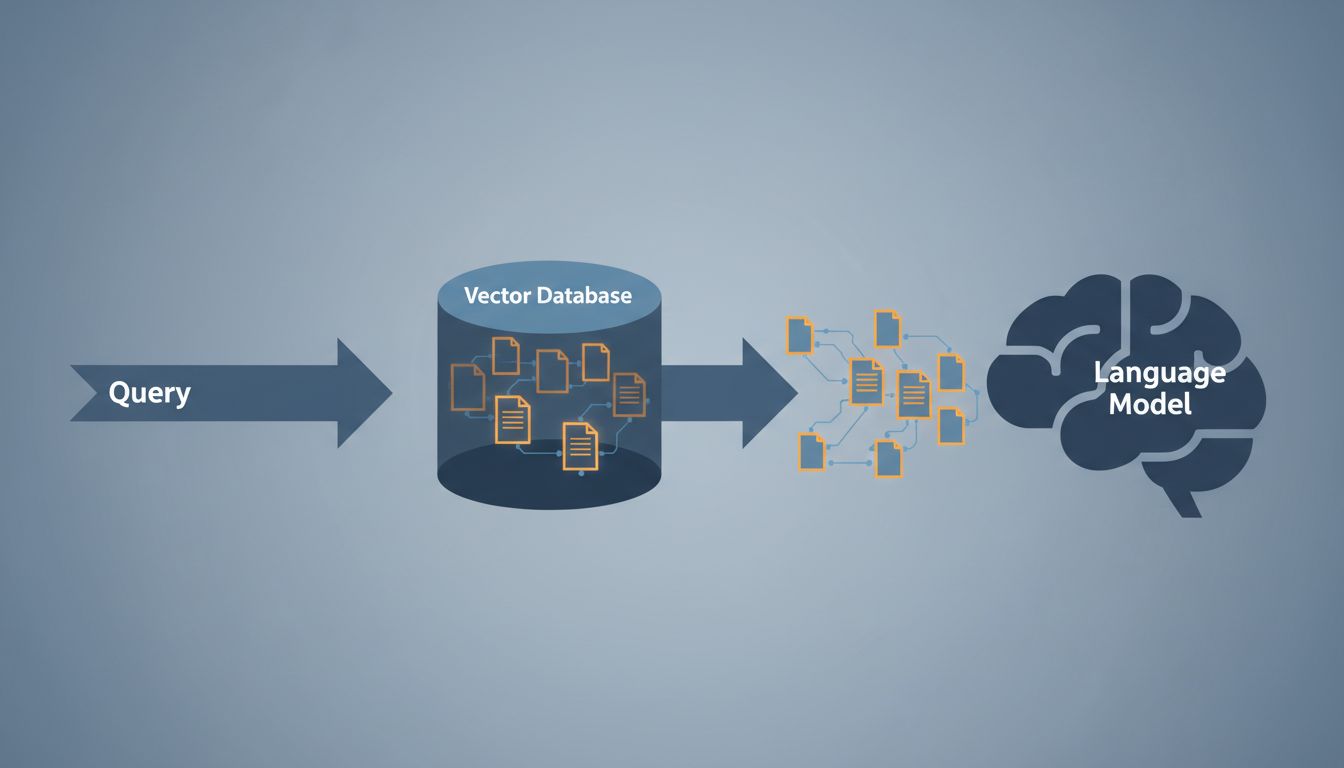
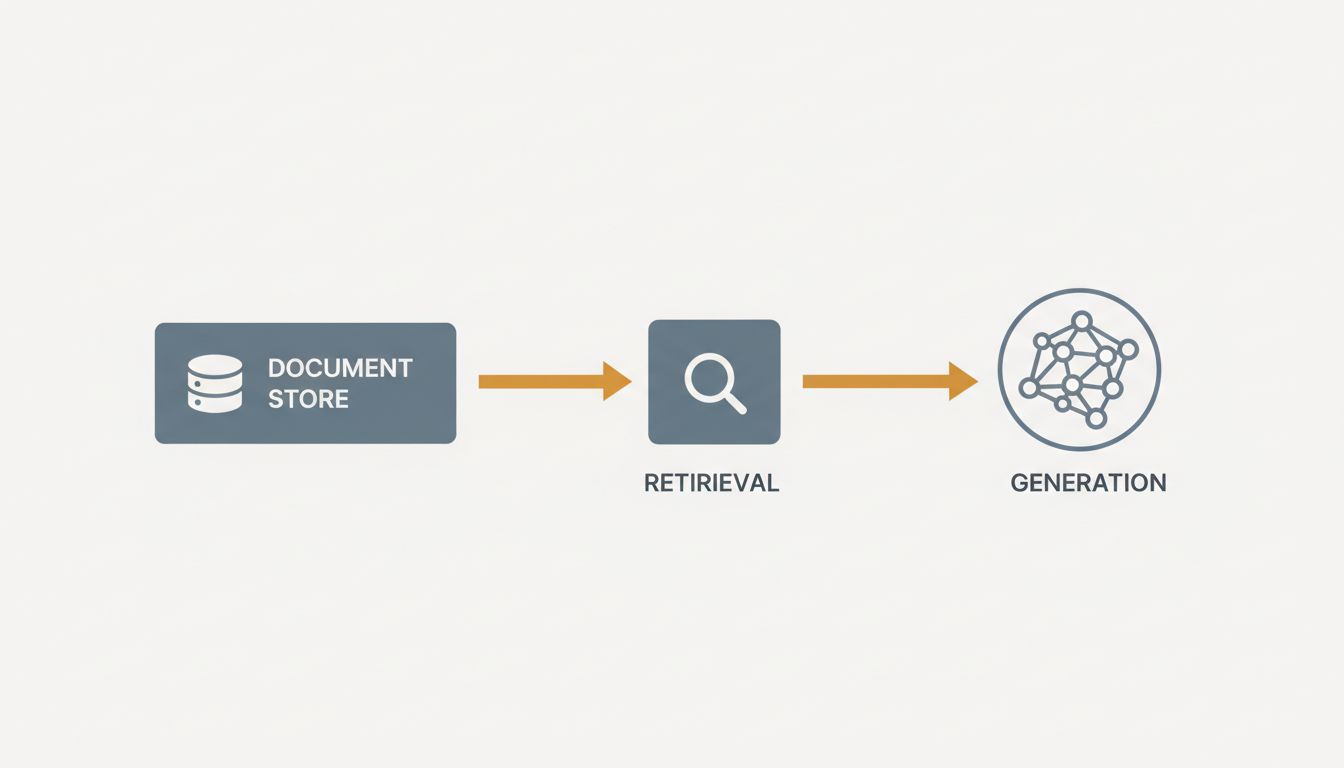
Retrieval-Augmented Generation (RAG) is the production answer to this problem, and it’s worth understanding why it works rather than just that it works.
In a RAG setup, you don’t ask the model to rely on its trained weights for domain-specific facts. Instead, you retrieve relevant chunks from an external knowledge base (your documentation, your codebase, your internal wiki) and inject them into the context window as if they were part of the prompt. The model then synthesizes an answer using its general reasoning capability applied to the retrieved specifics.
This sidesteps the interpolation problem for factual recall. The model no longer needs trained geometry about your internal systems. It just needs general geometry for reasoning, reading comprehension, and synthesis, which are the things it’s actually good at from large-scale training. You’re offloading the memory problem to a retrieval system and asking the model to do what it’s genuinely suited for.
The failure mode for RAG isn’t the geometry problem. It’s retrieval quality. If the chunks you retrieve don’t contain the right information, the model will happily reason from bad inputs. Garbage in, confident garbage out.
What This Means When You’re Building
If you’re integrating an LLM into a system that handles context the model was never trained on, a few things follow from the above.
First, familiarity of structure matters more than familiarity of content. A model will handle a novel business domain reasonably well if the underlying structure maps onto familiar patterns. Financial risk calculations are novel to a model that’s never seen your specific fund structure, but the computational and logical patterns are well-represented in training. Novel syntax or unconventional abstractions are harder because they require extrapolation rather than interpolation.
Second, the model’s confidence is not a reliable signal for correctness in novel domains. This is worth building around explicitly. Don’t ask the model to self-assess accuracy. Ask it to list assumptions it’s making, flag what it can’t verify, or produce multiple candidate answers. Forcing uncertainty into the output format is more reliable than trusting the model’s self-reported confidence.
Third, and most practically: the difference between a useful LLM integration and a liability is often how well you’ve scoped what the model is being asked to do. Narrow tasks with well-structured context and verifiable outputs are reliable. Open-ended tasks in novel domains with no verification step are where the interpolation breaks down and nobody notices until it matters.
The model didn’t crash when you pasted your codebase. It found a path through learned geometry and gave you something useful. Understanding that this is a capability with structural limits, not a general-purpose intelligence, is what separates teams that use these tools well from teams that get burned by them.