
The Illusion of Mastery
There is a particular kind of confidence that comes from getting an LLM to do exactly what you want. You spend an afternoon tuning a prompt, you find the phrasing that consistently produces clean output, and you feel like you understand something real about how these systems work. Maybe you do. But the thing you’ve actually built is a key that fits one specific lock, and the lock gets replaced without notice on a schedule you don’t control.
This is the central problem with prompt engineering as a practice: the feedback loop that makes you feel like you’re learning is not actually teaching you what you think it is. You’re learning the quirks of a specific model checkpoint. That knowledge is genuinely useful right now. It is not durable.
Understanding why requires looking at what a model update actually changes, and it’s more than most people assume.
What Changes in a Model Update
When a lab releases a new version of a model, the public-facing description usually focuses on improvements: better reasoning, reduced hallucination, longer effective context, safer outputs. What it doesn’t describe in detail is the precise shift in weight distributions across billions of parameters that produced those improvements. That shift changes how the model responds to every input, not just the categories the lab was explicitly targeting.
Think of a large language model as a function that maps token sequences to probability distributions over next tokens. When you tune a prompt, you’re finding inputs that reliably steer that function toward the output you want. But after a model update, the function itself has changed. Your inputs now steer a different function. The prompt is the same. The territory it was navigating is gone.
Some changes are coarse and obvious: a model might stop completing harmful requests it previously allowed, or start following formatting instructions it previously ignored. Those you’ll catch immediately. The dangerous changes are the subtle ones. A model trained to be more “helpful” might become more verbose in ways that break your downstream text parsing. A safety fine-tune might make the model more reluctant to adopt personas that your prompt relied on. A capability improvement in reasoning might make the model second-guess instructions it previously followed literally.
None of these changes will throw an error. Your prompt will still run. You’ll still get output. The output will just be subtly wrong in ways that may take days or weeks to surface.
The Silent Failure Mode
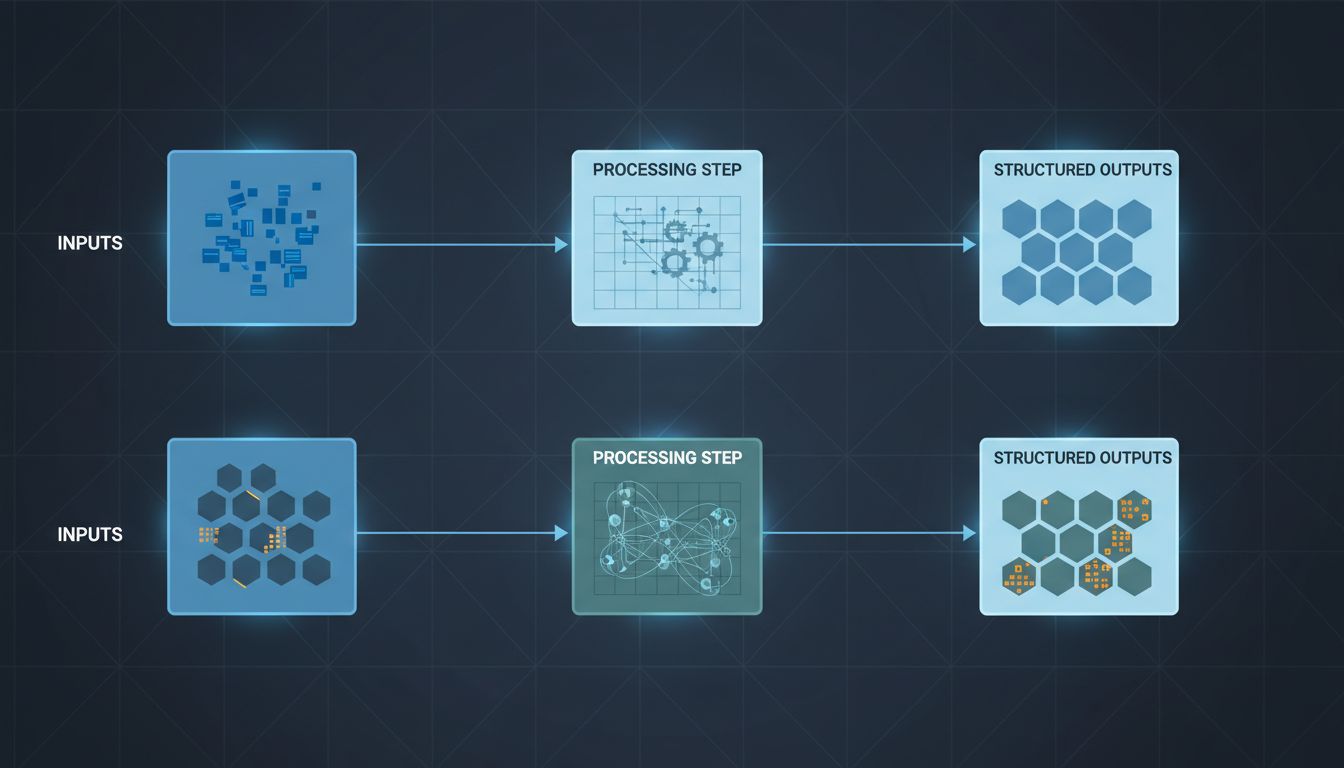
Software engineers have a well-developed sense for the ways that code can break loudly (exceptions, crashed processes, 500 errors) versus quietly (wrong results that look plausible). LLM-based systems sit entirely in the second category. When a database schema change breaks your query, you get an error. When a model update shifts the behavior of your prompt, you get output that looks fine until someone actually reads it.
Consider a practical example. You’ve built an internal tool that uses an LLM to classify customer support tickets into categories and extract a structured summary. Your prompt asks for JSON output with specific field names. You’ve tested it, it works well, you ship it. Three months later the model provider silently migrates your API endpoint to a newer checkpoint. The new model is slightly more conversational in its defaults. Now one in eight responses wraps the JSON in a markdown code block. Your parser expects raw JSON. It silently drops those tickets. Nobody notices for two weeks.
This isn’t hypothetical. It’s a category of bug that anyone who has run LLMs in production has either hit or narrowly avoided. OpenAI’s own documentation has acknowledged that model behavior can vary between versions in ways that affect downstream applications, which is precisely why they maintain legacy endpoint options and recommend version pinning where stability matters. The option exists because the problem is real enough that enterprise customers demanded it.
The comparison to dependency management is apt. The difference is that a breaking change in a library produces a failing test. A breaking change in model behavior produces a plausible-looking wrong answer. That’s a much harder class of problem to catch.
Why Your Evaluation Approach Probably Won’t Catch This
Most people who use LLMs in production don’t have evaluation pipelines. They have vibes. They spot-check outputs, they watch for user complaints, they notice when something seems off. This works well enough when you’re the primary consumer of the output. It falls apart when the output feeds into another system, or when the failure mode is a shift in quality rather than a shift in format.
Even people who do have eval pipelines often have a subtle gap: they evaluate against their current mental model of what good output looks like, which was itself calibrated on the old model. If the new model produces outputs that are different but not obviously worse, your eval might pass while real-world quality degrades.
Good evaluation for LLM outputs needs to be anchored to ground truth that exists outside the model. For classification tasks, that means labeled examples from your actual domain. For summarization or generation tasks, it means specific criteria that can be checked programmatically or against a held-out human-annotated set. The goal is a test suite that will fail when the model changes in ways that matter to you, regardless of whether the change looks like an improvement from the lab’s perspective.
This is more work than it sounds, partly because articulating what you actually want from an LLM is hard. But it’s the only way to get ahead of silent failures instead of discovering them after the fact.
The Versioning Problem
Some providers let you pin to specific model versions. This is worth doing for any production workload. But version pinning is a delay, not a solution. Pinned versions get deprecated. Security and safety changes sometimes get backported without a version bump. And at some point you will need to upgrade, at which point you’re doing exactly the migration you were trying to avoid, just with more accumulated technical debt.
The more durable approach is to decouple your prompt logic from your application logic as much as possible. This means treating prompts as versioned artifacts (stored in source control, with changelogs, reviewed like code), maintaining a regression test suite that runs against any model you’re considering using, and building your output handling defensively, meaning you validate and handle unexpected formats rather than assuming the model will always return what you expect.
It also means being honest about which parts of your system are brittle. A prompt that produces a rigid JSON schema is more fragile than one that produces free text you then parse loosely. A prompt that relies on a specific persona or roleplay setup is more fragile than one that relies on direct instruction. The more your prompt depends on model-specific quirks you discovered through experimentation rather than on documented, specified model behavior, the more exposure you have.
What Prompts Actually Encode
Here’s the uncomfortable truth about prompt engineering at its current state of maturity: a significant portion of what makes a prompt work is implicit. You’re not just giving instructions. You’re activating patterns in the model’s weights that were established during training and fine-tuning. When you phrase a request a certain way, you’re not logically compelling the model to comply, you’re pattern-matching to training examples that elicited similar-looking outputs.
This is why prompts transfer poorly across model families, and why they’re fragile across versions within a family. There’s no specification you can read to understand what patterns a given model has internalized. You discover them empirically, which means your knowledge is always lagging behind the model and always at risk of obsolescence.
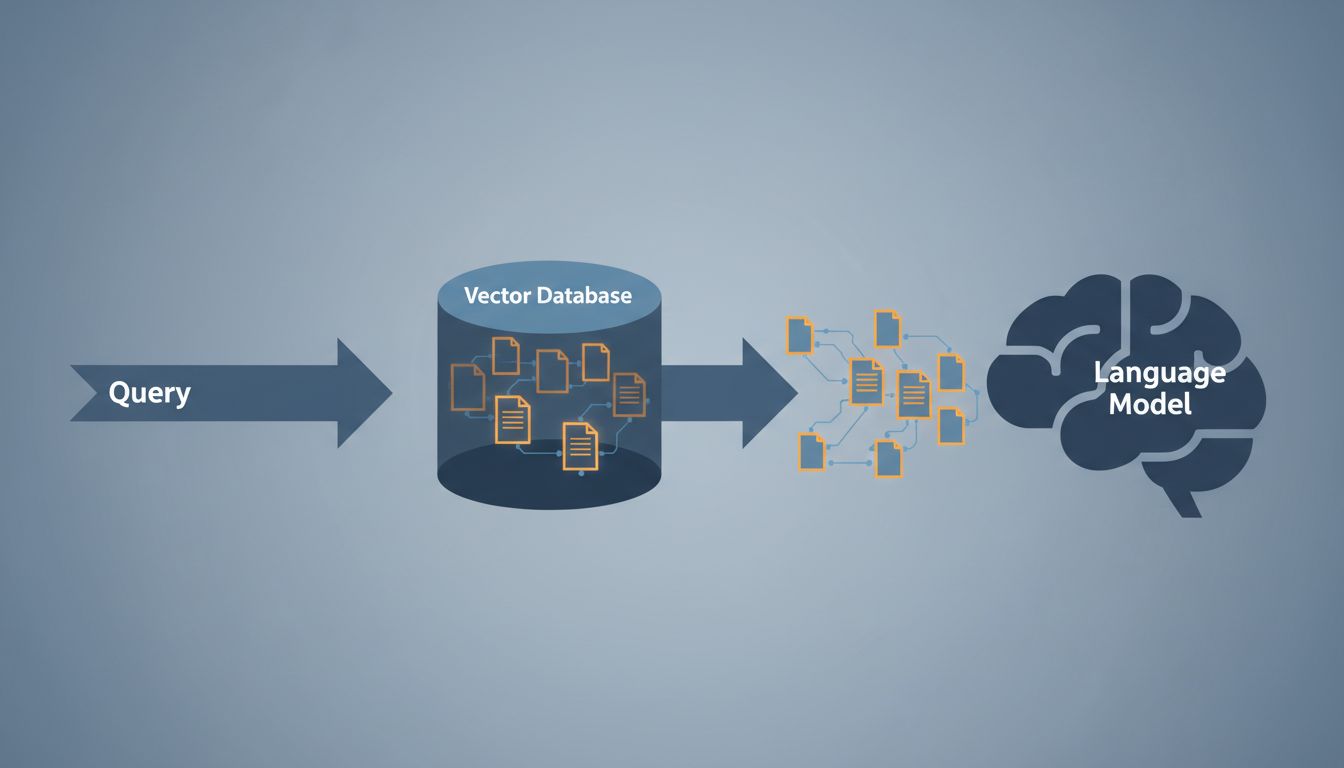
For anyone building serious applications on top of LLMs, this points toward a design principle: push as much of your critical logic as possible into layers that are model-agnostic. Retrieval, structured data, rule-based post-processing, deterministic validation. The model handles what it’s genuinely good at (reasoning over context, generating natural language), and the scaffolding around it handles correctness guarantees. RAG architectures are partly appealing for exactly this reason: they shift the factual grounding responsibility into a layer you control.
What This Means in Practice
The practical upshot is not to stop using prompts or to distrust LLMs. It’s to treat prompt-based integrations with the same engineering rigor you’d apply to any external dependency that can change without warning.
Specifically: pin your model versions in production and have a plan for migration before the deprecation notice arrives. Write eval suites that test against your actual success criteria, not the model’s self-assessment. Version your prompts in source control like code, not in a shared doc someone will forget about. Build output handling defensively, validating structure and catching unexpected formats before they propagate downstream. And when a model update does change your outputs, treat that investigation the same way you’d treat a dependency upgrade that changed behavior: read the changelog, run your tests, compare outputs on a representative sample before promoting to production.
The deeper shift is psychological. The prompt that works is not proof that you understand the model. It’s proof that you found a useful pattern in the current version of that model. Useful patterns are worth having. Just don’t mistake them for a foundation.