Retrieval-Augmented Generation has become the default answer to a very specific complaint: LLMs make things up. Companies bolt on a vector database, pipe in some document chunks, and declare the hallucination problem solved. It isn’t. RAG is a real and useful technique, but the problem it fixes is much narrower than the problem most teams are actually experiencing.
Let me explain what RAG actually does, and then we can talk about what it doesn’t.
What RAG Actually Does
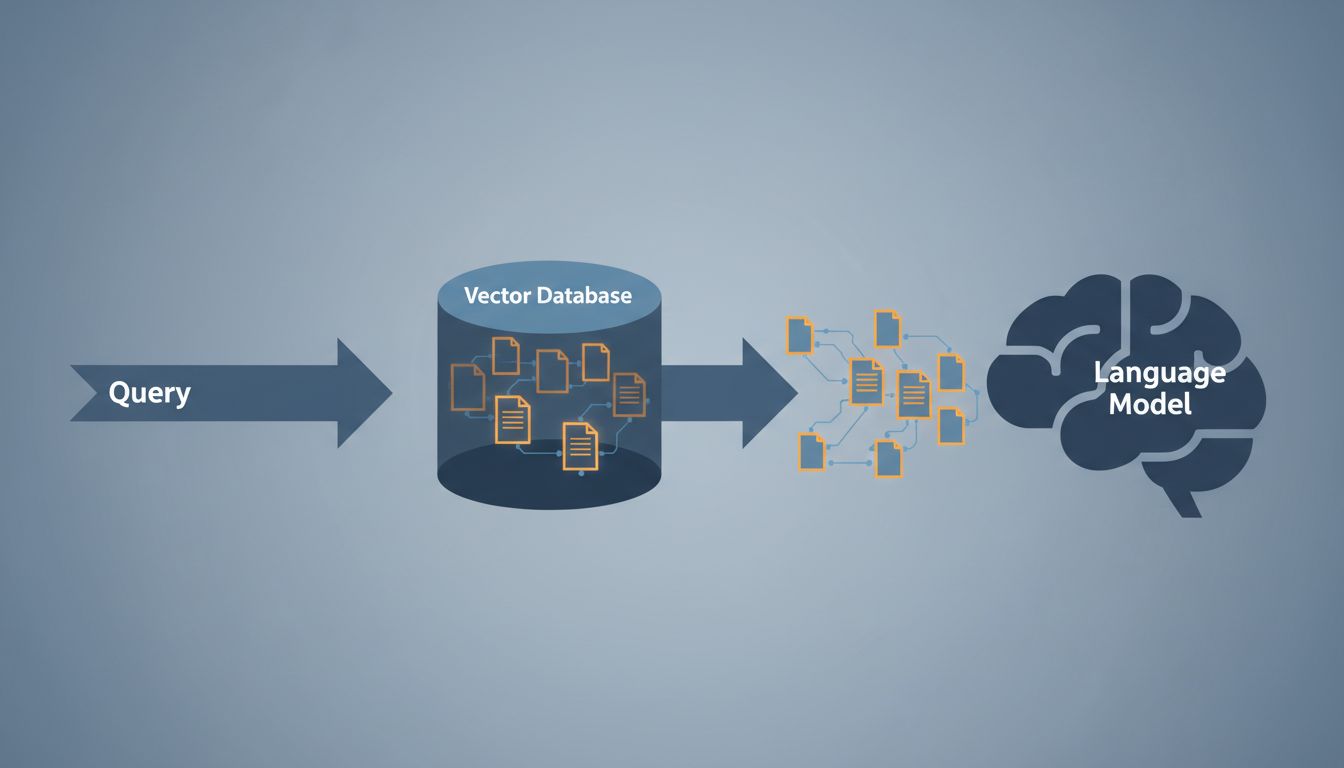
The core mechanic is straightforward. When a user submits a query, you convert that query into a vector embedding (a numerical representation of meaning in high-dimensional space), then search a pre-indexed store of your own documents for chunks that are semantically similar. Those chunks get stuffed into the prompt alongside the question, and the model generates its response using that retrieved context as a reference.
Think of it like giving an open-book exam instead of a closed-book one. The model can consult sources rather than relying purely on what it learned during training. This is genuinely useful for a narrow but important class of problems: questions where the correct answer exists in a specific document you own, and where you can trust the model to read and summarize that document accurately.
Internal knowledge bases are a good example. If someone asks “what’s our reimbursement policy for international travel,” and that policy is in a PDF that gets embedded and indexed, RAG will usually surface the right answer. The model doesn’t need to have memorized your HR handbook during pretraining. It just needs to read the relevant passage.
The Problems RAG Doesn’t Touch
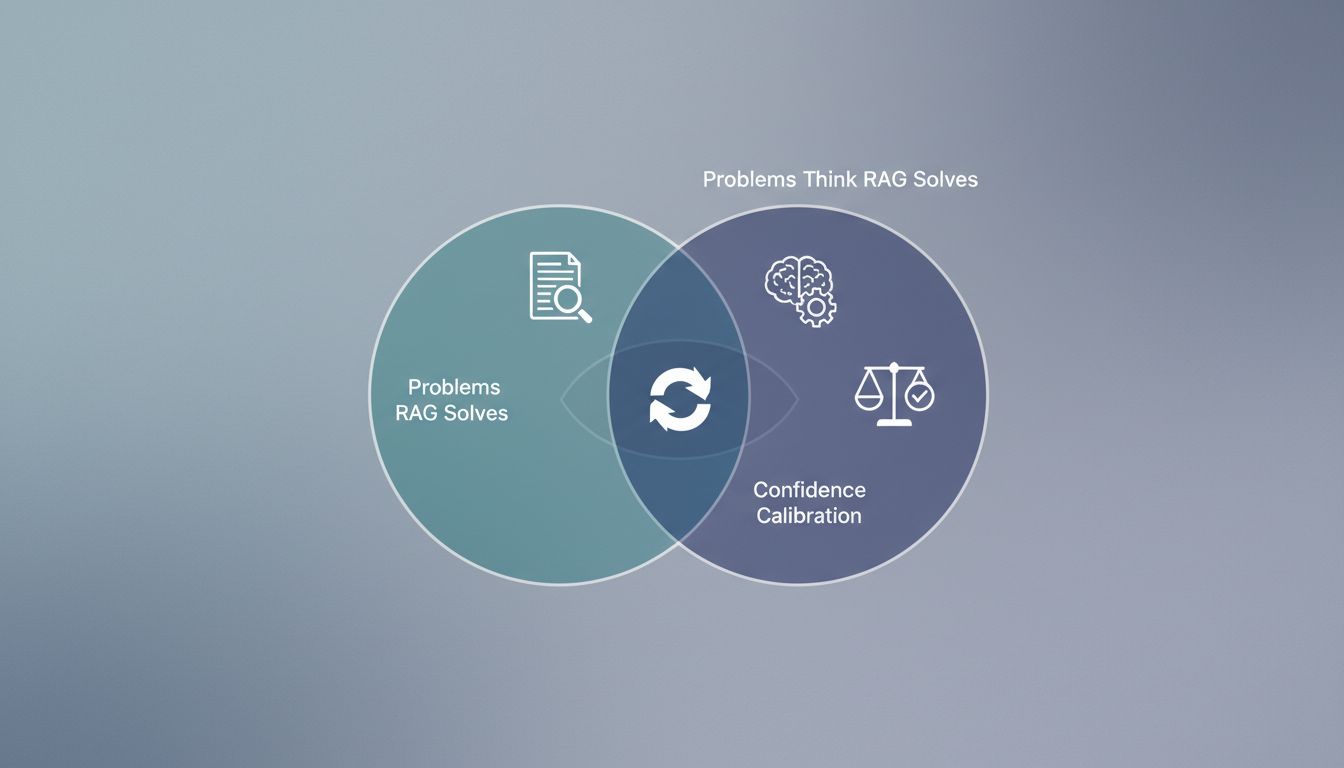
Here’s where the trouble starts. RAG fixes the case where the model lacks information. It does almost nothing about the case where the model misreads, misweights, or misapplies information it’s been given.
If you retrieve the right document chunk but it’s ambiguous, the model will still confidently resolve that ambiguity in whatever direction its training biases pull it. If you retrieve three chunks that partially contradict each other, the model will synthesize them into something that sounds coherent but may not be. Retrieval doesn’t make the model a better reasoner. It just changes what raw material the bad reasoning operates on.
There’s also a retrieval failure mode that gets underestimated. The quality of what you retrieve depends entirely on whether the query embedding and the document embedding end up close together in vector space. Semantically similar doesn’t always mean contextually relevant. A user asking about “performance issues” in a software context might retrieve chunks about employee performance reviews if your document corpus contains both. The model then writes a very confident, very wrong answer using that content.
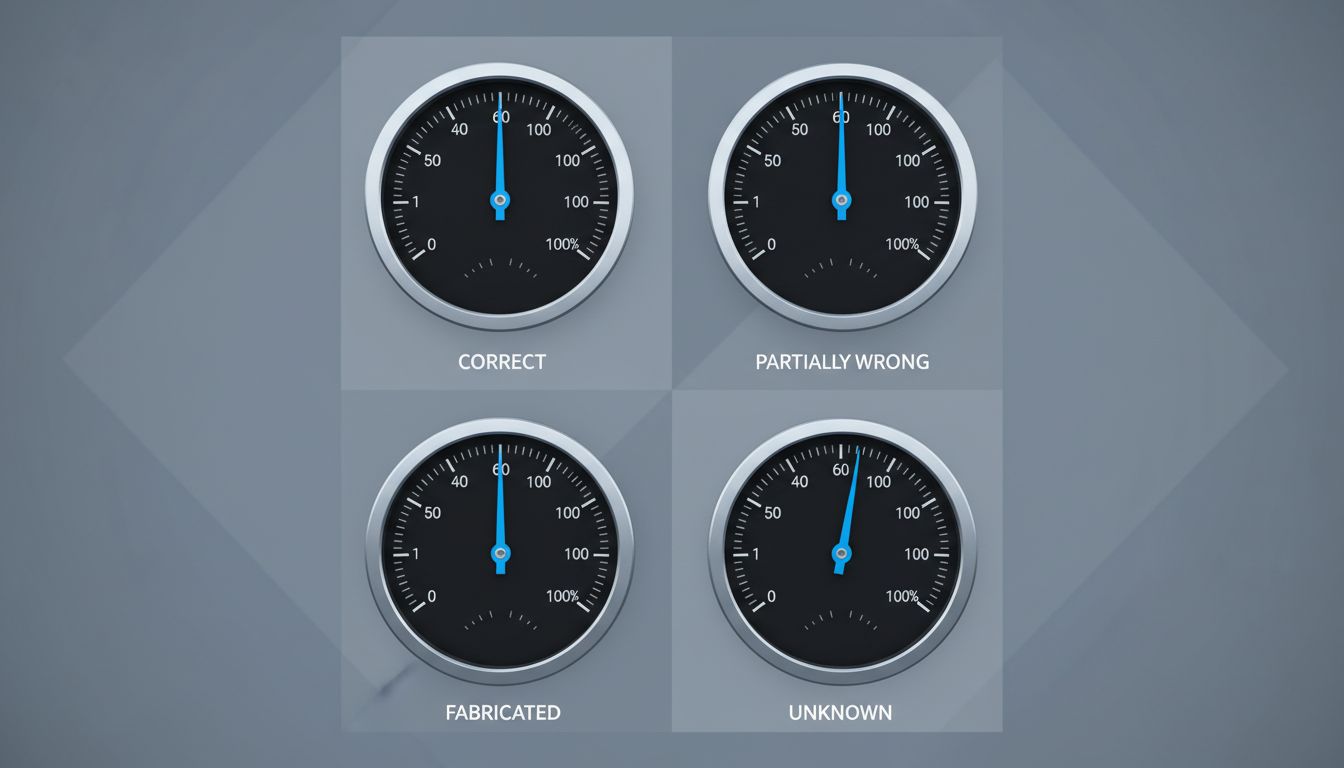
The confidence problem is distinct from the information problem, and it’s worth taking seriously. As covered in Why AI Confidence Tells You Nothing About Accuracy, the fluency of a model’s output is a terrible proxy for its accuracy. RAG doesn’t change this. A model with retrieved context still produces equally fluent wrong answers when the retrieval goes sideways.
The Architecture Gets Complicated Fast
Teams that implement RAG in production quickly discover that the hard part isn’t the retrieval. It’s everything around it. Chunking strategy matters enormously: too small and you lose context, too large and you fill the prompt with noise. Metadata filtering, re-ranking retrieved results, handling queries that span multiple documents, deciding what to do when retrieval returns nothing useful. All of this requires engineering judgment and ongoing maintenance.
The index also rots. Documents change. Policies get updated. Old chunks that were accurate six months ago are now wrong, and you need a pipeline to detect and re-index them. What starts as a “just connect it to a vector database” project turns into a small data engineering operation.
None of this means you shouldn’t do it. It means you should budget for it honestly.
The Counterargument
The strongest version of the pro-RAG case is this: for knowledge-intensive enterprise applications, RAG meaningfully reduces hallucination rates on factual questions about domain-specific content. That’s true, and it matters. Customer support systems, internal documentation tools, and compliance-adjacent applications have all seen real improvements from RAG implementations.
Fair enough. But the companies getting value from RAG are, on inspection, using it for a tightly scoped retrieval task: find the right document, surface the relevant passage, let the model paraphrase it. They’re not using it to make the model smarter about reasoning, causality, or multi-step inference. When teams try to use RAG to fix those problems, they’re disappointed.
The technique is being oversold as a general solution to LLM unreliability when it’s actually a specific solution to LLM ignorance of private or recent information.
What You Actually Need to Fix the Rest
The broader problem, that LLMs reason poorly under uncertainty and present their outputs with unjustified confidence, requires different interventions. Structured output validation. Explicit uncertainty quantification. Constrained generation pipelines that force the model to cite its sources and flag when it’s interpolating versus retrieving. Smaller, fine-tuned models for specific domains where you can actually test and verify behavior. Human review for anything that matters.
RAG is one tool. It belongs in a larger system that treats model outputs as drafts requiring verification, not as answers requiring formatting. The teams building reliable AI products understand this. They use RAG where it fits and don’t expect it to carry weight it wasn’t designed to bear.
The hallucination problem isn’t solved. We have better tools for a subset of it. That’s worth being precise about.