The Simple Version
When an AI tool shows you a confidence score, like “87% confident,” that number is not a calibrated probability. It is an output of the same prediction process that generated the answer, and it can be just as wrong as the answer itself.
What the Score Actually Is
Large language models do not work like a doctor estimating odds of a diagnosis from years of case data. They generate text token by token, predicting the most likely next word given everything that came before. The “confidence” many interfaces display is typically derived from the model’s internal probability distributions over those token predictions.
Here is the catch: a model can assign high probability to a fluent, coherent, completely wrong answer. Fluency and factual accuracy are different things, and the model is optimized for the former far more directly than the latter. This is why AI systems confidently cite papers that do not exist, invent legal precedents, and produce plausible-sounding statistics with no basis in reality. The confident tone is not a bug in those cases. It is the system working exactly as designed.
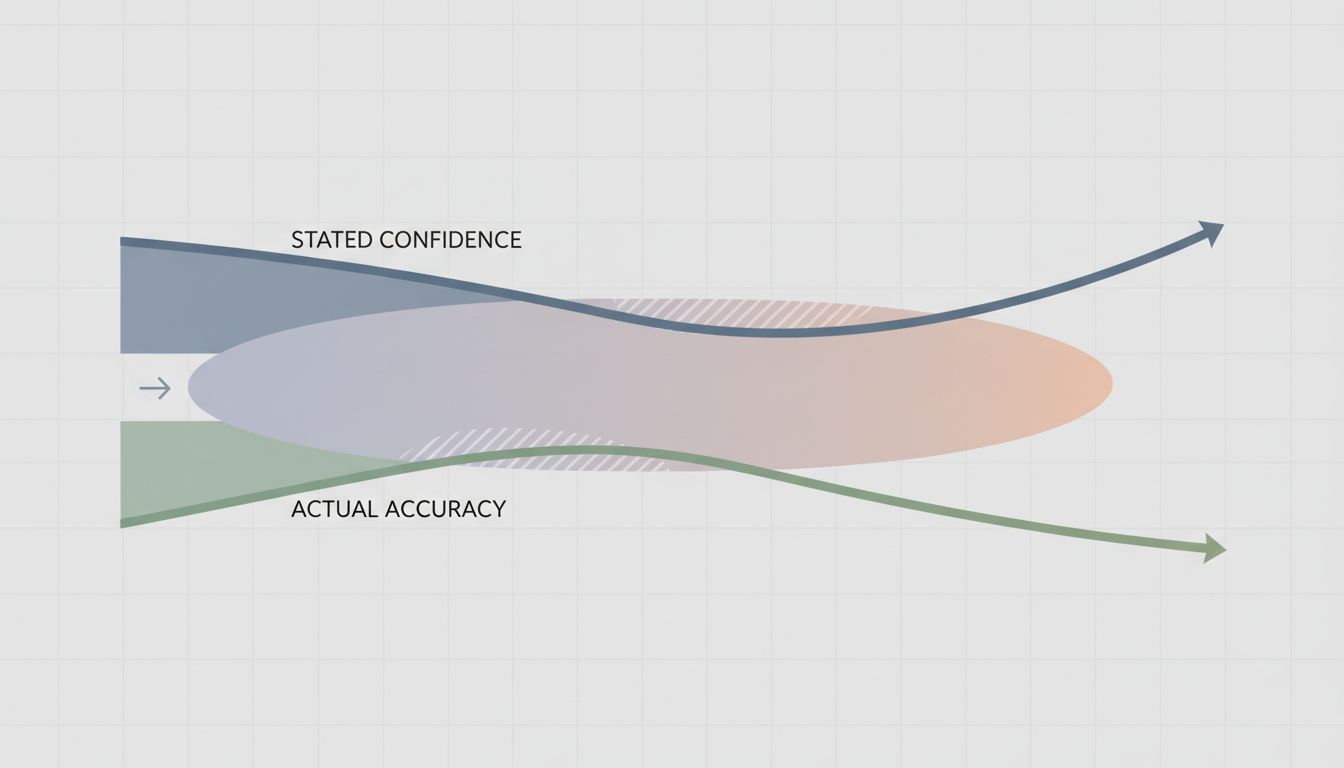
Researchers call this calibration, and it measures how well a model’s stated confidence matches its actual accuracy rate. A perfectly calibrated model that says “I’m 80% confident” should be right 80% of the time across many such statements. Most large language models are poorly calibrated, especially outside the domains they were most heavily trained on.
Why the Number Looks Real
There is a deeper problem here beyond just inaccurate percentages. The confidence score is presented in a context that makes it feel meaningful. Interfaces use progress bars, decimal places, color gradients from red to green. These are design choices that signal precision. A number formatted to two decimal places reads as measured, not estimated.
Humans are not well-equipped to resist this. We treat numbers as more objective than words, which is often reasonable in daily life. A bridge rated for 40,000 pounds has been engineered to that specification. A medication with a 73% efficacy rate comes from a clinical trial. Numbers in those contexts carry real epistemic weight because they were derived through specific processes designed to produce calibrated estimates.
AI confidence scores carry none of that infrastructure. The number emerges from the same prediction machinery as the answer. Asking the model how confident it is and asking it for the answer are not two separate, cross-checking processes. They are iterations of the same process.
This is related to a broader problem in how AI outputs get interpreted. As we noted in “AI Summarizers Miss the Parts That Actually Matter”, the format of AI output shapes how seriously we take the content, often independently of whether the content deserves that seriousness.
Where This Breaks Down in Practice
Low-stakes use cases absorb this problem reasonably well. If an AI drafting tool assigns high confidence to a sentence that turns out to be awkward, you read it, notice it is awkward, and fix it. The confidence score was useless, but no harm done.
High-stakes use cases are different. Medical information retrieval, legal research, financial analysis, security assessments: these are domains where people are adopting AI tools quickly and where the confidence score is most likely to influence decisions made by people who cannot easily verify the output themselves. A nurse using an AI assistant to look up drug interactions and seeing “92% confidence” has almost no way to know that number reflects fluency, not verified accuracy.
This is not hypothetical risk. Lawyers have submitted AI-generated briefs citing nonexistent cases, a pattern documented in several court proceedings since 2023. In each case, the AI produced the citations with the same confident tone it uses for citations that do exist. No score was going to flag the difference.
What Would Actually Help
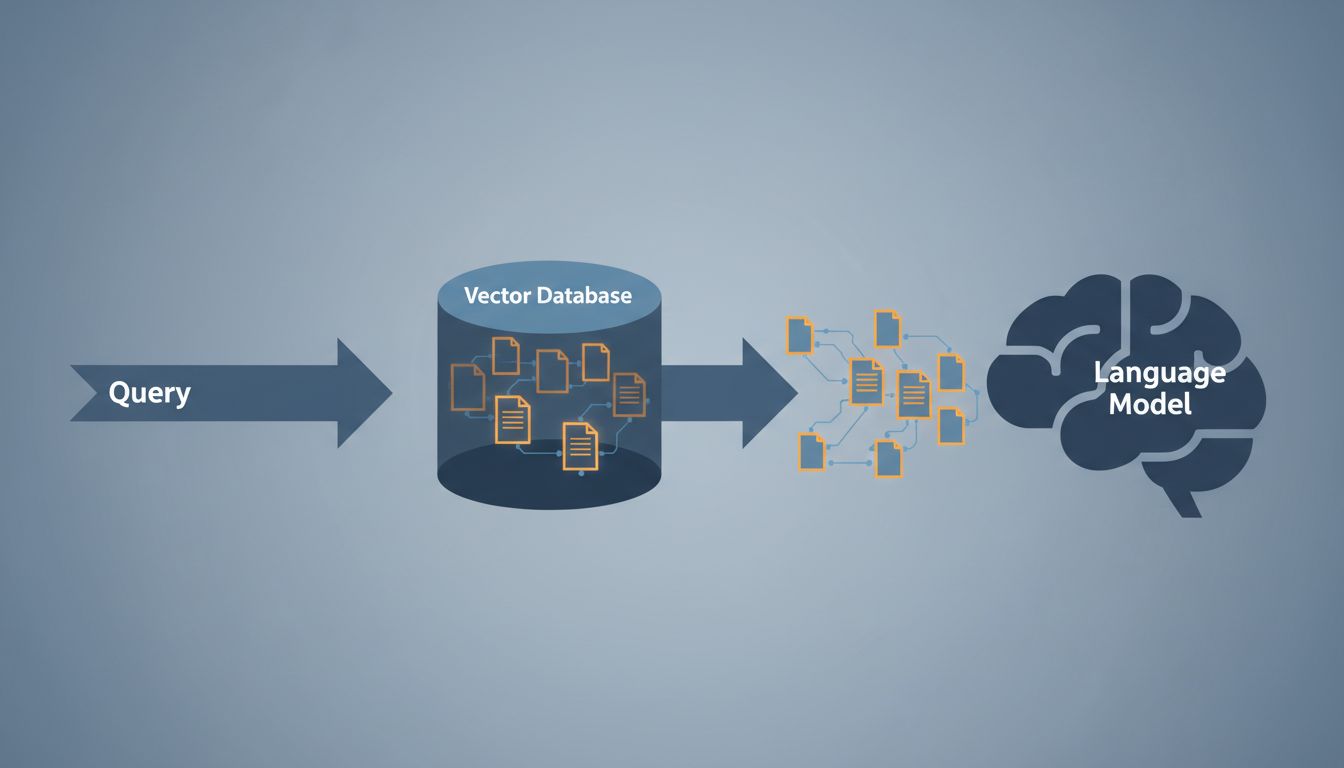
Better calibration is a real research goal and there is genuine progress. Techniques like temperature scaling and Reinforcement Learning from Human Feedback (RLHF) can improve alignment between stated confidence and actual accuracy. Some models are trained with explicit uncertainty estimation in mind. Retrieval-augmented generation, where the model grounds its answers in retrieved documents rather than parametric memory alone, reduces the hallucination rate substantially and makes the confidence concept more defensible because you can inspect the source.
But these improvements are partial, domain-dependent, and still rarely communicated clearly to end users. The confidence score displayed in a consumer product almost never comes with a calibration curve, a domain qualifier, or a note about what process generated it.
The practical advice is blunt: treat AI confidence scores as loosely correlated with quality at best, and verify anything consequential through a separate source. The score should function like a prior, not a verdict. High confidence narrows the field of things worth checking first. It does not replace checking.
And if a system does not show you where it got its answer, the confidence score is doing even less work than you think. A number without a source is decoration.
The Real Signal
Confidence scores persist because they make users feel more comfortable, and comfortable users engage more. That is a product incentive, not an accuracy incentive. The number is partly a UX feature.
The honest version of AI uncertainty would look messier. It would say things like “this answer is based on patterns in training data and I have no way to verify it against current reality” or “I generate plausible text, not verified facts, and this domain is one where I am frequently wrong.” Some newer systems are moving in this direction with more explicit uncertainty language. Most are not.
Until calibration is taken as seriously as capability, and until interfaces are designed to communicate genuine uncertainty rather than performed confidence, the best policy is to treat the score as noise. Not because AI tools are not useful. They are. But their usefulness comes from how you integrate them into a verification workflow, not from trusting the number they put next to the answer.