
A founder I know spent six months building a feature her three most vocal customers asked for. She shipped it. They loved it. Two months later, she had four new signups and seventeen cancellations. The cancellations had nothing to do with the feature. They had everything to do with what she’d ignored while building it.
The customers who stay are lying to you. Not maliciously — they just aren’t motivated to tell you hard truths. They’ve adapted to your product’s limitations. They’ve built workarounds. They’ve accepted the parts that frustrate them because the switching cost isn’t worth it yet. They represent a kind of survivorship bias you can’t see unless you deliberately look for its opposite.
The customer who almost cancelled, or who actually did cancel, is the one who hit your product’s real ceiling. They’re the one who felt your weaknesses with enough force to act. That makes them more valuable than almost any other signal in your business.
Retention metrics hide product problems
A healthy retention curve is a comfortable thing to look at. It feels like validation. The problem is that healthy retention can persist even when your product is fundamentally broken for the people who most need it to work. You’ll keep the customers who have low demands, high tolerance, or nowhere better to go — right up until a competitor shows up and takes them all at once.
When a customer churns, they’ve done something difficult. They’ve weighed the cost of leaving against the cost of staying and decided your product wasn’t worth the friction. That decision contains more information about your product’s real problems than a hundred NPS surveys from customers who checked “mostly satisfied” because it was the easiest box to click.
The complaint you don’t hear is the dangerous one
Most customers who are unhappy don’t tell you. They just leave. Research on customer behavior consistently shows that the majority of people who stop using a product never complain directly, they simply disappear. The ones who do complain, loudly and specifically, are a gift. They’re doing the work of articulating something that a much larger silent group felt and never said.
This is why the loudest customer is not always steering you off a cliff. Sometimes they’re the only one with the energy to tell you the truth. The skill is in distinguishing between a customer screaming about their specific edge case and a customer articulating a real structural flaw. Both types complain. Only one is pointing at something that matters to the whole market.
Churn interviews are brutally efficient
Most founders don’t do exit interviews because they’re uncomfortable. You’re asking someone who rejected you to explain why. The instinct is to avoid that conversation, or to send an automated survey that lets you process the data from a safe distance.
Do the interviews instead. Call them. Ask one question: what made you leave, and what would have had to be true for you to stay? Then stop talking.
The answers will not be polite. Some will be irrelevant — budget cuts, company pivots, reasons that had nothing to do with your product. But a pattern will emerge, usually faster than you expect, and that pattern will tell you something your retained customers never will. It will tell you where your product breaks for people who actually pushed it.
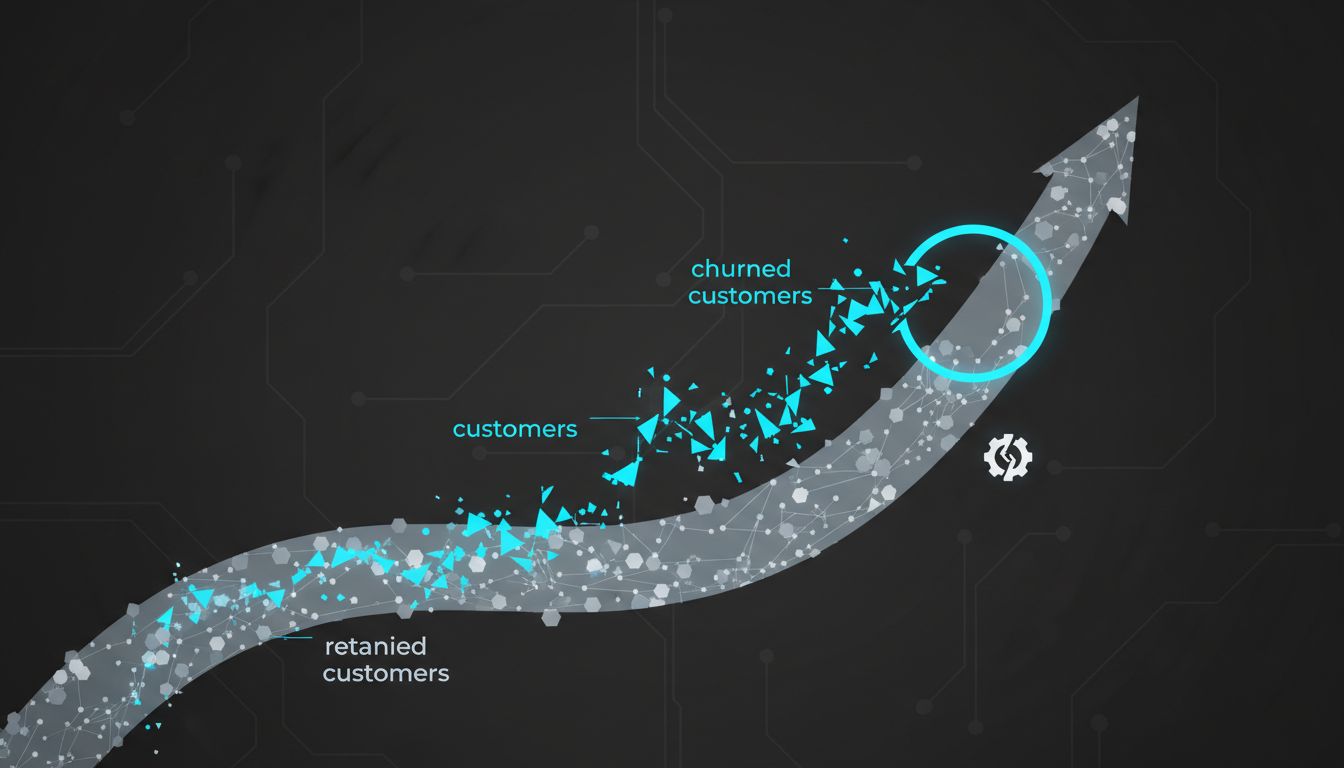
The customers who stayed adapted to your limitations
Here’s the part that’s hard to accept: your best customers may have the worst judgment about what your product needs to become. They’ve built their workflows around your constraints. They’ve stopped noticing what’s broken because they fixed it themselves with spreadsheets or manual steps or sheer habit. Ask them what to build and they’ll describe an incrementally better version of what already exists.
The customer who left, especially the one who left for a competitor, has done something valuable. They’ve told you what better looks like. They’ve shown you the gap between what your product is and what the market will eventually demand. If you can get specific about why they left and where they went, you have a roadmap that your current customers are constitutionally unable to give you.
The counterargument
The obvious objection is that churn data is noisy. Some customers leave for reasons that have nothing to do with product quality, and over-indexing on outliers is how you end up building the riskiest thing first for the wrong reasons. If you chase every churned customer’s complaints, you’ll end up building for the people you couldn’t keep instead of the people you can.
This is fair. Churn interviews require judgment, not just collection. You’re looking for patterns across many exits, not instructions from a single unhappy user. A single customer who left because your UI wasn’t blue enough is noise. Twelve customers who left because they couldn’t integrate with a tool you don’t support is a decision you need to make.
The argument isn’t that churned customers are always right. It’s that they contain signal your retained customers are structurally incapable of providing. Both data sources matter. Most founders ignore one of them entirely.
The honest version of your product roadmap
Every startup has a version of its product that its best customers love and its churned customers found inadequate. Most roadmaps are built entirely from the first group’s input. That’s why so many products get refined into something polished and limited — optimized for people who already decided to stay, invisible to everyone else.
The customer who almost killed your startup by leaving, or who threatened to and meant it, is the one who saw your ceiling clearly. They’re the one who needed something your product couldn’t provide and cared enough to say so before they walked out the door. You should be talking to them more than almost anyone else.