In the summer of 2016, a small team at HubSpot spent several weeks rebuilding how the company displayed and enforced its pricing tiers. The project looked, from the outside, like a routine infrastructure task. Clean up the billing logic, make the pricing page load faster, tighten the feature flags. The kind of work that rarely makes it into a company all-hands.
The results were not routine. By separating feature access more cleanly across tiers and surfacing upgrade prompts at the moments users hit plan limits, HubSpot increased upgrade conversions measurably without changing the underlying price points or the product itself. The lever was the architecture of how pricing was communicated and enforced.
This story, repeated in various forms at Slack, Dropbox, Notion, and nearly every SaaS company that has scaled past its early growth phase, points to an underappreciated truth: the engineers who build and maintain pricing infrastructure are among the most economically consequential people in the building. They are almost never treated as such.
The Setup
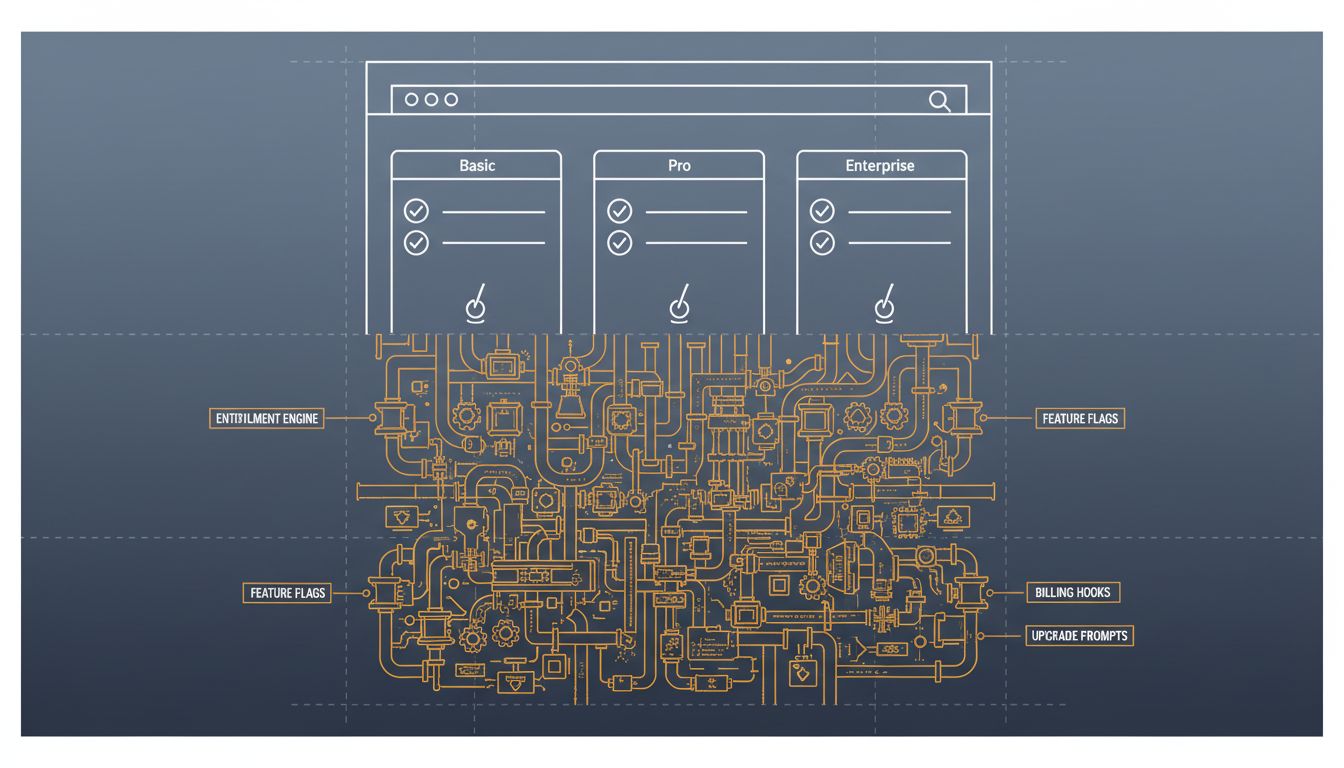
SaaS pricing pages look simple. A few columns, some checkmarks, a highlighted middle tier. What sits underneath is considerably more complicated. Every pricing page is enforced by billing logic, feature flags, entitlement systems, upgrade flows, trial management, and plan migration paths. Each of those systems is an engineering product that can be built well or built badly.
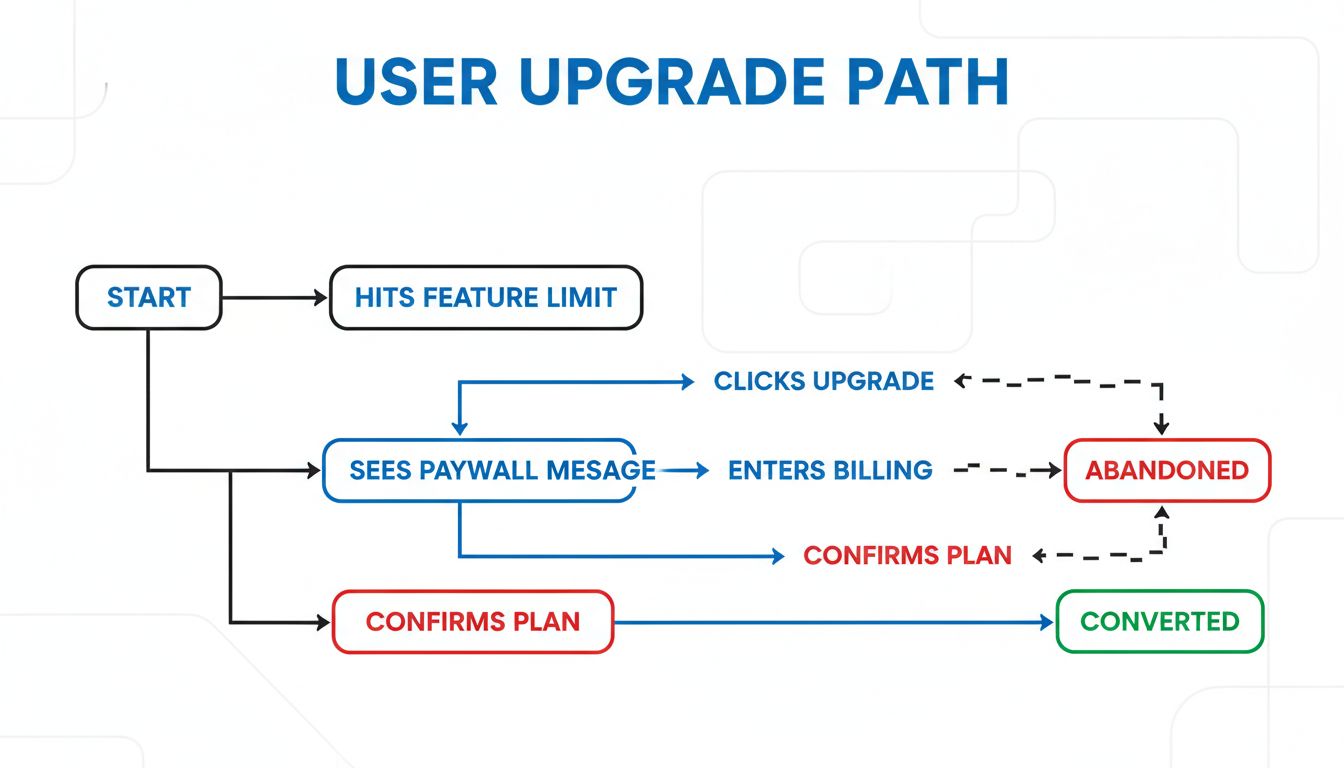
Built badly, they create friction at the exact moment a user is ready to pay more. A trial user hits the limit on a feature, gets a vague error message, and tries to find the upgrade path. The path requires a support ticket. They cancel instead.
Built well, they deliver the right message at the right moment, make upgrading take thirty seconds, and give the billing team the flexibility to run pricing experiments without filing an engineering request every time.
The difference between these two outcomes is not a product decision or a marketing decision. It is an engineering decision.
What Happened at Slack
Slack’s pricing architecture became a case study in the value of building this infrastructure thoughtfully from the start. The company’s freemium model, which allowed teams to use Slack indefinitely but limited message history and integrations, required a billing system precise enough to track per-seat usage across workspaces, enforce limits gracefully rather than abruptly, and convert free teams into paying customers without creating animosity.
The “fair billing” feature Slack introduced, which automatically credited accounts for deactivated users mid-cycle, was not a pricing strategy invented in a boardroom. It required engineers to build per-seat accounting down to the day, prorate credits automatically, and surface that behavior transparently in the billing UI. It was a technical implementation of a business insight: customers would pay more comfortably if they felt they weren’t being exploited on inactive seats.
Slack’s net revenue retention consistently ran above 120 percent during its growth years, meaning existing customers spent more over time without Slack needing to acquire new ones. A meaningful portion of that expansion revenue flowed through billing and entitlement systems that had been built to make upgrading easy and limit friction.
Why the Leverage Is So High
The economic logic is straightforward once you see it. An engineer building core product features affects revenue indirectly, through the quality and retention implications of better software. An engineer building pricing infrastructure affects revenue directly. Every upgrade flow they improve, every limit-hit moment they handle gracefully, every experiment they make possible without a deployment touches the company’s top line.
The math compounds quickly. If a SaaS company has 50,000 accounts on a free or entry-level plan and the upgrade conversion rate is 4 percent, every percentage point improvement in that rate is 500 new paying customers. At even a modest average contract value, that is material revenue from a project that might take two engineers six weeks.
Compare that to the same two engineers spending six weeks on, say, improving search latency by 40 milliseconds. The search improvement matters. Users notice it, and it probably reduces churn at the margins. But it does not touch revenue as directly or as measurably as pricing infrastructure does.
The reason this leverage goes unrecognized is partly organizational. Pricing infrastructure sits at an uncomfortable intersection of product, engineering, and finance. Nobody owns it cleanly, so nobody champions it loudly. It gets treated as plumbing.
What We Can Learn
Companies that figure this out tend to do a few specific things differently.
First, they assign dedicated engineering ownership to billing and entitlement systems rather than treating them as shared infrastructure anyone can modify. Stripe, which built an entire business on the argument that payments infrastructure deserves serious engineering attention, is the obvious proof of concept. The companies that use Stripe well internally tend to treat their own billing logic with similar rigor.
Second, they instrument pricing flows as carefully as they instrument product features. If your analytics track every click in the product but you have no visibility into where users abandon the upgrade flow, you are flying blind on your highest-leverage funnel. Most companies have this backward: exhaustive product telemetry, minimal billing telemetry.
Third, they build pricing infrastructure that gives non-engineers leverage. A pricing system that requires an engineering deploy every time the growth team wants to test a new tier structure is a bottleneck that costs money. A system with flexible plan configuration, experiment support, and clean entitlement APIs lets the business move faster without engineering becoming the rate limiter.
The broader point is about where economic value actually originates in a software company. It is tempting to think the answer is the product itself, the core features users come for. But a feature that is difficult to discover, locked behind a confusing pricing tier, or accessible only through an upgrade flow that takes ten minutes is a feature that is not fully monetized.
Pricing infrastructure is the system that converts product value into actual revenue. Engineers who build it well are not doing plumbing. They are doing one of the most economically precise jobs in the company. The ones who understand that tend to be the ones doing work that never makes it onto anyone’s task list.
The companies that recognize this first will have a structural advantage over those that keep treating billing as an afterthought. Not because pricing infrastructure is glamorous, but because revenue is.