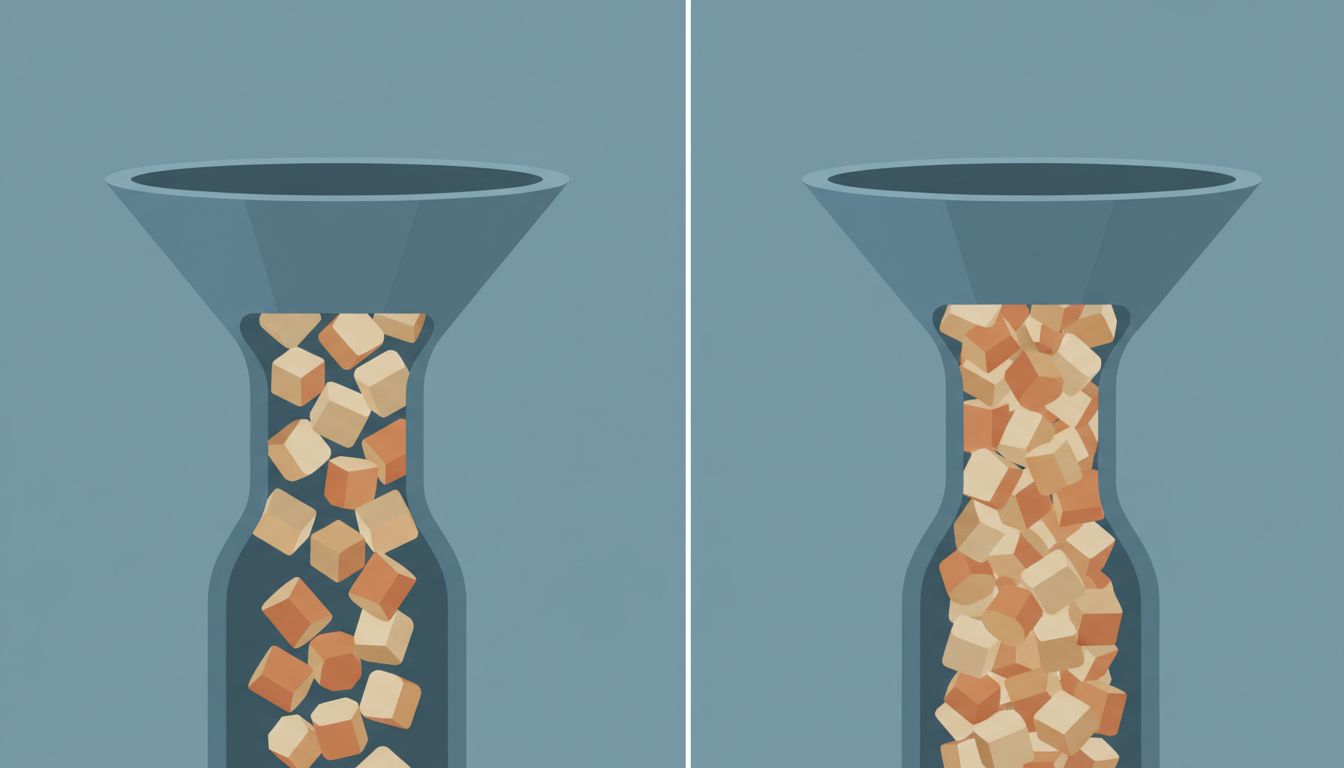

The Problem With Task Lists Is That They Only Hold What You Already Know
Your task list is a record of decisions that have already been made. Someone identified a problem, broke it into steps, and wrote those steps down. The list is the output of thinking, not the thinking itself.
This is fine for most operational work. If you’re shipping a feature, onboarding a client, or preparing a quarterly report, a checklist is exactly the right tool. You’ve done this before. The path is known. Execute.
But there’s a whole category of work that never makes it onto the list, not because it’s less important, but because it hasn’t been defined yet. Noticing that a team dynamic is quietly degrading. Recognizing that your product strategy has drifted from what customers actually need. Seeing that the process you built six months ago is now causing more friction than it prevents. This work requires you to step outside the list entirely, and most productivity systems give you no mechanism for doing that.
The result is a subtle but serious trap. You stay busy, you clear tasks, you feel productive, and meanwhile the things that would actually move you forward sit unnamed and unaddressed.
Why Undefined Work Gets Systematically Ignored
There’s a reason this happens. Your brain prefers defined tasks over undefined ones. Checking off “schedule Q3 review meeting” releases a small dopamine hit. Sitting with the vague, uncomfortable question of “is our Q3 review process actually useful” releases nothing. It just makes you feel unsettled.
Task management tools reinforce this. They’re built around completion. An item either exists (open) or doesn’t (done). There’s no state for “I need to spend unstructured time thinking about whether this is even the right direction.” So that kind of work never gets added in the first place.
Calendars make it worse. When your day is structured around meetings and time blocks for specific deliverables, anything that doesn’t fit a slot gets squeezed out. The work that needs open, unhurried thinking, the kind where you’re not sure what you’re looking for until you find it, has nowhere to live. You might tell yourself you’ll do it when things calm down. Things don’t calm down.
This compounds over time. The longer you defer undefined work, the more invisible it becomes. The team dynamic doesn’t just degrade, it calcifies. The product drift doesn’t just continue, it becomes the new default. Undefined problems don’t wait patiently. They accumulate.
The Two Types of Work You’re Actually Managing
It helps to name the distinction clearly so you can plan for both.
Execution work is everything with a known path. Tasks, meetings, deliverables, processes. Your task list handles this. It should handle this. Don’t try to fix what isn’t broken.
Discovery work is everything where the path is unknown, or where you’re not even sure you’ve identified the right problem yet. Scanning for weak signals in a project. Rethinking a constraint you’ve accepted as fixed. Noticing patterns across conversations with customers. Asking whether a goal you’re working toward still makes sense.
Most knowledge workers spend 95% of their structured time on execution and almost none of it on discovery, not because discovery is unimportant but because it requires a different kind of scheduling and a different kind of output. You can’t point to a completed discovery task the way you can point to a sent email.
The people who consistently do their most important work have usually figured out, often without naming it this way, that discovery needs protected time. Not a to-do item. Protected time.
How to Schedule Work That Isn’t Defined Yet
You can’t put undefined work on a task list, but you can build structures that surface it. Here’s what actually works.
Schedule thinking time as a recurring calendar block. Not “work on strategy” but literally an unstructured block where your only job is to notice things. Call it whatever you want. The label matters less than the protection. Treat it like a meeting you can’t reschedule. Two or three times a week, ninety minutes each, is enough for most people to start catching what they’ve been missing.
Keep a running “tensions” list, separate from your task list. When something feels off but you can’t articulate it yet, write it down anyway. “The Slack channel for that team seems quieter than usual.” “Client seemed less enthusiastic on that call.” “We keep solving this same problem.” These aren’t tasks. They’re signals that deserve attention before they become obvious. Review this list in your thinking time and see what’s grown.
Do regular strategy audits. Pick one thing you’re working toward, a goal, a project, a process, and ask whether it still deserves the resources you’re giving it. Not whether it’s on track, but whether it should exist in its current form. This is uncomfortable because it can surface the answer “we should stop this,” which means admitting sunk cost. Do it anyway.
Talk to people outside your immediate loop. Customers, adjacent teams, people who’ve left your organization. They see things your task list can’t show you. One conversation with a churned customer often contains more useful signal than a month of internal status updates.
What Getting This Right Actually Looks Like
The goal isn’t to eliminate your task list or to replace structured work with vague reflection. It’s to make sure your structured work is pointed at the right things, and that you have a reliable mechanism for checking.
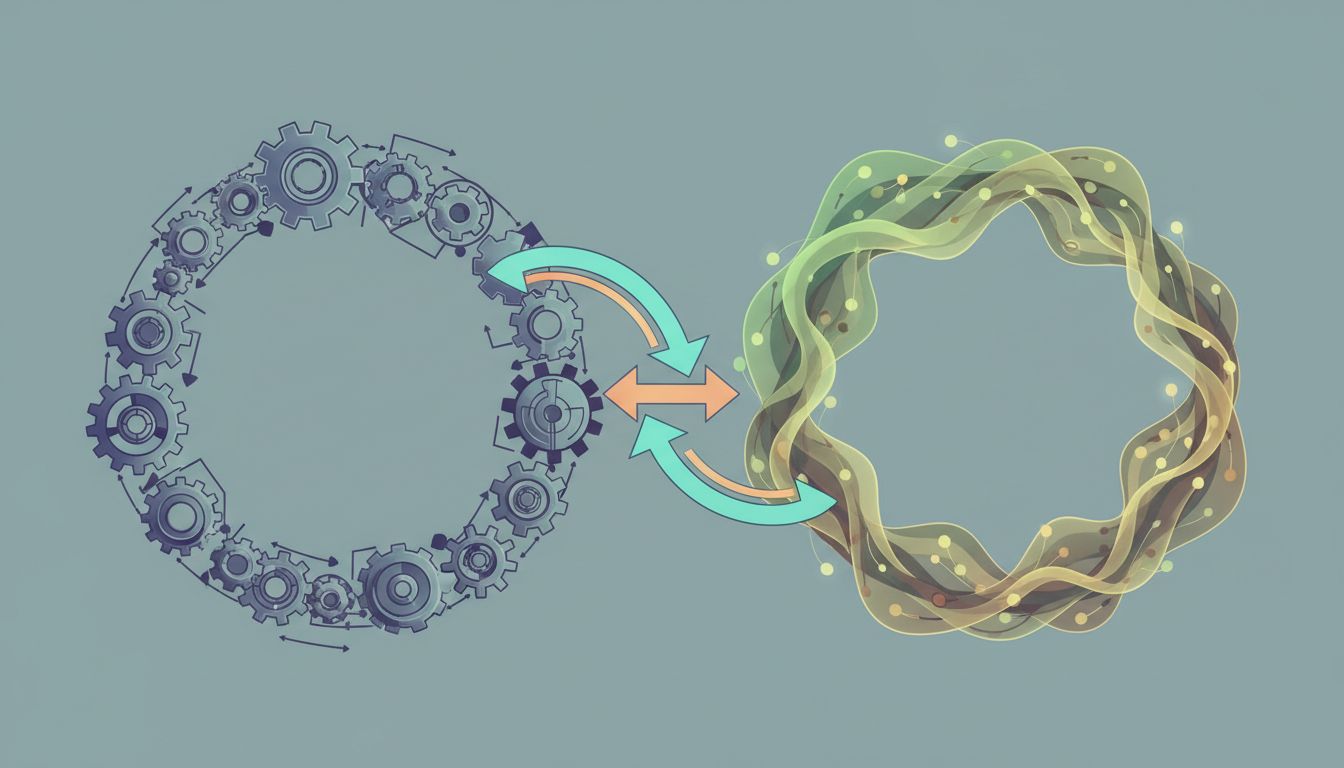
Think of execution and discovery as two systems that need to stay in conversation. Your task list tells you what you’re doing. Your discovery time tells you whether you’re doing the right things. If the two systems never interact, you end up with a very well-organized effort pointed in the wrong direction. Your second brain might look productive and still be collecting the wrong inputs.
Practically, this means a weekly habit where you step back from the list and ask: what is this week’s work in service of, is that still the right goal, and what am I not seeing? Ten minutes of honest reflection here is worth more than a perfectly prioritized backlog.
It also means being honest about which type of work you’re avoiding. For most people, it’s discovery. It’s harder, the feedback loop is longer, and you can’t check it off. But this is exactly why it needs deliberate protection rather than hoping you’ll get to it eventually.
The Productivity Trap Hidden in Your Own System
Here’s the uncomfortable truth: the more efficient your task management system is, the easier it is to stay entirely within it. A frictionless productivity system can actually make you worse at your job if it trains you to only work on what’s already been defined.
This is different from the usual critique of over-organizing. The issue isn’t that your productivity system is too elaborate. It’s that even a simple, well-run system creates a closed loop if you’re not intentional about what it can’t contain.
You probably already have a sense of the important work that isn’t on your list. The thing you keep meaning to think through. The question you’ve been avoiding. The pattern you’ve noticed but haven’t acted on. That vague unease about whether you’re spending your time on the right things is not background noise. It’s signal. The practical move is to stop treating it like something you’ll address when you have more room, and start treating it like work that deserves a slot on your calendar.
What This Means in Practice
Start this week. Block ninety minutes, put it on your calendar as a non-negotiable recurring event, and use it only for thinking rather than executing. During that time, review your tensions list, audit one goal or process, and ask yourself what you’re not seeing. Do this for a month and notice what surfaces.
Your task list will still be there. It will still need doing. The point isn’t to abandon execution, it’s to make sure your execution is connected to something worth executing on. The most important work you do is often the work that makes the rest of the list make sense.