
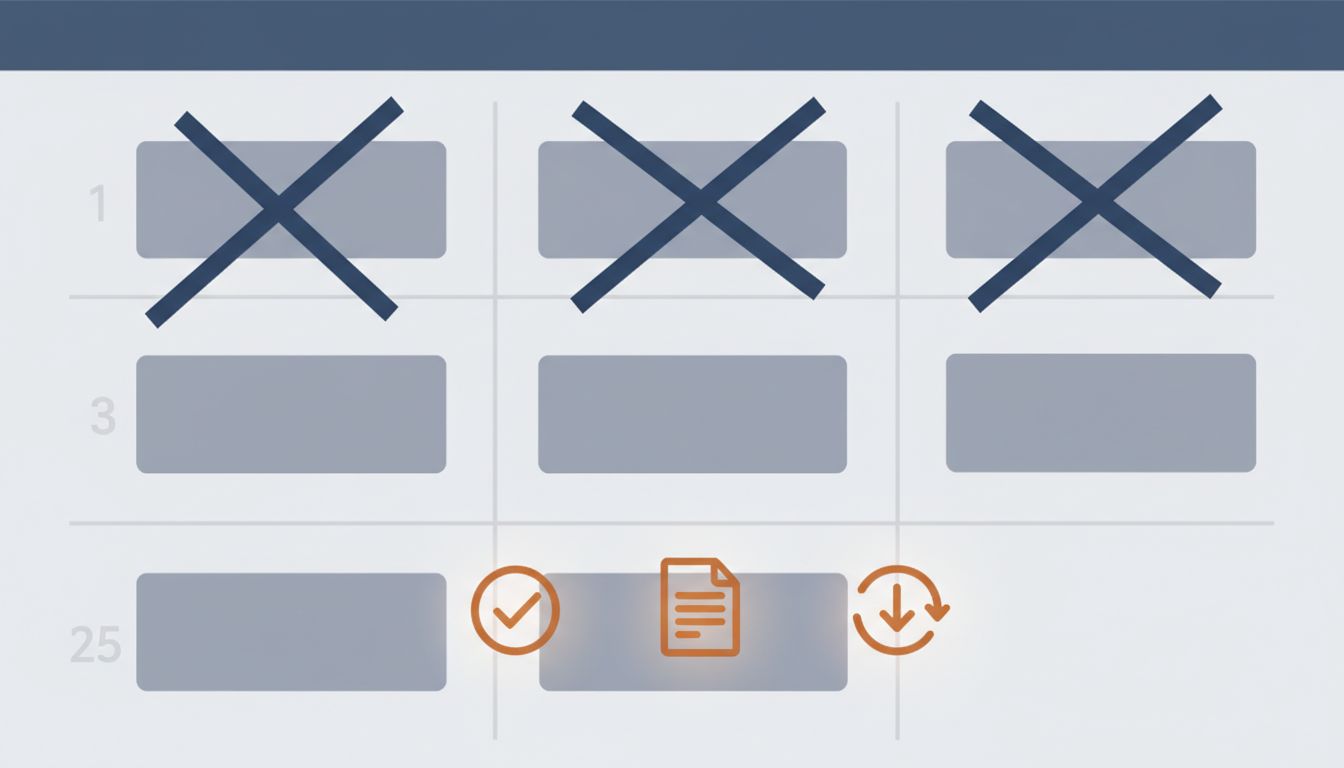
Most productivity advice about meetings focuses on how to run them better. Tighter agendas, shorter durations, fewer attendees. That’s fine advice, but it misses a more useful question: should this meeting exist at all?
The answer, more often than you’d expect, is no. And the evidence isn’t subtle. You’ve felt it yourself: the meeting you dreaded all morning that produced nothing actionable, versus the 20 minutes you protected for focused work that actually moved something forward. The canceled meeting isn’t a failure. It’s frequently the better outcome.
Here’s why that’s true, and how to build cancellation into your workflow as a deliberate tool rather than an apology.
1. Every Meeting Has a Hidden Attendee Cost
When you schedule a one-hour meeting with five people, you’re not spending one hour. You’re spending five, plus the fragmentation cost on either side of it. Cal Newport’s research on context switching documents this clearly: the damage isn’t the time in the meeting, it’s the cognitive wind-up and wind-down that surrounds it.
This means a 30-minute sync that interrupts a morning of deep work might cost two hours of productive output across the team, even if the meeting itself felt efficient. When you cancel that meeting, you’re not just saving 30 minutes. You’re returning a much larger block of usable attention to everyone involved.
Get in the habit of multiplying headcount by duration before you book anything. If that number feels uncomfortable, that’s the point.
2. The Agenda Is a Proxy for Whether the Meeting Should Exist
A meeting without a clear agenda isn’t just poorly organized. It’s a signal that the underlying need hasn’t been defined yet. And if the need isn’t defined, the meeting can’t actually address it.
Try this test before any meeting you’re about to schedule: write one sentence describing the specific decision or output the meeting will produce. Not “discuss the Q3 roadmap” but “decide which two features get cut from Q3 to hit the launch date.” If you can’t write that sentence, you’re not ready to meet. You might need a document, a shared thread, or just more thinking time first.
This isn’t gatekeeping for its own sake. It’s recognizing that a lot of meetings are actually attempts to think out loud in front of an audience, and that’s an expensive way to think.
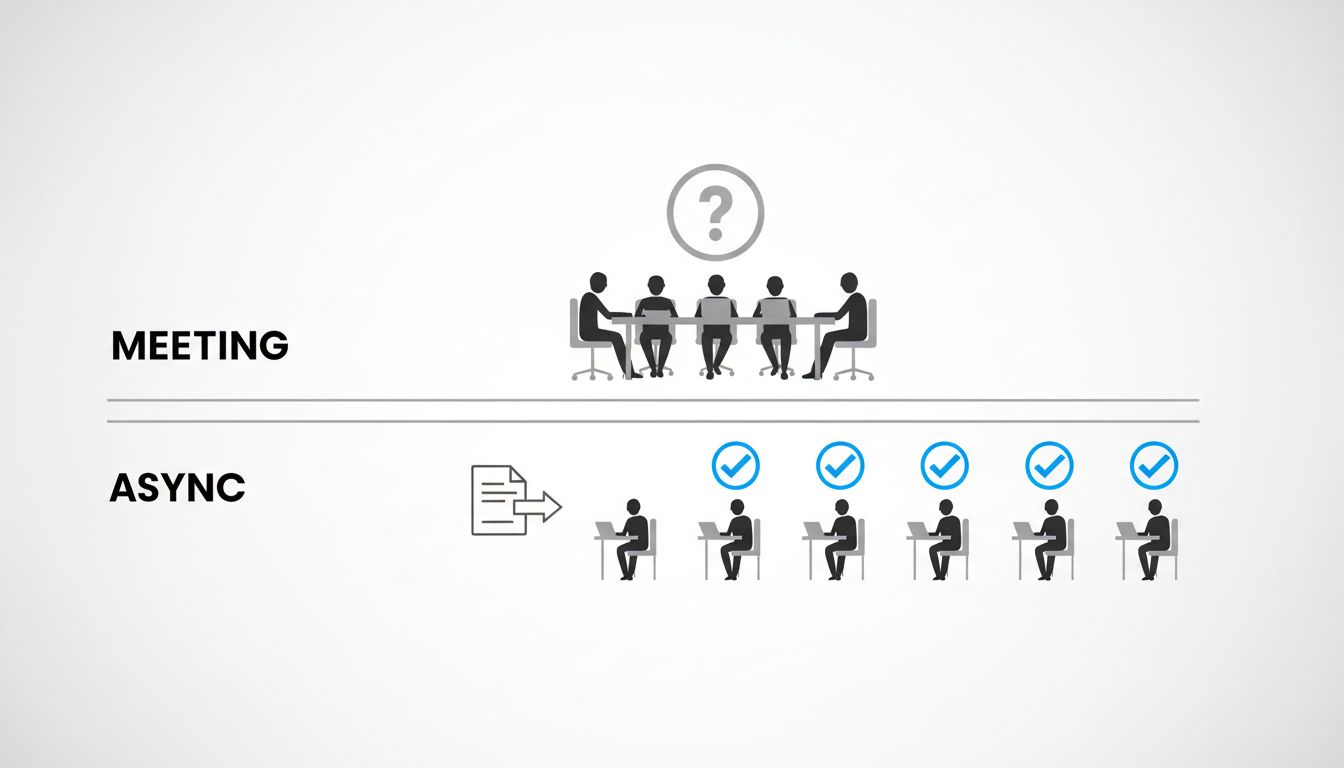
3. Async Often Produces Better Decisions Than Real-Time Discussion
Real-time conversation has a bias toward the loudest and fastest thinkers in the room. The person who processes information slowly, or who needs to check a figure before committing, gets steamrolled by whoever speaks first with confidence.
When you replace a meeting with a well-structured written proposal or shared document, you give everyone time to think before responding. The quality of input tends to go up. Dissenting views that would never get voiced in a group setting appear in writing. You also create a record, which every meeting should have but most don’t.
This doesn’t mean async solves everything. Complex interpersonal issues, negotiations, and situations where tone matters benefit from real-time conversation. But status updates, decision reviews, and information sharing almost always work better in writing.
4. Canceling Builds Trust Instead of Eroding It
There’s a common fear that canceling meetings signals disorganization or disrespect. In practice, the opposite is usually true. When you cancel a meeting because you’ve realized the problem can be solved with a two-paragraph email, you’re telling your colleagues that you value their time and that you’ve thought about whether gathering them was actually necessary.
What erodes trust is the recurring meeting that everyone dreads but nobody cancels, the weekly sync that became a ritual rather than a tool. Killing that meeting, even if it’s been on the calendar for two years, is often a relief to everyone. You just have to be the one willing to say it.
The teams that cancel meetings freely tend to have higher baseline trust in each other, not lower. Because they’re demonstrating continuously that they won’t waste each other’s time without reason.
5. The Best Meeting Is One That Follows a Decision, Not Precedes It
Most meetings are framed as decision-making forums. In practice, most decisions have already been shaped before anyone enters the room, by whoever wrote the pre-read, whoever set the agenda, whoever had the informal hallway conversation beforehand.
If that’s true, which it usually is, then the meeting isn’t where the decision happens. It’s where the decision gets ratified or surfaced. Which means you can often compress or skip it entirely if the decision process has been done well upstream.
Flip the model. Do the real work before the meeting: circulate a clear recommendation, collect async responses, note where genuine disagreement exists. Then either cancel the meeting because consensus emerged, or hold a shorter, sharper meeting focused only on the actual points of contention. You’ll spend less time in rooms and make better decisions.
6. Cancellation Is a Skill, Not an Exception
The goal isn’t to cancel meetings whenever possible. It’s to hold meetings only when they’re clearly the right tool. That means building a small decision framework you apply consistently.
Before any meeting you schedule or accept, ask three questions: What specific output does this meeting produce? Could that output happen without the meeting? Who actually needs to be there for that output to be valid?
If your answers are “unclear,” “probably,” and “fewer than half the invite list,” you have your answer. Cancel it, or at minimum, redesign it.
This approach takes some discipline at first, especially in organizations where meeting attendance is conflated with engagement. But once people experience the alternative, they rarely want to go back. Your to-do list has the same problem meetings do: it’s optimized for adding items, not for protecting your capacity to do real work. Treat your calendar the same way you’d treat that list. Question every entry. Earn its spot.