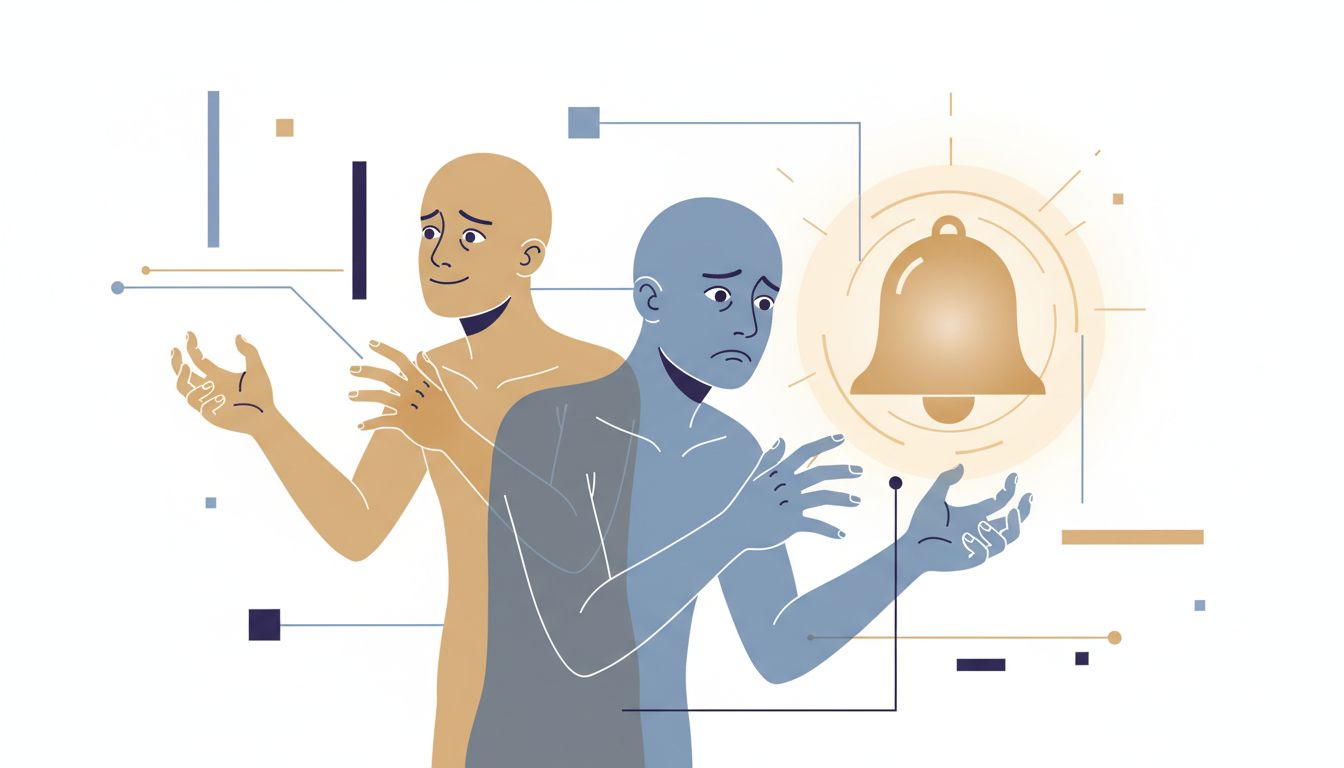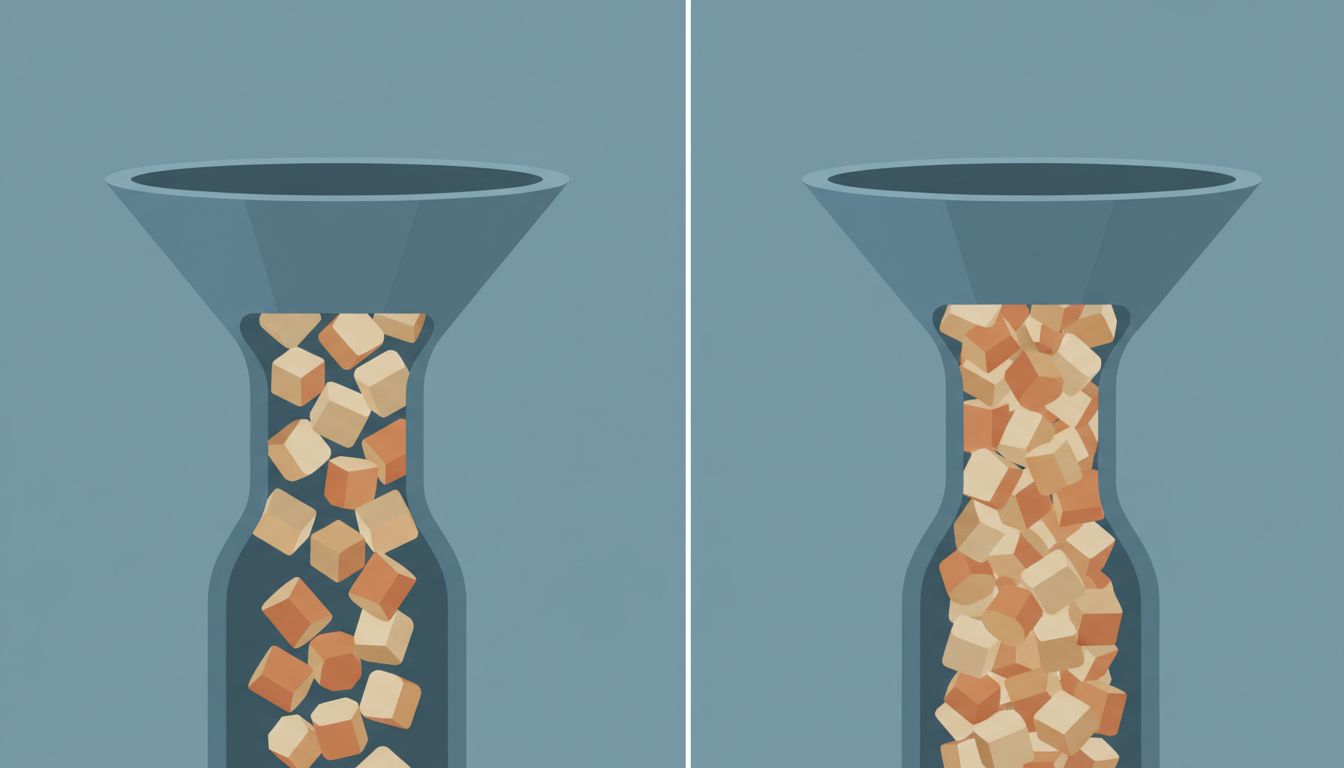

Every productivity framework treats context switching as a scheduling problem. You switch tasks, you lose 23 minutes getting back on track (a figure from Gloria Mark’s research at UC Irvine), and so the solution is to batch your tasks and protect your calendar. This framing is not wrong, exactly. It’s just aimed at the wrong target.
The real damage from context switching isn’t the time you lose. It’s the kind of thinking that never happens at all.
Shallow work is easy to resume. Deep work isn’t.
There’s a difference between picking up where you left off and picking up where you were going. When you’re composing a routine email or closing a ticket you already understand, interruption is mostly a time tax. You can reload the context and finish.
But some thinking doesn’t work that way. Designing an architecture that accounts for six competing constraints. Debugging a failure mode that only appears under specific conditions. Writing an argument that actually holds together. These tasks require you to hold a complex, fragile mental structure in place while you work on it. Interrupt that structure and you don’t just lose time, you lose the structure. You come back to a pile of notes that used to be a half-formed insight, and you rebuild from scratch, less ambitious than before because you’re not sure where the ambitious version was going.
This is the real cost. Not minutes. Mental altitude.
Your brain optimizes for what it gets practice finishing.
Habitual context switching doesn’t just interrupt good thinking. It trains you out of it. When you spend months fielding Slack messages, jumping between browser tabs, and joining quick syncs, your brain gets very efficient at short-horizon tasks. It learns to scan, triage, and respond. These are genuinely useful skills. But they crowd out the capacity for sustained inquiry.
Researchers studying attention have documented this pattern: people who frequently multitask show worse performance on tasks requiring sustained focus, even when they’re not multitasking. The habit reshapes the baseline. You’re not just distracted in the moment. You’ve made it harder to not be distracted.
If you want to do hard thinking, you need to practice hard thinking. That means creating conditions where your brain gets to finish something complex often enough to stay good at it.

The problems that matter most require connected thinking.
Most high-value work, whether it’s technical, strategic, or creative, requires you to see connections across a wide field of information. You need to hold multiple constraints in mind simultaneously and notice when they conflict. You need to follow a line of reasoning far enough to discover whether it actually holds.
This is exactly the kind of thinking that context switching prevents. Not because it takes too long to resume, but because connection-finding requires continuity. The insight that resolves a hard problem often comes from a pattern you notice on lap three through the same material, not lap one. If you only ever run one lap before getting pulled away, you collect observations that never synthesize.
This is why the slower engineer is often the more valuable one. The person who disappears into a problem for four hours and surfaces with a clean solution has done something fundamentally different from the person who spent those same four hours visibly responsive and technically busy.
The counterargument
Some work genuinely requires responsiveness. If you’re a support engineer, an incident commander, or managing a team through a crisis, being available isn’t a productivity failure. It’s the job. And for roles where work is inherently modular, the fragmentation cost is lower.
There’s also something to the argument that forced context switching occasionally produces unexpected connections. Stepping away from a stuck problem and letting it process in the background is a real phenomenon. But this is different from a calendar full of 30-minute context switches. Stepping away is deliberate. Being interrupted is not. One involves returning to the problem with fresh perspective. The other involves never going deep enough to have perspective worth returning to.
The claim here isn’t that focus is always better than responsiveness. It’s that most knowledge workers dramatically underestimate how much they’ve sacrificed in the hard-thinking column, because the sacrifice doesn’t show up as lost minutes. It shows up as problems that stayed hard longer than they should have, and ideas that didn’t quite arrive.
What to do about it
The practical fix is not complicated, though it does require some protection of your schedule. Block time specifically for work that requires connected thinking, and treat that block differently from other focus time. No email, no Slack, no “quick questions.” The goal isn’t silence for its own sake. It’s creating enough continuity that your thinking can actually go somewhere.
Pay attention to which problems you keep not solving. If something has been on your list for weeks and you’re smart enough to solve it, the issue is probably not intelligence. It’s that you’ve never given yourself four uninterrupted hours to actually sit with it.
Canceling a meeting to think is not laziness. It’s often the highest-leverage decision you can make on a given day.
Context switching costs you time, yes. But what it really costs you is the version of your work that could only exist if you’d gone deep enough to get there.