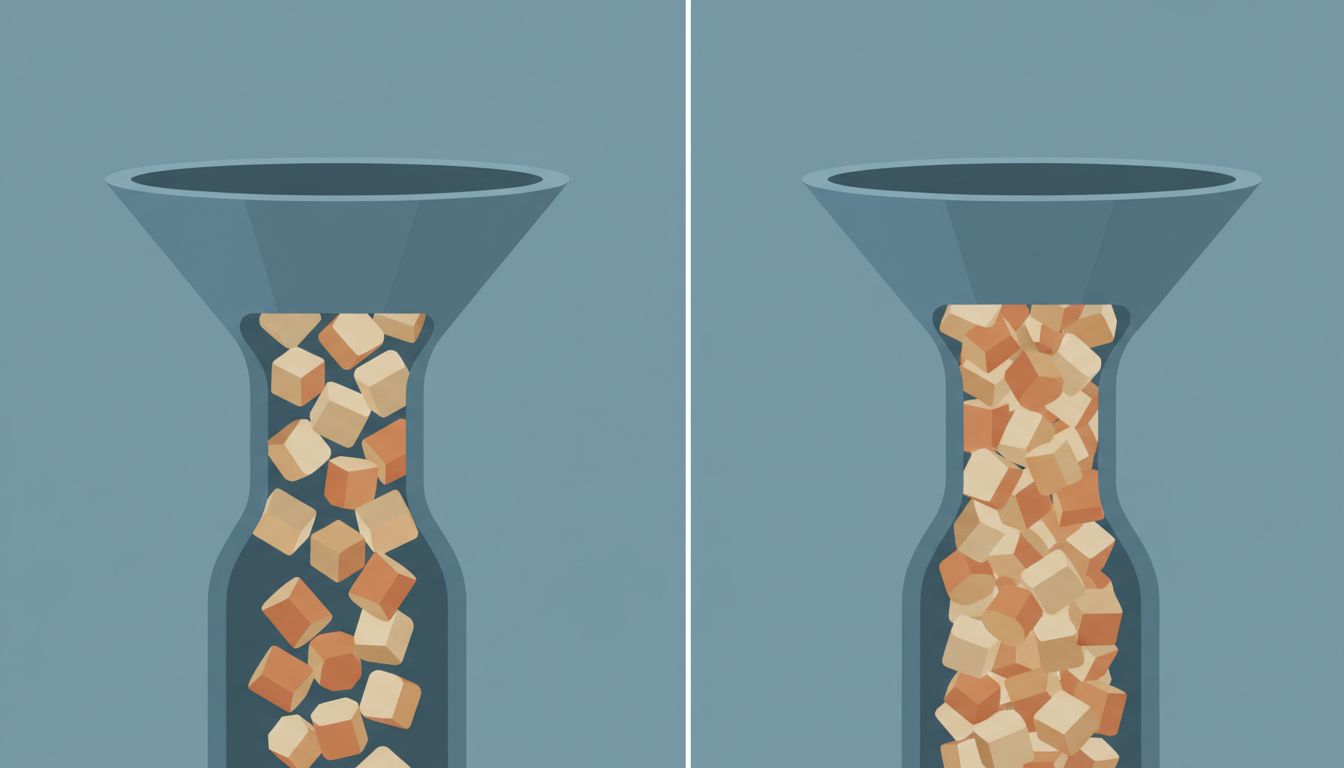

Most productivity advice focuses on the meetings you attend. Which ones to decline, how to run them tighter, how to end on time. That’s all fine, but it misses something more interesting: the conversations that never got scheduled are often doing the real work.
This isn’t about “culture” or “vibes.” It’s a structural observation about how decisions actually get made and how work actually moves. If you pay attention to the informal communication happening around your formal calendar, you’ll find things worth acting on.
1. Decisions Get Made Before the Meeting, Not During It
If you’ve ever walked into a meeting and sensed that something was already settled, you weren’t imagining it. The decision often happened in a Slack thread that morning, a hallway conversation the day before, or a quick call two people had before anyone sent a calendar invite.
Formal meetings, especially in larger organizations, tend to ratify decisions rather than generate them. The actual deliberation happened somewhere unscheduled, probably between two or three people who had enough shared context to cut through the ambiguity fast. What you’re attending is often the documentation step.
The practical implication: if you want to influence a decision, waiting for the meeting is too late. You need to find where the real conversation is happening and get into it earlier. That means being reachable informally, not just in scheduled blocks.
2. Unscheduled Conversations Move Faster Because They Have No Agenda
A meeting agenda is a useful fiction. It signals seriousness and helps people prepare. But it also freezes the conversation in advance, before anyone knows exactly what the conversation needs to be. You end up spending ten minutes on the third agenda item when the second item raised a more urgent issue nobody anticipated.
An informal conversation has no such constraints. Two people connect, figure out what the actual problem is, and stop when it’s resolved. There’s no sunk cost from a 30-minute block. There’s no social pressure to get through the list. The conversation is shaped entirely by what’s useful, not by what someone typed into a calendar invite two days ago.
This doesn’t mean you should abolish agendas. It means you should notice which problems are getting solved without them, and ask yourself whether those problems were actually suited to a scheduled meeting in the first place.

3. The People Who Seem Plugged In Are Usually Just Available
You know the person in your organization who always seems to know what’s going on? They’re not necessarily smarter or more connected than you are. They’re almost always just more accessible in unscheduled ways. They respond to quick messages promptly. They’re willing to hop on a five-minute call. They don’t require a calendar invitation to have a conversation.
This creates a compounding information advantage. Because they’re easy to reach informally, they get looped in early and often. They accumulate context. They become the person others bring problems to, which means they hear about things before those things become official. It looks like influence, and it is, but the source of it is availability, not status.
If you feel like you’re missing information that others seem to have, the fix is usually not more meetings. It’s being easier to reach in the spaces between them.
4. Calendar Density Is a Terrible Proxy for Productivity
A fully-booked calendar creates a powerful illusion. It feels like evidence of importance and output. In practice, it often signals the opposite: you’ve become so scheduled that the informal, generative conversations can’t find you. The work gets done around you, not with you.
Research on how engineers actually spend time has consistently found that context-switching between meetings is one of the most expensive things a knowledge worker can do, not because of the time lost in transition, but because of the thinking capacity that evaporates. Context switching doesn’t just steal time, it steals the quality of your best thinking. A day with six meetings and six gaps isn’t a productive day with six interruptions. It’s a day where real thinking probably didn’t happen at all.
Calendar density optimizes for being present and accounted for. It’s a visibility strategy, not a productivity strategy. The people generating the most actual output are usually the ones who’ve protected some unstructured time where they’re reachable but not committed.
5. Asynchronous Communication Creates Its Own Informal Layer
Remote and hybrid work shifted a lot of informal conversation into Slack, Teams, and their equivalents. The hallway conversation became a DM. The quick desk-side question became a voice message. This wasn’t a degradation of informal communication, it was a transformation of it, and it introduced something the hallway never had: a record.
The informal asynchronous layer in most companies is now dense with actual work. Product decisions get hashed out in thread replies. Engineers debug collaboratively in public channels. Someone drops a question into a channel at 9pm and wakes up to four answers. None of this appears on anyone’s calendar, but it’s load-bearing.
The risk is that this layer becomes invisible to people who aren’t in it. If you’re managing a team and only seeing what happens in scheduled meetings, you’re missing a significant portion of how the work actually moves. Worth spending some time reading the threads, not to surveil, but to understand where decisions are actually forming.
6. Protecting Informal Time Is a Scheduling Decision
Here’s the actionable part. If informal conversation is doing real work, you have to protect space for it, which means treating unscheduled time as intentional, not as the leftover fragments between commitments.
This looks different depending on your role. For individual contributors, it might mean blocking two mornings a week where you’re available for quick conversations but not in formal meetings. For managers, it might mean proactively being present in async channels during a specific window, or doing informal check-ins that never get added to anyone’s calendar. The specific tactic matters less than the underlying decision: you’re protecting the unscheduled space because you’ve decided it’s where real work happens.
If you’ve ever wondered why you feel productive on the days your calendar happens to be lighter, this is why. You’re not just getting more done. You’re getting access to the faster, less filtered conversations that your scheduled day usually blocks out.