
The simple version
Your test suite checks that your code does what you think it does. The problem is that bugs live in the gap between what you think and what’s actually true.
Why tests are a mirror, not a window
When a developer writes a function, they have a mental model of how it works. When they write tests for that function, they’re testing that mental model. If the model is wrong in some subtle way, the tests will be wrong in the same way. The bug passes. The tests go green. Everyone ships with confidence.
This isn’t a failure of discipline. It’s a structural problem. The person best positioned to write tests for a piece of code is the person who wrote the code. That same familiarity is precisely what makes their tests incomplete. They won’t think to check inputs they never imagined users would send, or sequences of operations they consider nonsensical, because they designed the system to avoid those situations.
The result is a test suite that is thorough within a certain frame and useless outside it.

The specific shape of what gets missed
The bugs that survive well-maintained test suites tend to cluster in predictable places.
Edge cases at the boundary of valid input. A function that processes order quantities works fine for every value the team tested. Nobody tested zero. Nobody tested a negative number submitted by a user who edited a form field directly. Nobody tested 2.5, because the business logic assumes whole units. These aren’t exotic inputs. They’re inputs the developer mentally excluded before writing the first line of code, so they never appeared in the test.
Interactions between components. Unit tests, which test individual functions in isolation, are the most common form of automated testing. They’re also the most likely to miss bugs that emerge from how two correct functions interact. Each module does exactly what its tests say it does. When they’re composed together, the assumptions they make about each other can conflict in ways no individual test would catch.
State that accumulates over time. Most tests set up a clean environment, run a function, and check the result. Real software runs continuously. Data accumulates, caches fill, sessions persist. A bug that only appears after a system has been running for six hours under specific load conditions will sail through a test suite that resets state between every run. The 2003 Northeast blackout, which cut power to 55 million people, was partly attributed to a race condition in an alarm system that only manifested under specific concurrent conditions that routine testing hadn’t surfaced.
The path nobody walks in a straight line. Tests usually follow the happy path and a handful of known error paths. Users don’t. They abandon flows halfway through and restart. They open three tabs. They hit the back button after submitting a form. They do things that make no sense from the perspective of someone who designed the system to be used in a specific way.
Why code coverage is not the answer
The standard response to this problem is to demand higher code coverage. Coverage tools measure what percentage of your code gets executed during tests. Many engineering teams treat 80% or 90% coverage as a quality signal.
The number is nearly meaningless. Coverage tells you that a line of code ran during testing. It tells you nothing about whether the test actually checked anything meaningful about what that line did. You can write a test that executes every line in a function without asserting a single thing about its output, and your coverage number will reward you for it. Teams that optimize for coverage metrics tend to produce test suites that are large, green, and full of gaps.
The deeper issue is that coverage measures the tests you wrote, not the tests you should have written. A 90% coverage score says nothing about the 10% of inputs you never imagined.
What actually helps
Three approaches address the structural problem rather than just adding more of the same kind of tests.
Property-based testing flips the model. Instead of writing specific examples (“when I pass 5, I expect 10”), you define properties that should hold across a range of inputs (“the output should always be positive”) and let the testing framework generate hundreds of random inputs to find violations. Libraries like Hypothesis for Python and fast-check for JavaScript do this. They reliably find the edge cases you didn’t think to test because they’re not constrained by your mental model.
Fuzzing takes a similar approach to whole systems. Fuzzing tools send malformed, random, or mutated inputs at a program and watch for crashes or unexpected behavior. Google’s OSS-Fuzz project has found tens of thousands of vulnerabilities in open-source software, including bugs that had survived years of manual testing. The bugs weren’t subtle. They were simply in places no human thought to look.
Chaos engineering, popularized by Netflix with their Chaos Monkey tool, deliberately introduces failures into a running system to see how it responds. The premise is that a distributed system will eventually face hardware failures, network partitions, and unexpected load spikes. If you don’t test how your system behaves under those conditions, you’re discovering its failure modes in production. Netflix runs controlled failures in their production environment because they’d rather learn about weaknesses on their own terms than during an outage.
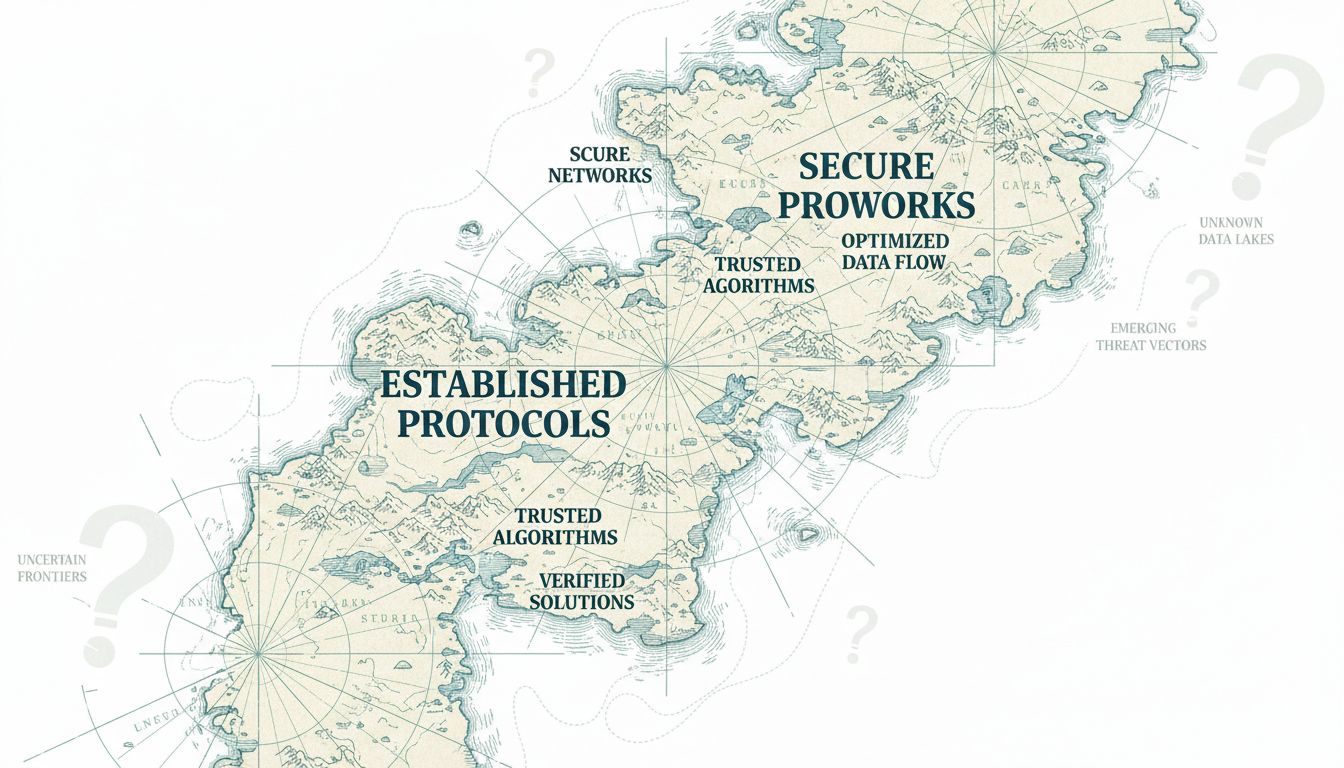
None of these eliminate bugs. They systematically probe the territory that developer-written tests leave unexplored.
The honest position on test suites
A passing test suite is evidence that your code works under the conditions you anticipated. It is not evidence that your code is correct. These are different claims, and conflating them is how teams ship confidently into outages.
The engineers who understand this treat their test suite as one signal among several, not as a guarantee. They combine it with code review that specifically looks for missing cases, with monitoring that surfaces unexpected behavior in production, and with testing approaches that don’t share their own assumptions about what inputs are reasonable.
The tests that tell you your software works are the ones you wrote. The bugs that matter are the ones you didn’t write tests for, because you didn’t know they were possible. Those two facts sit in tension with each other, and the teams that take that tension seriously build more reliable software than the ones chasing green dashboards.