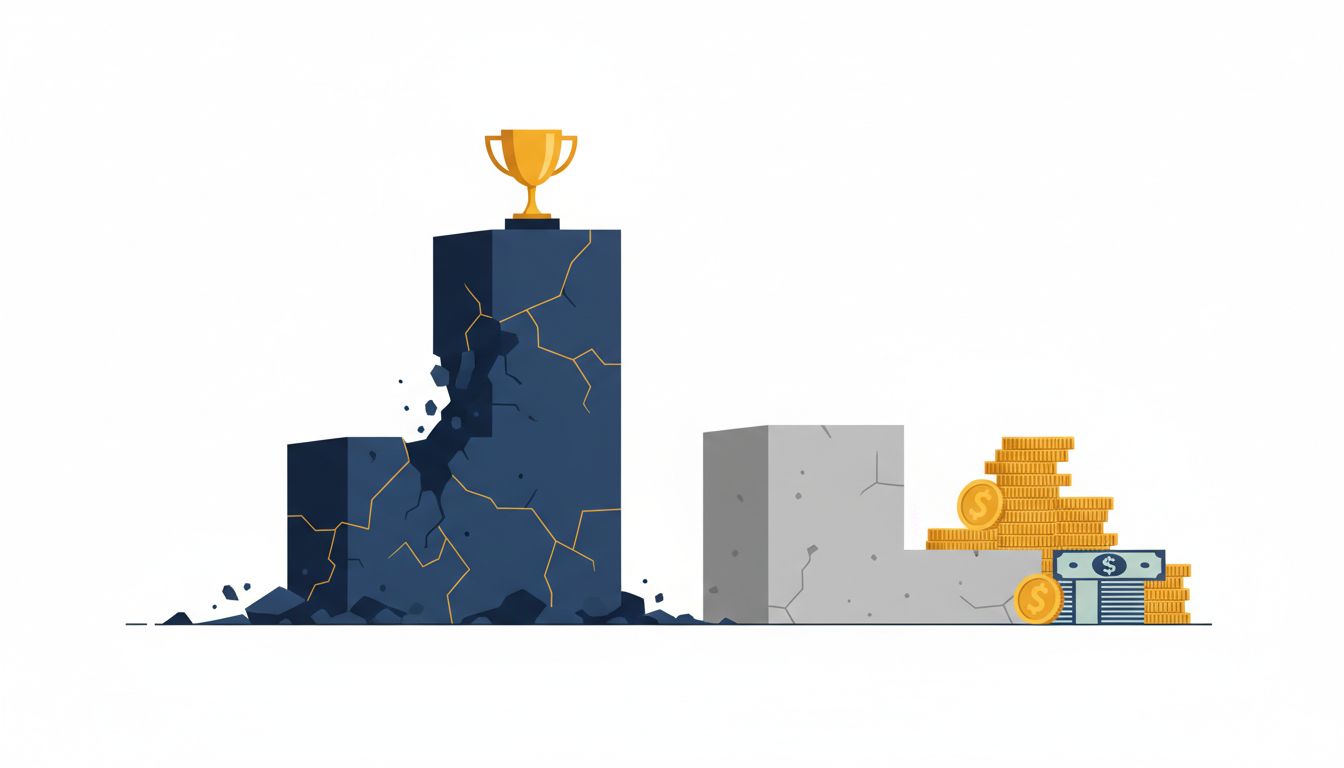

A fintech startup (one that has since been acquired and asked not to be named) spent two years building on what their CTO called a ‘fiscally responsible’ cloud architecture. They chose mid-tier object storage, mid-tier compute instances, and a managed database tier positioned just below the premium offering. Their monthly bills looked reasonable. Their investors were pleased. Their engineering team was quietly drowning.
By the time they ran an honest accounting, the ‘affordable’ architecture had cost them roughly three times what the top-tier equivalent would have run. The lesson wasn’t that they should have spent more money. The lesson was that cloud pricing tiers are not what they appear to be on the pricing page.
The Setup
Cloud providers present their tiers as a simple quality-versus-price tradeoff. Pay more, get better performance. Pay less, accept some limitations. This framing is accurate as far as it goes, but it obscures a more important economic reality: the limitations of cheaper tiers don’t reduce your costs linearly. They shift costs off the provider’s invoice and onto your payroll.
The fintech company’s mid-tier database, for instance, lacked automatic query optimization and had connection limits that required them to build and maintain their own connection pooling layer. That layer took one senior engineer roughly six weeks to build correctly and ongoing time to maintain. At fully-loaded engineering costs, that work is never as cheap as it looks on paper. The database tier they avoided would have cost an additional $400 per month. The engineering work cost, conservatively, $60,000 to build and $15,000 per year to maintain.
This is the second-cheapest tier trap in its purest form. The most expensive tier is fully managed, fully optimized, and priced to reflect that. The cheapest tier is bare-bones, and engineers who choose it know exactly what they’re taking on. The second-cheapest tier is the dangerous one: it costs enough to feel like a real service, but it’s missing just enough that you spend significant engineering time papering over the gaps.
What Happened
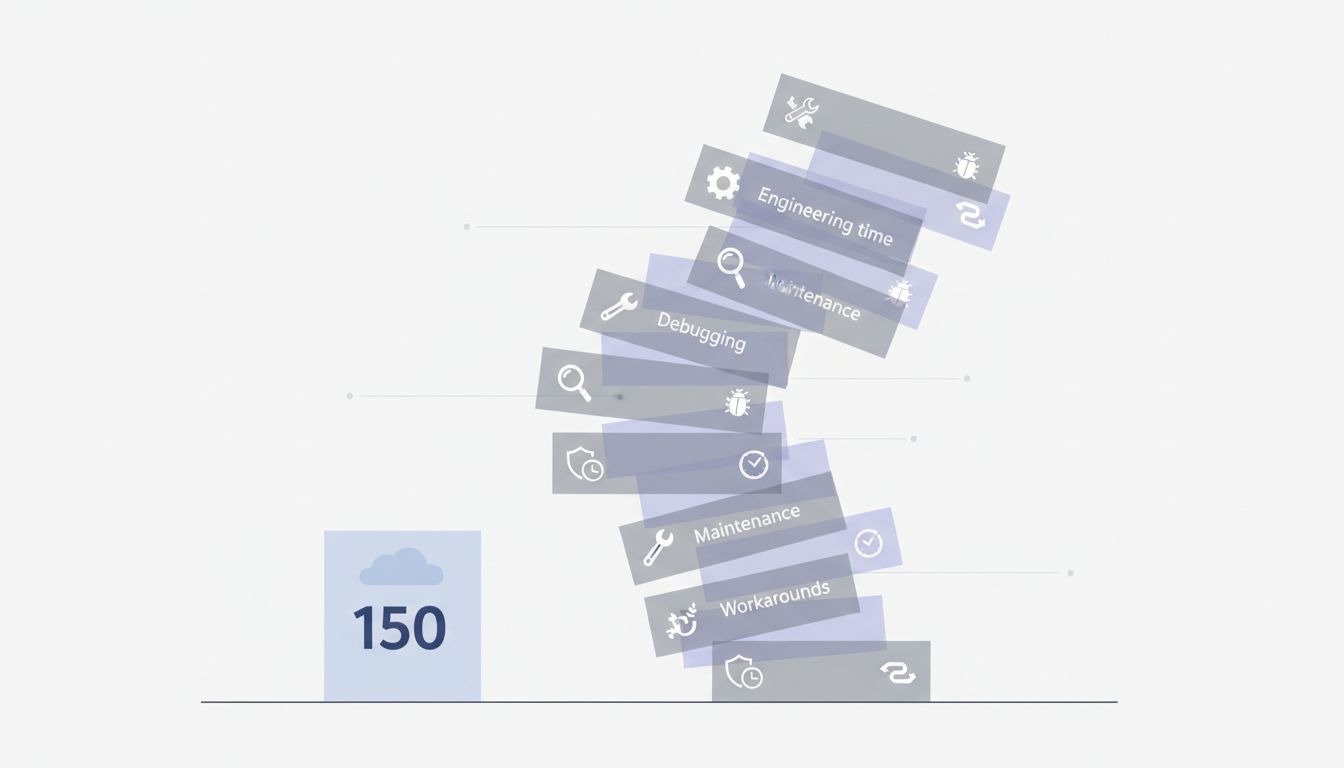
The pattern repeated itself across the company’s stack. Their mid-tier object storage had lower request limits than premium storage, which mattered once their transaction volume grew. Rather than upgrade, their team built a local caching layer to reduce API call frequency. That caching layer introduced consistency bugs that took weeks to diagnose. The debugging time, the cache invalidation logic, the additional test coverage required: none of this appeared on the cloud bill, but all of it was real cost.
Their mid-tier compute instances had less predictable CPU performance due to shared tenancy characteristics. Applications that ran fine in testing occasionally spiked in production, which they addressed by over-provisioning, which largely eliminated the cost savings they were trying to capture in the first place.
Two years in, a new engineering director joined and did something straightforward: she added up all the engineering hours spent building workarounds for infrastructure limitations, priced them at fully-loaded cost, and compared that number to what premium tiers would have charged. The gap was not close.
She upgraded most of the stack to the highest available tier. The monthly cloud bill increased by about $4,000. Engineering time spent on infrastructure workarounds dropped significantly in the following quarter.
Why This Pattern Is So Persistent
Cloud bills are visible. They land in someone’s inbox every month with a specific number attached. Engineering time spent on infrastructure problems is nearly invisible by comparison. It’s bundled into sprint velocity, attributed to ‘technical debt,’ or simply accepted as the cost of maintaining a complex system. Nobody sends a monthly invoice that says ‘connection pooling workaround: $8,000.’
This accounting asymmetry makes the second-cheapest tier look rational on every individual decision while being irrational in aggregate. The engineer choosing a database tier sees a line item. They don’t see a projection of future maintenance hours. The CFO approving infrastructure spend sees the bill go up or down. They don’t see what the engineering team is quietly absorbing.
Cloud providers understand this dynamic, which is why mid-tier products exist in the first place. They’re not cynical products; they genuinely serve customers whose technical needs don’t require premium features. But they are priced based on the provider’s costs, not based on the hidden costs they create for buyers.
AWS, Google Cloud, and Azure have all expanded their mid-tier offerings substantially over the past decade. There are now more ways than ever to feel like you’re saving money while spending more in aggregate. Unexpected cloud costs are a pervasive problem for companies at every stage, but the second-tier trap is distinct because it’s not about usage spikes or forgotten resources. It’s about the architecture of the pricing itself.
What You Can Actually Learn From This
The lesson isn’t to always buy the premium tier. There are absolutely situations where mid-tier or even minimal cloud services are the right choice. The lesson is to price the gaps honestly before you choose.
For any cloud tier you’re considering, ask specifically: what does this tier not do that the tier above it does? Then estimate the engineering cost of doing that thing yourself. Connection pooling, caching layers, monitoring workarounds, manual failover procedures: these have real costs. If the sum of those costs over 18 months exceeds the price difference between tiers, you’ve found your answer.
A related question worth asking: who on your team will own the gap? If the answer is your most expensive engineers, the math gets worse fast. If the answer is nobody, because everyone is already fully committed, you’ve just found a future incident waiting to happen.
The fintech company’s CTO said something worth repeating after they completed the upgrade: ‘We thought we were making conservative infrastructure decisions. We were actually just hiding the costs somewhere the CFO couldn’t see them.’ That framing matters. Choosing the second-cheapest tier often isn’t fiscal conservatism. It’s cost deferral, with interest.
Premium cloud tiers are expensive because they include labor: the provider’s engineers maintaining, optimizing, and managing the service so yours don’t have to. When that labor has clear market value, paying for it directly is often cheaper than providing it yourself, just harder to see on a spreadsheet.