

In 1998, two Stanford PhD students launched a search engine into a market that already had half a dozen established players. AltaVista had been running for three years. Yahoo had a search product. Excite, Lycos, and Ask Jeeves were all collecting users. Google arrived late, studied what everyone else had built, and decided the whole category was doing it wrong. By 2002, it owned the market.
The “first mover advantage” is one of the most persistent myths in startup culture. It sounds intuitive. Get there first, plant your flag, lock in customers before anyone else shows up. But the historical record doesn’t support it, and anyone who has spent time inside early-stage companies knows why.
What the First Mover Actually Wins
The first company into a market wins something real: the right to make every foundational mistake at full cost. They educate the customer from scratch, which is expensive. They build infrastructure before best practices exist. They hire for a problem nobody fully understands yet. They raise money on a vision, not evidence, which means they either undershoot or overshoot the actual market.
Netscape built the commercial web browser. They also burned through money building features nobody asked for, lost the thread of what made them good, and handed Microsoft an opening. Friendster validated social networking so thoroughly that MySpace and then Facebook could walk in with a working blueprint. Napster proved people wanted to share music digitally, spent its brief life fighting lawsuits, and handed the insight to every streaming service that followed.
Being first means you’re solving a problem before the problem is fully legible. The early team’s intuition has to substitute for market feedback that doesn’t exist yet. That’s an incredibly hard way to build a product.
The Second Mover’s Actual Advantage
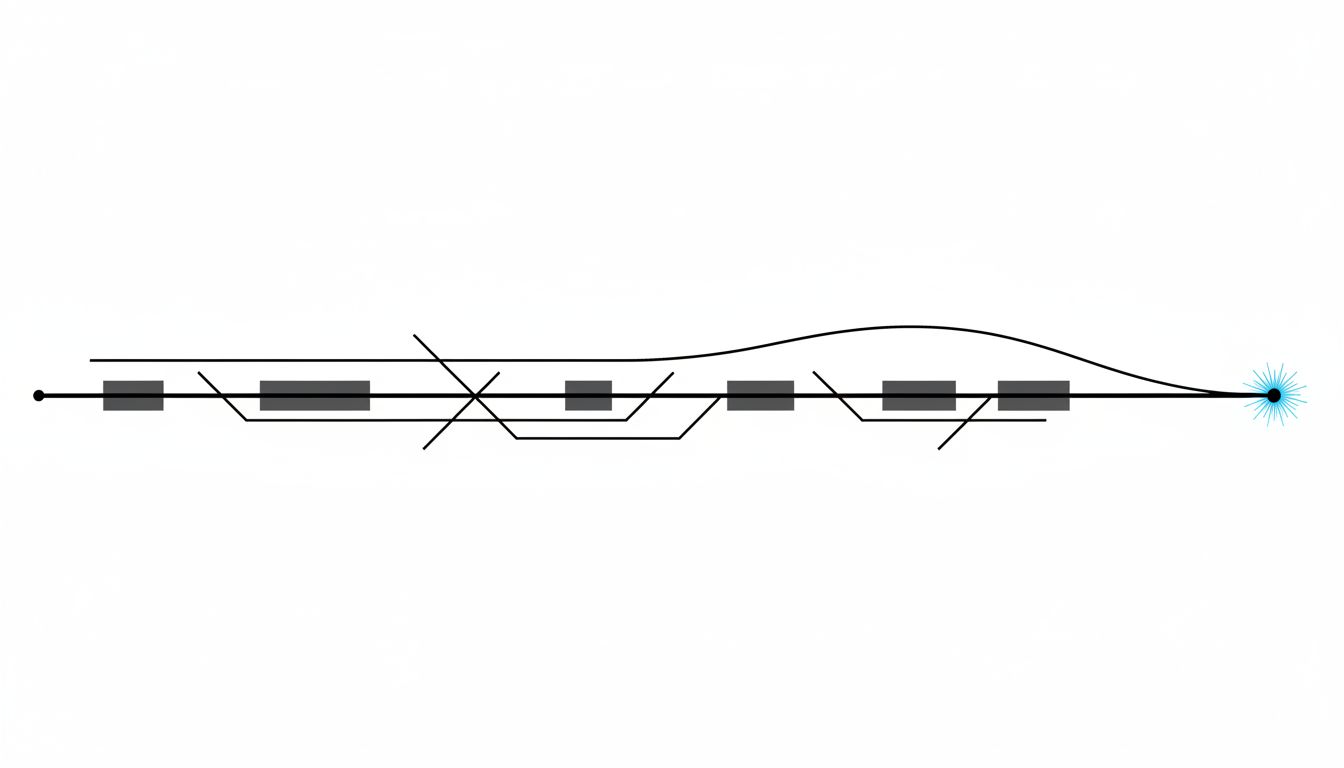
The company that arrives second inherits something priceless: a real user base doing real things with a real product. They can watch what the first mover got right and what frustrated customers enough to complain publicly. They know which customer segment is most valuable because the first mover accidentally found it. They know what the product needs to do because users have been asking for it for a year already.
This isn’t a minor advantage. It collapses the most expensive part of building a company, which is figuring out what to build. The second mover can skip the pure exploration phase and spend their time on execution.
Slack didn’t invent team messaging. HipChat, Campfire, and a dozen internal tools existed. But Slack arrived after watching what those tools got wrong (mainly: they were grim to use) and built something people actually wanted to open in the morning. Salesforce didn’t invent CRM software. It arrived after Siebel Systems had spent years proving that companies would pay for sales tracking software, and then built the same thing for a fraction of the cost as a web application.
Why Investors Get This Backwards
Venture capital has a structural incentive to fund first movers. A fund that backs the company creating a new category gets to write the origin story. It’s better marketing for the fund than backing a fast follower, even if the fast follower is the better bet.
This produces a real distortion. Founders get coached to pitch uniqueness and novelty, to claim they have no competitors, to frame any existing market as a negative signal. But the absence of competition usually means the absence of a market. A crowded market is often a validated market, and a validated market is where you want to be.
The companies worth funding in a crowded market are the ones with a genuinely better theory of why customers will switch. Not a feature list. A theory. Facebook’s theory wasn’t “we have a better profile page than MySpace.” It was “people want to connect with people they actually know, not build audiences of strangers.” That’s a coherent insight about human behavior that the first movers had missed.
When First-Mover Advantage Is Real
There are markets where being first genuinely matters, and it’s worth being precise about which ones. Network effects can make the first mover nearly impossible to dislodge, but only when those network effects are strong and the switching costs are high. The classic case is payments infrastructure. Visa built a network that became more valuable with every new merchant and cardholder, and that compounding effect made the network itself the moat.
Distribution lock-in can work similarly. If the first mover secures the one partnership channel that reaches most of the market, a better product might not be enough to overcome the access gap. And in regulated industries, the first company to get licensed in a new category can use regulatory compliance as a genuine barrier.
But these are specific, identifiable conditions. Most markets don’t have them. Most markets reward execution over timing, and execution is something a second mover can study and improve.
The Only Question That Actually Matters
Founders spend too much time asking “is anyone else doing this?” The better question is “why would customers switch to us?” If you can answer that with something sharper than “we got here first,” you have a strategy. If your only answer is first-mover advantage, you’re hoping the market never matures, competition never arrives, and your early lead compounds forever. That’s not a strategy. It’s a prayer.
The second mover’s job is to learn from the pioneer’s mistakes and build something meaningfully better for a specific kind of customer. Sometimes that’s a better product. Sometimes it’s a simpler one. Sometimes it’s just dramatically cheaper. But it has to be something real. “We arrived after them” is only an advantage if you actually used the time to watch and think.
Google didn’t win because it was late. It won because it was late and right.