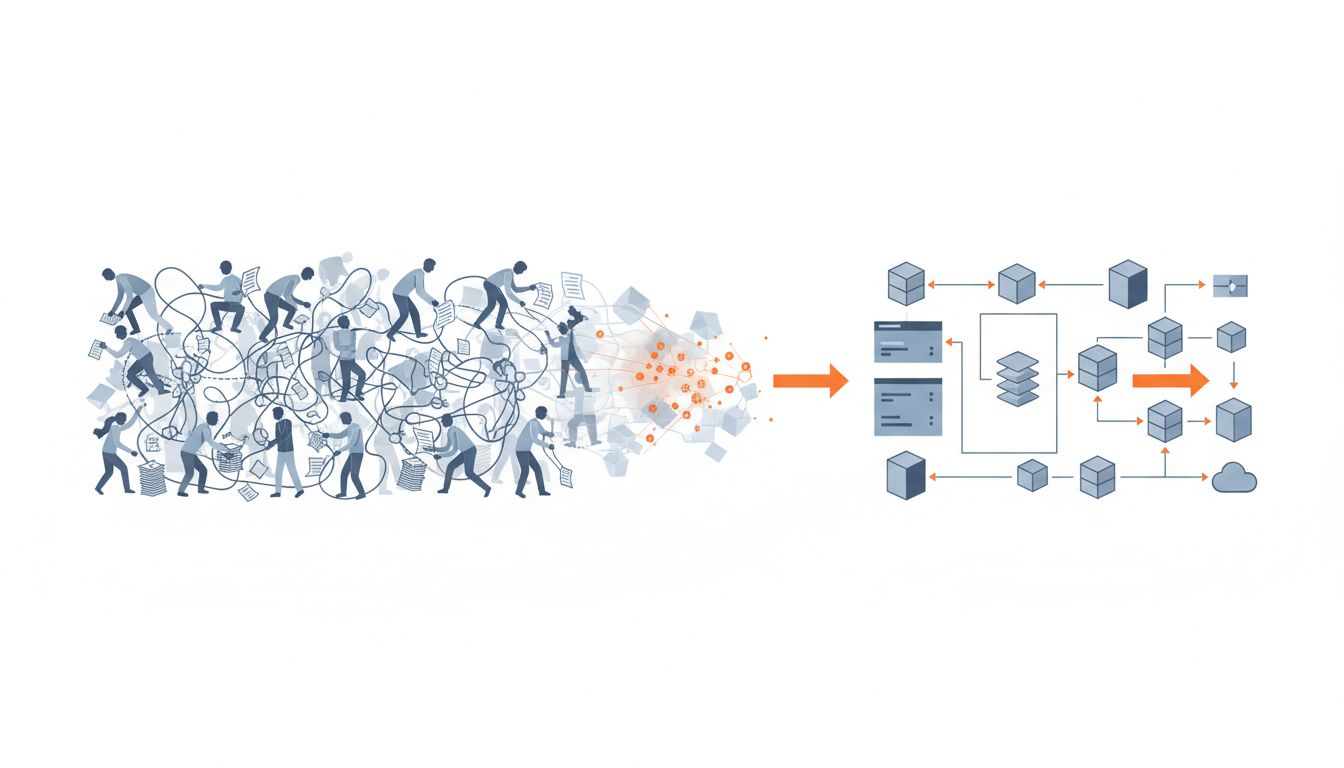

The Myth of the Singular Founder
Somewhere around 2010, the Valley collectively fell in love with the lone genius origin story. One person, one idea, one garage. The myth got so thick that when companies had two or three co-founders, journalists would often pick one to be the protagonist anyway. The others got demoted to “also helped start” in paragraph three.
This is bad pattern recognition dressed up as narrative clarity.
The question of who founds a company is actually two questions, and the second one matters more: who did the first founder decide to build with? That choice, made in the messy early months before anything is real, shapes the company’s capability ceiling more than the founding idea itself. Yet founders agonize for weeks over their pitch deck and make the second-founder decision in a weekend.
What the Second Founder Actually Provides
Start with what the first founder usually is. In most technical startups, it’s someone who saw a problem, had domain knowledge, and had enough conviction to quit their job. They’re a specialist. They know one thing deeply. That’s the point. You don’t start a company because you have broadly distributed skills. You start it because you have a specific, burning belief about something specific.
The first founder’s specialty is also their blind spot. The person who built enterprise software for ten years and finally decided to go fix the mess they lived through, they know the problem cold. They probably have terrible instincts about go-to-market. Or they’ve never managed anyone. Or they can ship product but can’t write a sentence that makes a human want to buy it.
The second founder (and this role doesn’t require an equal equity split or even a co-founder title, it’s whoever joins as a true peer early enough to shape the company’s DNA) fills the gap the first founder can’t see. Not “fills the gap” in an abstract org-chart sense. Fills it in the daily operational sense where someone has to make decisions under uncertainty in an area where the first founder has no intuition.
This is why the common advice to “find a technical co-founder” or “find a business co-founder” is too shallow. Those are categories. The real question is: what specific capability will this company need to repeatedly make good decisions in, and does neither founder currently have it?
The Complementary Trap
Founders know they’re supposed to find someone complementary. So they go find someone who looks complementary on paper. Technical founder finds a business-y person. Solo operator finds someone who can code.
The trap is that “complementary” gets interpreted as “different background” instead of “makes better decisions where I make worse ones.”
A first founder with a sales background and a second founder with an engineering background can still both be terrible at recruiting, or at financial modeling, or at the specific kind of domain expertise the customer actually needs to trust you. Two people who cover different functions don’t automatically cover the company’s actual gaps.
Worse: founders often pick complementary on background but nearly identical on temperament. Two optimists who never stress-test assumptions. Two introverts who avoid difficult customer conversations. Two people who both like building things and hate selling them. The professional diversity is real; the decision-making diversity is nonexistent.
The second founder needs to be someone who will argue with the first founder from a place of genuine knowledge, not just contrarianism. You’re not looking for someone who disagrees on principle. You’re looking for someone whose expertise makes certain disagreements non-negotiable.
Why Timing Destroys Good Second-Founder Decisions
There’s enormous pressure to move fast in the founding period. Investors want momentum. Early hires want leadership certainty. The first founder, operating alone, often reaches a point of exhaustion where they just need someone to show up.
This is exactly when most second-founder decisions get made, and it’s the worst possible moment to make them. Exhausted people optimize for relief, not fit. The person who’s available, enthusiastic, and already understands the problem is enormously attractive when you’ve been grinding alone for six months. But availability and enthusiasm are not qualifications for a role that will shape the next ten years of a company.
The early-stage pressure also compresses the evaluation period. Founders who would never hire a senior employee without multiple interviews and reference checks will effectively hand someone co-founder status after a few dinners. The relationship-building feels like diligence. It isn’t. You can like someone and thoroughly enjoy talking to them and still have no idea how they perform under the specific pressures your company will generate.
The founders who get this right usually slow down at exactly the point when everything is screaming at them to speed up. They treat the second-founder decision with more rigor than any other hire they’ll make, because in terms of impact per decision, it is.
What Actually Fails When You Get It Wrong
Let’s be concrete about the failure modes, because the abstract version doesn’t create urgency.
The skills gap persists. When the second founder doesn’t genuinely cover a critical capability, the company outsources those decisions or ignores them. Early marketing gets handed to an agency because neither founder wants to own it. Financial discipline gets delayed because neither person actually understands unit economics. These aren’t process failures. They’re second-founder failures.
Conflict gets unproductive. Good founding partnerships have disagreements that produce better decisions. Bad ones have disagreements that produce paralysis or resentment. The difference is almost always whether each person has a domain of genuine authority. When the second founder’s role isn’t clear, every major decision becomes a negotiation about who has standing to weigh in. That cost compounds invisibly. Your productivity tools are measuring the wrong thing when co-founder dysfunction is the actual drag on output.
Culture defaults to the first founder’s weaknesses. This is the one that’s hardest to see from inside. The first founder’s blind spots become company blind spots if the second founder shares them or doesn’t have enough standing to push back. A company where neither founder respects sales will build a product team that treats selling as beneath them. A company where neither founder values operational rigor will ship things fast and break things badly. Culture gets set in the first two years, and the second founder is the only person with enough equity and context to push back on the patterns being established.
The Operational vs. Vision Split
One framework that actually works: think about who will be responsible for the day-to-day decisions that don’t rise to the level of strategic importance, but that collectively determine whether the machine runs.
Most first founders are vision-heavy. They have the why. They can articulate the problem and the destination. What companies routinely fail on is the operational density of getting from here to there. Not strategy. The thousands of small decisions about process, prioritization, communication, and execution that happen below the strategic layer.
The most durable second-founder relationships I’ve seen have an operational clarity to them. One person runs toward the horizon; the other one keeps the current ground from crumbling. This isn’t hierarchy. In the best cases it’s deeply mutual. The operations-focused founder needs the vision founder to create a reason for any of it to matter. The vision founder needs the operations founder to prevent the vision from becoming embarrassingly disconnected from reality.
This maps loosely to the Steve Jobs and Tim Cook relationship, though that wasn’t a co-founder situation. The useful lesson there is that Jobs’s vision was genuinely enabled by Cook’s operational capability, not in spite of the contrast between them but because of it.
What This Means
If you’re in the founding stage, or advising someone who is, here’s what’s actually actionable:
Map your own gaps before you start looking. Not generic gaps, not “I’m not technical” or “I’m not a salesperson.” Where specifically have you made bad decisions under pressure? What kind of problems do you consistently avoid? The answer to those questions defines who you need, not the role title you’re hiring for.
Test for decision quality under conditions that resemble your actual environment. Work on something real together before the papers get signed. Watch how they handle being wrong. Watch how they disagree. A few weeks of genuine collaboration will tell you more than six months of friendly dinners.
Give the second founder a domain they actually own, and then stay out of it. The second-founder relationship fails when it becomes advisory rather than operational. If someone is genuinely your equal partner, there have to be decisions they make that you don’t override. If you can’t name those decisions clearly, you don’t actually have a second founder. You have a very senior early employee, which is a different and lesser thing.
The founding team is the company’s first and most consequential product decision. Most founders spend more energy on their product roadmap than on this one. That’s the real problem.