
Steve Jobs gets the biography. Jony Ive gets the museum retrospective. But ask anyone who was at Apple in 1998 what actually saved the company, and a different name keeps surfacing: Tim Cook, who joined as SVP of Operations in 1998 and quietly dismantled the supply chain disaster Jobs had inherited.
Jobs had the vision. Cook built the machine that could execute it. Without Cook, the iMac was a beautiful product that Apple might not have been able to ship profitably at scale. The founder mythology erases this, because mythology needs a single protagonist.
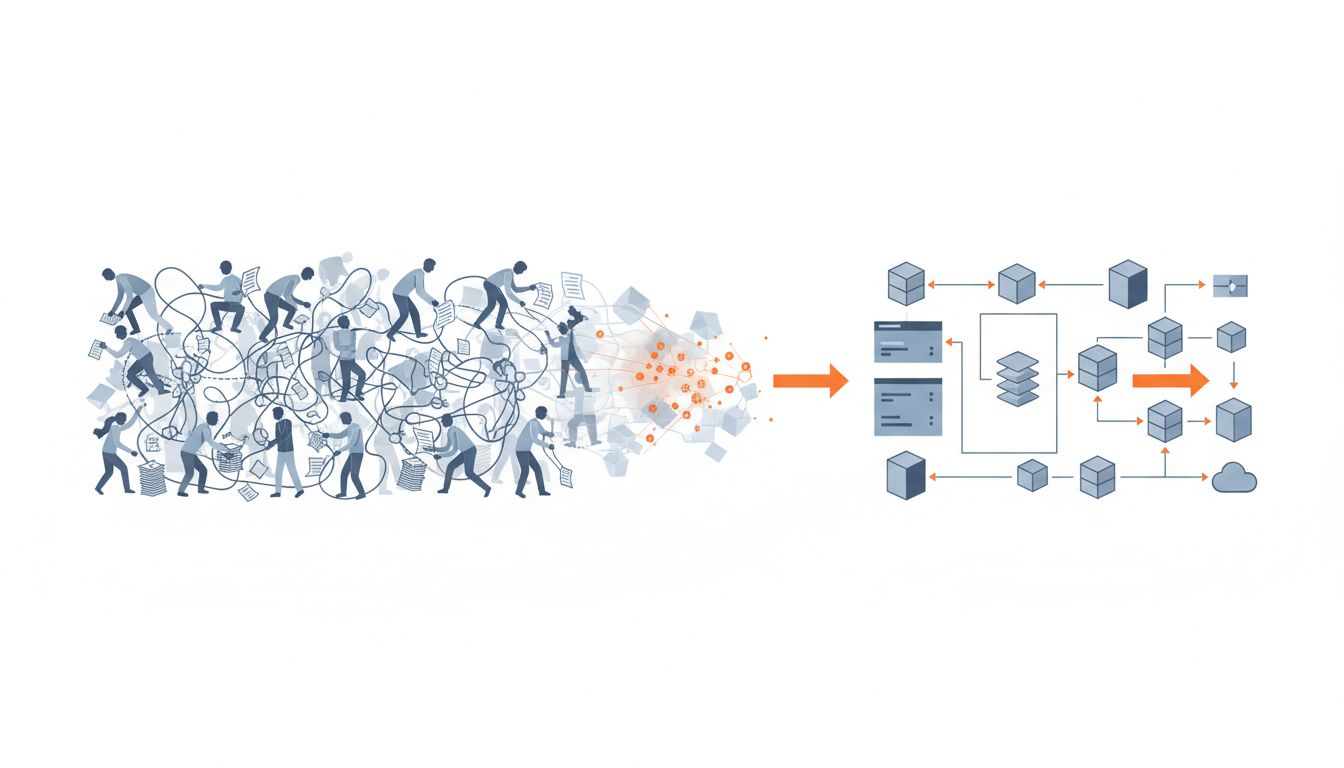
This pattern repeats often enough that it deserves a name. Call it the second-founder effect: the person who joins after the charismatic original but before the company has figured out how to function, and who provides the operational and organizational infrastructure that lets the original vision actually work.
The Setup: Google in 2001
The clearest modern case study is Google. Larry Page and Sergey Brin built something genuinely remarkable, a search engine that worked better than anything else, funded by Sequoia and Kleiner Perkins, growing fast. They were 27 and 28 years old and had never run a company before.
By 2001, the board was pushing hard for adult supervision. Page and Brin resisted. They interviewed candidate after candidate and rejected them all. Then Eric Schmidt came in.
Schmidt had been CEO of Novell and before that CTO of Sun Microsystems. He wasn’t a founder type. He wasn’t there to have a vision. He was there to build a company around the vision that already existed.
What Schmidt actually did between 2001 and 2011 is less glamorous than the origin story but more consequential. He implemented OKRs (borrowed from Intel’s Andy Grove, which Page and Brin had already been introduced to, but which Schmidt knew how to operationalize). He built out the sales organization that turned PageRank into a business. He navigated the IPO. He managed the relationships with Wall Street, regulators, and enterprise customers that two PhD students from Stanford had no particular interest in managing.
When Schmidt stepped down as CEO in 2011, Google had grown from roughly 200 employees and a few hundred million in revenue to nearly 32,000 employees and $29 billion in revenue. Page and Brin were the founders. Schmidt was something harder to categorize but arguably more important during that specific window: the person who made the thing real.

Why It Matters
Founder mythology is partly a VC artifact. Investors need a story, and stories need heroes. The hero of a startup story is the person who saw something others didn’t, who persisted when everyone said no. That person is usually the first founder.
But the skills that make someone a great first founder are often exactly the wrong skills for building a company past a certain size. First founders are frequently optimized for conviction, pattern-breaking, and the ability to ignore feedback that should be ignored. Those traits are critical early. They become dangerous later.
The second founder (the term I’m using loosely for whoever provides the operational and organizational layer, whether they’re a co-founder, a COO, or a CEO replacement) tends to be optimized for different things: process, trust-building across teams, systems thinking, and a tolerance for unglamorous work.
The tension between these two modes is real. Many first founders either can’t hire this person because they feel threatened, or can’t retain them because the culture remains too chaotic. The companies that survive this transition tend to be the ones where the first founder has enough self-awareness to recognize what they’re bad at.
Page had that self-awareness. He genuinely didn’t want to run the sales org or deal with investor relations. Schmidt was additive, not competitive. That made the relationship work.
What Usually Goes Wrong
The failure mode isn’t hard to find. A first founder who can’t tolerate a second-in-command either cycles through executives quickly (each one blamed for failing rather than being failed) or retains control past the point where they’re the best person for the job.
This is one of the reasons your first pricing will be wrong and your first organizational structure will be wrong and your first hiring framework will be wrong: the person best positioned to fix those things often isn’t the person who built them. It takes a specific kind of security to invite someone in who is better at your job than you are.
The second failure mode is the second founder who tries to become the first founder. They start wanting credit, visibility, the origin story. They start repositioning themselves as the real visionary. This usually ends badly for the company and badly for them. Schmidt was effective partly because he never seemed to need to be Jobs. He had his own identity, his own credibility, and he was genuinely comfortable being the person who made things work rather than the person who imagined them.
What We Can Learn
If you’re a first founder, the most useful thing you can do is get honest about the gap between where your company is and where it needs to go, and whether you’re the right person to close that gap. Most aren’t, at least not alone.
The hire you’re probably avoiding because it feels like a threat (the COO, the experienced CEO, the VP of Sales who’s been at three companies that scaled) is often the hire that determines whether your company survives the transition from scrappy to functional.
If you’re the second-founder type, the role is genuinely harder than it looks from outside. You’re operating in someone else’s shadow, building infrastructure for a vision you didn’t originate, and you’ll rarely get the credit. But the companies that get built this way are usually the ones that last.
The origin story is a founding myth. It serves a purpose: it attracts early believers, it gives the company an identity, it keeps the vision coherent when everything else is chaos. But myths simplify. The actual building of a company almost always involves at least two distinct phases of leadership, and the second phase is where most companies either solidify or collapse.
Schmidt didn’t found Google. He built it. The distinction matters more than the mythology admits.