You’ve been using a note-taking app for three years. You paid for it, you organized your entire work life inside it, and now a larger company has acquired it. The announcement email arrives with words like “exciting news” and “better together.” Six months later, the app is sunsetted, your export window closes, and you lose a chunk of your professional memory.
This isn’t a hypothetical. It’s a pattern that has played out with apps like Sparrow (acquired by Google in 2012, abandoned shortly after), Wunderlist (acquired by Microsoft, eventually shut down in favor of Microsoft To Do), and Mailbox (acquired by Dropbox, killed 18 months later). The pattern is consistent enough that there’s now a graveyard website dedicated to tracking Google’s acquisitions and product shutdowns.
So what do you actually own when this happens? The honest answer is: less than you think.
1. You Own a License, Not the Software
When you buy an app, you are not buying software. You are buying a license to use software under terms the developer sets and can change. This distinction sounds like legal hairsplitting until an acquisition happens. At that point, the acquiring company inherits the right to modify those terms, and in most jurisdictions, they can change them with reasonable notice.
The terms of service you agreed to almost certainly include a clause allowing the company to transfer your agreement to a successor. You clicked through it. Everyone does. The practical implication is that the new owner can sunset features, raise prices, change privacy policies, or shut the product down entirely, and your legal recourse is typically limited to whatever the original ToS specified, which is usually nothing meaningful.
Paid apps are only marginally better than free ones here. A one-time purchase grants you a license to the version you bought. It rarely obligates the seller or their acquirer to provide updates, maintain servers, or keep the product alive at all.
2. Your Data Lives on Someone Else’s Infrastructure
This is the thing people genuinely underestimate. If an app stores your data in the cloud (and most do), that data lives on servers owned by the company, or more likely rented from AWS, Google Cloud, or Azure. You are a tenant, not a property owner.
Acquisitions create a specific and underappreciated risk here: your data is often part of the deal. The acquirer wants the user base, the behavioral data, the training corpus. When Facebook acquired WhatsApp in 2014 for $19 billion, it later updated WhatsApp’s privacy policy to share user data with Facebook for ad targeting purposes, a change that drew regulatory scrutiny across multiple jurisdictions. The data you generated under one privacy regime became an asset in a different one.
The practical defense is boring but real: export your data regularly, before you need to. Most apps offer this, and almost nobody does it until the shutdown notice arrives.
3. The Features You Depend On Are the First to Go
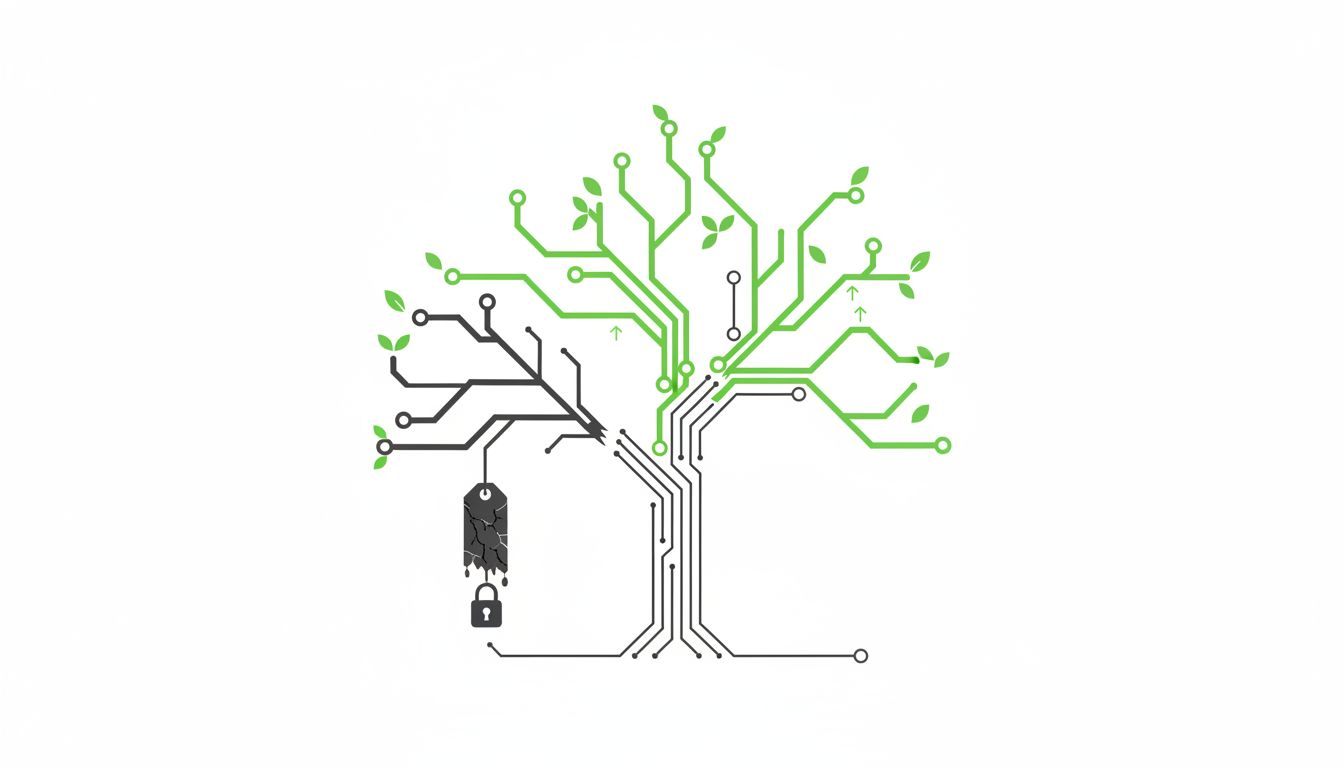
Acquiring companies typically have one of two goals: absorb the technology and team (an acqui-hire), or integrate the product into their existing suite. In both cases, the features that made your favorite app your favorite are frequently the first casualties.
The reasoning is logical from the acquirer’s side. If you’re integrating a note-taking app into a productivity suite, you rebuild its core functionality inside your existing product. You don’t maintain a separate product with overlapping features indefinitely. The distinctive UI, the keyboard shortcuts that became muscle memory, the specific sync behavior you loved, these things get rationalized away.
Wunderlist users who migrated to Microsoft To Do discovered exactly this. Microsoft To Do is a functional app, but the features that made Wunderlist feel distinct, the sharing workflows, the design, the subtask handling, took years to partially replicate, and some never came back.
4. The Acquisition Price Tells You What They Bought (and It Isn’t You)
When a large company pays hundreds of millions of dollars for a startup with a modest user base, they are not buying the users. They are buying the team, the technology, the IP, or the competitive threat removal. Users are the collateral that comes with the deal.
This matters because it tells you how the acquirer will prioritize decisions when user interests conflict with integration goals. If the acquisition was an acqui-hire, the product is already on borrowed time. If it was a strategic technology acquisition, the product might survive but will be reshaped around the acquirer’s roadmap, not yours.
The companies that tend to preserve acquired products with integrity are usually ones buying for user growth in a specific segment, where the product continues to generate revenue as a standalone. Salesforce’s acquisition of Slack is an example worth watching: Slack has remained more intact than most because it generates substantial standalone revenue that Salesforce has clear incentive to protect.
5. Open Source Is the Only Durable Ownership
If you want to actually own software, use open-source software. This isn’t idealism; it’s a practical risk calculation. When a company acquires an open-source project, or when a company offering an open-source core goes under, the code doesn’t disappear. The community can fork it, maintain it, and keep it alive.
WordPress has survived multiple ownership changes and commercial pressures around Automattic precisely because the core software is open source. Nextcloud exists because ownCloud’s original lead developer forked it when he disagreed with the company’s direction. The option to fork is a form of property right that closed-source software never gives you.
For tools where you’re building critical workflows, the question of whether there’s a viable open-source alternative is worth asking before you’re locked in. Switching is painful. Switching after a shutdown notice is worse.
6. “We’ll Honor Existing Subscriptions” Means Less Than You Think
Every acquisition announcement includes some version of this promise. Sometimes it’s genuine. Often it’s a 12-month runway to wind down gracefully while giving the PR team something to say.
The realistic read: if the acquirer isn’t building a business model around your continued subscription, honoring your existing terms is a temporary gesture toward reducing churn and backlash. Once that period ends, you’re subject to whatever terms the new owner sets. And if the product is being sunsetted, “honoring subscriptions” typically means a pro-rated refund window, not ongoing service.
The people who fare best through acquisitions are the ones who treat every “we’ll honor existing users” announcement as a countdown clock rather than a commitment. Start evaluating alternatives immediately. Export your data. Figure out what a migration actually costs before you need to make it under pressure.