The Call You Don’t See Coming
Somewhere around month eighteen, a founder I know got a calendar invite from his biggest (and only) customer’s VP of Engineering. The subject line said “partnership discussion.” He assumed it was about expanding the contract. It wasn’t. They’d spent the previous quarter quietly building what he’d built. They wanted to negotiate a wind-down.
His company had $2.3M in ARR. Every dollar came from this one customer. He had six months of runway. The meeting lasted forty minutes.
This isn’t a rare story. It has a name in some circles: the customer-to-competitor conversion. And it follows a pattern predictable enough that you can almost set your watch by it.
How You Get There
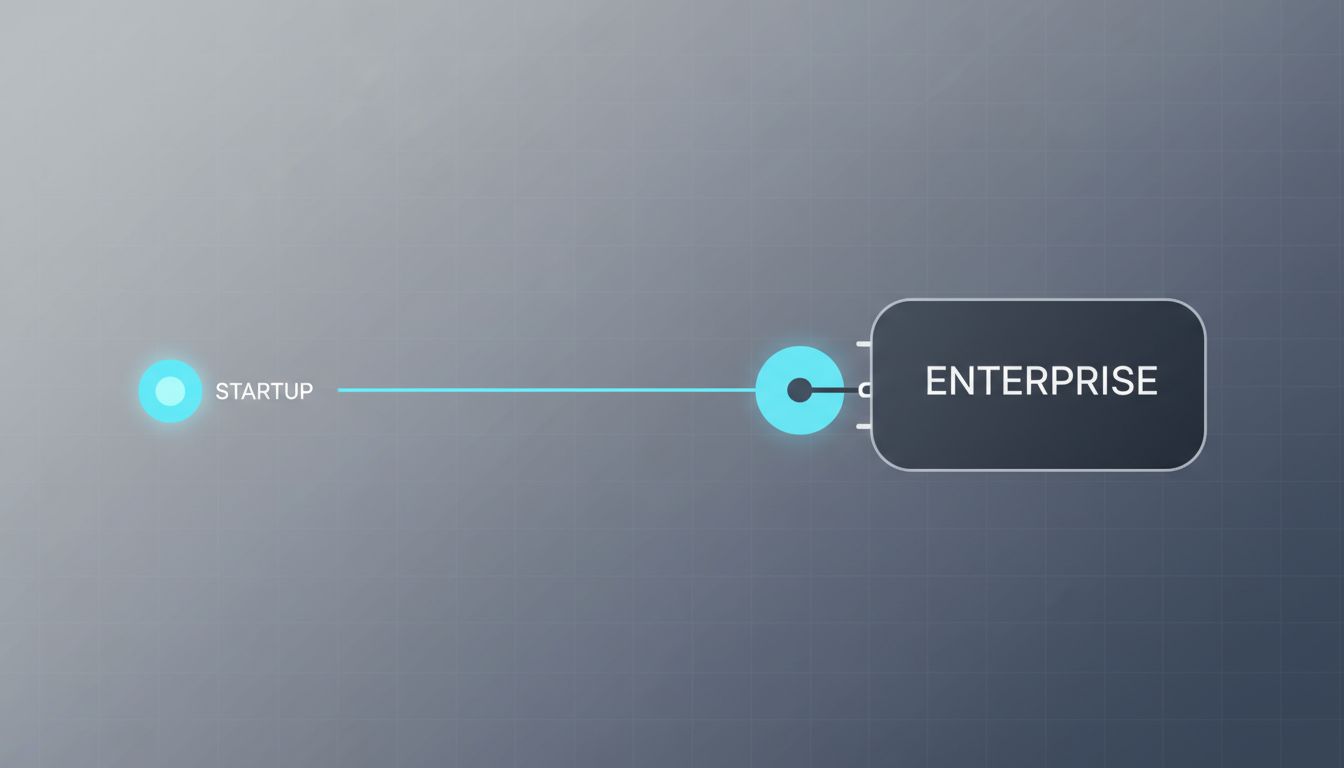
The single-customer trap usually starts with what looks like a dream scenario. A large enterprise finds you early, loves what you’re doing, and offers a substantial contract. They want exclusivity, or close to it, because they don’t want a competitor using the same tool. You take the deal because it’s real money and you’re not sure when the next real money is coming.
For a while, this works. They fund your development. Their engineers file detailed bug reports. Their use cases push your product in directions that make it genuinely better. You get fast feedback and a clear roadmap because you have one customer with loud opinions.
What you’re also doing, without fully realizing it, is training them. Every integration call, every architecture review, every feature you explain is a free education in how your technology works. Large companies are full of engineers watching vendor tools and thinking “we could build this.” The threshold at which in-housing becomes attractive is lower than most founders assume: when a company is paying you more than a couple of senior engineers would cost, someone is running that math.

The Ratchet Effect
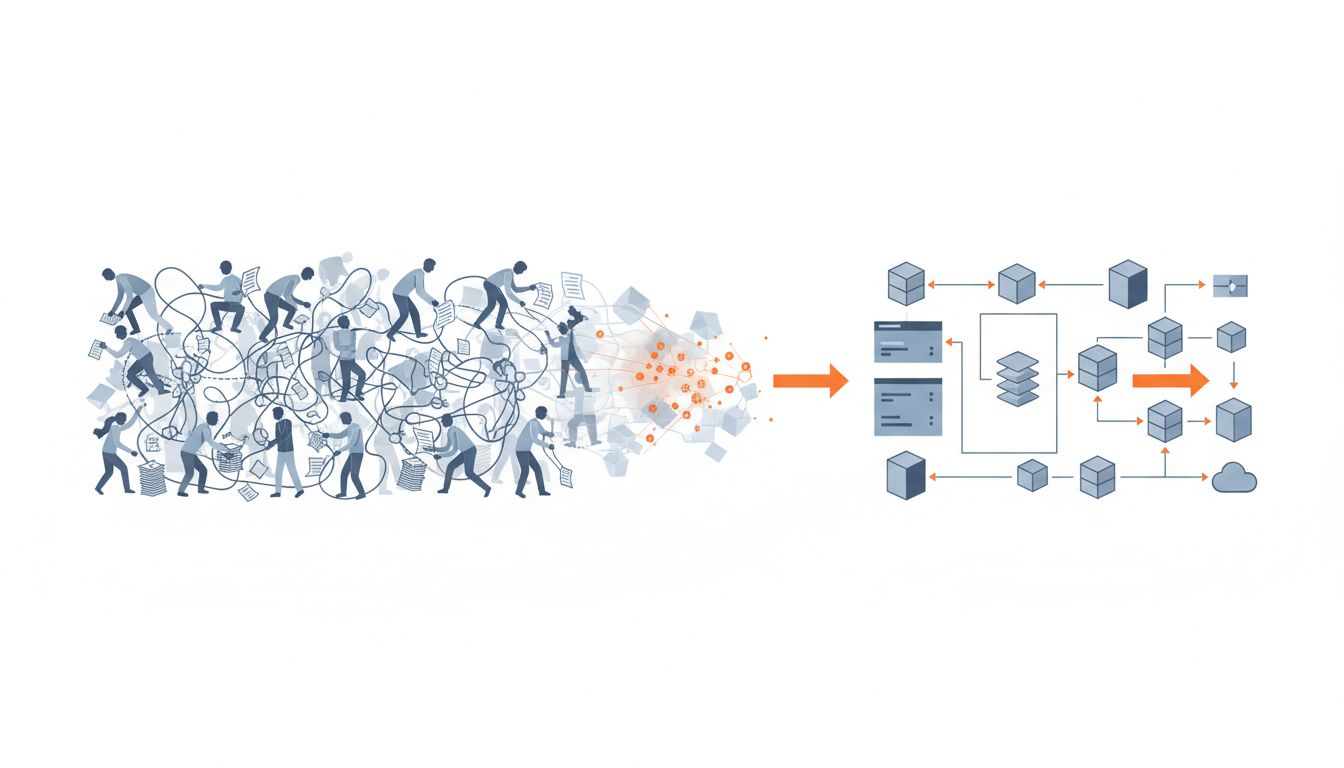
Here’s the mechanism that makes this so hard to escape once you’re in it. Your product roadmap gets bent toward your single customer’s needs, because that’s the feedback you have. Features that would matter to a broader market don’t get built because nobody is asking for them. Over time, your product becomes more and more specifically shaped around one company’s workflow, one company’s data model, one company’s preferences.
This has two consequences that compound each other. First, it makes you less attractive to other buyers, because prospects can see the product was built for someone else. Second, it makes your customer more confident they can replicate what you do, because what you do has been narrowed down to a well-understood problem domain.
You’ve also, almost certainly, allowed deep integrations that would be painful to remove. Your system touches their internal data pipelines. Your team knows their architecture. This feels like stickiness, and in one sense it is. But it also means that when they decide to build internally, they already have engineers who understand your system well enough to reverse-engineer the important parts.
The companies that fall hardest into this trap are the ones who interpreted deep integration as a competitive moat. It’s not. It’s a familiarity ramp they funded for you to build for them.
What Your Customer Is Actually Thinking
Enterprise procurement teams don’t think in terms of partnerships the way founders do. They think in terms of vendor risk. A startup with one customer (them) registers as a fragile supplier. If you go under, their operations are disrupted. If you get acquired, their costs go up. If your pricing changes, they have no alternatives.
The natural solution to vendor risk, from their perspective, is to reduce dependence on the vendor. That might mean finding alternatives. It might mean building internally. It almost certainly means investing less in the relationship than you’d like.
This is rational behavior, not betrayal. But founders in these situations often experience it as betrayal because they’ve been operating with a partnership mental model while the customer has been operating with a procurement mental model. These two models lead to very different decisions, and when they collide, the procurement model wins.
The moment your customer’s engineers feel confident they understand your core technology, the build-vs-buy calculus shifts. Talent is expensive, but predictable. Vendor relationships carry ongoing costs, external dependencies, and the specific anxiety of knowing that your critical infrastructure is controlled by a small company that could fail or pivot at any time.
What Actually Provides a Moat
If deep integration isn’t the moat, what is?
Network effects are real, but most B2B SaaS products don’t have them. What most startups actually have, or can build, is a combination of things that are collectively hard to replicate rather than a single defensible position.
Data accumulation is one. If your product improves because of aggregate patterns across many customers, any single customer trying to build internally starts from scratch. This is why multi-tenant products that learn across their user base have structural advantages over point solutions. You need enough customers for this to work, which is itself an argument against staying single-customer.
Domain expertise embedded in the product is another. Not “we know your specific workflow” but “we have spent three years understanding this category of problem across dozens of companies and that knowledge is in the product.” This is harder to transfer through a contract.
Switching costs through output, not input, matter too. If your product produces things that feed other systems and those outputs are relied upon downstream, replacement requires rewriting integrations everywhere. This is different from the customer’s engineers simply understanding how your product works.
The common thread is that real moats are things an internal team can’t replicate just by watching you work for eighteen months. A single customer relationship, by definition, can’t generate most of these.
What You Should Have Done, and Still Can
The obvious retrospective advice is to diversify your customer base early, even when the single large contract feels comfortable. This is true and most founders know it intellectually. The harder question is what to do when you’re already deep in the trap.
The first thing is to stop confusing revenue concentration with market validation. If one company is paying you, that’s evidence one company has a problem you can solve. It’s not evidence of a market. Real validation requires multiple customers with similar problems who found you independently. You need to know whether your product solves a category problem or a company-specific problem, and you won’t know that until you’ve sold to at least a handful of companies.
The second thing is to be honest about what your customer knows. Map it out: what have they learned about your architecture, your pricing model, your team size, your technical choices? If the answer is “a lot,” you should assume build-vs-buy conversations have happened inside their walls, even if they’ve given you no signal of it. Act accordingly.
The third thing, and this is uncomfortable, is to recognize that your customer’s success is not identical to your success. What’s best for them may be to bring your functionality in-house. You are not in a partnership. You are a vendor, and behaving otherwise leads to decisions that feel collaborative but are actually just free consulting.
Diversification at this point isn’t easy because your product is probably shaped wrong for the broader market. That’s a real problem. But the answer is to start reshaping it, even if that means some uncomfortable conversations about roadmap reprioritization. The alternative is to stay dependent on a customer who is watching you closely and making calculations you’re not party to.
The Structural Question You Have to Answer
Underneath all the tactical advice is a question that most founders in this situation have been avoiding: is your company actually a standalone product business, or did you accidentally build a service business for one customer?
This is not a failure. It’s a clarifying question. Some companies discover that the “product” they’ve been building is really a custom solution, and that the right move is to formalize as a services firm, or to get acquired by that single customer before the relationship deteriorates. Others discover that there genuinely is a multi-customer product inside what they’ve built, but it requires stripping out the customer-specific assumptions and rebuilding toward generality.
The companies that end up in the worst position are the ones that never answer the question. They stay half-committed to the product path, keep their single customer happy, watch the build-or-buy evaluation quietly progress on the other side of the contract, and get to that forty-minute meeting unprepared.
By then, the decision has already been made. The call is just the paperwork.
What This Means
For founders still in this situation: Your customer is not your partner. They’re your only customer, which is a very different thing. Every month you stay single-customer is a month they learn more about what you do and a month you fall further behind on building the product that actually has a market.
On moats: Deep integration is not a moat. A customer who knows your architecture, has your team on speed dial, and understands your pricing model is a customer who has already done most of the due diligence for an internal build.
On timing: The best time to diversify was twelve months ago. The second best time is now, before the calendar invite arrives.