
The Customer You Should Be Afraid Of
In 2008, a small project management software company had a problem that looked like success. Their biggest customer, a regional construction firm, was paying five times what anyone else paid, demanded weekly calls with the founding team, and had accumulated a list of custom feature requests that had quietly become the product roadmap. The engineers were building for one company. Sales kept pitching a product that was increasingly built for nobody else.
They fired the customer. Refunded the remaining contract, wished them well, deleted the Slack channel. Then they spent three months rebuilding around the use cases that made sense for everyone. Within a year, they’d tripled their customer count.
This story is not unique. It keeps happening, in different industries, with different founders, because the same trap keeps getting laid. A high-value customer shows up early. You bend to keep them. And somewhere in that bending, you stop building a product and start building a consulting business with a SaaS wrapper.
Why Your Best Customer Is Sometimes Your Worst
The conventional framing is that customer concentration is a financial risk, which it is. If one customer represents 40 percent of your revenue and they churn, you’re having a very bad quarter. But concentration is also a strategic risk, and that one gets less attention.
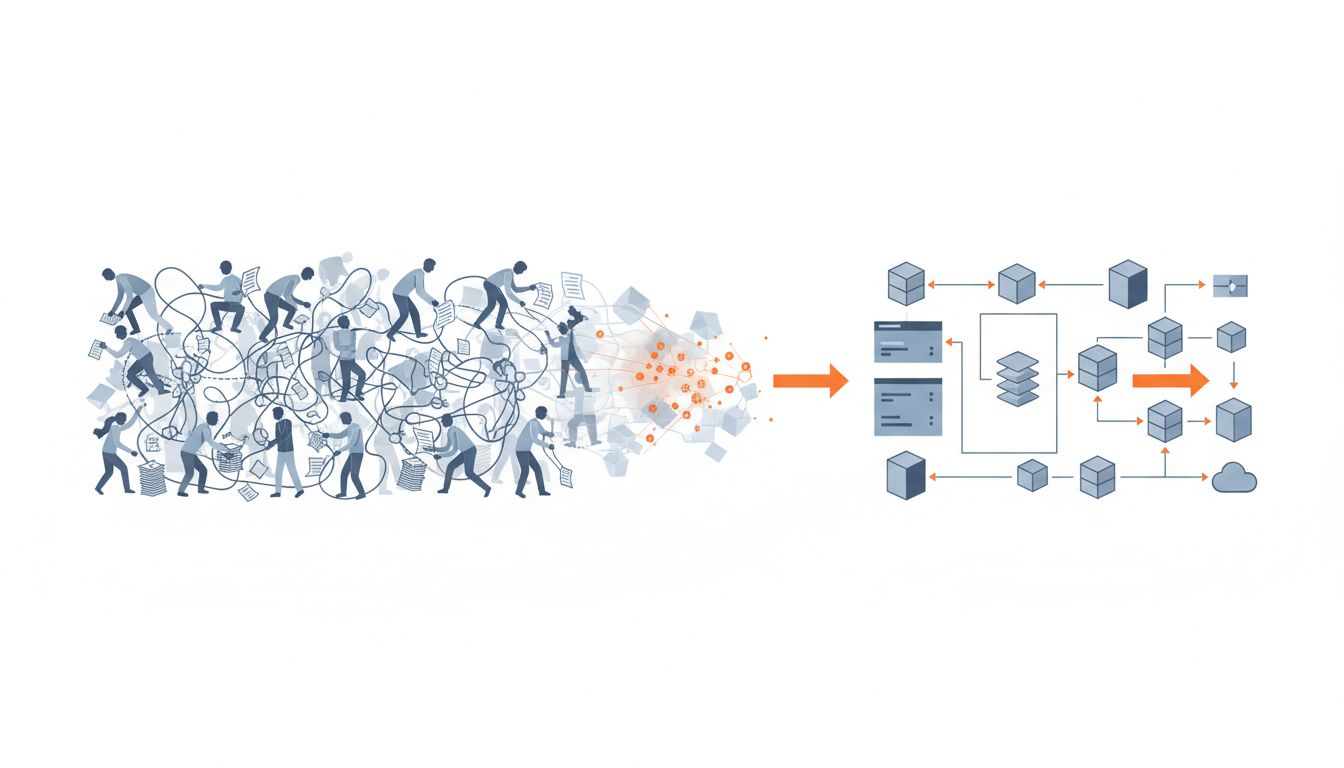
When a single customer has enough leverage, they don’t just influence your roadmap, they become it. The features they need, the integrations they require, the reporting formats their CFO prefers: all of it flows into your backlog with a kind of gravity that smaller customers can’t match. Your product starts solving their specific problems instead of the general problem you set out to solve.
The insidious part is that this looks like product development. You’re shipping features. Customers are using them. The velocity looks fine. What’s actually happening is that you’re accruing product debt at the same rate most startups accrue technical debt. Every custom workflow you build for one enterprise client is a workflow every other customer has to navigate around. Your price tag is already writing your product roadmap in ways you can control. Letting a single customer write it for you is a way of ceding that control without realizing it.
What Firing a Customer Actually Requires
The mechanics of ending a high-value customer relationship are straightforward. The psychology is not. Founders who have scraped for every dollar find it almost physically painful to hand money back. Early employees who worked weekends to keep that account happy feel like they’ve failed. And there’s always a voice in the room pointing out that you don’t have enough revenue to be this principled.
The way to think through it is to ask what you’re actually trading. You’re not trading revenue for nothing. You’re trading distorted revenue for the ability to build something that scales. A customer paying you to be their de facto software development team is extracting value at a rate that doesn’t compound. A product that solves a real problem for a wide market compounds significantly.
The companies that handle this well tend to do a few things. They’re honest with the customer, telling them the product is moving in a direction that won’t serve their needs as well, and offering a transition. They’re honest internally, making the case to the team about why this is the right call before making the call. And they have at least a rough model of what the customer base looks like without that anchor, because walking away from 40 percent of your revenue without any sense of what fills that gap is a different conversation entirely.

The Signal Hidden in Who’s Leaving
There’s a related version of this problem that involves not firing customers but watching which ones leave and ignoring the pattern. If your churn is concentrated in a particular segment, that’s information. If the customers who leave tend to be smaller, or less technical, or in a specific industry, your product is drifting away from them. You can keep chasing the big logos or you can ask why the little ones aren’t staying.
The metrics you use to evaluate customer health matter here. Gross revenue retention flatters high-concentration books of business. If your biggest customer is growing its contract and everyone else is quietly leaving, revenue retention looks fine until suddenly it doesn’t. This is part of why the metrics that got you to Series A will kill you at B, because the numbers that made sense when you were validating stop telling you the truth when you’re supposed to be scaling.
Net revenue retention broken out by segment, customer acquisition trends by segment, product usage patterns across different customer types: these give you an earlier warning. By the time a high-concentration problem shows up in your topline numbers, you’ve usually been building for the wrong customers for two years.
The Counterintuitive Math of Customer Quality
Firing a customer does not have to mean losing revenue. In a lot of cases it means redirecting resources that were going toward one demanding relationship into acquisition and retention of customers who actually fit the product. The math often works out, not immediately, but in the medium term in ways that are more durable.
The companies that navigate this well are ones that have a clear view of who the product is genuinely built for and the discipline to keep that view when a large check shows up attached to a different kind of customer. That clarity has to come from somewhere other than the current customer list. It has to come from a thesis about the problem, who has it most acutely, and what they actually need.
None of this means refusing enterprise revenue or avoiding large customers. It means knowing what you’re agreeing to when you take that revenue and having a plan that doesn’t involve letting one relationship reshape your product strategy by default. The customers who make you better are the ones whose problems point toward where your product should go anyway. Everyone else is just paying you to get lost.