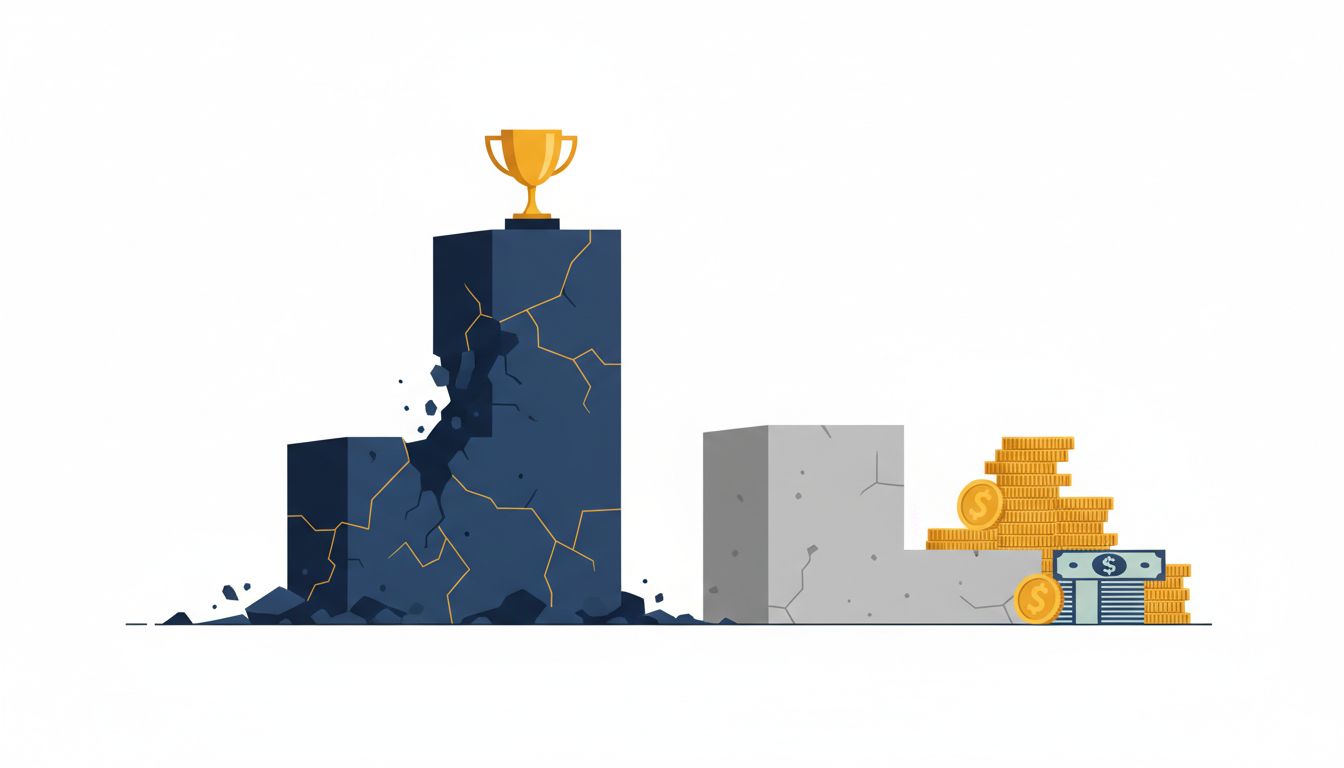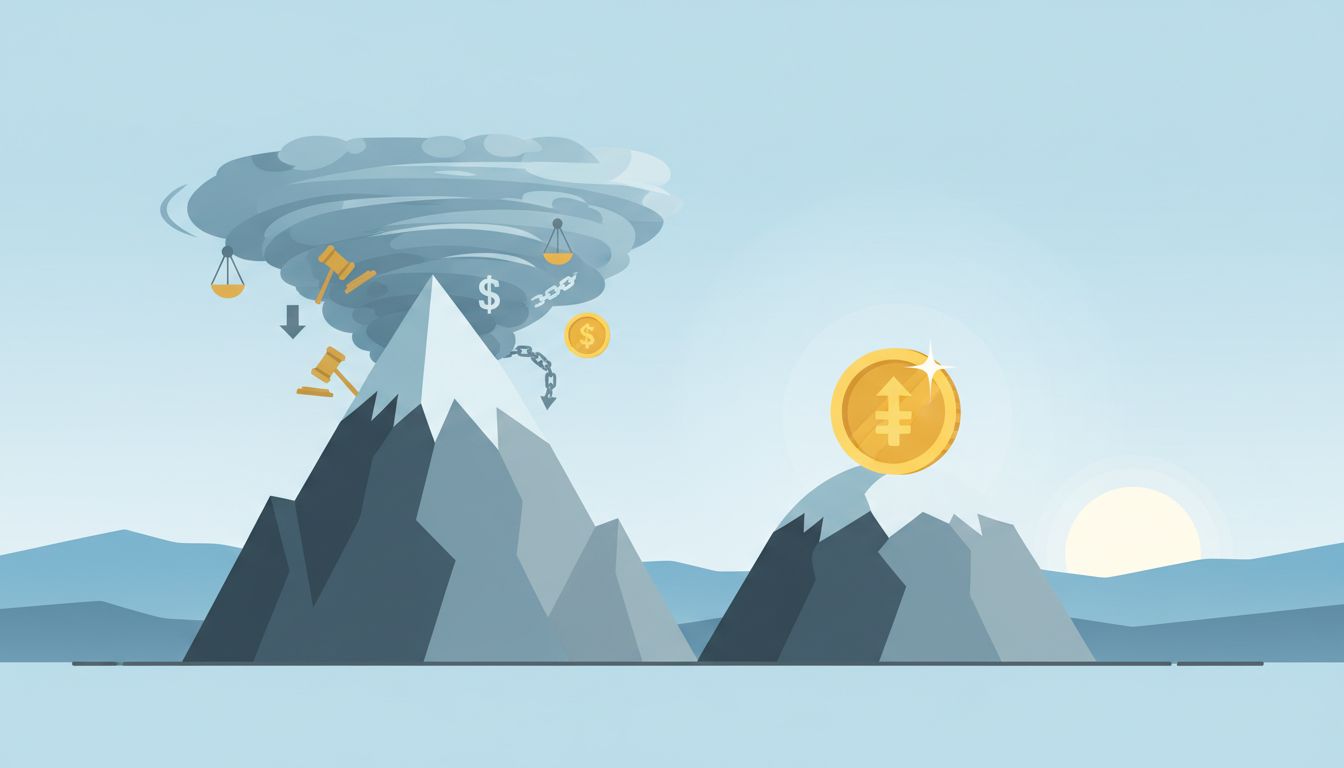

Winning a market and profiting from it are not the same thing. Market leaders carry costs that their closest competitors don’t: heavier R&D burdens, the expense of educating buyers, and the political scrutiny that comes with dominance. The runner-up, meanwhile, gets to copy what works, skip what doesn’t, and price aggressively against a benchmark the market leader already established. This isn’t a fluke. It’s a structural pattern worth understanding.
1. The Leader Pays to Build the Market; the Follower Pays to Enter It
When a product category doesn’t yet exist, the company creating it has to convince buyers that they have a problem worth solving. That costs money. Amazon spent years and billions educating enterprises on cloud computing before the category was self-sustaining. Microsoft Azure entered afterward, found a buyer base that already understood the product concept, and grew faster than AWS in percentage terms for several consecutive years after launch.
The first-mover spends on market creation. The fast follower spends on conversion. Conversion is cheaper, because you’re talking to someone who already knows they need the thing.
2. R&D Costs Are Asymmetric
The leader has to fund every failed experiment, every prototype that never shipped, every feature that customers rejected. The follower looks at what shipped and what customers actually use, then builds that. This is sometimes called the “fast follower advantage,” but the financial reality is more specific: the follower’s R&D budget is smaller because the leader already ran the costly process of elimination.
In pharmaceuticals, this produces generics. In software, it produces the second or third entrant who ships a cleaner product because they knew from day one what to leave out. The original iPhone had no app store at launch. By the time Android shipped, the model was clear. Google didn’t have to discover it.

3. Pricing Power Flows to the Challenger
The market leader sets the anchor price. Everyone else gets to undercut it. Undercutting isn’t always a race to zero. Often the follower prices 10 to 20 percent below the leader, captures price-sensitive customers, and maintains healthy margins, because their cost base is already lower for the reasons above.
Zoom didn’t price against nothing. It priced against Cisco WebEx and Microsoft Skype for Business, products with established price points that enterprises were already paying. Zoom’s lower price looked like a bargain against a known benchmark. Without WebEx, Zoom would have had to justify its price from scratch. The leader’s pricing did that work for them. As your first pricing will be wrong, and you should price anyway suggests, price discovery is painful, and the market leader absorbs that pain first.
4. Regulatory and Antitrust Risk Falls Disproportionately on the Winner
Dominance attracts scrutiny. Google faces antitrust cases in the United States and Europe. Meta has been through multiple congressional hearings. Apple’s App Store pricing is under formal legal challenge in several jurisdictions. These proceedings consume executive attention, legal budgets, and often result in forced changes to business models.
The second-place competitor generally escapes this. Bing is not under antitrust review. DuckDuckGo has not been hauled before Congress. Being smaller means flying below the regulatory radar, and that is a real financial advantage. Legal defense and mandated remedies are not small costs.
5. The Leader’s Installed Base Becomes a Trap
Market leaders often can’t cannibalize themselves. They have enterprise contracts, compatibility commitments, and revenue streams tied to the existing product. When the market moves, the leader has to move carefully enough not to break what’s already working. The follower has no such constraint.
Intel’s dominance in x86 chips made it structurally difficult to pivot hard into mobile processors. The margins on desktop and server chips were too important to sacrifice. ARM-based designs filled mobile, and Apple eventually used the same architecture to challenge Intel in laptops. Intel knew ARM was coming. The problem wasn’t information, it was that their profitable installed base made bold cannibalization economically painful.
6. Talent Costs Less When You’re the Underdog
The market leader has to pay to attract talent. It has to pay retention bonuses to keep people from leaving. Its engineers know their leverage. The challenger, by contrast, can offer equity in something that hasn’t yet reached its ceiling, which is a different kind of compensation that doesn’t immediately hit the income statement.
This shifts over time, obviously. The follower who becomes the leader inherits the same talent cost structure eventually. But during the window when the second-place company is growing fast against an established incumbent, compensation costs are a genuine advantage.
7. Being Second Is Not the Same as Being Safe
None of this means second place is a comfortable position. The runner-up still has to be competitive, still has to ship, still has to retain customers. The structural advantages above only materialize if the product is good enough to be a genuine alternative. A distant second, with a meaningfully worse product, doesn’t benefit from these dynamics. It just loses slowly.
The profitable second place is the one close enough to the leader that buyers are genuinely weighing both options. That’s the position that gets to harvest what the leader planted. Being third or fourth is a different, harder problem. The economics described here are specific to the company competing for the number-two slot in a category the leader has already validated.
The business press celebrates winners. The financial results, more quietly, often favor the runners-up.