
The Poisoned Crown
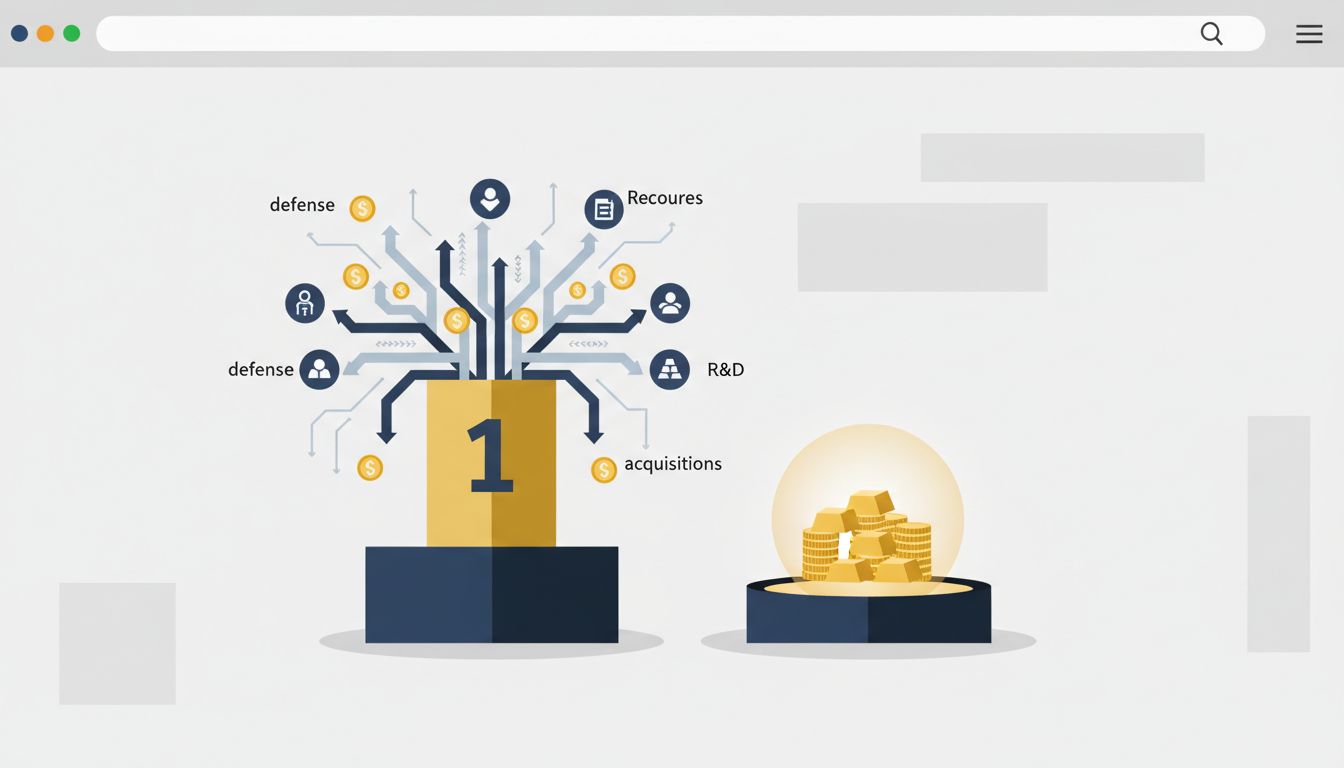
Winning a technology market is expensive. Not just to achieve, but to maintain. The company that reaches the top of a market inherits obligations that the second-place competitor never has to carry: the cost of setting the category’s direction, the burden of defending against every challenger, and the margin-crushing pressure to justify its position through perpetual reinvestment.
The second-place company, by contrast, operates with a useful clarity. It knows what customers want (the leader showed it), knows where the market is going (the leader pointed there first), and knows exactly which bets it doesn’t need to take. That clarity translates into something the market leader rarely has: pricing power and cost discipline at the same time.
This is not a fringe phenomenon. It shows up across hardware, software, and services. And the mechanism behind it is more structural than accidental.
What First Place Actually Costs
Intel is the clearest case study in recent memory. For most of the 2000s and 2010s, Intel held dominant share in PC and server processors. It also spent accordingly. Intel’s research and development budget regularly exceeded $13 billion per year, and the company maintained its own manufacturing fabs, which require capital expenditures in the tens of billions to keep current.
AMD, the perpetual second-place finisher in that market for most of those years, made a different choice. It spun off its manufacturing operations in 2009, creating GlobalFoundries, and became a fabless chip designer. That decision looked desperate at the time. It turned out to be one of the better strategic pivots in the industry’s history. By outsourcing fabrication to TSMC and focusing capital on design, AMD rebuilt its cost structure while Intel continued carrying the full weight of vertical integration. By the early 2020s, AMD was posting operating margins competitive with, and in some periods exceeding, Intel’s, despite still holding a smaller share of most markets.
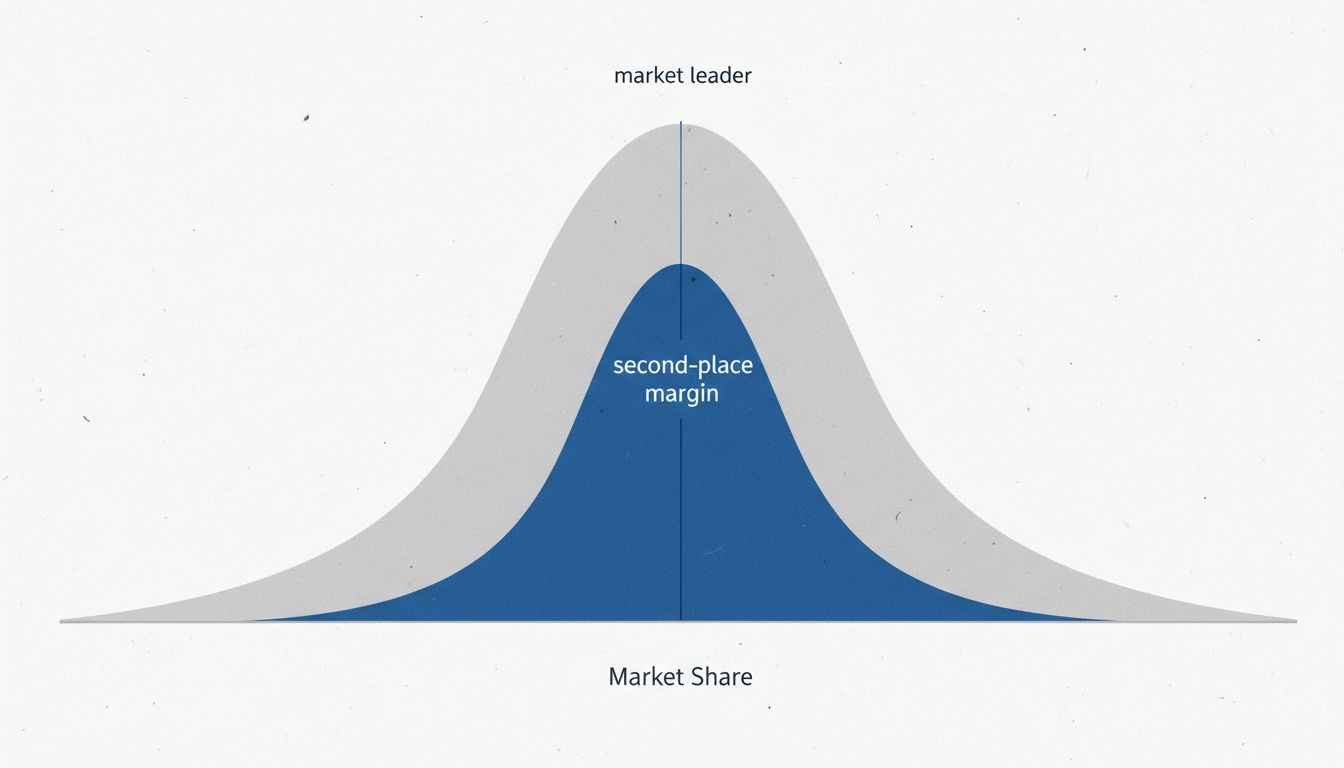
The pattern has a name in economics: the cost of market leadership scales faster than revenue from it. The leader must invest to protect its entire position. The challenger only has to invest to win the next segment.
The Follower’s Advantage in R&D
The research and development dynamic is particularly striking because it inverts conventional wisdom about innovation. The assumption is that market leaders innovate more because they have more resources. In practice, many market leaders over-invest in innovation aimed at defending their position rather than expanding value.
Microsoft’s years of dominance in productivity software offer an illustration. The company spent heavily trying to extend Office into new areas, some successful, many not. Google entered the productivity market with a narrower, cheaper-to-build approach. Google Docs launched without most of Office’s features, which meant Google spent a fraction of what Microsoft spent to build it. Google then used the competitive pressure to force Microsoft into building its own cloud version, absorbing costs Microsoft hadn’t originally planned.
Second-place players frequently benefit from what economists call “technology spillovers.” The market leader spends to develop and validate a technology. Others observe what worked. The follower then builds a refined version with less wasted R&D. This doesn’t require copying or imitation in any problematic sense. It just means that the market’s direction is clearer the later you enter.
Pricing Power Without the Price War
One of the more counterintuitive advantages of second place is pricing. Conventional thinking says the number-one player sets prices and everyone else follows. In practice, the market leader is often the one stuck in a defensive pricing posture.
Salesforce holds dominant share in CRM software. It also runs one of the most expensive sales organizations in enterprise software, with sales and marketing expenses that have consistently represented roughly 45 to 50 percent of total revenue. That expense exists primarily to retain and expand its installed base against challengers. HubSpot, positioned below Salesforce in the market, targets a different customer segment with a simpler product and a lower-cost inbound marketing model. HubSpot’s sales and marketing spend as a percentage of revenue has historically run below Salesforce’s, and the company has generated meaningfully better free cash flow margins than Salesforce in recent years, despite being a fraction of the size.
The reason is target selection. Second-place companies often compete in segments the market leader can’t defend efficiently. Salesforce’s sales force is expensive because it’s built to close large enterprise deals. HubSpot’s motion is cheaper because it’s aimed at companies Salesforce would consider too small to pursue. Neither company is copying the other’s strategy. They’ve found non-overlapping cost structures, and HubSpot’s happens to generate better unit economics.
The Acquisitions Trap
Market leaders face another tax that second-place companies often avoid: the expectation of acquisitions. When you are the defining company in a category, the market, investors, and press expect you to buy your way into adjacent spaces, neutralize potential threats before they mature, and demonstrate that your dominance is expanding.
This is costly in ways that extend beyond the purchase price. Acquisitions divert executive attention, create integration costs, introduce cultural friction, and often fail to produce the promised synergies. Cisco, which spent decades as the market leader in enterprise networking, made more than 200 acquisitions. Many worked. Many didn’t. The overhead of running a serial acquisition strategy is real and rarely shows up cleanly in headlines.
Second-place companies get to be more selective. They can acquire opportunistically rather than strategically defensively. And when they do acquire, the urgency is lower, which typically means better pricing and better integration outcomes.
This connects to a broader dynamic worth examining: the first-mover disadvantage in market entry, where being slightly behind often means absorbing the lessons of others’ expensive experiments rather than funding them yourself.
When Volume Destroys Margins
There’s a particular failure mode that catches market leaders: volume that requires margin sacrifice to maintain. This happens when a company has grown so large that its revenue depends on customers or segments that aren’t particularly profitable, but losing them would send a negative signal to investors.
Amazon Web Services is a notable exception to many patterns in this article, because AWS has managed to hold both market leadership and strong margins. But AWS is unusual. The more common pattern is what happened in personal computing: Microsoft held dominant share in operating systems through much of the 1990s and 2000s but consistently watched hardware partners compete on price in ways that kept the broader ecosystem margin-poor. Apple, with roughly ten to fifteen percent of global PC market share for years, ran some of the highest margins in the hardware business. The second-place positioning allowed Apple to ignore the low-margin volume segments entirely.
Apple’s gross margins on Mac have historically run in the high twenties to low thirties as a percentage of revenue, while many PC manufacturers operated on gross margins in the single digits. Apple got there by choosing customers carefully, which is something the market share leader cannot do without risking losing its position.
The Second-Mover Specific to Software
In software, the second-place advantage is sharper than in hardware because the cost structure differences are more pronounced. Software has no manufacturing costs to speak of, which means margin differences come almost entirely from sales, marketing, and R&D allocations.
The market leader in a software category typically reaches its position through aggressive sales expansion, category definition spending (conferences, white papers, analyst relations), and heavy investment in convincing skeptical buyers that the category is worth buying at all. That last cost is significant and rarely discussed. Educating a market is expensive. The second-place company enters after customers already believe the category has value.
This education cost advantage compounds over time. Early SaaS companies spent heavily on explaining why software delivered over the internet was worth trusting. Competitors who followed five years later inherited a market that had already resolved those concerns. They could spend on differentiation instead of legitimacy. That’s a fundamentally better use of a sales budget.
What This Means for Investors and Operators
If you’re evaluating technology companies, market share rank is a poor proxy for financial quality. A company holding second or third place in a large, growing market may be running a structurally superior business, precisely because it never took on the obligations of leadership.
For operators inside these companies, the implication is equally direct: the goal of becoming the market leader should be interrogated rather than assumed. In markets where the leader’s position requires perpetual expensive defense, staying in second place with a focused customer base and a disciplined cost structure may be the better outcome, not a consolation prize.
The companies that internalize this tend to resist the temptation to buy share through margin sacrifice. They choose customers the way Apple chose its Mac customers: not the largest possible set, but the most defensible one. They let the market leader explain the category to the world and show up after the education is paid for.
None of this is guaranteed to produce better outcomes. Second place can become irrelevance quickly in winner-take-most markets. But in markets with genuine segmentation, the economics of second place aren’t inferior to first. They are, in many cases, the better seat at the table.