The simple version
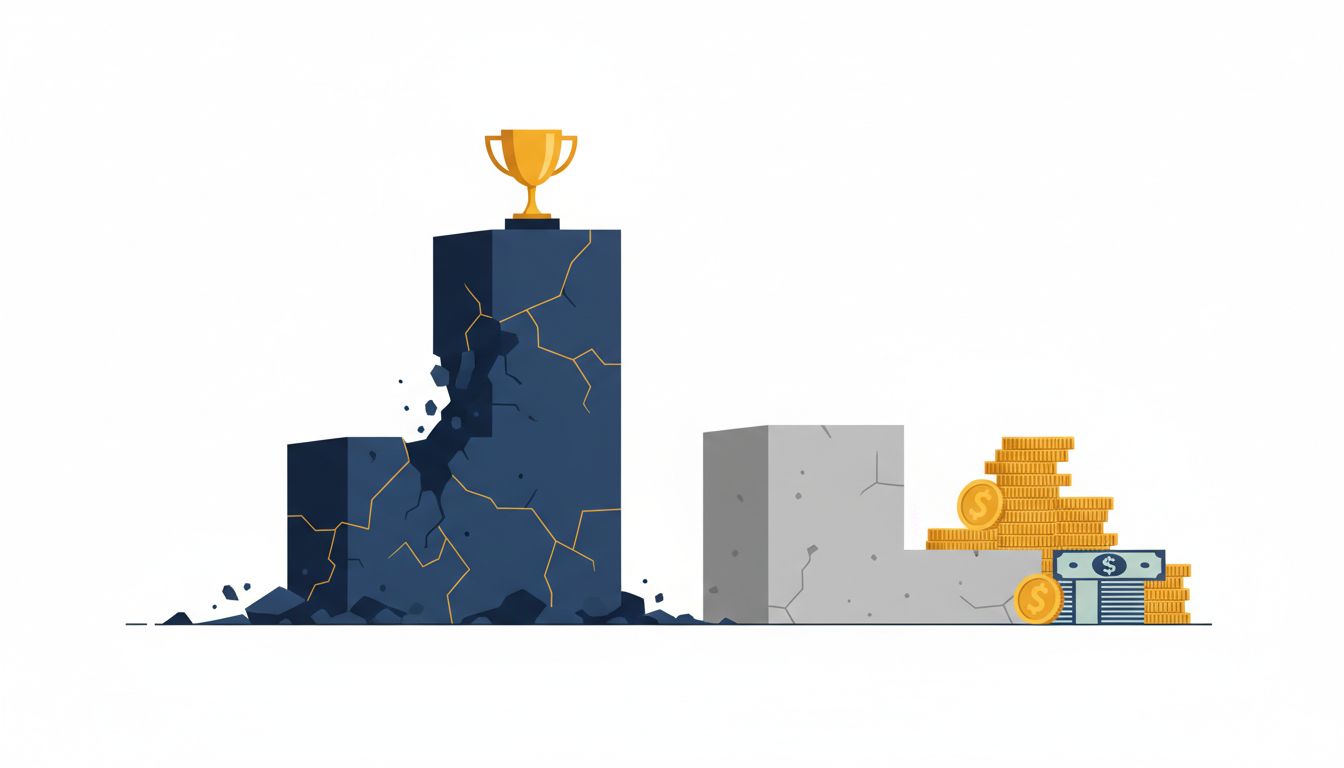
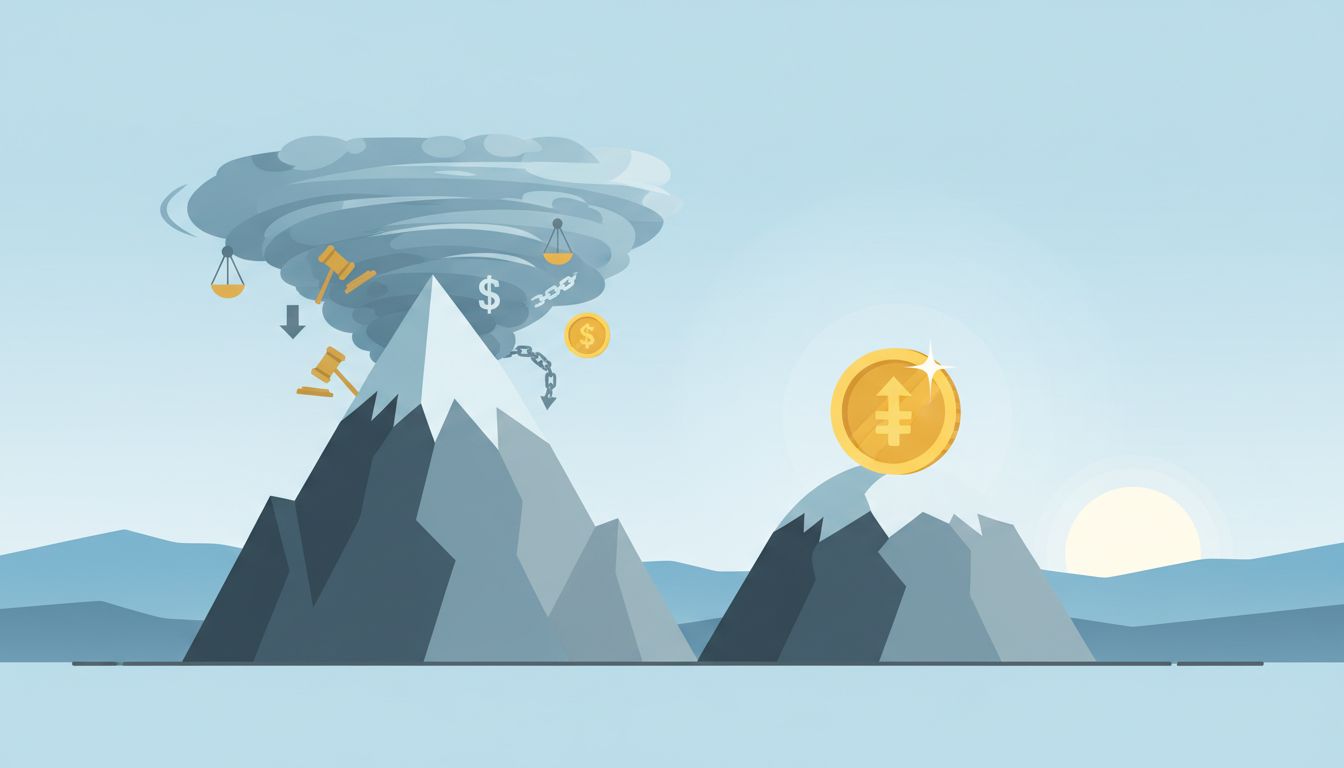
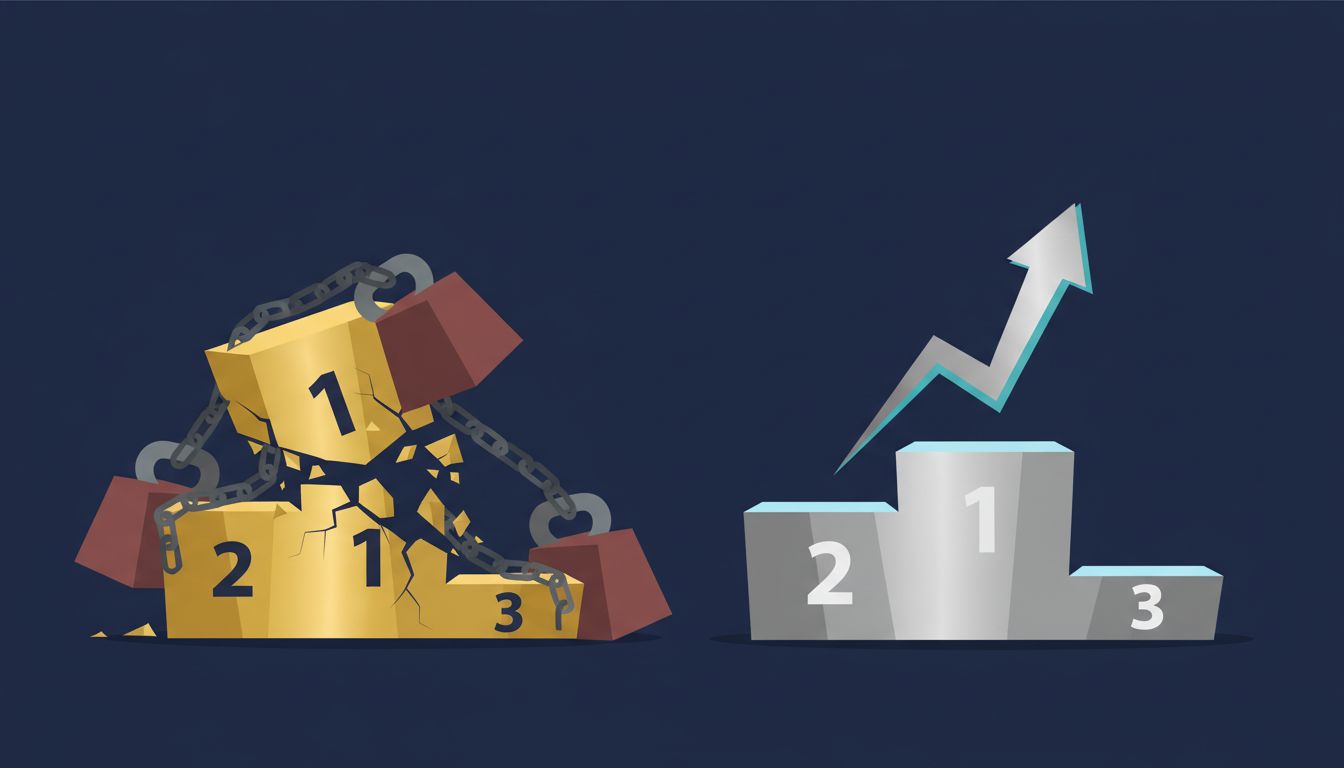
The company that wins a tech market usually has to spend so aggressively to stay on top that its profits get eaten alive. The company in second place often skips the most expensive fights and ends up keeping more of what it earns.
How the throne gets booby-trapped
Picture being Uber in 2015. You’ve won the ride-hailing market in the United States. Congratulations. Now you have to defend it. That means subsidizing rides to keep prices competitive, paying bonuses to retain drivers every time a competitor enters a city, launching in 70 more countries before someone else does, and spending on lobbying in every jurisdiction that wants to regulate you into oblivion. Winning didn’t hand you a treasure chest. It handed you a list of obligations.
This is the trap that market leaders consistently fall into: the crown comes with a cost structure that would make a CFO cry. You’re not just running a business, you’re running a business and simultaneously building a moat wide enough to drown anyone who tries to cross it. Those are two very different jobs, and doing both at once is brutally expensive.
Lyft, meanwhile, focused on the U.S. market where it already had brand recognition and a loyal user base. It avoided the international land-grabs. It wasn’t winning, but for stretches it was losing money at a much slower rate than Uber, and in some quarters posting better unit economics on individual rides. The number-two position gave it permission to be selective.
The research and development tax on leadership
There’s a version of this dynamic that plays out in enterprise software and semiconductors, and it’s even more punishing. When you are the market leader, customers and investors expect you to define what the market does next. That means you carry a disproportionate share of the R&D burden.
Intel spent billions developing new chip architectures through the 2010s while AMD could afford to be more surgical, targeting specific performance gaps rather than building the entire stack. AMD didn’t have to win everywhere. It just had to be meaningfully better in a few places, like gaming CPUs and server chips, to take share. By the time AMD’s Ryzen line launched in 2017, the company had rebuilt itself on a fraction of Intel’s R&D budget. Intel had been funding the future for the whole industry, and AMD showed up to collect.
This is a structural advantage that rarely gets discussed in the breathless coverage of market share battles. Second place gets to watch the leader make expensive bets, see which ones land, and then invest in the proven direction. The leader pays the tuition; the challenger gets the education.

Sales and marketing costs follow the same logic
Acquiring the first customer in a category is cheap compared to defending against a challenger once they’ve decided to come after you. Market leaders routinely find themselves in pricing wars they didn’t choose, forced to match discounts just to keep accounts they’ve held for years.
Salesforce has been the CRM market leader for two decades and spends around 45 to 50 percent of revenue on sales and marketing, a ratio that would be alarming in almost any other industry. The reason is simple: when you own the most territory, you have the most territory to defend. Challengers like HubSpot, particularly in the mid-market, can concentrate their sales effort rather than spreading it across every possible vertical and deal size. Pricing pressure is real, but it’s more manageable when you’re not simultaneously trying to hold every account in the book.
The leader also tends to become the target for competitor messaging. Every challenger’s sales deck positions itself against the market leader by name. You’re funding your competitors’ marketing strategy just by being number one.
When network effects invert the advantage
You might object here: what about network effects? Doesn’t the winner get stronger and stronger as more users join, making the whole structure self-reinforcing?
Sometimes, yes. But network effects are genuinely powerful in fewer markets than the mythology suggests. And even where they exist, they have a ceiling. Once a network reaches saturation, adding more users doesn’t improve the product, and the cost of maintaining a massive user base starts to outweigh the benefit. Facebook’s social graph became so dense and so contested (by family members, brands, political content) that it degraded the product for many core users, creating room for Instagram, then TikTok, to pull attention away despite Facebook’s enormous network advantage.
The companies that build their entire strategy around capturing the wrong user base often discover the network effect works against them, locking them into serving an audience that doesn’t actually grow the business.
What actually determines profitability here
The honest version of this thesis isn’t that second place is always better. It’s that second place allows a specific kind of strategic discipline that first place actively discourages.
A challenger can decide which customer segments to pursue, which geographies to prioritize, which product investments to make. The leader often doesn’t have that luxury because declining to fight in a particular area gets interpreted as retreat. When Microsoft started losing enterprise cloud deals to AWS in the early 2010s, it couldn’t just decide data centers weren’t important anymore. It had to compete everywhere, even where the unit economics were terrible.
The companies that extract the most profit from a second-place position share a few traits: they’re ruthless about where they choose to compete, they let the leader absorb the cost of market education, and they pick the fights where they have a genuine structural advantage rather than trying to be a smaller version of the company ahead of them.
That last part is what most challengers get wrong. The profitable number-two isn’t trying to be number one with a lower budget. It’s playing a fundamentally different game, one where the scoreboard isn’t market share but margin. And on that scoreboard, the winner’s trophy can look a lot like a consolation prize.