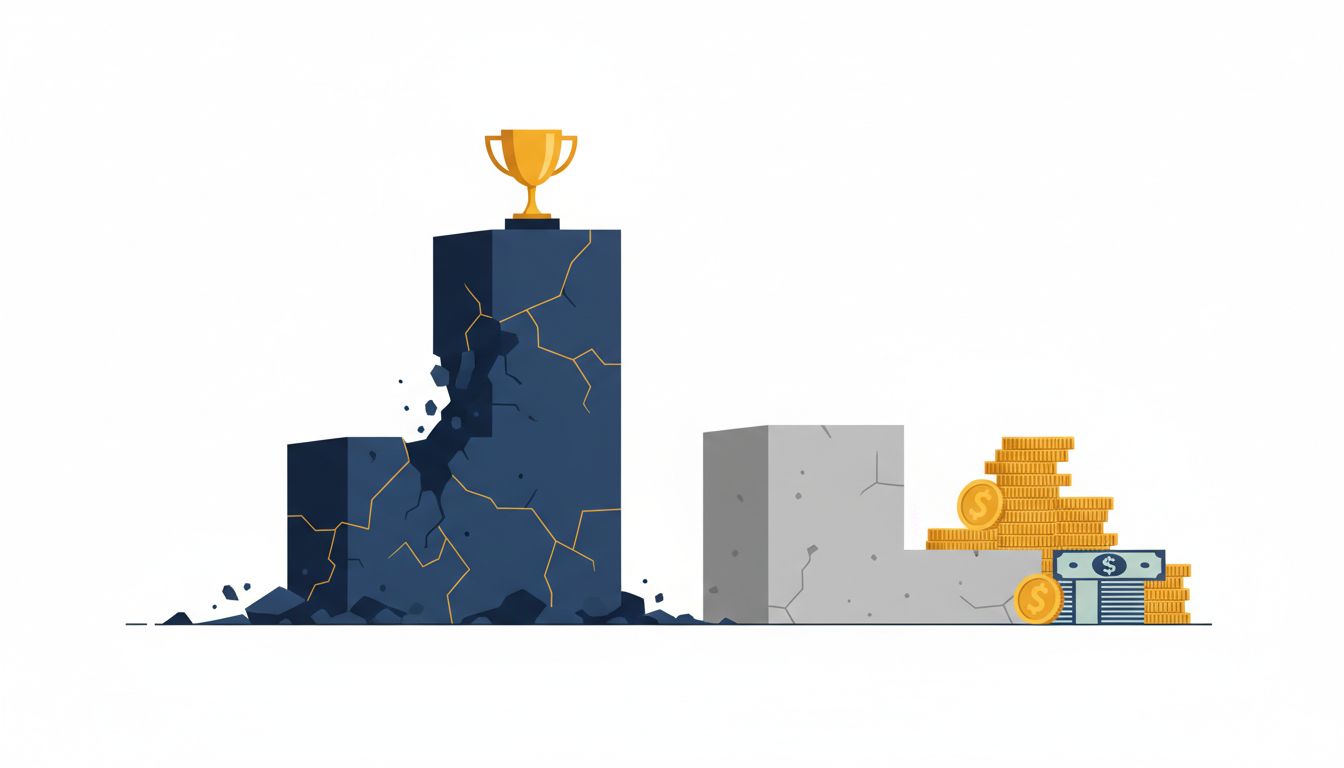

Myspace taught a generation how to have a social media profile. Facebook showed up and collected the tuition.
This happens so often it barely registers as surprising anymore, yet founders keep pitching “first mover advantage” like it’s a cheat code. It’s not. In many categories, being first is closer to a liability than an asset. Here’s why the second-place product usually takes home more money.
1. The Pioneer Pays for Market Education
When TiVo launched in 1999, it had to explain what a DVR was, why you’d want one, and why it was worth $400 plus a monthly subscription. That’s expensive selling. By the time cable companies bundled DVR functionality into set-top boxes, TiVo had done years of consumer education for free. The cable companies collected the reward.
This pattern shows up in almost every category that required behavioral change. The first mobile payment app had to convince people that paying with a phone was safe. The first SaaS accounting tool had to argue against desktop software. Whoever came second inherited a customer base that already understood the concept and just needed a better reason to buy.
2. Second Place Gets a Detailed Map of Every Landmine
I’ve talked to more than a few founders who built version two of something. The ones who were honest about it would say some version of the same thing: “We just watched what broke for the first company and didn’t do those things.”
The pioneer has to make the mistakes in public. They find out that enterprise customers want SSO through a lost deal, not a user interview. They discover their pricing model falls apart at scale after they’ve already built a sales team around it. The second entrant reads the postmortems, studies the one-star reviews, and builds a product that skips straight to the version the market actually wanted. Your first customer can save or sink the company, but the second company into a market gets to study what sank the first one’s early customers before making any commitments.
3. Investors Price First-Mover Risk Into the Cap Table
Being first means raising money before there’s proof the market exists. That’s the riskiest bet a VC makes, and they price accordingly. Early investors in a category-creator often take large equity stakes precisely because the risk is so high. By the time a second entrant raises, the market is validated. The fundraising conversation is easier, the terms are better, and the company keeps more of itself.
This matters when it’s time to pay out. A company that owns 60% of itself heading into an acquisition or IPO will have very different outcomes for founders and employees than one that got diluted funding a market that didn’t fully cooperate until year five.
4. Technology Gets Cheaper While You Wait
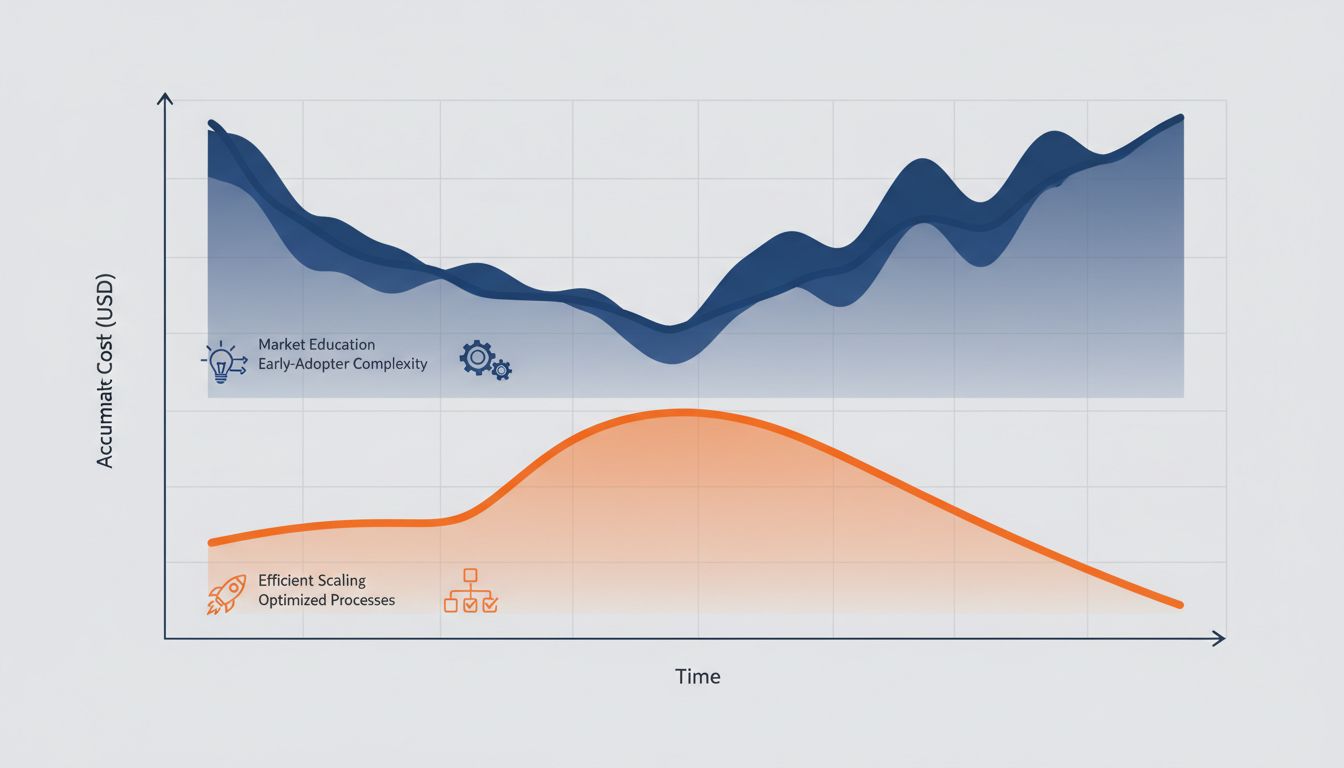
The first company to build in a new infrastructure category is often building on expensive, immature tooling. The second one, arriving two or three years later, benefits from the cost curve doing its work. Cloud compute costs fall. Open-source libraries appear. Specialized hiring markets develop.
AMD didn’t invent the x86 processor market, but they spent years building toward profitability by letting Intel carry the infrastructure investment and then competing on unit economics once the architecture matured. They got to optimize rather than invent. Optimization is a far cheaper game.
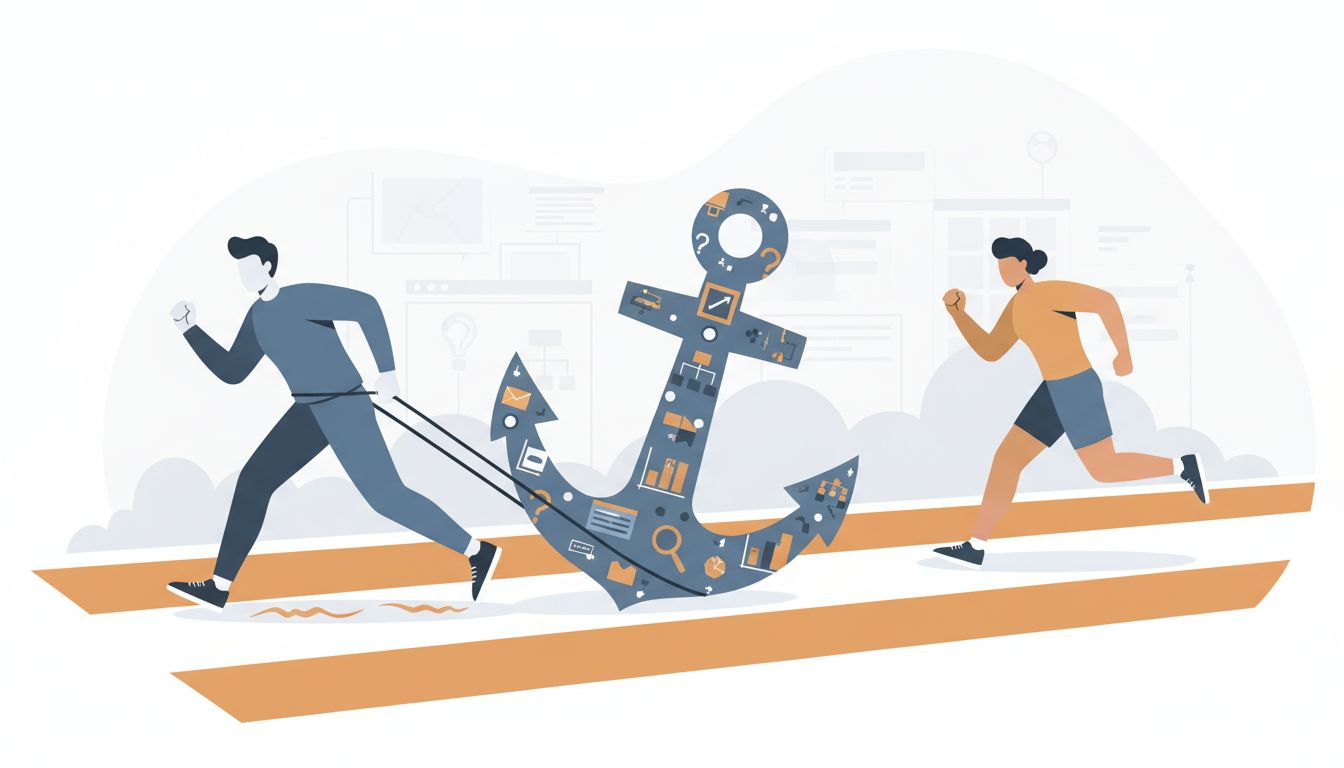
5. The Pioneer Gets Trapped by Its Early Customers
The first product in a category is often shaped by whoever was willing to take a risk on an unproven solution. That customer profile is almost never the mass market. It’s a specific kind of buyer: sophisticated, tolerant of rough edges, and opinionated. The pioneer builds for that buyer, deepens the relationship, and ends up with a product architecture optimized for a customer segment that doesn’t scale.
The second entrant watches which features the mainstream market actually uses, ignores the ones only early adopters cared about, and ships something cleaner. This is part of why deleting a feature is harder than building one for category creators specifically. They can’t remove things without alienating the loyal customers who funded their survival.
6. Brand Trust Accrues to the Familiar, Not the Original
Most buyers in most markets do not care who invented the category. They care who has the best-looking product, the most credible brand, and the social proof that other people like them made this choice. The pioneer’s invention story is a great pitch deck slide but a weak purchase motivator.
The second entrant can arrive with a refined product, a polished brand, and testimonials from customers the pioneer left dissatisfied. That’s a much stronger selling position than “we did this first.” Google didn’t invent search, but most people who use it couldn’t name the company that did. Slack didn’t invent workplace messaging. Instagram didn’t invent photo sharing. The list is long.
7. Winning the Category Isn’t the Same as Winning the Business
Even when the first mover does retain category leadership, it frequently wins a market that turns out to be structurally brutal. Heavy investment has created a customer expectation of low prices. Margins are thin. The pioneer built the road and now everyone drives on it for free.
Being a dominant player in a low-margin category is a painful place to operate. Winning the market is often a terrible business. The second entrant, particularly one that chose a specific segment rather than the whole market, often ends up with better unit economics than the company whose name became synonymous with the category.
The mythology of first-mover advantage persists because it makes for a compelling story. “We invented this” sounds like a defensible position. Frequently it isn’t. The better story, if you’re willing to tell it honestly, is that you watched someone else figure out what the market wanted and then built the product it actually deserved.