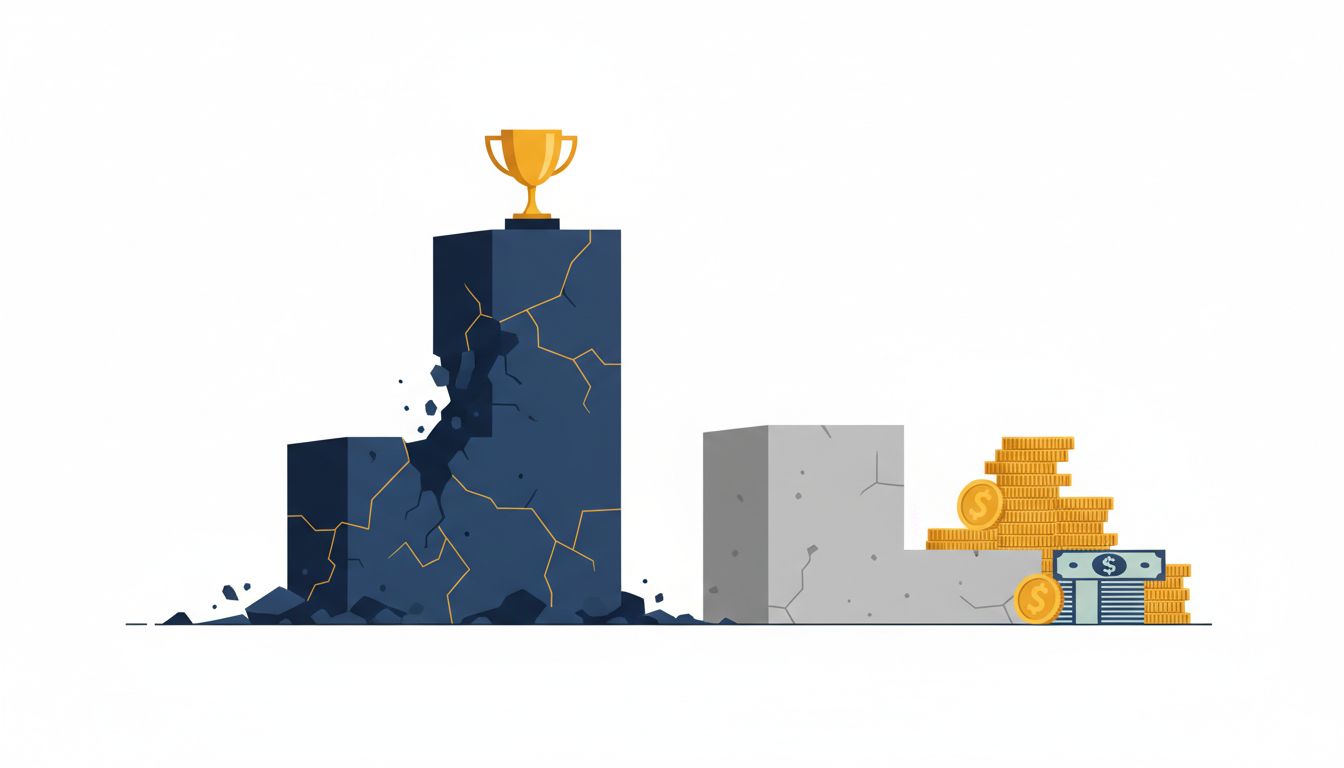

Cloud infrastructure pricing looks like a commodity market from the outside. Every few months, AWS, Google Cloud, or Azure cuts rates on compute or storage, and the press treats it like a price war. It mostly isn’t. Price is rarely the deciding factor in enterprise cloud deals, and when it is, second-cheapest loses almost every time. Here’s why the middle of the price curve is where deals go to die.
1. Buyers Who Care About Price Care About the Lowest Price
This sounds obvious until you watch a procurement process up close. The companies running pure price-optimization exercises, the ones genuinely migrating workloads to whoever quotes lowest, are not splitting the difference between first and second cheapest. They’re taking the floor. If your pitch is “we’re almost as cheap as the cheapest option,” you’ve already lost that buyer. You’ve just made them better at negotiating with your competitor.
The only exception is when the cheapest option has reliability or support concerns that create meaningful risk. But that’s not a price argument. That’s a risk argument, which belongs in a different part of the conversation entirely.
2. Buyers Who Don’t Care About Price Care About Something Else Entirely
Enterprise cloud decisions above a certain spend threshold are almost never made by the person who sees the bill. They’re made by engineering leadership, sometimes the CTO, sometimes a VP of infrastructure, weighing factors like managed service depth, compliance certifications, geographic availability, and support quality. These buyers are price-sensitive in the abstract but not in the specific. They’ll negotiate on terms. They won’t switch providers over a 12% per-core-hour difference.
For this segment, being second-cheapest buys you nothing. You’re competing on the wrong dimension. The companies that win large enterprise cloud deals, and Azure’s consistent gains against AWS in heavily regulated verticals like financial services and government are the clearest example, win them on trust, tooling, and existing vendor relationships. Not on rack rate.
3. The Middle Position Signals Nothing
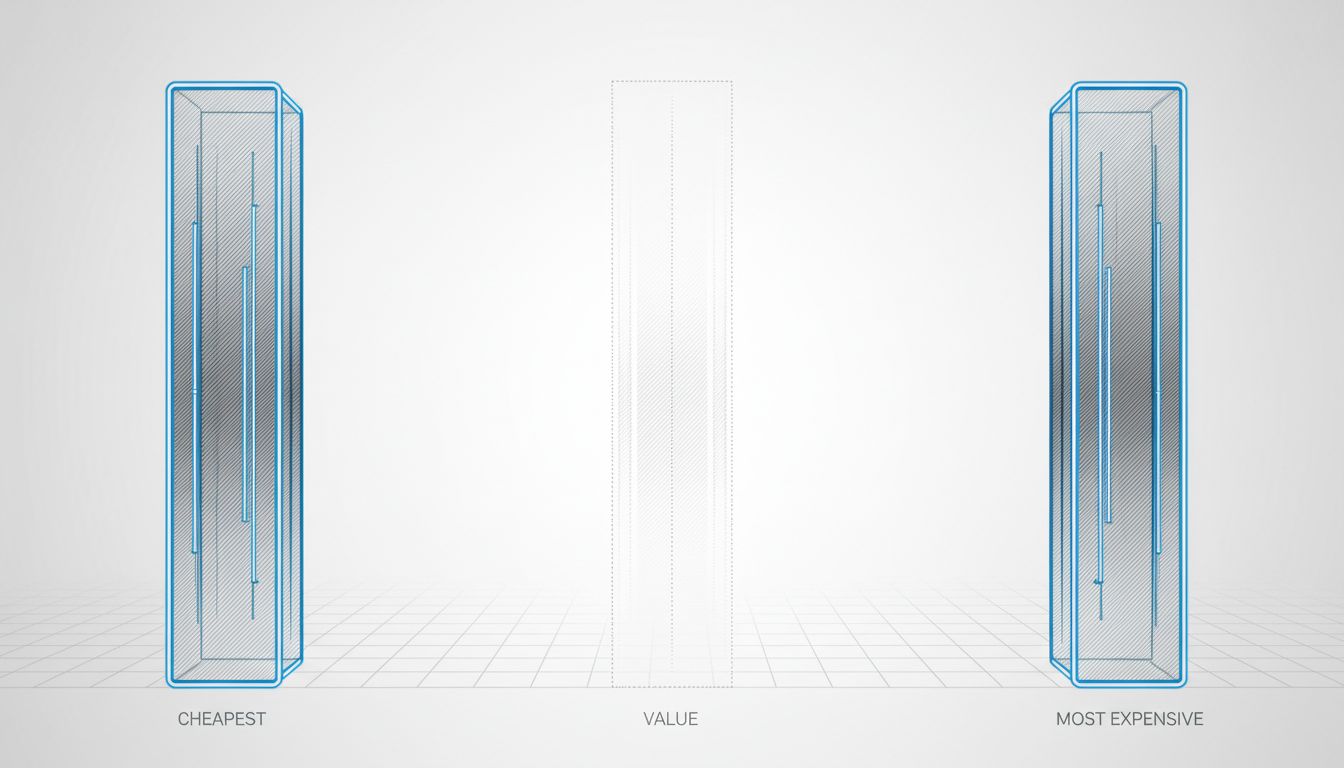
Brand positioning is partly about what you signal to buyers before they talk to your sales team. The cheapest option signals accessibility, volume, and a race-to-the-bottom philosophy. The most expensive option signals premium support, compliance depth, and enterprise reliability. The second-cheapest signals… that you tried to undercut someone and mostly succeeded.
This is a genuine structural problem. Positioning theory has known for decades that the middle of a spectrum is the hardest place to defend because it communicates no clear priority. In cloud specifically, where buyers are sophisticated and switching costs are high, ambiguous positioning is actively damaging. It creates doubt at exactly the moment a buyer needs confidence.
4. Switching Costs Rewire How Buyers Think About Savings
A company running serious workloads on AWS doesn’t evaluate a competitor’s lower pricing in isolation. They evaluate it against the migration cost, the retraining cost, the integration rebuild cost, and the risk premium of moving production systems. The threshold for switching is far higher than most challengers model.
This means a small price advantage rarely clears the bar. The challenger needs to be dramatically cheaper, or significantly better on another dimension, to generate a serious conversation. “We’ll save you 15% on compute” is not a serious conversation starter for a company with three years of AWS-specific architecture investment. It might be enough to get a meeting. It is almost never enough to close a deal.
5. The Real Wins Come From Specificity, Not Price
The cloud providers who have taken real market share in the last decade did it by owning specific use cases, not by being marginally cheaper across the board. Google Cloud built a genuine stronghold in machine learning workloads, partly through its tensor processing units and partly through association with the research community that trained on Google infrastructure. Oracle Cloud grew its cloud revenue substantially by targeting existing Oracle database customers who needed a migration path with minimal friction. Neither story is a price story.
This pattern mirrors what happens in almost every mature tech market. Second place doesn’t win on price; it wins on a different definition of the product. The cloud providers that have found durable revenue did it by making a specific customer segment feel like the platform was built for them.
6. Deep Discounting Trains Buyers to Wait
There’s a downstream consequence to positioning yourself as the price-competitive alternative: your buyers learn to treat your list price as a negotiating fiction. They come in expecting heavy discounts. Your sales cycles lengthen. Your margins compress. Your customer success team is measured against customers who chose you because you were cheap, which correlates strongly with lower retention when a cheaper option eventually appears.
This is the structural trap second-cheapest providers often don’t see until they’re inside it. The customer mix you acquire through price competition is the hardest customer mix to retain and expand. It’s a churn accelerant built into the acquisition strategy.
7. The Lesson Isn’t to Be the Most Expensive
None of this argues that premium pricing is automatically the right call. The argument is sharper than that: price is a positioning decision, not just a revenue decision, and the second-cheapest position conveys the wrong information to almost every meaningful buyer segment. If you’re going to compete on price, commit to it and be the cheapest. If you’re not going to compete on price, stop treating marginal discounts as a growth strategy and start figuring out what you actually do better.
Cloud infrastructure has room for more than two viable competitors. But the ones who survive long-term will be known for something specific, whether that’s compliance depth, developer tooling, regional availability, or ML infrastructure. The ones who survive on “we’re almost as cheap as AWS” are still waiting for their first big win.