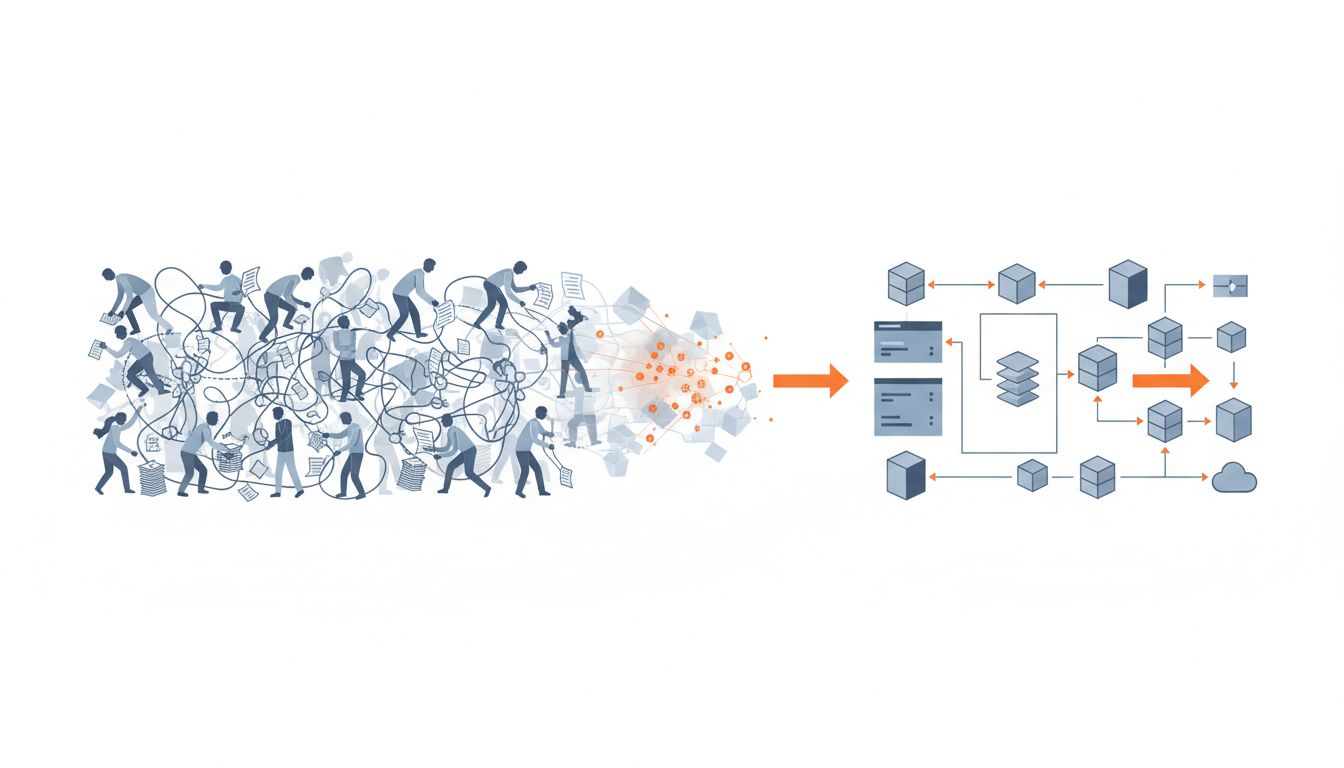

A friend of mine co-founded a payments startup around 2014. Brilliant guy, deep domain knowledge, raised a respectable seed round. Three years later he was winding it down, not because the market moved against him, but because he’d spent two of those three years building infrastructure that Stripe had already figured out. He was relitigating solved problems with investor capital. The company that eventually ate his lunch was started by someone who’d watched a handful of payments startups struggle and fail, took notes, and built something fundamentally different.
This is not a story about copying. It’s a story about information.
What We Get Wrong About First-Mover Advantage
The mythology of the first mover runs deep in startup culture. Be bold. Move fast. Plant your flag before anyone else. The logic seems airtight: if you’re first, you set the standard, build the moat, lock in the customers. Google killed AltaVista. Amazon killed Borders. Facebook killed MySpace.
Except those examples are almost universally misread. Google wasn’t the first search engine, it was approximately the twenty-first. Amazon had a dozen bookselling competitors online before it became Amazon. Facebook arrived years after Friendster and MySpace had already proven that social networking was a real behavior people wanted. In each case, the eventual winner had the luxury of watching what didn’t work.
The first mover’s actual advantage is market education. They spend their capital, time, and credibility teaching customers that a category exists and that it’s worth paying for. That’s genuinely valuable work. But the first mover also absorbs all the cost of being wrong, and in new markets, the cost of being wrong is enormous.
The Specific Advantages That Come With Going Second
There’s a particular kind of knowledge you can only get from watching someone else build something. Not theoretical knowledge about markets, but operational knowledge about failure modes.
The second founder knows which customer segments churn immediately, which enterprise contracts take eighteen months to close, which integrations eat engineering bandwidth without producing revenue. They know what the sales deck looked like before it worked. They can see, in the first company’s public communications, the exact moment when the pivot happened and what preceded it. This is intelligence that no amount of market research can replicate, because it’s produced by real humans spending real money on a real product.
Operationally, they also face lower infrastructure costs. The first generation of companies in any category builds on primitive tooling. They write things from scratch that are now commodities. By the time the second founder arrives, there’s often a mature vendor for the hardest pieces of the stack, a community of engineers who understand the domain, and a set of established integrations that customers already expect. The second founder inherits a more hospitable technical environment.
The talent pool is also warmer. Engineers and operators who worked at the first-generation companies are available, often with genuine grievances about what went wrong and strong opinions about what should be different. Recruiting becomes a different conversation when you can say: I know what the previous company got wrong, here’s how we’re doing it differently.

Why This Isn’t Just About Being a Fast Follower
I want to push back on a specific misreading of this argument before someone makes it: the second founder isn’t valuable because they can copy quickly. Pure fast-follower strategies, where you wait for a competitor to validate a market and then replicate their product faster, tend to produce commodity businesses that compete only on price or distribution. That’s a brutal place to build.
The durable version of the second-founder advantage requires a genuine insight about why the first company’s approach was structurally limited. Not “they made tactical mistakes we can avoid” but “their fundamental assumptions about the customer, the pricing model, or the delivery mechanism were wrong, and here’s what’s actually true.”
Stewart Butterfield is a useful case here. Glitch (originally Game Neverending) failed as a game but produced Flickr. His second game company failed but produced Slack. Butterfield wasn’t copying anyone. He was finding the real product inside the wreckage of the original thesis. That kind of second-order thinking, what did people actually use this for, what problem were they really solving, is distinct from imitation.
The question the second founder should be able to answer clearly: what does the first company’s failure or stagnation tell me about the real structure of this problem? If you can’t answer that with specificity, you’re probably just copying.
The Psychological Cost Nobody Talks About
First founders carry a particular psychological burden that’s underappreciated. They’re building without a map. Every major decision is made with essentially no relevant precedent. That’s exhilarating for a certain kind of person, which is probably why those people get celebrated so heavily in startup culture. But it’s also exhausting in ways that compound over time.
The scar tissue from early decisions, technical architecture chosen under pressure, early hires who shaped the culture in ways that calcified, pricing structures set before the founder understood the customer, doesn’t just slow the company down. It shapes what the founder believes is possible. First founders often can’t see the constraints they’re operating under because they built those constraints themselves.
Second founders enter with a different psychological relationship to uncertainty. They’ve watched someone navigate the ambiguity already. They have a rough map even if it’s imprecise. That doesn’t make them less bold, but it tends to make them more deliberate, less prone to the charismatic overconfidence that causes first-generation companies to scale before they’ve actually solved the core problem.
This shows up in how these founders think about focus. First founders often chase every signal because they’re terrified of missing the thing that matters. Second founders, having watched that pattern fail, tend to be more willing to ignore noise.
Where the Second Founder Still Gets Wrecked
This argument has real limits and I don’t want to pretend otherwise.
The second founder loses badly in categories where timing is genuinely deterministic, where a specific technology window opens and then closes, and where being first is the only way to accumulate the proprietary data or network effects that matter. Large language model infrastructure is probably an example of this right now. The compute advantages and training data advantages that accrued to the companies that moved early in 2020 and 2021 are not easily replicable by someone starting today. In those situations, the information advantage of being second is overwhelmed by the compounding structural disadvantage.
The second founder also loses if they mistake the first company’s execution problems for structural problems. If a company failed because the founder was bad at sales, that’s not a signal that the market doesn’t want the product. Misreading the failure mode leads to solving the wrong problem with the same flawed underlying thesis.
And there’s a timing risk in both directions. Come too early after the first company and you’re still fighting the same market education battle they were fighting, without their head start. Come too late and the window has closed. The second founder’s advantage is largest in a particular window, roughly eighteen to forty-eight months after the first company has established the category but before a clear winner has emerged.
What the Research Actually Shows
A pattern worth noting: studies of market entry timing consistently show that early movers retain an advantage in brand recognition and customer relationships, while later entrants tend to outperform on unit economics and long-term profitability. The first mover grabs the beach. The second mover builds the hotel.
This tracks with what you see across categories. Salesforce wasn’t the first CRM. Workday wasn’t the first HR software vendor. Shopify watched years of e-commerce platform struggles before building something that fit a different, better-defined customer. In each case, the company that eventually dominated the category had the benefit of watching an earlier generation absorb the cost of figuring out what customers actually needed.
Durability, specifically the ability to survive long enough to compound, comes from solving a problem correctly, not just first. And solving it correctly requires information that only exists after someone has tried and either failed or gotten partially right.
What This Means
If you’re considering starting a company in a category where someone has already built and either failed or plateaued, that’s not a warning sign. It’s potentially an asset, but only if you do the hard work of understanding specifically what went wrong and why.
That means actually talking to former employees and customers of the first company. Reading every post-mortem and investor update you can find. Building a detailed theory of the failure that goes beyond “they had bad execution” to something structural about the market, the pricing model, or the customer assumption.
If you can articulate what the first company got fundamentally wrong, you have an edge. If you can only articulate what they got tactically wrong, you’re probably going to repeat the strategic mistake while executing it more smoothly.
The first founder is brave. The second founder, done right, is wise. Both matter. But wisdom compounds in ways that bravery alone doesn’t.