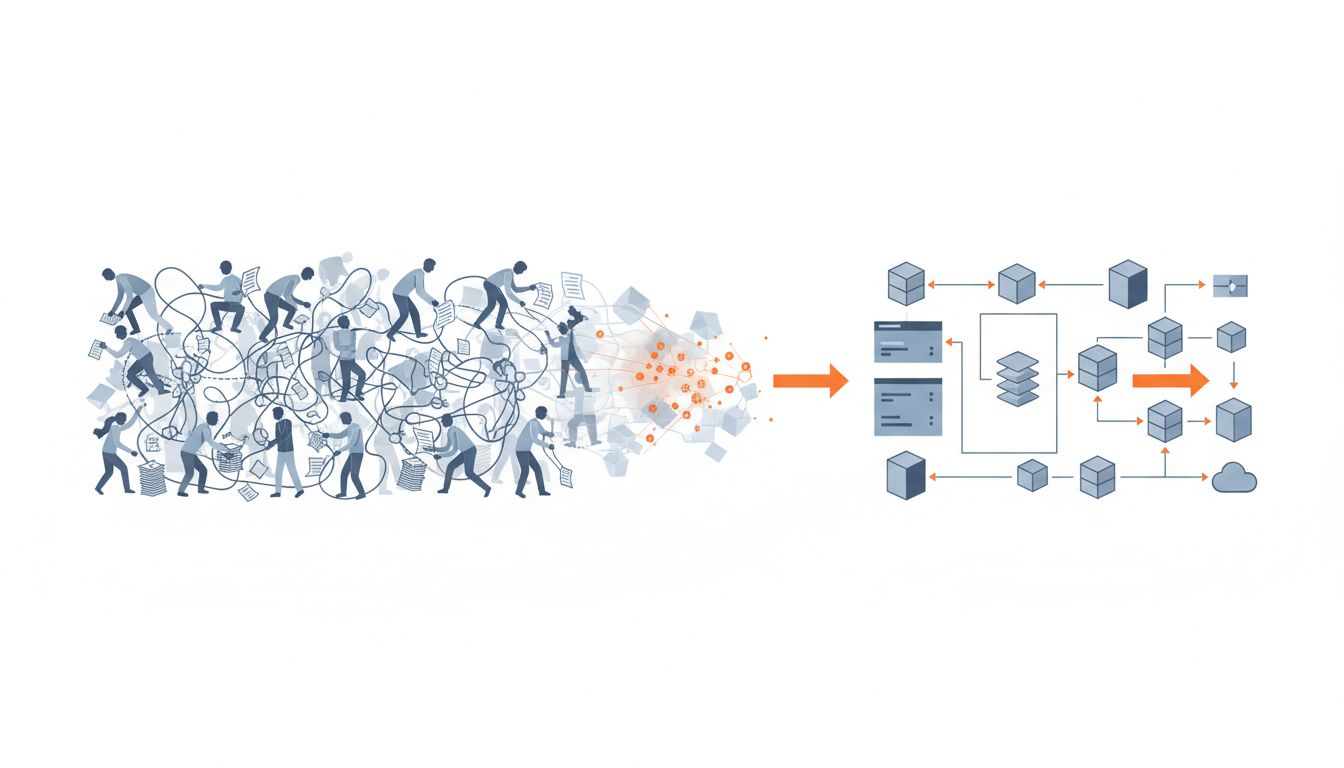
A few years ago, a B2B SaaS company I knew shut down with three weeks notice. They sent a single email on a Tuesday. Their customers, many of them small businesses that had built workflows around this tool, had until the end of the month to export their data, find an alternative, and migrate. One of those customers had been with them since beta. She had referred a dozen other paying accounts. The shutdown email landed in her spam folder.
This story is not unusual. It is, in fact, the default.
Founders spend enormous energy thinking about how to raise money, how to hire, how to grow. They spend almost none thinking about how to fail responsibly. And that asymmetry has real costs, paid mostly by the people who trusted you.
Your customers made a bet on you
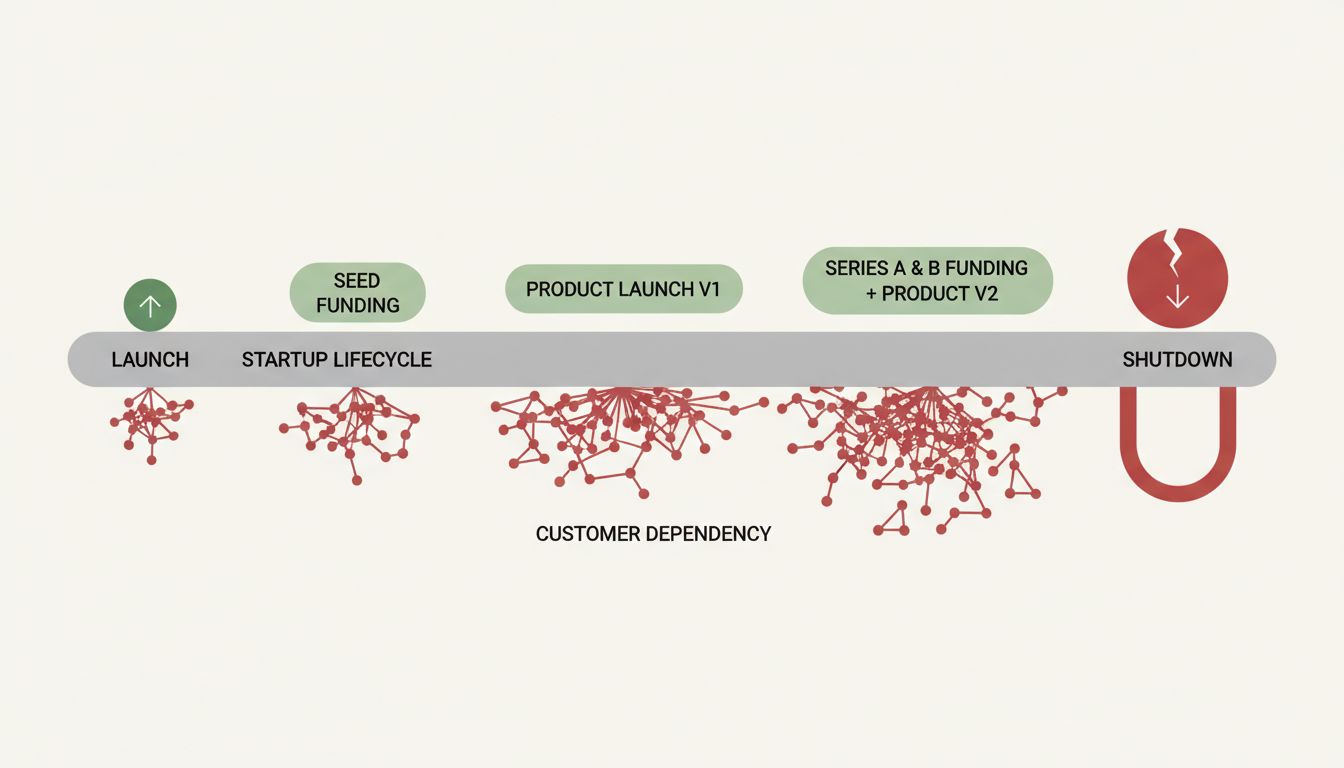
When a business buys your software, they are not just purchasing features. They are making an operational commitment. They are training staff, adjusting processes, storing data in your system, and in many cases, telling their own customers that they use your product. That commitment compounds over time. A customer who has been with you for two years has woven you into their operations in ways neither of you fully understand.
When you shut down without adequate notice, you are unwinding that commitment for them, on your timeline, with your interests as the priority. The fact that you ran out of money does not change the nature of what you are asking them to absorb. It just changes who is suffering.
The startup world has a tendency to treat customers as abstract metrics, conversion rates and churn numbers, until they become exit interview quotes. The moment you are contemplating shutdown is the moment that abstraction becomes most dangerous.
The notice period is almost always too short
Industry practice, to the extent there is any, seems to converge on 30 days notice for most SaaS shutdowns. That is not enough. It is barely enough time for a customer to evaluate alternatives, let alone migrate data, retrain staff, and renegotiate contracts with a new vendor.
Enterprise customers sometimes fare better because they have legal teeth. Small business customers, who are often the backbone of early-stage SaaS revenue, typically have no leverage at all. They get the same Tuesday email.
Ninety days is a reasonable minimum for anything where customers have stored data or built integrations. Six months is not unreasonable for tools embedded in critical workflows. Yes, that might mean running on fumes to keep the lights on longer than you want to. That is part of what you signed up for when you took their money.
Data portability is not optional
Many startups treat data export as a nice-to-have, something to build after the core product is stable. That calculation looks very different from the customer’s side. Their data is not yours. You are holding it on their behalf.
A clean, complete, self-service data export is not a feature. It is a baseline obligation. It should exist before you launch, not as a shutdown task. The number of startups that shut down and leave customers either unable to retrieve their data or forced to do it through a manual, error-prone process is genuinely alarming. Sometimes the export functionality has to be built in the final weeks, by a skeleton crew, under time pressure, which is exactly when you most want it to have been finished years earlier.
If you are reading this before you have shipped your export functionality, stop reading and go build it.
Silence is the worst choice you can make
Founders going through a shutdown are often dealing with genuine personal and financial stress. Investors are calling. Lawyers are involved. The last thing anyone wants to do is communicate clearly and repeatedly with customers about what is happening.
But silence, or a single form email, is actively harmful. Customers pick up signals. Support tickets go unanswered. Changelogs go quiet. Forum posts from the team stop appearing. People start asking each other in Slack whether the company is okay. And then the Tuesday email arrives and they have 30 days.
Proactive communication, even when there is nothing definitive to say, gives customers time to plan. It also happens to be what you would want if the situation were reversed. The founders who do this well are remembered differently than the ones who don’t, and that matters for whatever comes next in their careers.
The counterargument
Some will argue that a startup running out of money cannot afford to prioritize customer experience during shutdown. Resources are gone. The team is dispersed. Lawyers are billing by the hour. There is no organizational capacity for a thoughtful wind-down.
This argument confuses cause and effect. The reason shutdown wind-downs are chaotic and customer-hostile is usually that no one planned for the possibility of failure while the company was still healthy. If you build data portability early, maintain honest customer communication throughout the company’s life, and keep a documented shutdown plan the way you keep a disaster recovery plan, the actual shutdown is not nearly as overwhelming.
The cost of responsible shutdown planning is low when you do it proactively. The cost when you don’t is paid by your customers.
Failure is not the problem. Negligence is.
Most startups fail. That is not a secret or a scandal. The people who build them know it going in, and increasingly so do the customers who choose early-stage tools. What customers cannot reasonably anticipate, and what they have every right to be angry about, is being treated as a secondary consideration when the end comes.
You took their money. You took their trust. You took their time and their operational risk. The least you can do is give them enough runway to land safely when yours runs out.