The simple version
When you write a prompt, you’re thinking in terms of meaning and intent. The model is doing something much stranger: predicting which tokens are statistically likely to follow the ones you gave it. Those two things often produce similar results, but when they don’t, the gap is confusing.
You’re not giving instructions. You’re setting a context.
The mental model most people bring to prompting is roughly: write instructions, get output. It’s the natural way to think about it, because that’s how we communicate with humans and software alike. You tell a function what to do. You tell an employee what you need.
LLMs work differently at a mechanical level. When GPT-4 or Claude reads your prompt, it isn’t parsing your intent the way a person would. It’s using your text as a statistical context from which to predict likely continuations. The model has no understanding of what you want. It has a very sophisticated sense of what usually comes next, given text that looks like yours.
This matters because those two things, fulfilling intent versus predicting continuation, often produce the same output. But the failure modes are completely different, and if you don’t understand which process you’re actually triggering, you’ll misdiagnose why things go wrong.
Tokens first, meaning second
The model never actually reads your prompt as text. It converts your words into tokens (roughly, fragments of words, sometimes whole words, sometimes subword units) and processes those numeric representations through its attention layers. The phrase “Don’t include any caveats” becomes a sequence of tokens. The model doesn’t reason about the prohibition. It updates the probability distribution for the output.
This is why certain prompt patterns work and others don’t, in ways that seem almost arbitrary. Saying “You are a helpful assistant that never uses bullet points” sometimes works. Sometimes the model uses bullet points anyway, not because it’s defying you, but because the training data strongly associated bullet points with helpful assistants, and that statistical weight can outpull your explicit instruction.
The flip side: patterns that seem redundant or odd to a human can be genuinely effective. Saying “Think step by step” works not because the model understands the value of deliberate reasoning, but because text that contains that phrase in training data tended to be followed by careful, methodical content. You’re steering the distribution, not issuing a command.
Position matters more than you expect
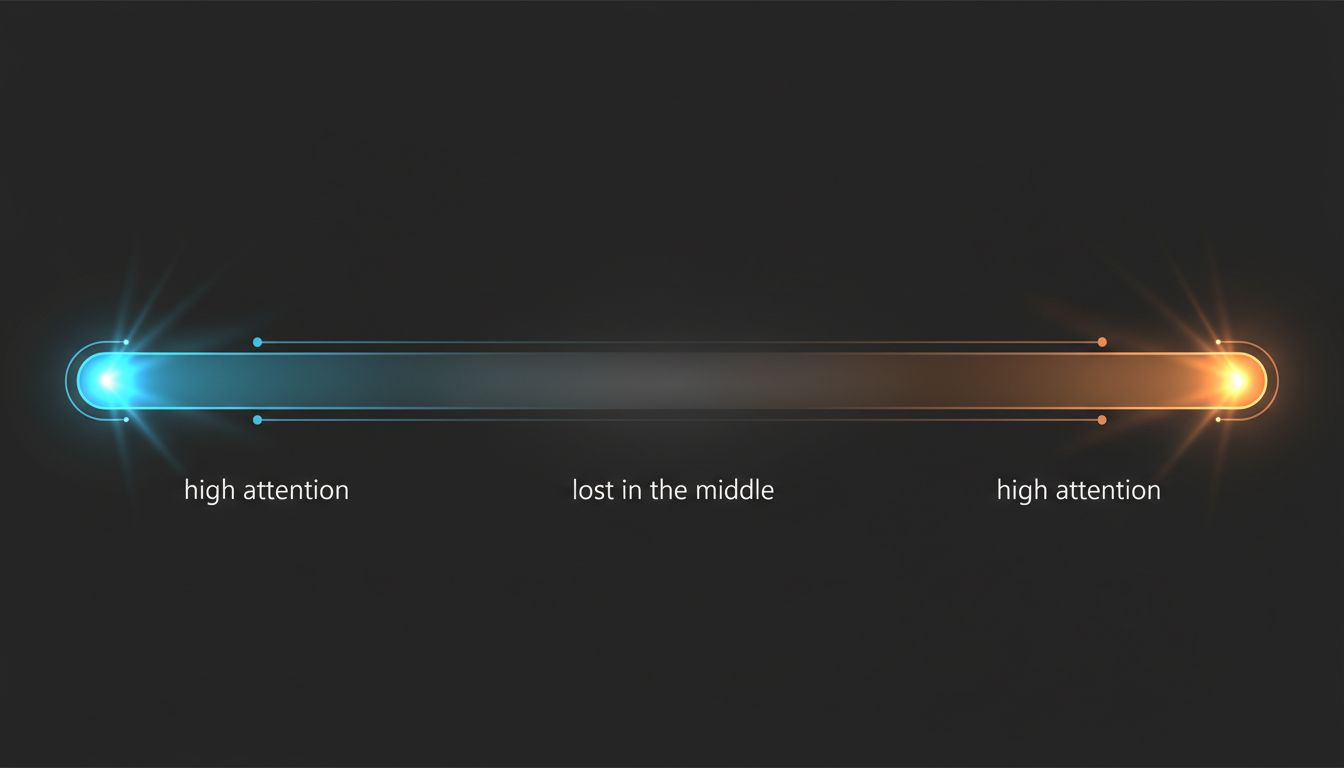
Research into how transformer models process context has shown that information at the beginning and end of a prompt receives more reliable attention than information buried in the middle. This is sometimes called the “lost in the middle” problem, documented in a 2023 paper from Stanford researchers who found that LLMs performing retrieval tasks performed significantly worse when the relevant information was positioned in the middle of a long context window, even when that information was identical to what appeared at the edges.
Practically, this means the order of your prompt isn’t just stylistic. If you have a critical constraint, putting it in the middle of a long system prompt is riskier than putting it at the start or end. The model isn’t more likely to ignore the middle because it got bored. It’s a structural artifact of how attention mechanisms weight context. As context windows have gotten larger, this effect has become more consequential, not less.
Why “be specific” is only half the advice
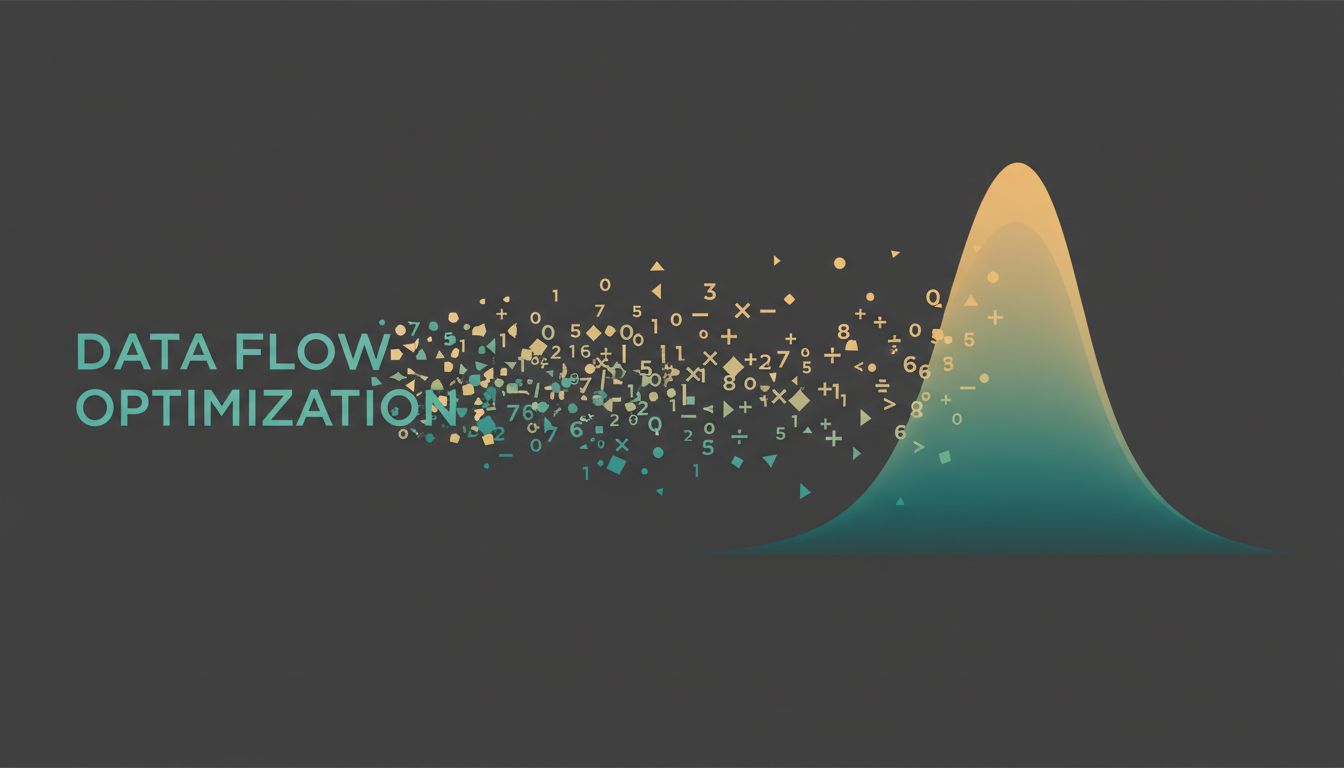
The standard prompting tip is: be specific. This is correct but incomplete. Specificity helps, but what you’re really doing when you add specifics is narrowing the probability distribution toward outputs that resemble the kind of content your specifics are associated with in training.
Consider two prompts:
- “Write me a product description.”
- “Write a product description for a water bottle targeted at trail runners, under 100 words, in a direct and unpretentious tone.”
The second prompt works better not just because you communicated more clearly, but because the combination of those tokens activates a narrower, more appropriate region of the model’s output space. You’re essentially assembling context that resembles the kind of document you want to produce.
This also explains why examples in prompts (few-shot prompting) are so effective. An example isn’t just a clarification. It’s a direct sample of the output distribution you’re targeting. You’re saying, statistically speaking, “more like this.”
What this means when things go wrong
When a model produces output that ignores part of your prompt, most people assume the model missed it or “didn’t understand.” Sometimes that’s right. But often the issue is a conflict between your explicit instruction and stronger statistical priors from training. The model isn’t confused about what you said. The probability pull from the training data simply outweighed your context.
This is why rephrasing sometimes fixes problems that seem like comprehension failures. You’re not clarifying meaning. You’re changing the statistical neighborhood your prompt sits in. A prompt that uses phrasing from professional documentation will pull toward outputs that resemble professional documentation. A prompt that reads like a casual conversation will pull toward a different distribution.
It’s also worth being honest about what this implies for reliability. The model isn’t executing a program. It’s sampling from a distribution that your prompt shapes but doesn’t control. Getting consistent outputs requires either narrowing the distribution aggressively (with examples, constraints, and specific phrasing) or accepting that you’re working with a probabilistic system and building accordingly.
None of this makes LLMs less useful. It makes them more useful, once you stop fighting the architecture. Write prompts as context-setting, not command-issuing. Put critical constraints where attention is strongest. Use examples when precision matters. And when something goes wrong, ask not “what did it misunderstand” but “what distribution did I accidentally aim at.”