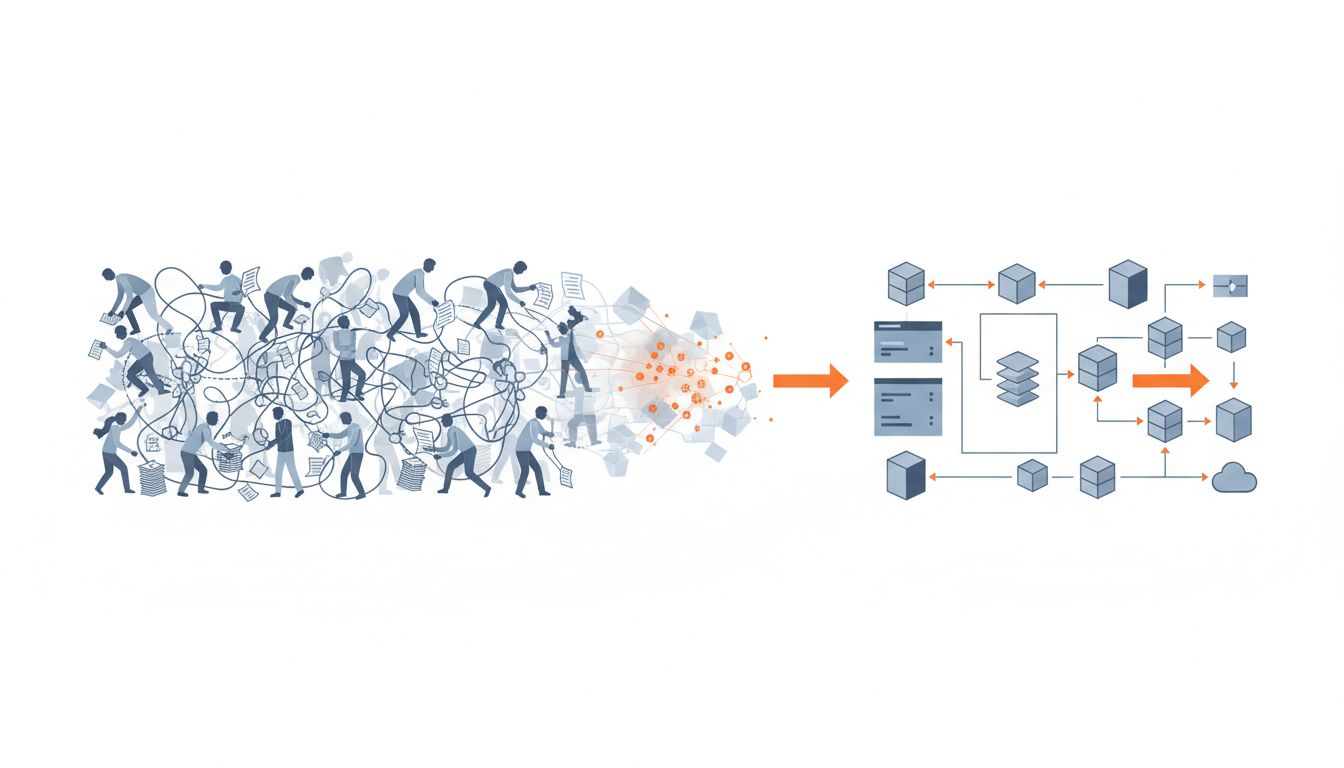
A founder I know spent eight months building a project management tool for architecture firms. Custom workflows, Gantt charts, file versioning tuned specifically for CAD outputs. He showed it at a conference. Architects were polite. Nobody bought it. When he finally asked one prospect directly why, the answer was blunt: “We already have a process. We just complain about it.”
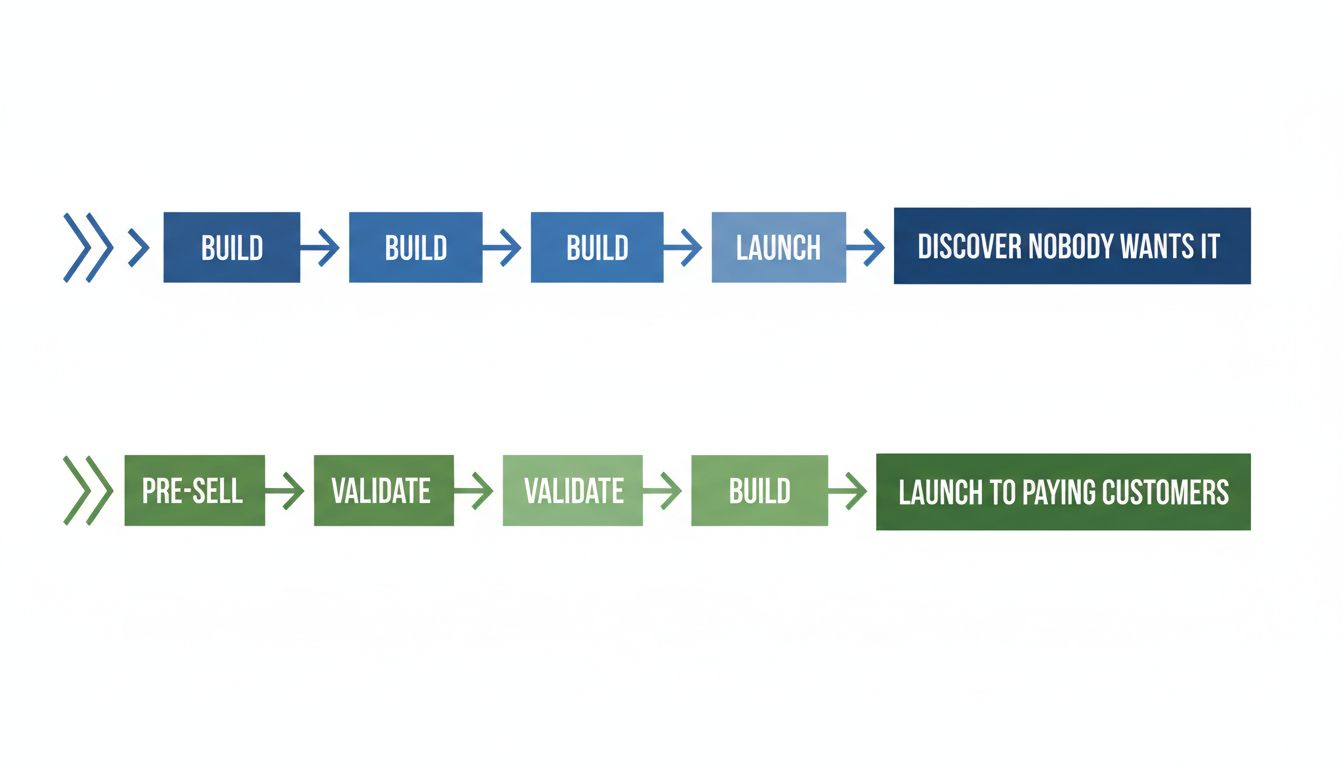
Eight months. Gone. And the entire disaster was avoidable if he had tried to charge someone before writing a single line of code.
Pre-selling, charging waitlists, collecting deposits on products that don’t exist yet — these practices make a lot of founders uncomfortable. They feel like overpromising. Like you’re taking money under false pretenses. But that discomfort is mostly misplaced, and the founders who push past it tend to build better companies. Here’s why.
1. A Paying Customer Is a Different Animal Than an Interested One
There is a specific kind of enthusiasm that evaporates the moment you ask for a credit card. Everyone nods in a user interview. Everyone says “I’d definitely use that.” The moment real money enters the equation, the conversation changes completely.
When someone hands over cash for a product that doesn’t exist, they’re making a genuine bet on you. That’s not a soft signal. That’s commitment in the only form that actually counts. Basecamp (formerly 37signals) has written extensively about their approach of launching products only when paying customers validate the concept. It’s not a new idea, but most founders treat it as optional.
The inverse is also true: if you can’t get anyone to pay for the idea, that’s information too. Real, expensive information that you’d much rather have in month one than month nine.
2. Money Clarifies the Problem You’re Actually Solving
When prospects pay you before you build, they get invested in the outcome. And invested people talk differently than curious ones. They stop being diplomatic. They start telling you what they actually need the thing to do, because they have skin in the game now.
I’ve seen this pattern repeatedly: a founder pre-sells a tool, then gets on a call with early buyers to scope the build, and discovers the buyers want something meaningfully different from what the founder planned to build. Not different in spirit, different in specifics. The pre-sell didn’t just validate demand. It funded a much sharper requirements conversation than any discovery process would have produced.
This is one of the underrated benefits. The product you build after taking pre-orders is almost always closer to what the market wants than the product you’d build in isolation, no matter how much research you did upfront.
3. It Forces You to Articulate the Value Proposition Before You Hide Behind Features
Building is a great place to hide. You can spend months adding features and telling yourself you’re making progress, when really you’re postponing the moment of truth: can you explain what this does and why someone should pay for it?
Pre-selling removes that escape hatch. You have to describe the value, not the implementation. You can’t say “wait until you see the dashboard.” You have to make the case with words and positioning alone. That’s a harder exercise than it sounds, and founders who can’t do it usually discover that they weren’t as clear on the problem as they thought.
This is also why the pitch you develop to pre-sell tends to be your best early marketing material. It was tested against real resistance, not friendly feedback.
4. It Changes Your Relationship to Deadlines
Nothing focuses a team like having taken someone’s money. Hypothetical launch dates are easy to slip. Customers who paid a deposit are not.
This is a feature, not a bug. Startups are extraordinarily good at finding reasons to delay shipping. There’s always one more thing to polish, one more edge case to handle, one more feature that would make the launch feel safer. Pre-orders create external accountability that internal deadlines almost never do. You have a real obligation now, and that changes how decisions get made. Scope gets cut. Meetings get shorter. The minimum viable version suddenly looks a lot more attractive.
5. It Generates Cash Before You Need It Most
The timing of startup cash flow is almost always wrong. Money tends to arrive after you’ve already burned through the period when you needed it. Pre-selling inverts this, at least partially.
This isn’t theoretical. Kickstarter demonstrated at scale that customers will fund products that don’t exist yet, across categories far less urgent than software. Pebble raised over $10 million on the platform before manufacturing a single watch. That’s an extreme example, but the principle scales down cleanly. A SaaS founder who collects deposits from twenty customers before building has both validation and runway. Two problems solved at once.
The cash itself is almost secondary to what it represents: you’ve compressed the feedback loop between idea and market reality, and you’ve done it before spending significant time or money on the wrong thing. That’s not reckless. That’s the whole game.
6. The Ethical Objection Is Mostly Fear Wearing a Disguise
Founders who resist pre-selling often frame it as an integrity issue. “I don’t want to take money for something that doesn’t exist yet.” On the surface, that sounds principled. Look closer and it’s usually anxiety about commitment, about being held accountable to a delivery date, about the possibility of failure becoming public and real.
The ethical version of pre-selling is simple: be honest about what exists and what doesn’t, be clear about timelines, and have a refund policy if you don’t deliver. That’s it. Customers who buy early on those terms aren’t being deceived. They’re making an informed bet. Many of them prefer it because they get input into the product, pricing advantages, or simply the satisfaction of being first.
The founders who treat customers as partners in the building process, including the ones who hate what they see, tend to build stickier products. Pre-selling is just the earliest version of that partnership.
7. It Resets What You Think of as “Ready”
The biggest long-term benefit of pre-selling is the mindset shift it produces. Founders who do it once stop waiting for permission to go to market. They stop conflating “polished” with “valuable.” They develop an instinct for testing demand early that carries through every subsequent product decision.
That instinct is worth more than any individual sale. It’s the difference between a founder who builds what the market wants and a founder who builds what they imagine the market wants, discovers the gap too late, and calls it a learning experience.