Export controls are supposed to keep the best chips away from Chinese labs, but today’s lead story suggests the rules govern geography better than they govern use. Elsewhere, Nvidia’s startup spending faces a reset, and Cloudflare gives away a browser built for agents.
1. The chip ban may have a Malaysia-shaped hole
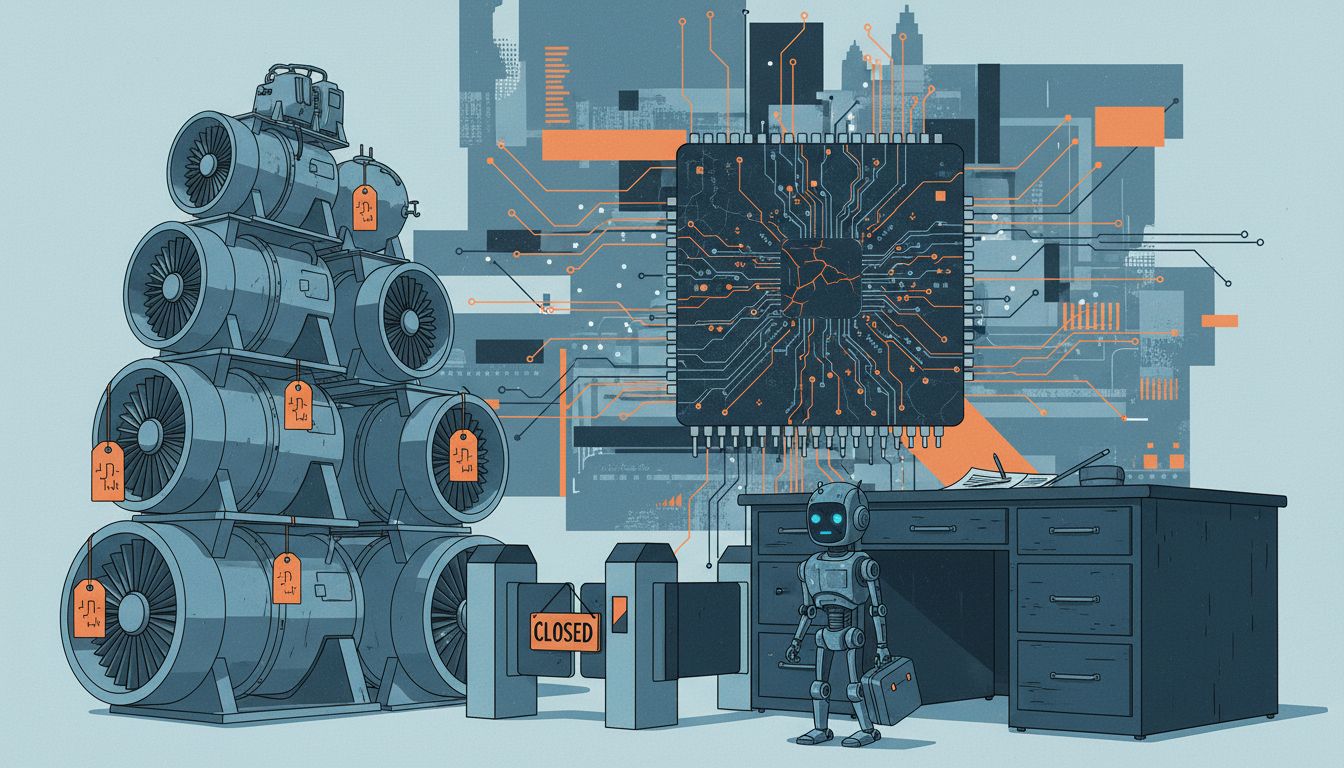
A researcher says Chinese open-weight models carry Blackwell’s fingerprints. Will DePue, formerly of OpenAI and now at Unemployment Labs, analyzed weights from DeepSeek, Moonshot AI, MiniMax, and Ant Group. TechCrunch reports he found compelling evidence that Moonshot’s Kimi K3 and DeepSeek’s V4 models were trained on the banned chips. The Register carries the same finding.
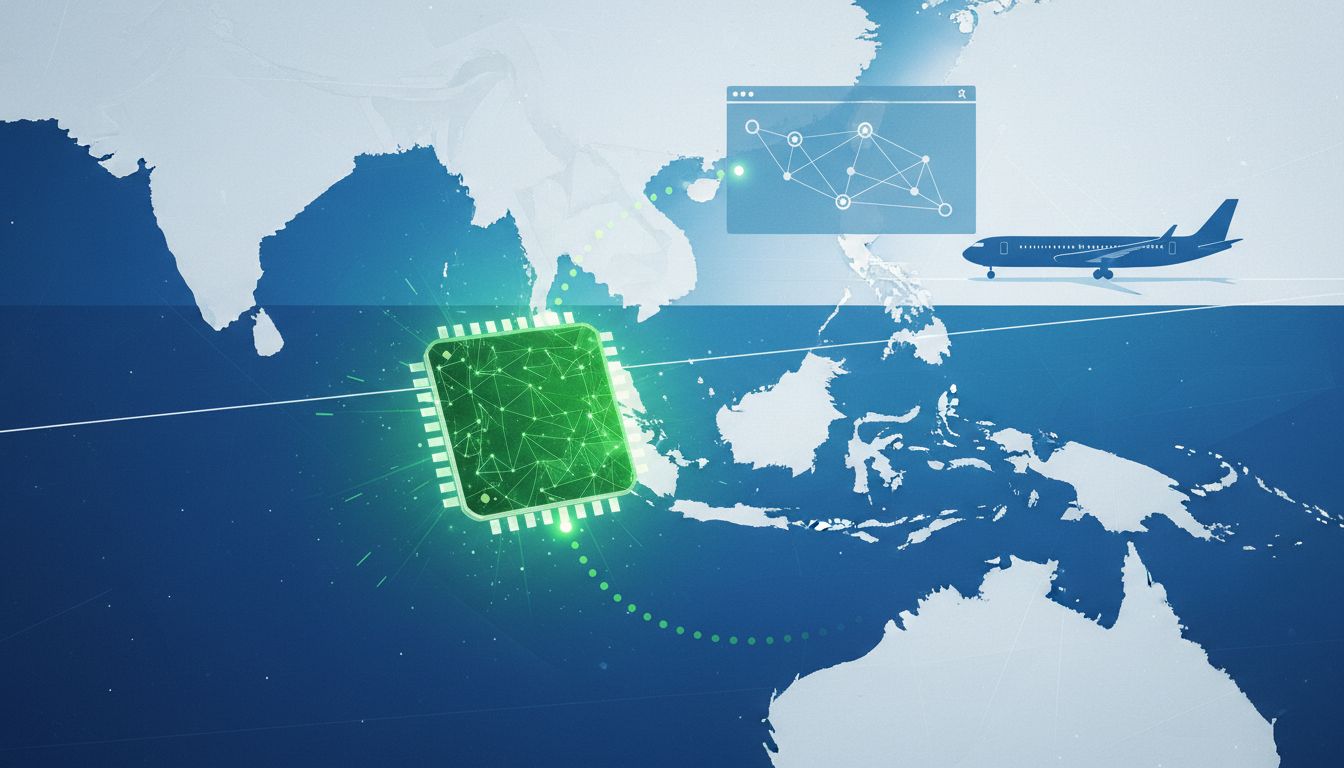
The caveat matters. TechCrunch notes this doesn’t show the models were trained only on Nvidia hardware, or that any law was broken. The chips could sit in an offshore data center, and Epoch AI estimates 275,000 Nvidia accelerators were imported into Malaysia across 2024 and 2025.
So the more uncomfortable reading may be that the system works as written. The ban restricts shipping Blackwell to China, not renting it abroad. China hawks have argued for controls on who uses chips, not only where they sit.
It also lands on Nvidia at a bad moment. Jensen Huang has just resigned over his relationship with an executive at Megaspeed, a company implicated in chip smuggling, and TechCrunch says Nvidia’s potential liability likely factored into that decision. Whether Washington tightens the rules on use, or just prosecutes smugglers, is now the real question.
2. A nationwide ground stop, and an AI rollout nobody can blame yet
For several hours on Friday, no plane could take off in the US. The FAA said the ground stop followed communication issues affecting multiple Air Route Traffic Control Centers. Ars Technica reports it was the third nationwide ground stop in FAA history, and Transportation Secretary Sean Duffy blamed obsolete equipment.
The tempting angle is that the administration had just rolled out an AI tool for controllers, so AI must be involved. TechCrunch says only that the timing is a coincidence nobody has ruled out, and that it’s unclear whether the outage is related. Homeland Security Secretary Markwayne Mullin said there was no indication of a nefarious act. Nothing here points to the AI tool.
The more useful lesson is about layers. A tool that trims flight time and fuel costs sits on top of communications links that, by the transportation secretary’s own account, are obsolete. The AI can be perfectly competent and still be irrelevant when the layer below it goes dark.
The open question is the root cause. Until the FAA names it, ‘old equipment’ is a diagnosis without a diagnosis.
TechCrunch · Ars Technica · The Register
3. Nvidia’s startup checks were also a lock-in strategy
Nvidia took part in 105 funding rounds this year, according to PitchBook, often as the largest investor. TechCrunch’s reporting says VCs and founders now expect that to shrink. One investor describes interim CEO Colette Kress as ‘much more conservative’, and most of the big startup-investing decisions reportedly came from Jensen Huang himself.
These are investor expectations, not announced policy. But the mechanism is plausible. One VC described infrastructure startups raising half of a $100 million to $500 million GPU need from Nvidia at valuations of $1 billion or more, and other investors followed because Nvidia was on the cap table. Without it, that comfort goes away.
TechCrunch also makes the less flattering point: those checks effectively tied startups to Nvidia chips. A pullback would hurt neoclouds and open-model labs, but it could give Google, AMD, and others room to compete.
The open-source side is murkier. A company insider doesn’t expect Nemotron development to change, and Hugging Face’s CEO says he’ll keep fighting for open source. Yet the roughly $13 billion Hugging Face deal, which the DOJ has reportedly been asking about, isn’t due to close until 2027. That leaves a long stretch of uncertainty.
TechCrunch · TechCrunch · TechCrunch
4. AI ransomware is mostly about scale, and stolen keys do the damage
The strongest evidence for AI-powered ransomware is volume rather than sophistication. WIRED reports that claimed leak-site attacks reached nearly 3,000 over the summer, and that fully AI-driven ransomware hasn’t appeared. Researchers say AI is used for phishing and negotiation, and that successful groups remain largely human-operated. ReliaQuest says one new group was run by an inexperienced teenager who made more than $800,000 in under two weeks.
Cloudflare adds the tooling side. After the original ARTEX pentesting framework was pulled on October 8, it says forks multiplied, and it now tracks more than 50 framework families, with related traffic up 30-fold since October 1. Those are scans, not confirmed breaches.
The most practical detail is old-fashioned: in the incidents Cloudflare describes, attackers used static, non-expiring CI/CD tokens to pivot between environments. AI sped up the exploitation, but the weakness was credential hygiene.
Cloudflare also sells the defenses it recommends, so read the framing accordingly. Still, rotating tokens and restricting by IP are cheap, and they matter more than any AI-specific tool.
5. Kitesurf is open source, but it still wants a Cloudflare account
Cloudflare has open-sourced Kitesurf, a stateless browser for AI agents, under Apache 2.0. It runs on Workers, supports the Chrome DevTools Protocol so Puppeteer can connect, and avoids a full Chromium container. Cloudflare says that means lower CPU and memory use.
You can run it locally, and the code is yours to modify. But deploying your own instance requires a Workers Paid plan, because it uses Dynamic Workers to isolate pages. Open source here means readable and forkable, not platform-neutral.
The engine is also unfinished. Cloudflare says it’s under heavy development, with work still going on compatibility, reliability, and efficiency. Contributors must be vouched for by a maintainer before opening pull requests.
As context, TechCrunch reports LangChain raised $300 million at a $3 billion valuation on its agent-management pitch. That shows investor appetite for agent infrastructure, but it says nothing about Kitesurf’s adoption. The real test is whether developers will accept a cheap agent browser that treats Cloudflare as home.