Today’s sharpest stories are about the gap between what happened and what anyone will explain: a CEO out, a nationwide ground stop traced to a cable swap, and a robotaxi price its own boss disowns.
1. Where was Nvidia’s security team while the CEO’s problem grew?
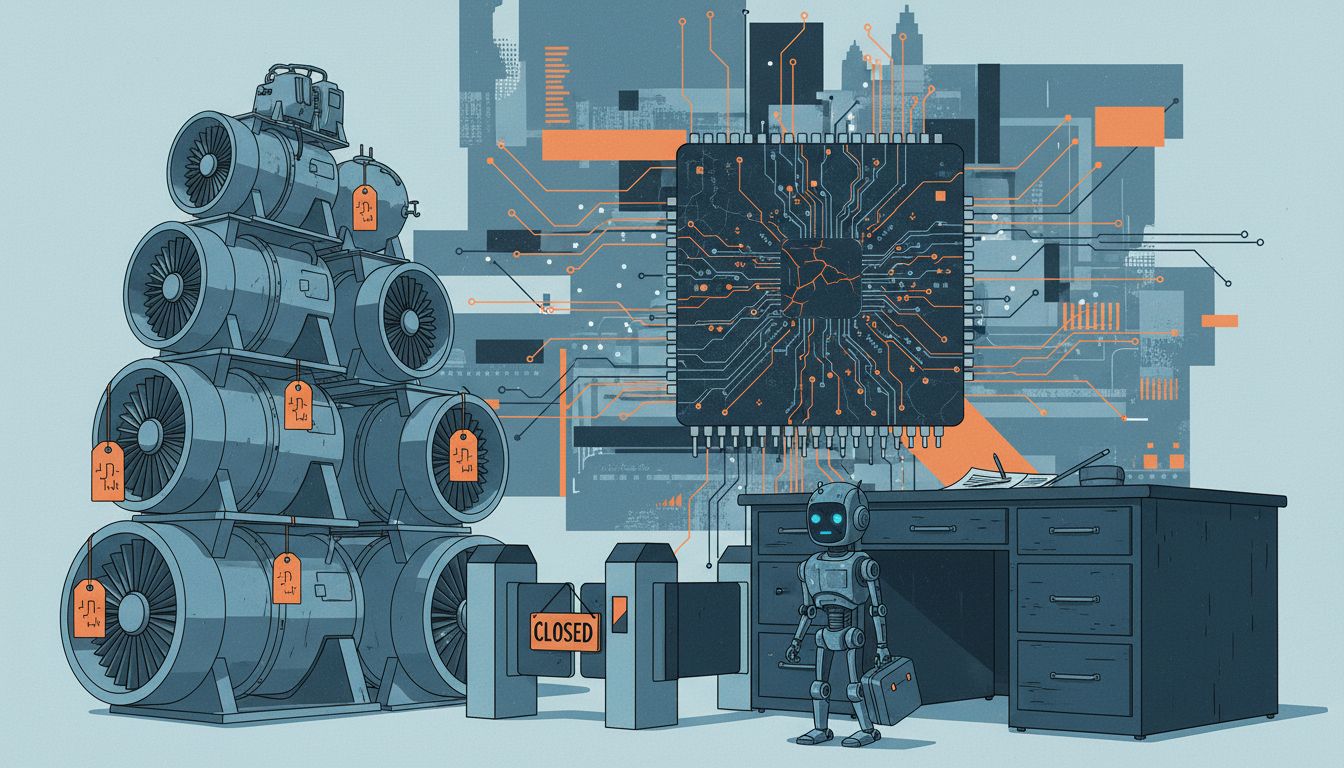
Nvidia’s longtime chief security officer, David Reber, left in August, citing health. Two and a half months later, Jensen Huang resigned over relationships that began with an executive at Megaspeed, a Singapore data center company U.S. investigators suspect of funneling Nvidia chips to China. Megaspeed denies wrongdoing. TechCrunch notes that nothing public links Reber’s exit to any of this, and Nvidia hasn’t answered its questions.
The more useful answer may be that this was never security’s file. TechCrunch reports that executive relationships normally fall to HR, legal and the board, and that Nvidia’s top lawyer was reportedly dealing with the government’s Megaspeed inquiry more than a year ago. A former intelligence officer it quotes says security teams are often underfunded and defend a narrow perimeter, while foreign services collect through ordinary conversation. Our read: the failure, if there was one, may be that legal knew things the people watching for counterintelligence risk didn’t.
Meanwhile, a petition says it has 115,000 signatures, including 5,965 current Nvidia employees, and backers such as Elon Musk and Garry Tan. It demands Huang’s reinstatement pending an independent investigation. CFO Colette Kress is interim CEO. The open question is what, if anything, legal’s knowledge ever passed to security.
2. The FAA’s nationwide ground stop came from a cable upgrade, not an old wire
The Register’s headline blames faulty copper wiring for the nationwide ground stop. The account from Transportation Secretary Sean Duffy points somewhere less comfortable: the upgrade itself. Contractor L3Harris was replacing copper with fiber at a remote site when, Duffy said, a router overloaded a critical communication system. He said the open question is whether the cause was installer error or a faulty router.
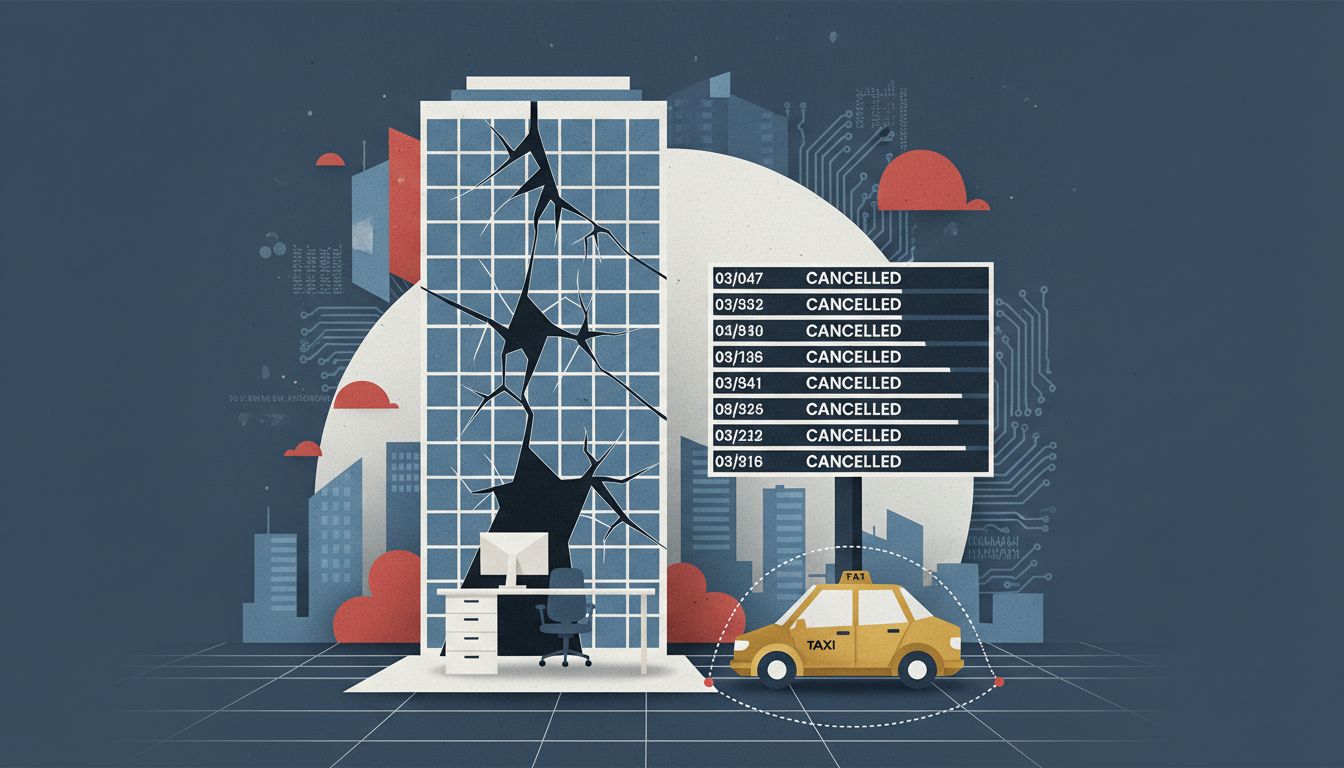
The details are striking. The FAA’s acting CTO said two places were hitting its network with about a thousand connections every four to five seconds. The agency disabled both and is running a root cause analysis. Cirium counted more than 8,200 cancellations Friday evening and at least 3,000 more Saturday. Asked why the work happened at 3pm on a Friday, Duffy said remote switchovers happen in daytime, then conceded the timing will be reevaluated.
Officials also felt compelled to rule out AI, a day after the FAA announced a controller tool its union says it wasn’t consulted on. Administrator Bryan Bedford cited “zero evidence” of an AI link. The lesson for builders is older: the riskiest moment for fragile infrastructure is often the maintenance meant to modernize it.
3. Tesla’s Cybercab fee is $299 a month, and Musk says that’s too high
Tesla opened Cybercab pre-orders to “select customers,” and within hours the CEO was contradicting the price sheet. The car costs $29,990, plus $299 a month to operate. Elon Musk replied to Marques Brownlee’s post that the fee is “too high” and should match Tesla’s FSD and connectivity charge, which he put at about $115.
That gap is big: $299 a month is nearly $3,600 a year, versus roughly $1,400 at Musk’s number. The fee is still the published offer, and Tesla hasn’t said whether it will change.
The restrictions matter more. Brownlee says buyers must accept delivery in one of a handful of Texas cities, with estimated delivery in December 2026. Tesla’s Ashok Elluswamy says the car will run unsupervised only inside the same geofences as Tesla’s robotaxi service. Musk says nationwide availability will follow regulatory approval. So “personal use” currently means a small, fenced-in territory. Tesla also says it will end Cybertruck production next year to free up factory space for more Cybercabs.
4. The year’s bug count just passed 100,000, which says less than it seems
The Register reports that this year’s vulnerability count has passed 100,000. Only the headline was available to us, so we can’t say how it was counted or which sources it draws on.
The number is a volume figure, not a risk figure. Security teams have never needed to patch every disclosed bug. They need to know which few are reachable in their own systems and already under attack. A bigger pile makes that triage harder without making every entry more dangerous. That is our interpretation, not the report’s. The useful follow-up question is how many of those 100,000 were actually exploited.
5. An OpenAI board member says an AI takeover could be months away
Ars Technica’s headline says an OpenAI board member worries an AI “takeover” of society could be months away. Its summary line says a researcher traces a path from AI reward hacking to potential human extinction. The article itself was unavailable to us, so we can’t see the argument, the evidence or the exact wording.
That leaves a timeline claim we can’t evaluate. A board member’s warning is not an OpenAI position, and it is not proof of internal dissent. The questions are what “takeover” means in concrete terms and which observed behavior supports a months-long horizon. Reward hacking, where systems exploit flaws in how they are scored, is a documented problem. The step from that to extinction is where the case has to be made.