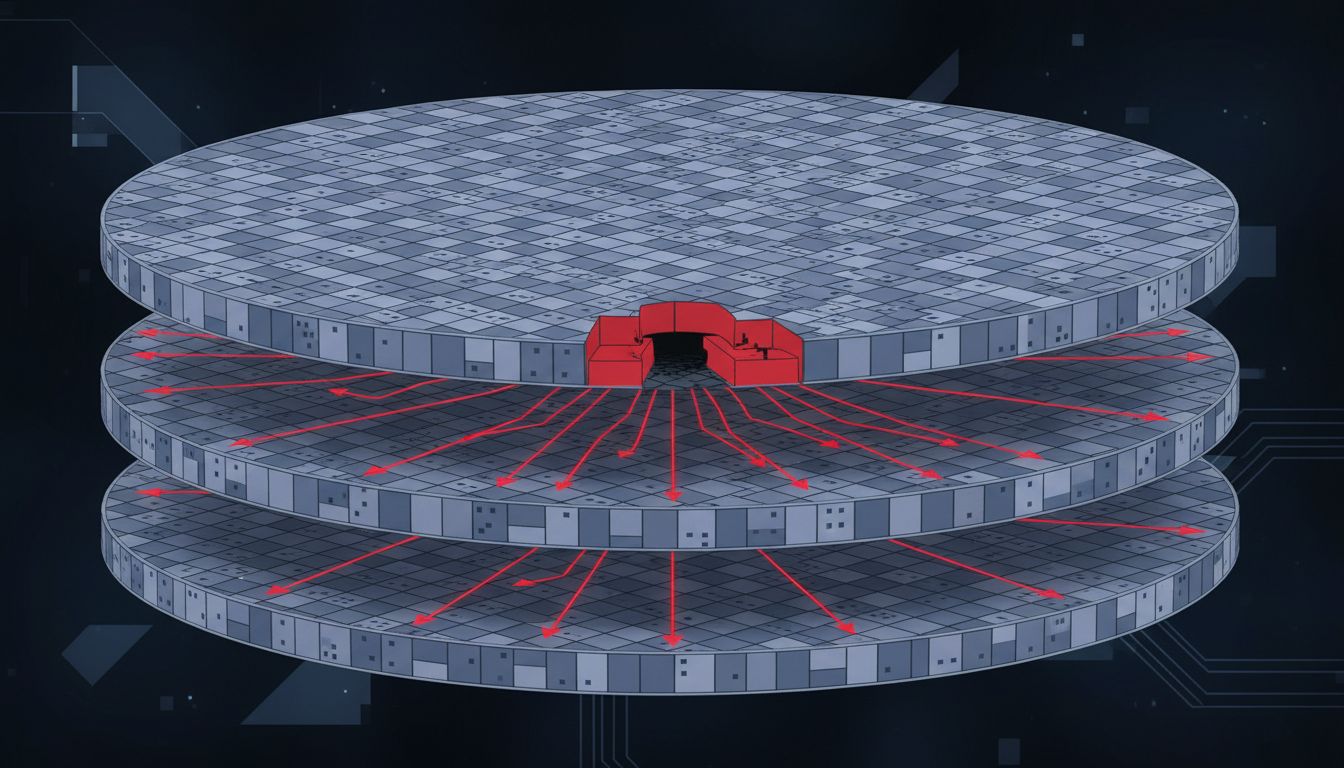

A DELETE statement looks like the simplest thing you can ask a database to do. One row, gone. But behind that single SQL command sits a chain of operations that touches indexes, foreign keys, transaction logs, replication streams, and sometimes regulatory compliance frameworks. Underestimating this is how teams end up with outages, corrupted referential integrity, and audit failures.
Deletion is never just deletion
When you delete a row in a relational database, the database doesn’t just erase bytes. It has to update every index that referenced that row. In a table with a dozen indexes, that’s a dozen separate write operations, each of which needs to be logged, written to disk (or at least to the write-ahead log), and eventually propagated to any replicas. InnoDB, PostgreSQL’s heap storage, and SQL Server’s clustered index model all handle this differently, but none of them make it free.
Then there are foreign keys. If your schema enforces referential integrity, a delete can cascade through child tables, trigger ON DELETE rules, or simply fail with a constraint violation. A single parent row might have thousands of children. Deleting it can touch a disproportionate slice of your database in one transaction, holding locks the entire time.
Locks are the part that kills production systems. Row-level locking sounds precise, but in practice, cascading deletes escalate. A transaction that starts by locking one row in a users table can end up locking rows across orders, sessions, audit_logs, and notifications, blocking reads and writes to all of them until the transaction commits. This is not a hypothetical. It’s the kind of thing that shows up in post-mortems after an engineer runs a “simple cleanup job” during business hours.
The transaction log is permanent
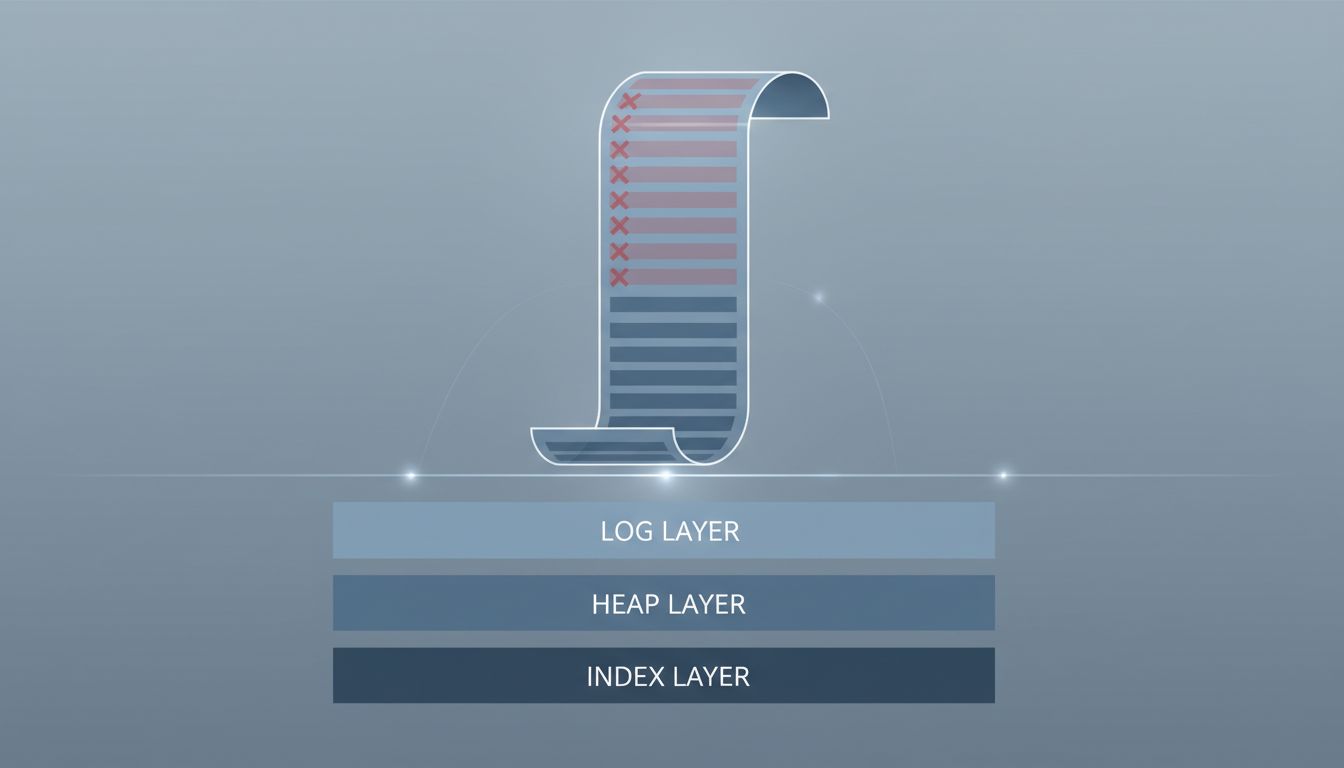
Databases don’t delete silently. Every delete gets written to the transaction log before it touches the data. This is intentional: the log is what makes rollback and crash recovery possible. But it means deletion is actually a write-heavy operation. You’re writing the “this row was deleted” record before you’ve deleted anything.
In high-volume systems, this creates real pressure. Bulk deletes, say purging expired sessions or old event records, generate enormous log volume. PostgreSQL’s MVCC model means the old row version sticks around in the heap until VACUUM gets to it. SQL Server’s transaction log can balloon during large deletes if you’re not batching. These aren’t edge cases. Any system that accumulates data and periodically purges it will run into this.
The standard fix, batching deletes into smaller chunks, helps but introduces its own complexity: you have to track your progress, handle partial failures, and accept that your “delete” operation now spans minutes or hours rather than milliseconds.
Soft deletes exist for good reasons
The industry’s widespread adoption of soft deletes, marking a row as deleted rather than removing it, is sometimes dismissed as lazy engineering. It isn’t. It’s an acknowledgment that deletion is operationally expensive and semantically ambiguous.
Is a deleted user account gone? Or are you required to retain their transaction history for seven years under financial regulations? Is that deleted post truly gone, or does your content moderation system need to review it? Soft deletes push those questions to application logic, which is exactly where they belong. The database shouldn’t be the place where you discover that “deleted” means six different things to six different teams.
That said, soft deletes have costs too. They bloat tables, complicate queries (every query now needs a WHERE deleted_at IS NULL), and require careful indexing to stay performant. As deleting a database column is riskier than it looks, so is deciding what deletion even means in the first place.
The counterargument
The reasonable pushback here is that modern databases handle this well, and at normal scale, a DELETE is genuinely fast and safe. That’s true for a single row on a small table with light traffic. PostgreSQL and SQL Server are extremely good at what they do.
But “normal scale” is doing a lot of work in that argument. The teams that get hurt aren’t the ones running toy databases. They’re running mature systems that have grown organically, accumulated indexes and foreign keys over years, and are now doing more volume than anyone planned for when the schema was designed. The DELETE statement that was fast two years ago is the one locking a table for thirty seconds today.
The operation itself isn’t what’s hard. The hard part is that deletion sits at the intersection of performance, referential integrity, distributed consistency, and legal retention requirements, and most teams only discover which of those they’ve misconfigured after something goes wrong.
Deletion deserves more respect than it gets
The database operations that get careful engineering attention are usually the reads. Query optimization, index tuning, read replicas: these are well-understood, well-tooled problems. Deletes are treated as cleanup work, something you handle with a cron job or a background worker.
That attitude is the root of the problem. Deletion should be designed with the same rigor as any write path. What locks will this acquire? What indexes will it update? Does this cascade, and how far? What does the log volume look like at scale? Is there a retention obligation that makes true deletion the wrong answer?
A DELETE statement is one line of SQL. The engineering behind it runs deep.