
The math feels intuitive: one engineer ships features at rate X, so two engineers ship at 2X. Founders believe this. Investors encourage it. Job boards fill up the moment a seed round closes. The belief is wrong, and the wrongness has a precise cause that most people never examine.
The Coordination Tax Is Not Optional
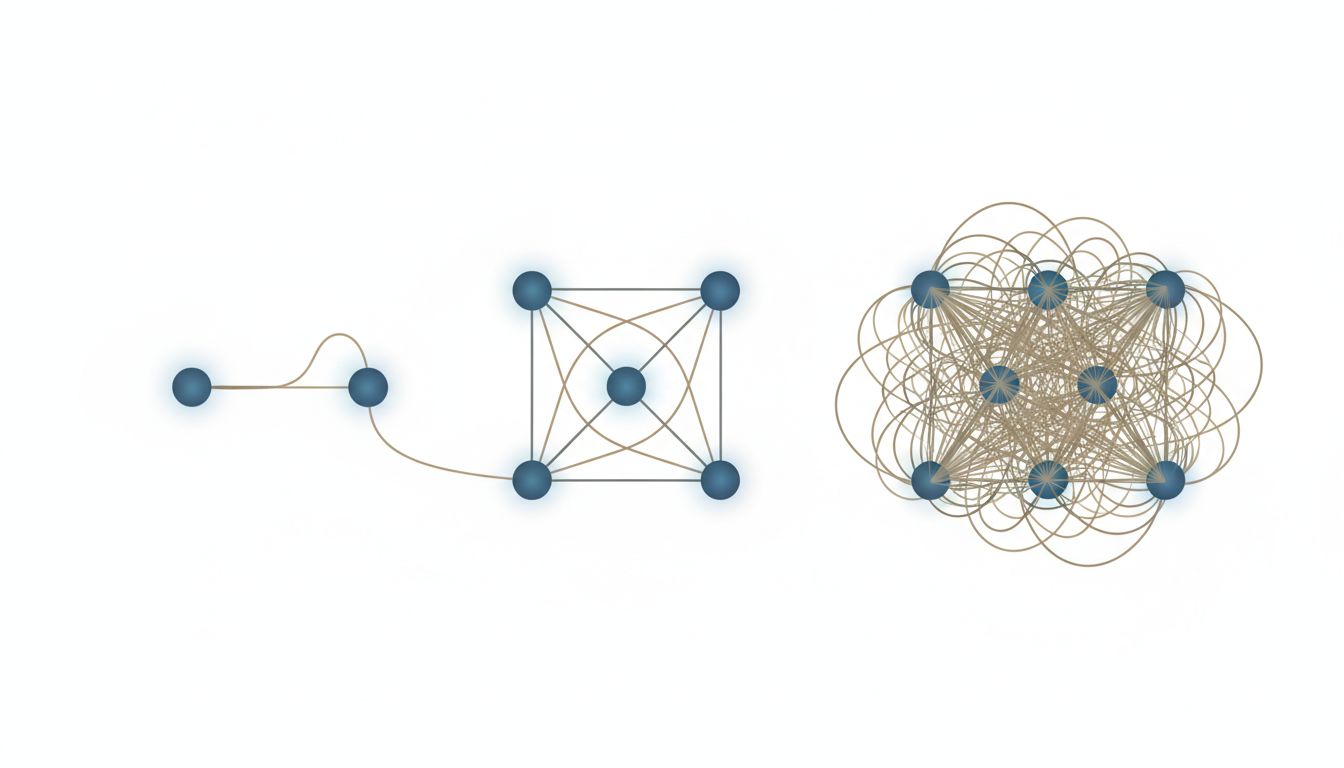
Frederick Brooks documented the core problem in 1975 in The Mythical Man-Month: adding people to a late software project makes it later. His explanation was that communication overhead grows faster than headcount. With one engineer, there are zero communication links. With two, there is one. With five, there are ten. With ten, there are forty-five. Every link is a meeting, a Slack thread, a code review, a misunderstanding that costs an hour to untangle.
At the startup stage, this isn’t just a theoretical concern. The first engineer and the second engineer need to agree on the architecture, the conventions, the deployment process, the way bugs get tracked, and which features matter most this week. None of that agreement is free. The first engineer, who was previously spending all their time building, is now spending a meaningful fraction of it teaching, reviewing, and aligning. The second engineer, who was hired to add capacity, spends their first weeks consuming it.
Brooks estimated that each new person added to a software project requires training that temporarily reduces the team’s net output. Early-stage startups have almost no documentation, informal processes, and constant context switching. The training cost is higher, not lower.
What You’re Actually Buying
This doesn’t mean the second engineer is a bad hire. It means founders are often buying the wrong thing with that hire and measuring success incorrectly afterward.
The first engineer is, in most cases, the person who understands the full system: the tradeoffs that got made, the shortcuts that are load-bearing, the parts that are deliberately underdeveloped. When you add a second engineer, you’re not adding a copy of that knowledge. You’re adding someone who has to build a partial model of it from scratch, usually by reading code, asking questions, and making mistakes.
The actual value of engineer number two is usually in one of a few narrow categories: they can own a distinct part of the system that doesn’t require deep integration (a mobile client when the first engineer is backend-focused, for instance), they can handle a category of work the first engineer is weak at or slow on, or they can take over maintenance so the first engineer can focus on new development. None of these is a doubling of throughput. The best realistic outcome is that the first engineer gets back some of the time they were spending on tasks outside their strengths.
The Measurement Problem
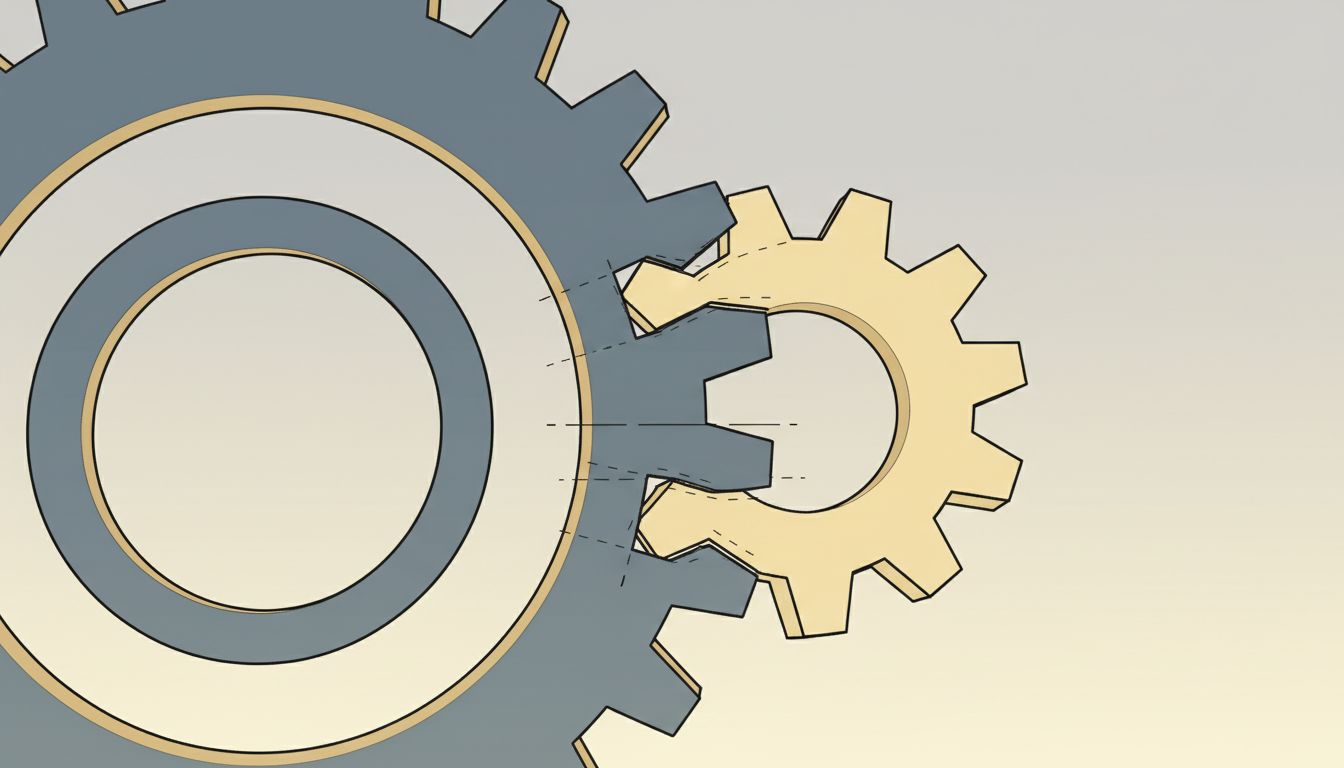
Founders who hire a second engineer and then measure “features shipped per week” are often disappointed. The metric dips before it recovers, and it rarely recovers to 2X. This is partly coordination overhead, and partly something less discussed: the second engineer changes what the first engineer builds.
Code written to be read by one person is different from code written to be read by two. It needs comments. It needs cleaner abstractions. The first engineer starts making different architectural choices, not because the choices are better for the product right now, but because they need to make sense to someone who wasn’t there for the original decisions. This is genuinely valuable in the long run. In the short run, it costs velocity.
There’s also the question of what “faster” means. If the bottleneck on your startup’s progress is engineering hours, a second engineer helps, eventually. If the bottleneck is actually product clarity, customer discovery, or sales, a second engineer adds cost without addressing the constraint. Many early-stage startups that feel engineering-bottlenecked are actually idea-bottlenecked. The first engineer has spare capacity but nothing clearly defined to build.
When the Second Hire Actually Pays Off
The hire works well when the work is genuinely parallelizable, the first engineer has already built infrastructure stable enough to be handed off in pieces, and the two engineers have complementary skills rather than overlapping ones. These conditions are rarer than founders assume.
The hire tends to go wrong when it’s made in response to a deadline (the classic Brooks mistake), when it’s made before the product scope is stable, or when the first engineer hasn’t had time to build the foundations that would let someone else contribute without constant supervision. Premature scaling kills more startups than bad ideas, and premature team scaling follows the same logic as premature product scaling: you’re absorbing fixed costs before you have the revenue or clarity to justify them.
The honest answer is that most startups should hire the second engineer later than feels comfortable, and should hire someone whose skills the first engineer specifically lacks rather than someone who broadly resembles the first engineer. A backend engineer who is slow at UI work plus a frontend engineer who is strong at UI work can get close to 2X on the interface, because the work actually divides. Two backend engineers working on the same codebase usually can’t.
What Doubles Isn’t Output, It’s Risk Coverage
The strongest argument for the second engineer isn’t throughput at all. It’s resilience. A one-engineer startup has a single point of failure. If that engineer gets sick, burns out, or leaves, the company stops shipping entirely. The second engineer doesn’t double output; they eliminate the scenario where output drops to zero.
This is a real and serious benefit, especially after product-market fit when downtime has a direct cost. But it’s a different benefit than the one most founders think they’re buying. Framing the hire as “we’ll move twice as fast” sets up a disappointment that causes founders to doubt good engineers. Framing it as “we’ll become resilient enough to take on larger commitments” is both more accurate and more useful for deciding when the hire makes sense.
The two-engineer startup is slower than the one-engineer startup for the first few months, then roughly as fast, then eventually faster, once the architecture has matured enough to genuinely support parallel work. That’s the real timeline. Plan accordingly.