The Myth of the Eight-Hour Productive Day
Ask a knowledge worker what they did today, and they’ll describe a sequence of meaningful tasks: designed a system, reviewed a proposal, solved a problem. Ask them to reconstruct their actual calendar, and something different appears. The meetings they didn’t plan to be in. The Slack thread that consumed 45 minutes. The email that required three clarifying replies before the original question got answered.
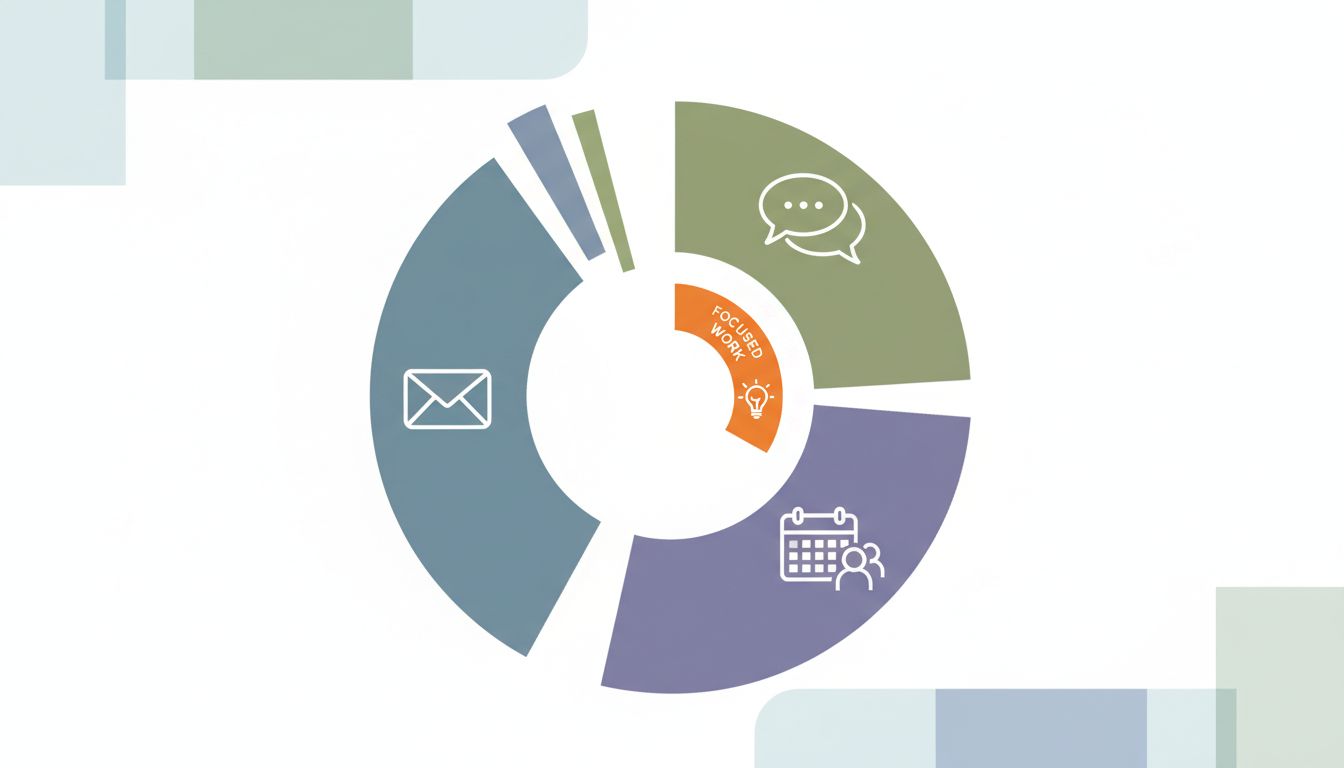
There’s a persistent assumption in professional life that being at work and doing work are roughly synonymous. The research says otherwise, and has been saying so for decades. McKinsey’s research on knowledge workers found that employees spend, on average, about 28% of their workweek on email and another 20% searching for and gathering information. That’s nearly half the week before any actual output-producing work happens.
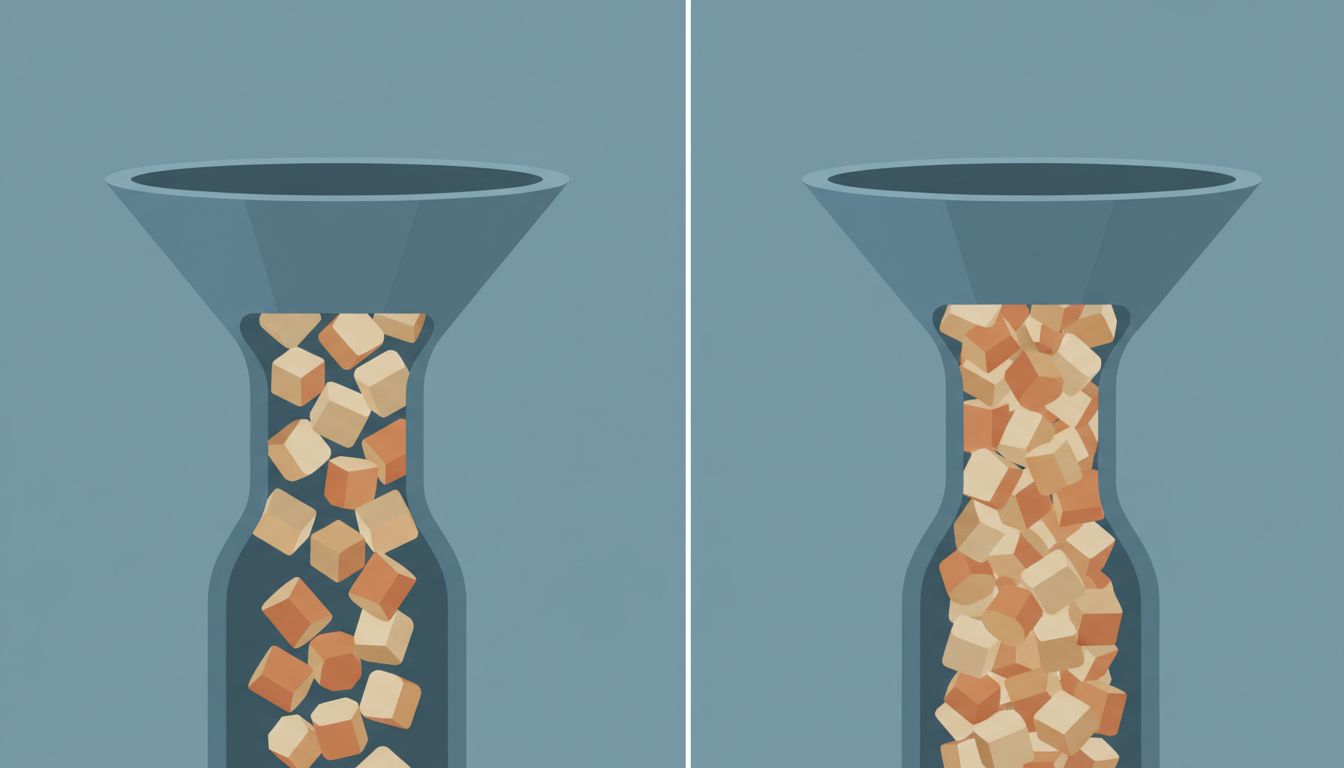
For a software engineer, this isn’t just inefficiency. It’s a structural problem. Context switching between tasks doesn’t just slow you down, it physically rewrites the mental model you were holding. Every Slack notification answered mid-deep-work session isn’t a small interruption. It’s a full eviction of whatever problem was loaded into working memory.
The Measurement Problem
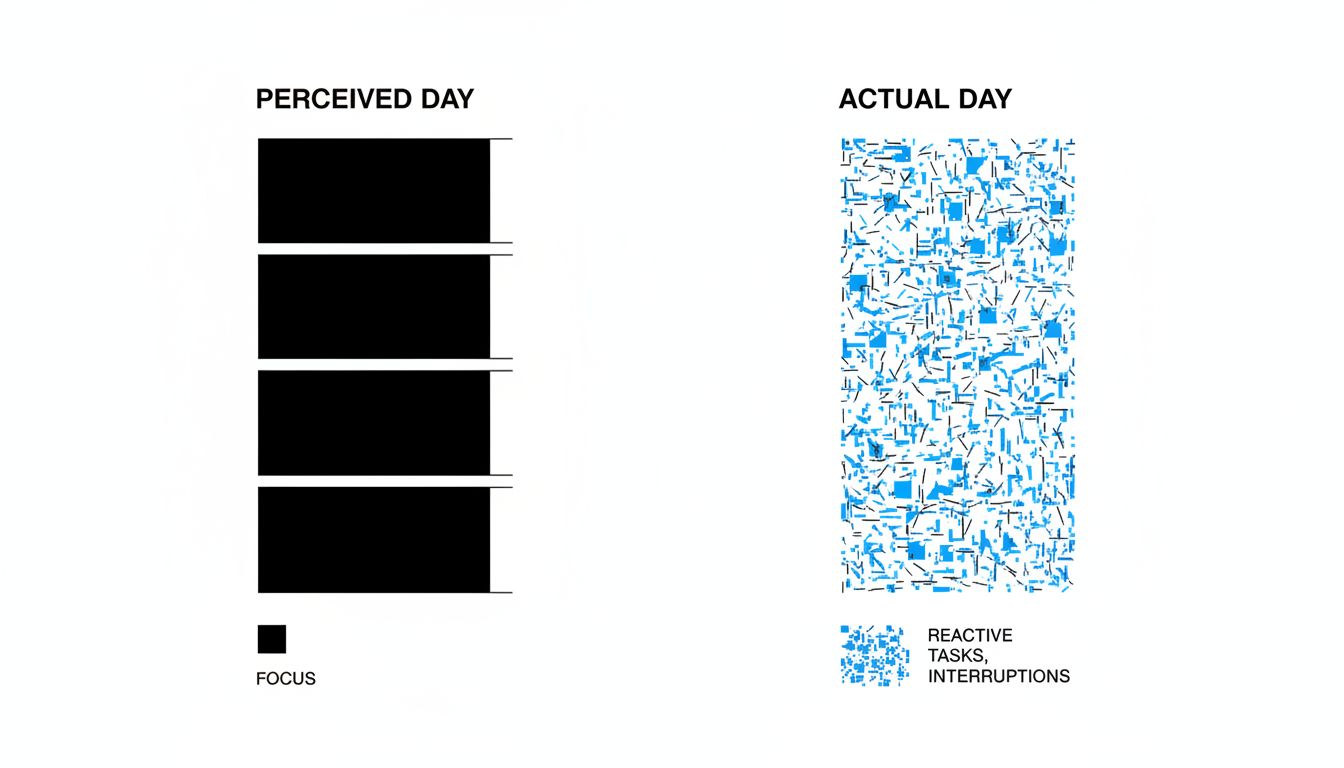
Part of why this is embarrassing rather than just unfortunate is that knowledge workers are generally bad at estimating how they spend their time. Studies on time perception consistently show that people overestimate time spent on high-value tasks and underestimate time spent on coordination, communication overhead, and reactive work.
If you’ve ever done a time audit on yourself, the first week is usually humbling. The coding or writing or analysis that felt like the bulk of Tuesday was actually four hours. The rest was a diffuse fog of status checks, clarifying questions, and getting-back-to-you replies.
This isn’t a character flaw. It’s partly cognitive, partly structural. Our brains are poor at accumulating mental accounting across a day, especially when each small distraction registers as trivially short. Three minutes here, five minutes there. The compound cost is invisible until you measure it.
The measurement problem also creates organizational blind spots. Managers often can’t see where their teams’ time actually goes, because the overhead work doesn’t show up in project tracking tools. Jira doesn’t have a ticket for “spent 40 minutes reconstructing context after four back-to-back meetings.” And because this cost is invisible, it never gets addressed.
What the Calendar Actually Reveals
Meetings are the most studied form of knowledge worker time drain, and the data is consistent across organizations. Microsoft’s Work Trend Index surveys have repeatedly found that time in meetings has more than doubled since 2020. What’s harder to measure is what meetings cost beyond the time they consume.
Consider a two-hour architecture review with six engineers. The nominal cost is twelve person-hours. The actual cost includes the prep time each person put in (or didn’t, creating misalignment), the recovery time afterward, and the decisions that got deferred because the meeting ran long. If three of those engineers were mid-flow on complex problems, the interruption cost isn’t just two hours. It’s the remainder of the afternoon.
The engineers at the high end of the compensation spectrum (the ones you actually want doing the hardest thinking) are also the ones most likely to be pulled into back-to-back coordination work. This is a genuine organizational failure. As we’ve written before about the real cost of senior engineering talent, the opportunity cost of expensive people doing cheap work is enormous and mostly invisible.
There’s also a meeting multiplication effect that organizations rarely account for. A meeting doesn’t just consume time. It typically generates follow-up messages, summary emails, clarifying conversations, and sometimes another meeting to cover what the first one didn’t resolve.
The Notification Layer on Top of Everything
If meetings are the structural problem, notifications are the ambient one. Email and instant messaging tools create a persistent low-grade interrupt environment that fragments attention even when no meeting is scheduled.
Closing a notification doesn’t end the interruption. Research from UC Irvine, particularly work by Gloria Mark’s group, has found that it takes a substantial amount of time to return to deep work after being pulled away, even briefly. The notification itself is a few seconds. The resumption cost is not.
The insidious part of always-on communication tools is that they were sold to organizations as productivity improvements, and in narrow ways they were. Slack is better than email for a lot of coordination tasks. But the expectation of real-time response that these tools created has fundamentally changed the attention budget of knowledge work. What used to be an asynchronous request that you could batch-process at 2pm is now a message with an implicit expectation of reply within minutes.
This creates something like an interrupt-driven programming model (where instead of executing a sequence, you’re constantly responding to incoming signals) being applied to work that actually requires something closer to batch processing. Deep thinking doesn’t happen in five-minute windows between replies.
What Fixing It Actually Requires
The usual advice here is personal: time-block your calendar, turn off notifications, do deep work in the morning. That advice isn’t wrong, but it treats a systemic problem as an individual one. A single engineer protecting focus time in an organization where everyone else operates on a real-time communication norm is swimming upstream. They’ll get messages asking why they didn’t respond, get added to meetings to compensate, or get social pressure to be “more available.”
The organizations that seem to have made real progress here share a few characteristics. They’ve made asynchronous communication the default rather than the exception. They’ve defined what actually requires a meeting (a definition that excludes status updates, approvals, and anything that could be a shared document). And they’ve accepted that response time norms need to be explicit and protected, not just implicit.
This is harder than it sounds because it requires coordinated change, not individual change. You can’t unilaterally declare asynchronous norms. The whole team has to shift together, and that shift has to come from somewhere with enough organizational authority to make it stick.
The data on how knowledge workers actually spend their time is uncomfortable precisely because it suggests the productivity problem isn’t a matter of personal discipline or better tools. It’s a matter of how the work is organized. Until organizations take that seriously, the gap between the workday people describe and the workday they actually have will stay embarrassingly wide.