
The simple version
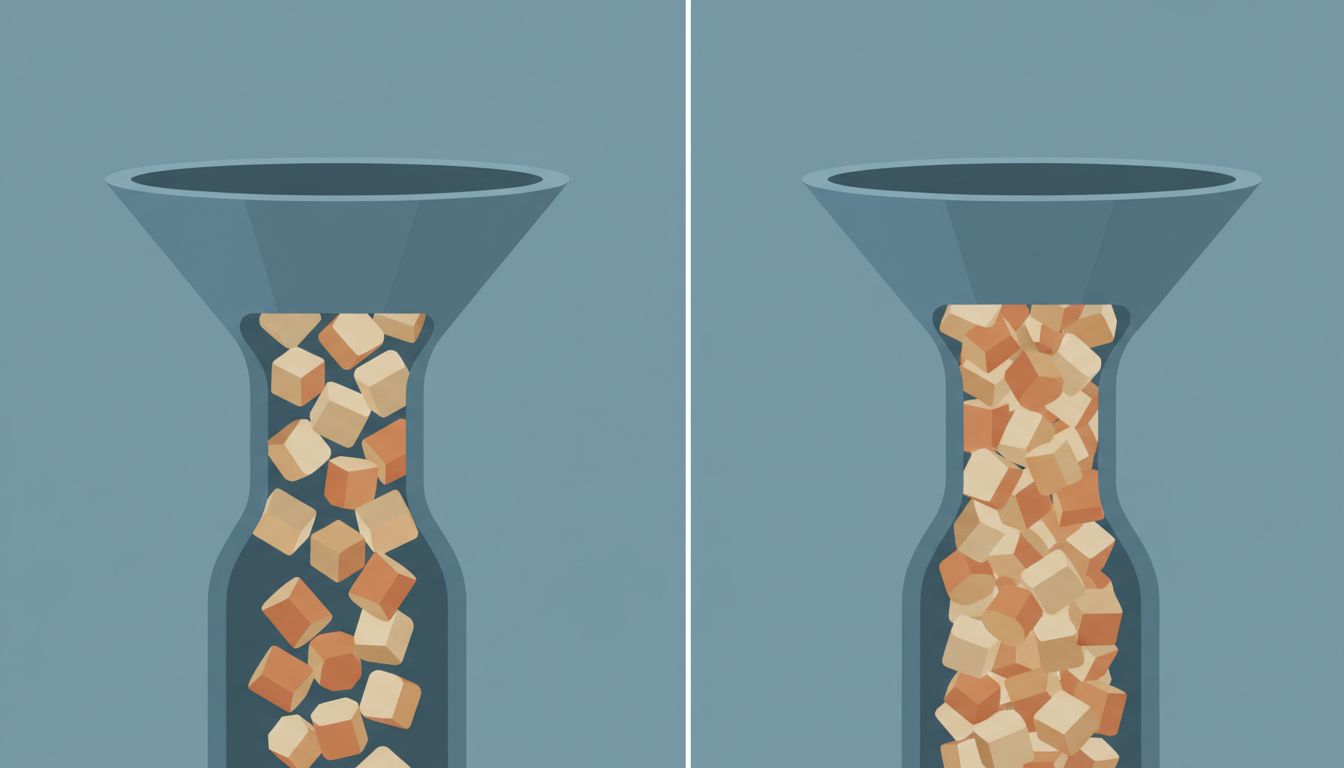
Time blocking works great for shallow tasks. For the work that actually requires sustained thought, it often fragments your attention in ways that make you meaningfully worse at the job.
Why time blocking feels so good
The appeal is obvious. You open your calendar, color-code three hours for “deep work,” block off email until 2pm, and feel like you’ve finally got it figured out. You can see your priorities. You’ve made a commitment. The day looks intentional.
And for a certain category of work, this genuinely helps. If you need to process invoices, respond to a batch of support tickets, or work through a structured review checklist, time blocking is excellent. You’re doing tasks that can be picked up and put down cleanly, and batching them reduces the friction of repeated context switches.
But most knowledge workers are doing a mix of that and something fundamentally different: work that requires building a mental model, holding a complex problem in working memory, and following a chain of thought wherever it leads. Writing. System design. Strategic analysis. Debugging something subtle. The kind of work where the quality of your output depends entirely on how deeply you got into it.
For that second category, time blocking has a hidden cost.
The block ends before the thinking does
Deep cognitive work doesn’t warm up instantly. Research on creative and analytical problem-solving consistently shows that serious engagement with a hard problem takes time to develop. You spend the first stretch just reloading context, remembering where you were, getting back to the edge of the thinking. The productive part happens after that.
When you time block, you’re imposing an external structure on a process that has its own internal rhythm. Your block ends at 11am. Maybe you hit your stride at 10:45. So you stop, go to the next thing, and lose everything you’d built up. As we’ve covered before, context switching doesn’t just slow you down, it rewrites what you were thinking. The next time you sit down with that problem, you’re not resuming. You’re starting over from a slightly earlier checkpoint.
Do that enough times and you’re spending most of your “deep work” hours in the warm-up phase, never quite reaching the depth the work requires.
The scheduling overhead you’re not counting
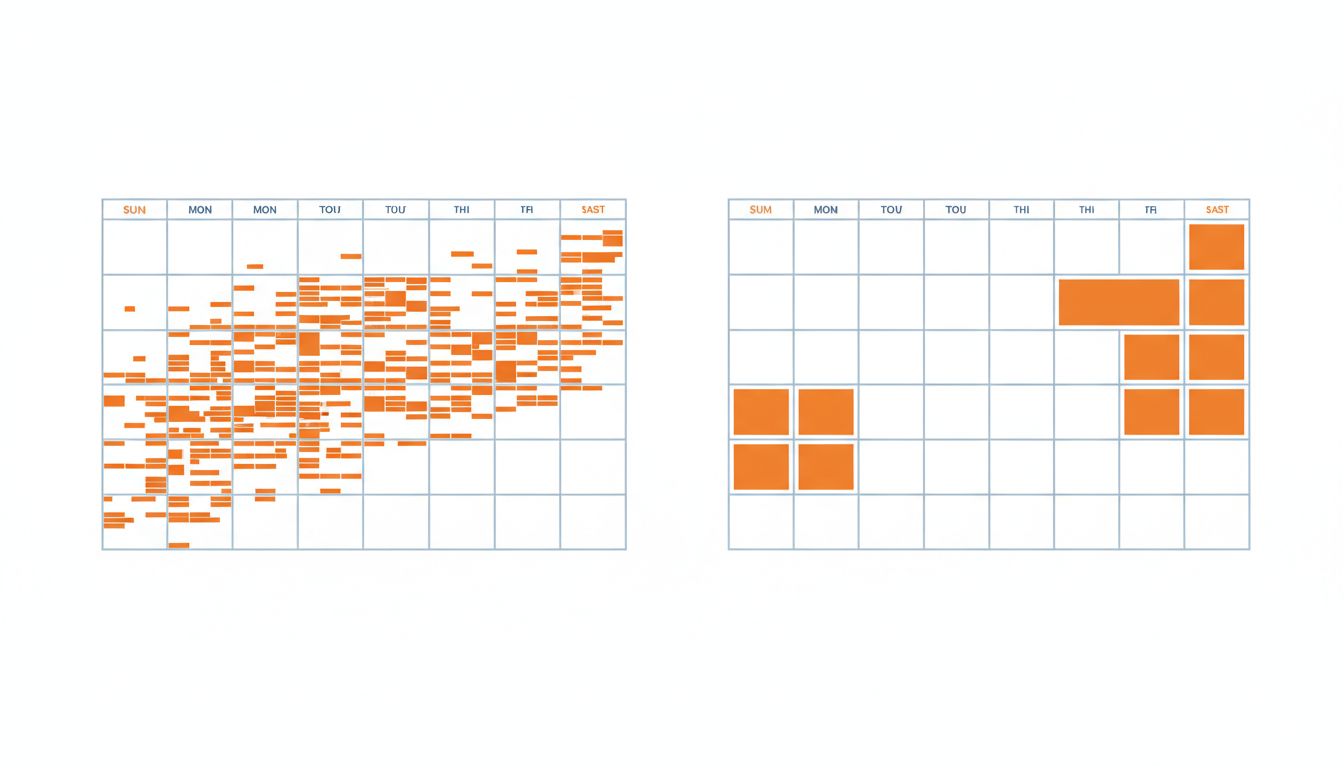
There’s a second problem that compounds the first: time blocking creates its own planning and adjustment overhead.
You block Tuesday 9-12 for the strategy document. Monday afternoon, three things come in that are genuinely urgent. Now you’re either breaking the block (and feeling like you failed at the system) or letting urgent things pile up (and feeling anxious the entire time you’re supposed to be focused). Most people toggle between both options, which means their blocks are being constantly renegotiated and their attention is divided even when the calendar says they’re focused.
The maintenance cost of a rigidly blocked calendar is higher than it looks. You’re making scheduling decisions continuously: Does this fit in my admin block? Should I protect tomorrow morning? Did I account for the fact that creative work takes longer when I’m tired? The system that was supposed to free up mental space is now consuming some of it.
What actually protects deep work
The underlying goal of time blocking, protecting space for important work, is correct. The mechanism is what causes problems.
Instead of scheduling specific tasks into specific slots, consider a lighter version: protect conditions rather than time slots.
This means you make one standing decision: mornings before a certain time are not available for meetings, calls, or reactive communication. You don’t assign tasks to those hours. You just show up and work on whatever the hardest thing is. This preserves the flexibility to follow a problem as far as it goes, rather than until a calendar event fires.
For your reactive work (email, Slack, reviews, quick decisions), you batch it into one or two windows in the afternoon. Not because the calendar says “email block” but because you’ve decided those hours are where interruptible work lives.
The difference sounds subtle but it changes the relationship between your attention and your calendar. You’re not managing tasks against time slots. You’re protecting a quality of working state and then trusting yourself to use it.
The tasks that still deserve blocks
To be clear: some work genuinely benefits from hard scheduling. If you have a meeting-heavy job and you don’t block time explicitly, it will disappear entirely. Some people work better with more structure, not less. And shallow tasks, anything you can execute without rebuilding a complex mental model, are well-served by batching and blocking.
The place to push back on time blocking is specifically when you’re applying it to work where quality scales with depth of engagement. If finishing the task is the goal, block away. If the quality of the thinking is the goal, protecting a clean mental state matters more than protecting a clean time slot.
You probably already have a sense of which category your most important work falls into. The question is whether your productivity system is designed around that distinction, or whether you’ve applied the same scheduling logic to everything and wondered why the hard work still feels rushed.