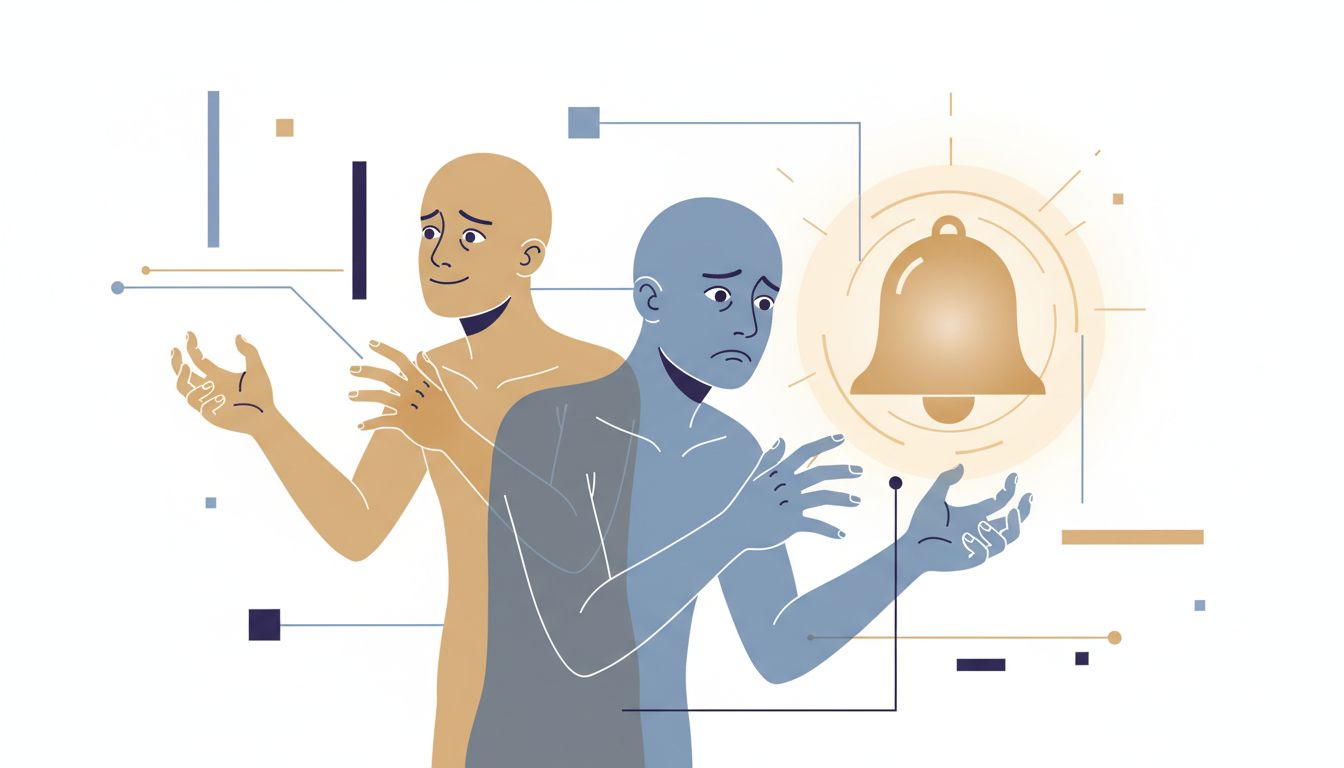
Most productivity advice about notifications follows the same script: turn them off, batch-check them, use Do Not Disturb. And that advice isn’t wrong, exactly. It’s just addressing the symptom while leaving the underlying system intact. You can silence every app on your phone and still spend your day in a reactive, fragmented state. The notifications weren’t the cause. They were just the most visible symptom of a broken attention architecture.
Attention architecture is a term I’m borrowing loosely from information architecture, the practice of structuring information environments so people can navigate them without friction. Your attention architecture is the collection of decisions, defaults, and habits that determine how your cognitive focus gets allocated across a day. Most people have never designed it. They’ve just accumulated it.
The Real Problem Is Default States
Every tool you use has a default state, the behavior it exhibits when you haven’t explicitly configured it otherwise. Default states for most software are tuned for engagement, not for your productivity. Apps send notifications because notifying you is in their interest. Your phone buzzes because that’s what phones do until you tell them otherwise. Your Slack is open in a tab because closing it would feel antisocial.
The result is an environment where your attention is constantly on offer. You haven’t decided to be interruptible. You just never decided not to be. There’s a meaningful difference between an active choice and an inherited default, and most people are living inside a stack of inherited defaults they’ve never examined.
This is where notification-silencing advice gets close to the right answer but stops short. Turning off a notification is a good decision. But it’s a local fix to a global problem. You’ve patched one endpoint in a system that’s still fundamentally misconfigured.
Depth of Focus Is a Resource, Not a Mode
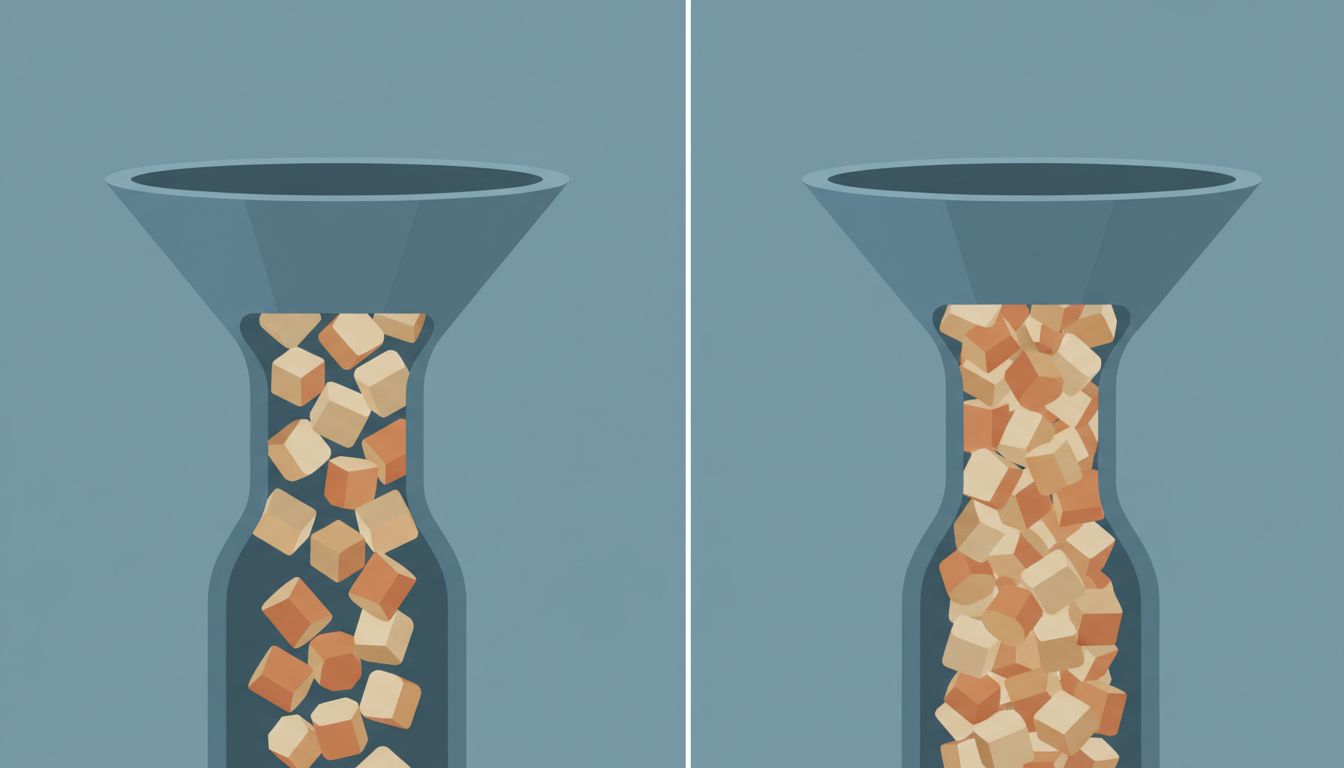
There’s a useful mental model from computer science here. Modern CPUs don’t just execute instructions; they maintain state across a pipeline. When you interrupt that pipeline, the processor has to flush it, discard partially computed results, and start over. The cost isn’t just the time spent on the interrupt. It’s the cost of rebuilding the computational state that got thrown away.
Your working memory works similarly. When you’re doing deep work, you’re holding a model in your head: the shape of the problem, the constraints you’ve already accounted for, the three things you’re currently trying to reconcile. An interruption doesn’t just pause that process. As context switching research has confirmed, it actively degrades the model. You don’t resume where you left off. You rebuild from whatever fragments survived.
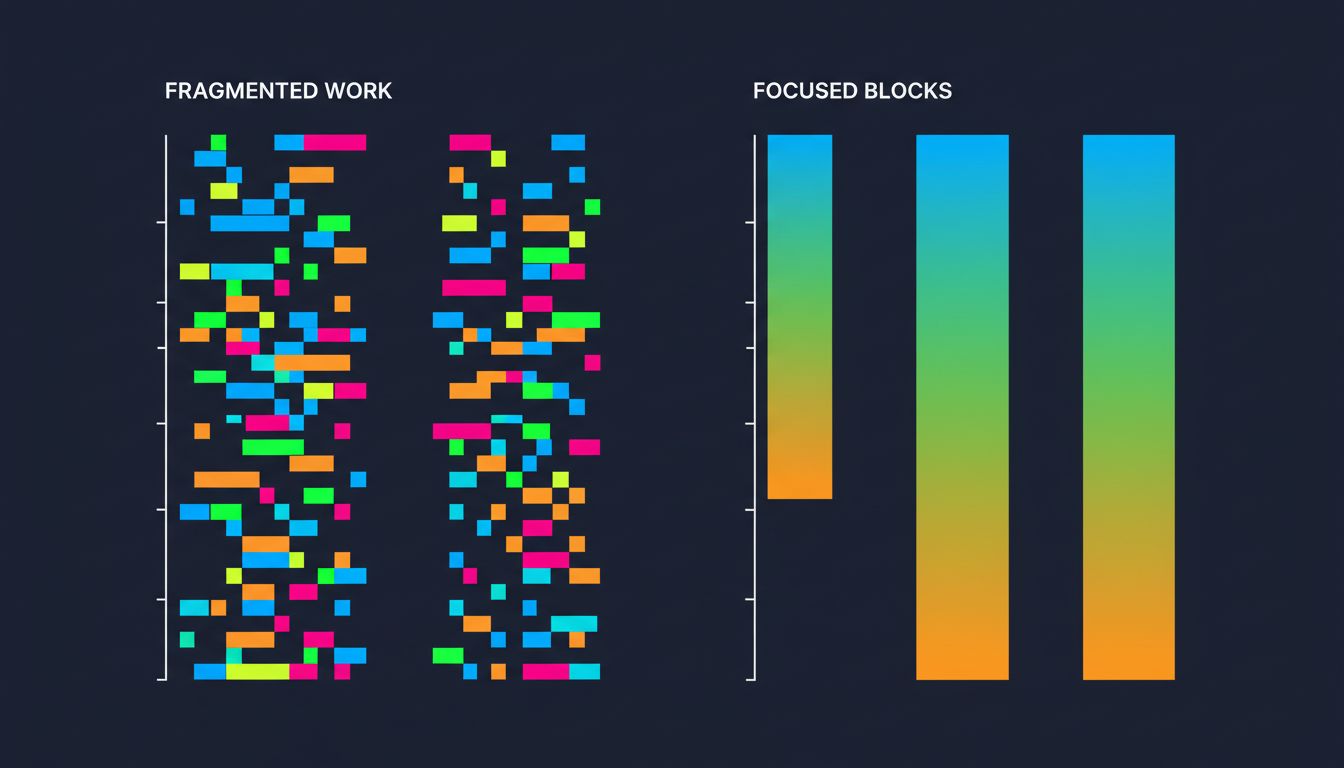
This means the cost of an interruption is asymmetric in a way most people don’t account for. A two-minute Slack message costs you two minutes plus whatever it takes to reconstruct your working state, which can easily be fifteen or thirty minutes for genuinely complex work. You can close a notification in seconds and still lose an hour’s worth of momentum.
The practical implication is that managing interruptions isn’t really about minimizing time spent on them. It’s about protecting contiguous blocks of focused time from being fractured in the first place. Depth of focus degrades non-linearly. An hour with two interruptions is not equivalent to two thirty-minute blocks. It’s often closer to four fifteen-minute blocks, none of which are long enough to get into real depth on anything hard.
Designing for Depth Means Redesigning Your Defaults
So what does it actually mean to design your attention architecture rather than just patch it?
Start by auditing what’s running in interrupt mode by default versus what you’ve explicitly decided should run in interrupt mode. These are different things. Your on-call pager probably should interrupt you. A GitHub comment on a PR that isn’t blocking anyone probably shouldn’t. The problem is that most systems treat all notifications as equally urgent because urgency is the default, not a setting you control.
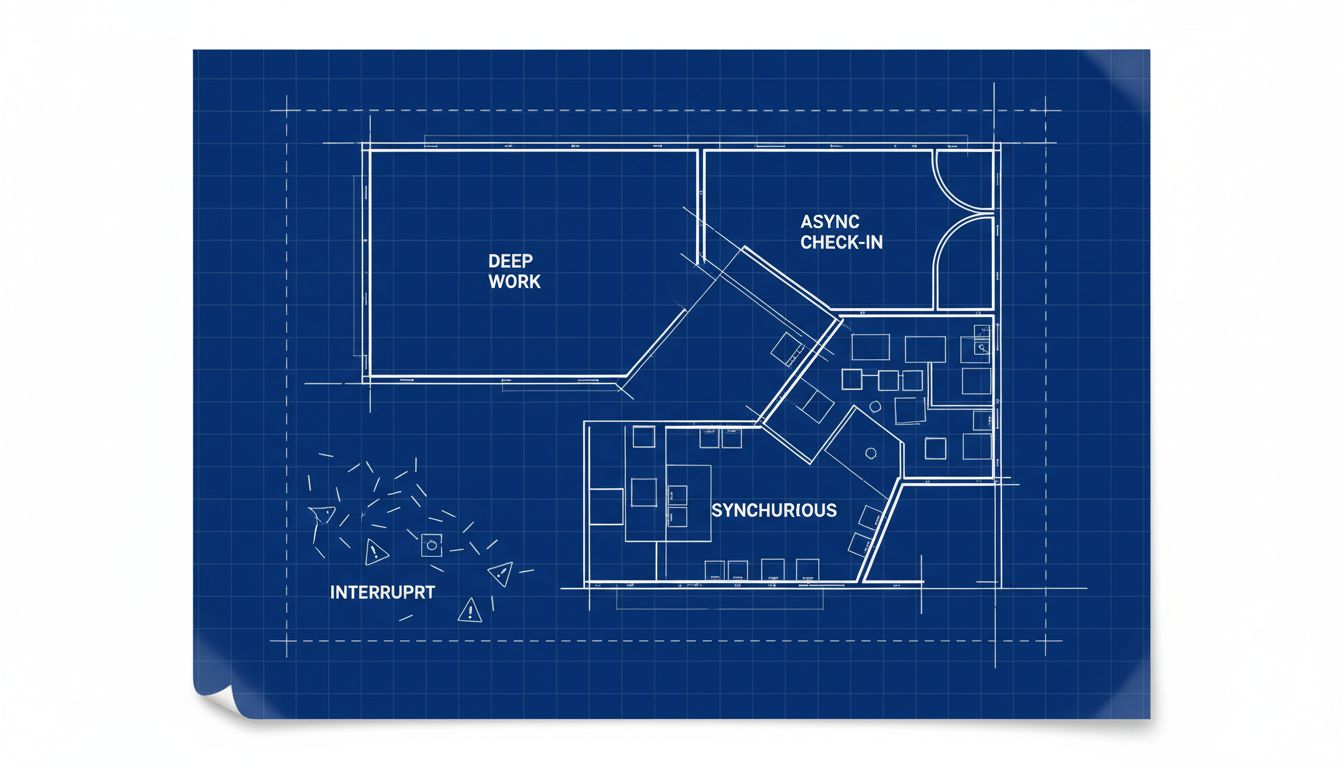
The useful distinction here is between synchronous and asynchronous communication channels. Synchronous channels (calls, face-to-face conversation, live chat) carry an implicit contract that you’re present and responding in real time. Asynchronous channels (email, tickets, comments, most Slack messages) don’t require immediate response, but they’ll behave like synchronous ones if you let them. The architecture question is: which channels are you running in synchronous mode that should be asynchronous?
For most knowledge workers, the answer is almost everything. Email that you check every ten minutes is effectively synchronous. Slack that you watch passively is synchronous. Even your to-do list app, if you have it open and are constantly adding and reviewing items, is consuming synchronous attention that could be asynchronous.
The fix isn’t to check these things less often (though that helps). It’s to make an explicit decision about their mode and enforce it architecturally. That means scheduled check-in windows for async channels, not willpower-based restraint. Willpower fails under pressure. Scheduled windows are a structural constraint that doesn’t require active maintenance.
The System Has to Survive Your Worst Days
Here’s the test I’d apply to any attention management system: does it work when you’re stressed, tired, and behind on something? Because that’s exactly when you’re most likely to collapse into reactive mode and exactly when the cost of doing so is highest.
Most notification strategies fail this test. Deciding in the moment whether to check Slack fails this test. “I’ll just do one quick thing” fails this test. Any system that depends on you making good micro-decisions under pressure will degrade under pressure, because that’s when your capacity for good micro-decisions is lowest.
Designing for your worst days means making the protective behaviors automatic rather than intentional. Focus blocks on your calendar that others can see and respect. A phone that physically cannot buzz during certain hours. A work setup where the async channels aren’t even visible during deep work time, not minimized but closed. These feel like small differences, but the difference between a distraction that requires active resistance and one that simply isn’t present is enormous over time.
The goal isn’t to become someone who’s impervious to interruption. It’s to build an environment that doesn’t constantly test that imperviousness. Notifications aren’t the enemy. Unexamined defaults are. And the good news about defaults is that, unlike willpower, they’re actually configurable.