
The call comes on a Tuesday. Your champion at the account got reorganized out of their role, the new VP wants to consolidate vendors, and the renewal isn’t happening. That single logo that’s been paying your bills, funding your roadmap, validating your pitch deck, gone. You have maybe six months of runway.
Here’s the uncomfortable truth that most startup advice dances around: losing that customer is not your real problem. Depending on them was.

You didn’t have product-market fit. You had patron-market fit.
There’s a version of early traction that feels like validation but is actually dependency in disguise. One large customer who shapes your roadmap, anchors your pricing, and constitutes the majority of your ARR is not evidence that you’ve built something the market wants. It’s evidence that you’ve built something one buyer wanted, and you’ve been mistaking their specific preferences for universal demand.
This pattern is common enough that it has a name in investor circles: a services business wearing a software costume. The enterprise customer got a product built roughly to their specifications. You got revenue that looked clean on a spreadsheet. Neither of you is being honest about what the relationship actually is.
The tell is in your roadmap. If more than half of your last year’s features were directly requested by that one account, you haven’t been doing product development. You’ve been doing bespoke consulting with equity upside attached.
Concentration risk was always the problem, not the departure
When a company generates more than 20-25% of its revenue from a single customer, most serious investors treat that as a liability, not an asset. The departure doesn’t create the risk. The departure reveals it.
Founders often know this intellectually and ignore it emotionally because the big logo feels like proof. It’s on the website. It comes up in every pitch. It makes hiring easier. It creates the illusion of momentum. And it papers over the harder, slower work of building a customer base that’s actually diversified.
The honest version of the story is this: you probably had opportunities to go find more customers and didn’t, because the big one was always there with another request, another expansion conversation, another reason to stay close. That’s not bad luck. That’s a choice, compounded over time.
The rebuild is harder than the build, and that’s the point
When the customer walks, founders typically do one of two things. They panic and chase whatever enterprise deal is closest, repeating the pattern. Or they do the harder thing, which is treat the moment as a forced audit.
The forced audit is brutal but clarifying. You find out which parts of your product anyone would actually pay for without a bespoke relationship propping it up. You find out what your real CAC is when you can’t reference the famous logo. You find out whether your team knows how to sell to someone who didn’t already decide to buy.
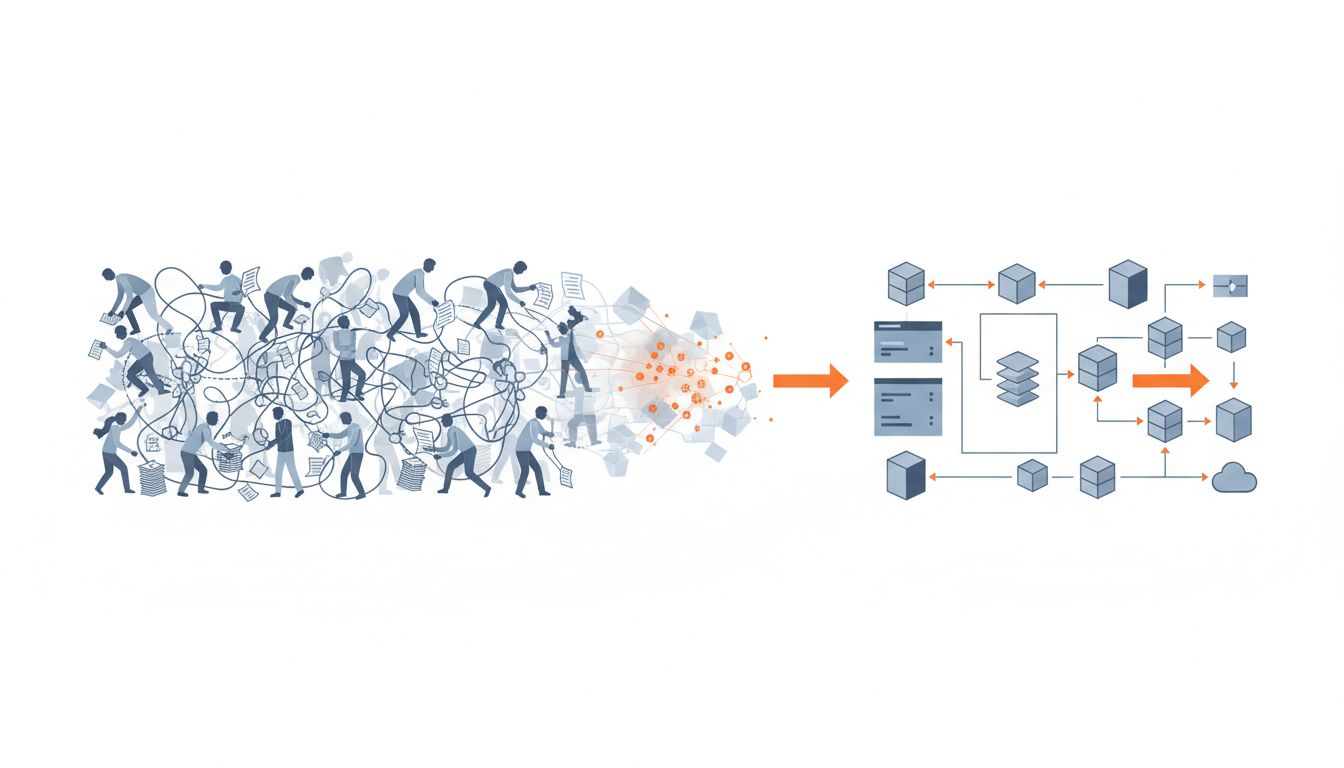
Startups that survive this usually do so by going narrower, not broader. They identify the one or two use cases from the lost customer relationship that felt genuinely painful to solve, and they build a repeatable motion around those, for buyers who aren’t already in their network. It’s slower. It’s less glamorous. It’s how you actually build a company.
The counterargument
The obvious pushback here is that many durable software companies started with a single anchor customer and used that relationship to build something real. Workday’s early relationship with Flextronics gets cited. Veeva built heavily around a handful of early pharma clients. The argument goes that concentrated early revenue isn’t inherently dangerous, it’s just a phase.
This is true, and it’s also a convenient story that survivors tell. What it omits is the deliberate work those companies did to convert a patron relationship into a generalized product. They treated the anchor customer as a source of insight and initial capital, not as a business model. The distinction matters enormously. If you have a plan to convert concentration into diversification, with milestones and a timeline, that’s a strategy. If you’re just hoping the big customer sticks around while you figure it out, that’s a risk you’ve chosen not to name.
The test is simple: could you describe your next ten customers without referencing the first one? If not, the concentration problem is still active.
What you actually owe yourself after the call
The customer is gone. The panic is real. But before you start calling every warm contact in your CRM, do the audit first.
Figure out what was genuinely valuable about what you built versus what was custom scaffolding for one buyer’s preferences. Be brutal. The things that only made sense for that one account, cut them or quarantine them. The things that solved a problem that would exist in any similar company, those are your starting point.
Then go find five more customers who have that problem and no idea who you are. If you can close them on the product’s merits without the famous logo to reference, you have something. If you can’t, you have more rebuilding to do, and you’re better off knowing that now.
One enterprise customer was never a business. It was a conversation. The conversation ended. Now you find out if you built anything worth selling.