
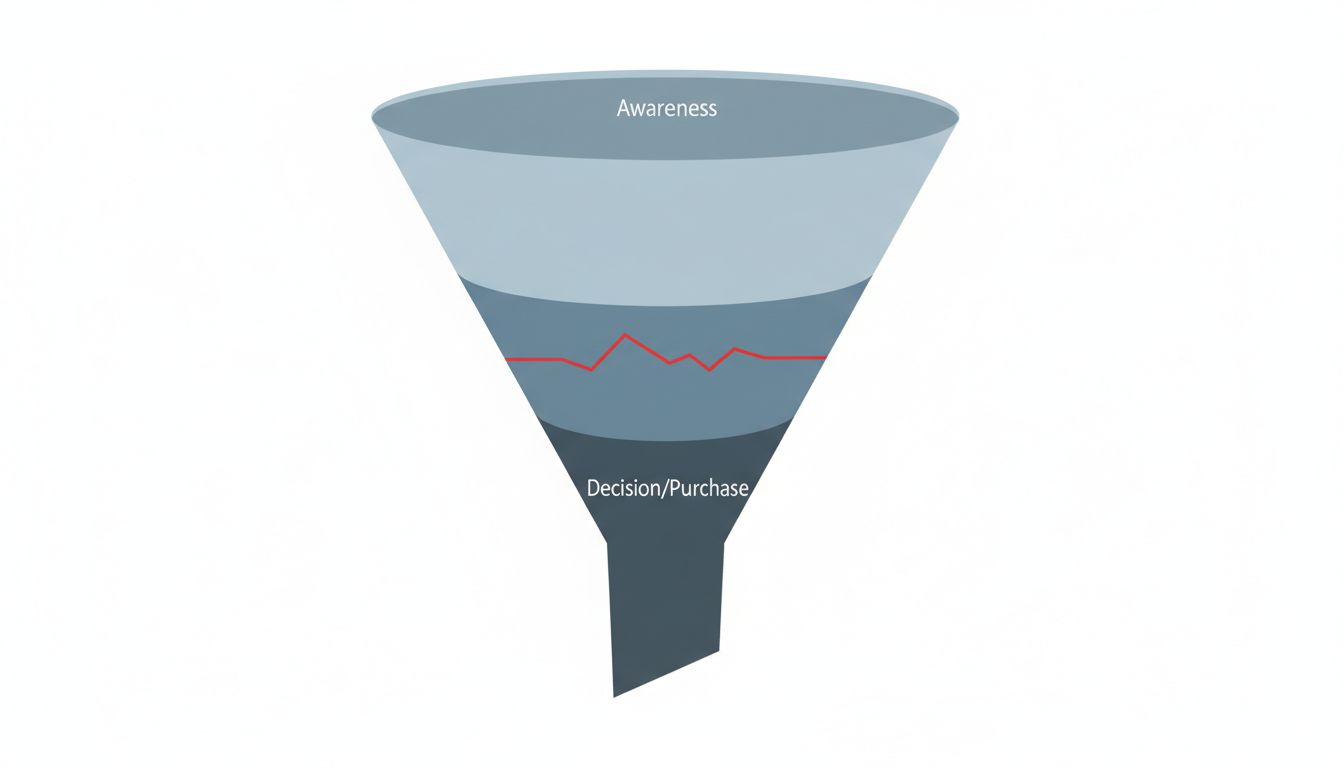
In 2019, a B2B project management startup called Planhat (then still finding its footing) ran an internal analysis on their churn data. What they found was uncomfortable: a disproportionate number of cancellations were clustering not in month one, not in month six, but around weeks five through eight. The product team immediately started a sprint to fix onboarding. The CEO, to his credit, stopped them. He wanted to know who sold those accounts first.
That instinct was right. And most founders don’t have it.
The Setup
Picture a SaaS company doing everything the playbook says. Growing headcount, hitting MoM revenue targets, celebrating new logos. The sales team is crushing quota. The founders are getting slides ready for the Series A.
Then someone builds a proper cohort analysis, maybe for the first time. They look not just at overall churn but at when customers are churning. And there it is: a spike at weeks four through eight. Not the clumsy first-week churn of people who signed up and never logged in. This is different. These are customers who got through onboarding. Who used the product. Who then left.
The product team gets blamed. Onboarding gets redesigned. Nothing changes.
This is one of the most common and expensive mistakes in early-stage SaaS.
What’s Actually Happening
Month-two churn almost always traces back to a mismatch between what was promised during the sale and what the product actually does. The customer wasn’t wronged by a bad product. They were wronged by a sales process optimized for getting to yes, not for getting to fit.
Salespeople are, by design, optimists. They hear a customer’s problem and see a solution. They emphasize the features that resonate and glide past the gaps. They close the deal. This is not malice. It is incentive structure doing exactly what incentive structures do.
The customer signs up. They spend three or four weeks genuinely trying to make it work. They hit the wall where the product doesn’t do the thing they actually needed. They cancel.
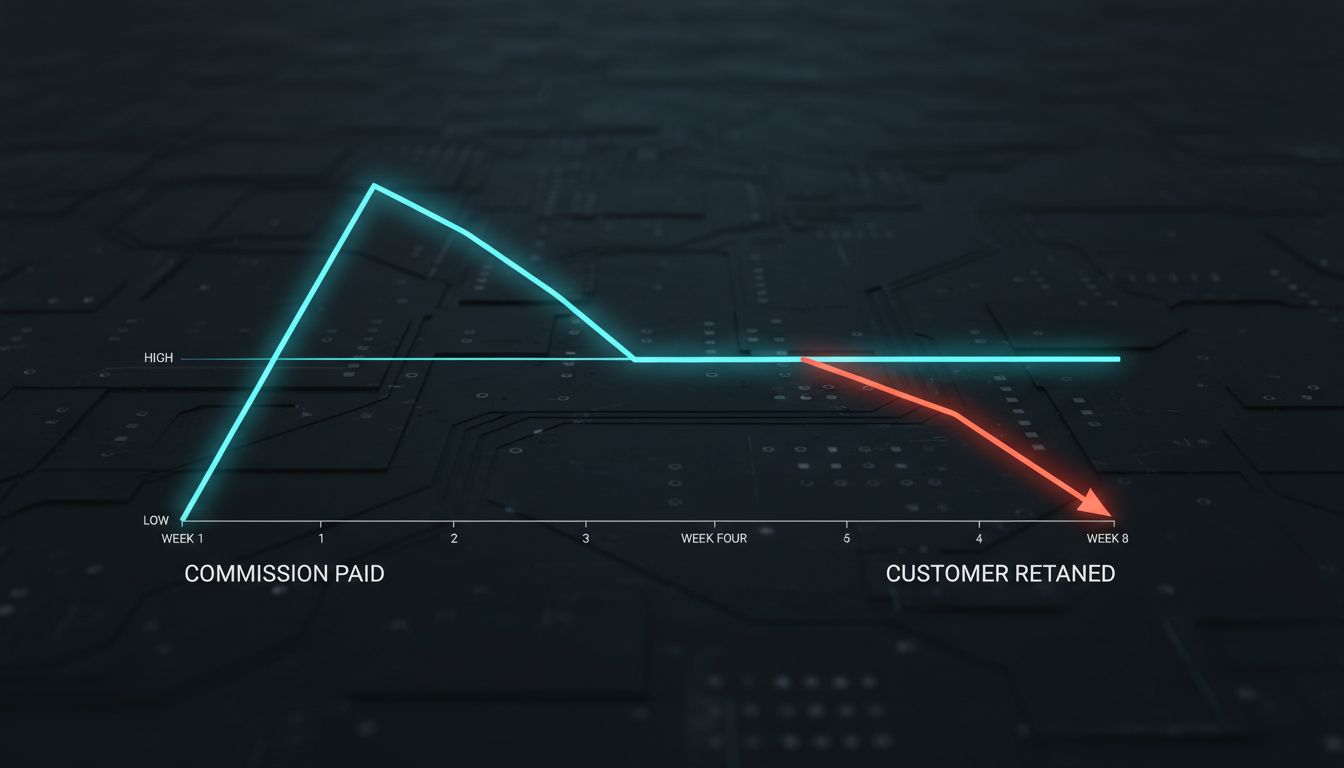
By the time this shows up in your churn report, the commission has been paid, the rep has moved on, and the deal is filed as a win in the system. The cost lands on customer success, on product, on your retention metrics, and eventually on your Series A valuation.
A More Honest Diagnosis
Here is how to tell whether your month-two churn is a sales problem or a product problem.
Pull every account that churned in months two or three. Call five of them. Not a survey, not a NPS form. An actual phone call with someone who has no stake in the outcome. Ask them one question: what did you expect the product to do that it didn’t do?
If they describe features that genuinely don’t exist and probably should, you have a product problem.
If they describe features that do exist but they never knew about, you have an onboarding problem.
If they describe use cases that were never a good fit for your product in the first place, you have a sales problem.
In my experience, most early-stage founders who do this exercise find the third answer showing up more than they expected. Not exclusively, but enough to matter.
The giveaway is specificity. Customers who were oversold don’t say “the product wasn’t good enough.” They say “we were told it would integrate with X” or “the rep said it handled Y automatically.” They have a precise memory of a specific promise that didn’t land.
Why Sales Teams Resist This Conversation
Bringing churn data to a sales team is politically treacherous territory in most startups. The objections come fast.
Customer success should have caught this. Sometimes true, usually a deflection.
The customer didn’t use it right. Occasionally accurate, but “the customer is wrong” is almost never a complete explanation for a pattern.
Those accounts were just a bad fit, we’ve refined our ICP since then. This is the most seductive answer because it sounds like learning. But if the ICP keeps getting refined retroactively to exclude everyone who churned, that’s not learning, that’s revisionism.
The deeper problem is that most sales compensation structures make this hard to address even when leadership wants to. If you pay commission on close and claw back nothing on churn, you’ve built a machine that is structurally indifferent to fit. The rep gets paid whether the customer stays or leaves. Changing this is uncomfortable but it’s one of the highest-leverage levers you have.
Some companies have started tying a portion of commission to three-month or six-month retention. This creates real alignment. It also makes some salespeople leave, which is often fine, because the ones who leave tend to be the ones selling hardest to accounts that shouldn’t be buying.
What Planhat Got Right
Back to where we started. Planhat, which has since become a well-regarded customer success platform, did something that takes real organizational courage: they traced the churn back to the source accounts and looked at who sold them. They found patterns. Certain types of prospects, sold in certain ways, were churning at higher rates.
They didn’t fire the salespeople. They changed what information was captured during discovery, built a scoring model for fit, and started flagging deals that matched the churn pattern before they closed. Some deals they chose not to pursue. Revenue in the short term went down slightly. Retention went up significantly. The unit economics improved.
This is the counterintuitive thing about early-stage growth: sometimes the right move is to close fewer deals. How startups use pricing to filter their best customers gets at a related idea, the notion that your acquisition strategy is also a filtering mechanism, and if it’s not filtering for fit, you’re building churn into the foundation.
What to Do With This
If you haven’t run a cohort analysis on when customers churn, do it today. Not revenue churn, customer churn, by month of tenure. Look for spikes.
If you find a month-two spike, resist the reflex to send it to product. Send it to revenue first. Pull the sales notes on those accounts. Look for patterns in what was promised, what industry they came from, what use case they described in discovery.
Then fix the incentives before you fix the process. Process changes don’t survive misaligned incentives. If your salespeople are rewarded for closing accounts that churn, they will keep closing accounts that churn, regardless of how many playbooks you update.
The customers who leave in month two are not outliers or statistical noise. They are a feedback mechanism. They’re telling you, clearly and at some cost to themselves, that something is broken upstream. The question is whether you’re willing to hear it from the people who actually created the problem, or only from the product team that had nothing to do with it.