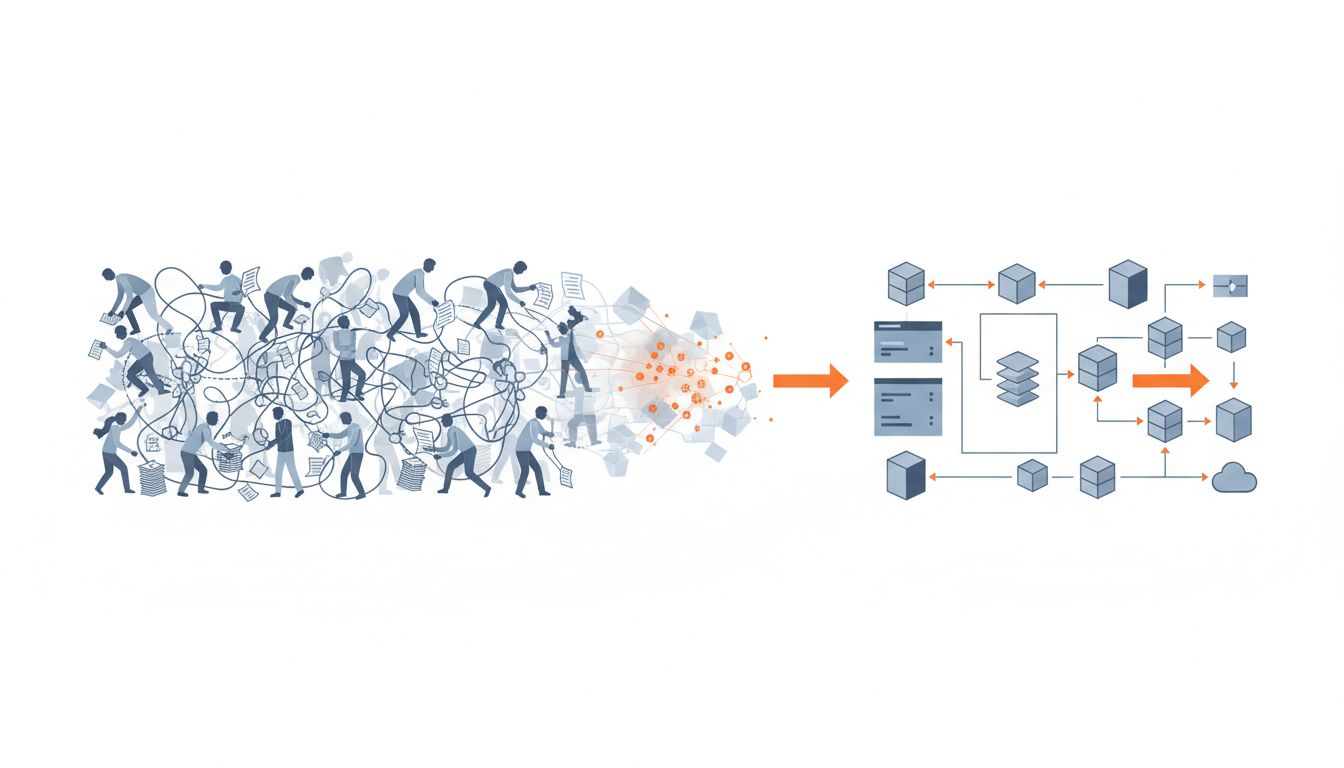

A founder I know built a small but profitable tool for managing creative agency workflows. Two years in, a major project management platform announced an almost identical feature set at their annual conference. The founder’s investors started texting. His team went quiet. He told me later that the worst part wasn’t the announcement itself. It was the three weeks of paralysis that followed, where nobody could agree on what to do.
This scenario plays out constantly. A bigger player notices your category is real, builds something passable, and relies on distribution to swamp you. Your instinct is probably to panic, litigate, or pivot completely. Almost all of those instincts are wrong. Here is what actually works.
1. Validate First, Panic Second
Before you do anything, figure out whether the copycat is actually a threat to your specific customers or just a threat to the abstract idea of your company. These are very different problems.
Big companies copying small ones often build a mediocre version of the feature, not a real competitor to the product. Salesforce launching a feature that overlaps with a focused sales tool rarely destroys that tool’s best customers, because those customers chose the focused tool precisely because Salesforce is too bloated. Talk to your ten most engaged customers within 48 hours of the announcement. Not to reassure them, to actually ask. If none of them are considering switching, your emergency is mostly psychological.
2. Do Not Sue Unless You Have a Very Good Reason
The instinct to lawyer up is understandable and almost always a trap. Litigation is expensive, slow, and distracting in ways that compound. While your legal team is building a case over 18 months, your competitor is shipping, your team is demoralized, and your customers are watching you fight instead of build.
There are real exceptions: if they copied proprietary code, if there is clear trade secret theft, if you have patents that are actually enforceable. But “they made something that looks like our thing” is not a case worth pursuing. Copyright protects expression, not ideas. Patents on software are hard to get and harder to enforce. Spend the litigation budget on engineering and sales instead.
3. Accelerate, Don’t Pivot
One of the dumbest things a startup can do when a competitor copies them is abandon the market. If a well-resourced competitor decided your idea was worth building, that is confirmation that you were right about the problem. The answer is not to find a new problem. It is to widen the gap.
Droupbox did not abandon cloud storage when Google Drive and iCloud arrived. They kept building, sharpened their collaboration features, and made sure enterprise customers had reasons to stay. You have an advantage most founders underestimate: you can move faster than the copying company. You knew the problem first, you have customer feedback they do not have, and you are not constrained by a roadmap approved by a committee of seventeen people. Use all of that.

4. Go Deeper on the Customers the Giant Can’t Serve
Big companies copy broad strokes. They almost never copy the specific, deeply considered workflows that make your best customers love you. This is your real moat, and you should be aggressively excavating it.
Find the customers in your base who have the most complex, specific, or unusual needs. Those are the people the copycat’s generic version will fail. Build harder for them. Make your product the obvious choice for the most demanding version of the problem, and let the giant own the casual users who were probably not going to pay much anyway. Niche depth is not a consolation prize. For a startup, it is usually the right business.
5. Use Their Marketing Budget Against Them
When a large company announces a feature that competes with you, they are also validating your category to the entire market. That announcement will reach people who had never heard of you. It will generate press, LinkedIn posts, and conversations that raise awareness of the problem you solve.
Be ready to intercept that interest. Run search ads on their product name. Write comparison content that is honest and detailed. Reach out to journalists covering the announcement and offer the “independent founder” perspective. Make sure your positioning clearly articulates why a dedicated product beats a tacked-on feature. This is not cheap opportunism. It is recognizing that their marketing dollars just funded your lead generation.
6. Raise Money if You Can, Now
If you were planning a fundraising round in the next six to twelve months, accelerate it. Not because you need the money for lawyers or because the threat is necessarily existential, but because investor interest often spikes when a large company validates your space. The same announcement that scared you can make a compelling slide in a deck.
“We were building this before Google thought it mattered” is a better fundraising story than most founders realize. A competitor’s entry into your category is, counterintuitively, a signal that the category is real and the timing is right. Frame it that way and use the window before the market figures out whether the big player’s version is any good.
7. Get Honest About Your Actual Differentiation
This is the uncomfortable one. Sometimes a competitor copies your product and you realize, in the cold light of that moment, that your differentiation was always thinner than you told yourself. Not a better product, just earlier. Not a network effect, just a head start.
If that is the case, the competitor did you a favor by forcing the question now rather than later. The companies that survive this scenario are the ones that can articulate a crisp, defensible reason why a customer should choose them that is not “we existed first” or “we’re scrappier.” If you cannot say it in one clear sentence, that is your real problem and the competitor just revealed it. Use the crisis as a forcing function to actually build the moat you thought you had.
The founder I mentioned at the start eventually stopped panicking after those customer calls. Not one of his ten best accounts was considering switching. He raised a round six months later using the competitor’s announcement as validation, spent the money on enterprise features the big platform couldn’t bother with, and still runs the business today. The giant’s feature is still mediocre. Turns out shipping fast matters more than shipping big.