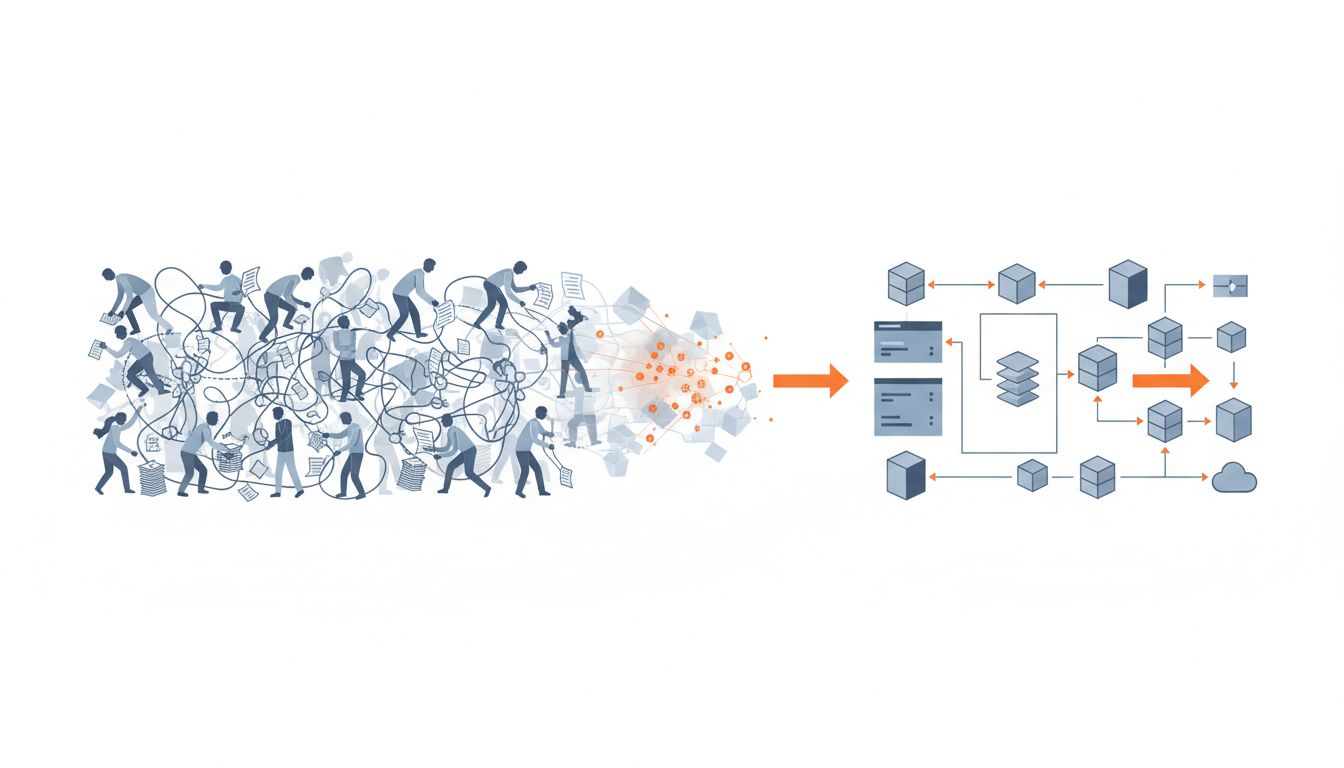
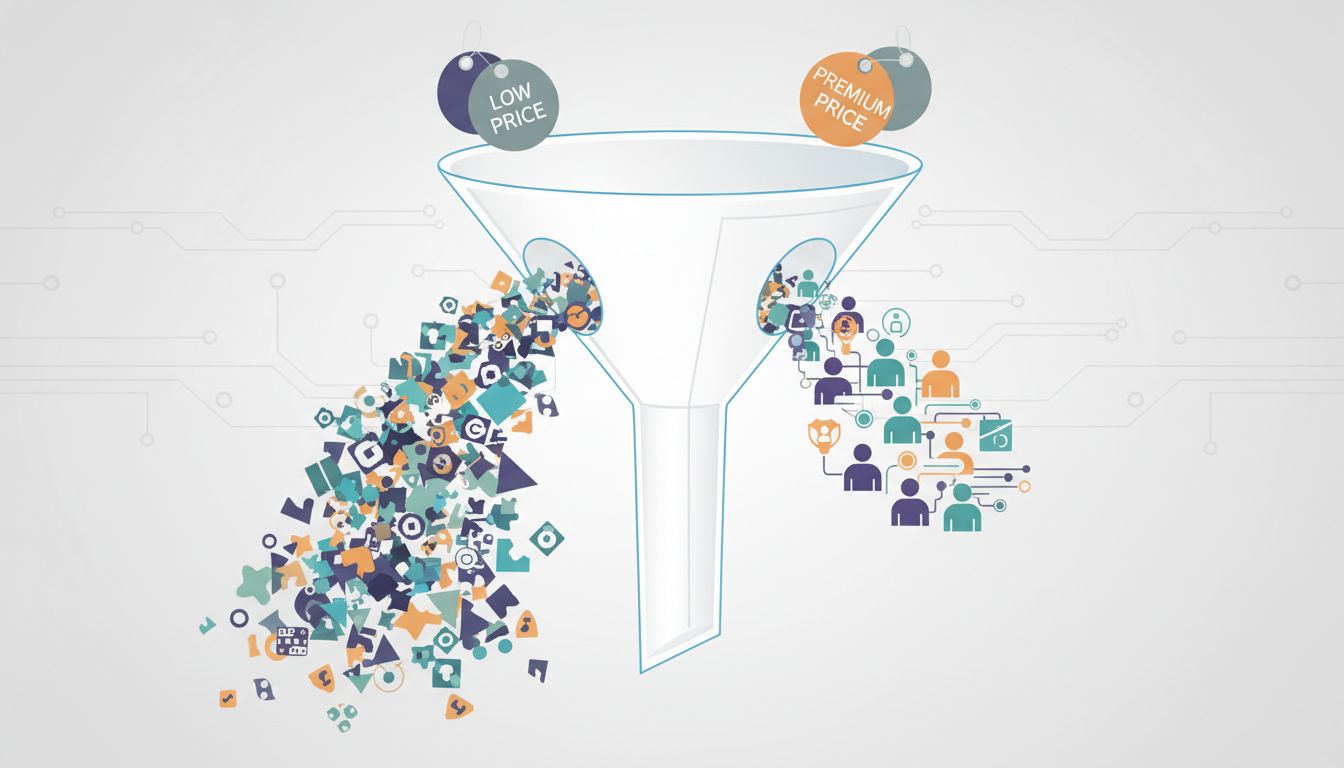
A founder I know spent eight months building a project management tool for construction crews. Good product. Genuinely solved a problem that Asana and Monday.com ignored. He launched at $9 per user per month because he was scared nobody would pay more.
Within a year he had 200 users, zero profit, and a support queue that was eating his team alive. His customers were the most price-sensitive people in his addressable market. They churned at the first sign of trouble, demanded features that required months of work, and referred other people just like themselves. When he tried to raise prices, half his base revolted. He shut down six months later.
The company didn’t die because the product was bad. It died because the pricing selected for the wrong customers from day one, and that selection compounded until there was no fixing it.
Low Prices Don’t Buy You Safety, They Buy You Risk
The instinct to underprice is understandable. You’re new, unproven, and terrified of rejection. Charging less feels like lowering the barrier to entry. But what you’re actually doing is changing the composition of who walks through the door.
Price is not just a revenue mechanism. It is a signal that attracts a specific kind of buyer. A cheap price says: this is for people who are sensitive to cost, who will make decisions based on a spreadsheet comparison, who are not buying a solution so much as experimenting with the cheapest available option. That’s a customer profile that generates churn, kills lifetime value, and makes your unit economics impossible to fix without a near-complete customer base replacement.
The math compounds in ways founders underestimate. When you price too low, you need more customers to hit the same revenue target. More customers means more support, more infrastructure, more sales effort. Your cost structure grows with scale, but your margin per customer stays thin. You can build a very busy company that gets poorer the faster it grows. Your runway number is wrong and here is why covers a related failure mode: founders who can see the cash number but not the structural problem it’s hiding.
The Customers You Attract Define the Company You Become
When Basecamp launched in the early 2000s, 37signals priced the product at a level that excluded the most price-sensitive segment of their potential market. Deliberately. They wanted customers who were buying on value, not on cost. That choice shaped everything about who stayed, what got built, what the support culture became, and what the brand eventually stood for.
This isn’t a boutique philosophy. It’s mechanics. The customers you acquire in your first year will dominate your feedback loop, your roadmap requests, your case studies, and your referral network. If that cohort is made up of people who chose you because you were cheapest, your product will evolve toward their needs, your sales pitch will optimize around their objections, and your entire company will calcify around a segment that doesn’t have money.
Conversely, higher prices filter for buyers who have allocated budget, who have a genuine problem, and who expect the product to actually work. They complain when something breaks, but they stay when it gets fixed. They’re worth studying. The feedback from a customer paying $500 a month is structurally different from feedback from someone paying $19.
Month two churn is a sales problem, not a product one argues that the customers who leave early were often the wrong fit at the point of acquisition. Underpricing accelerates that mismatch because it removes price as a self-selection mechanism.
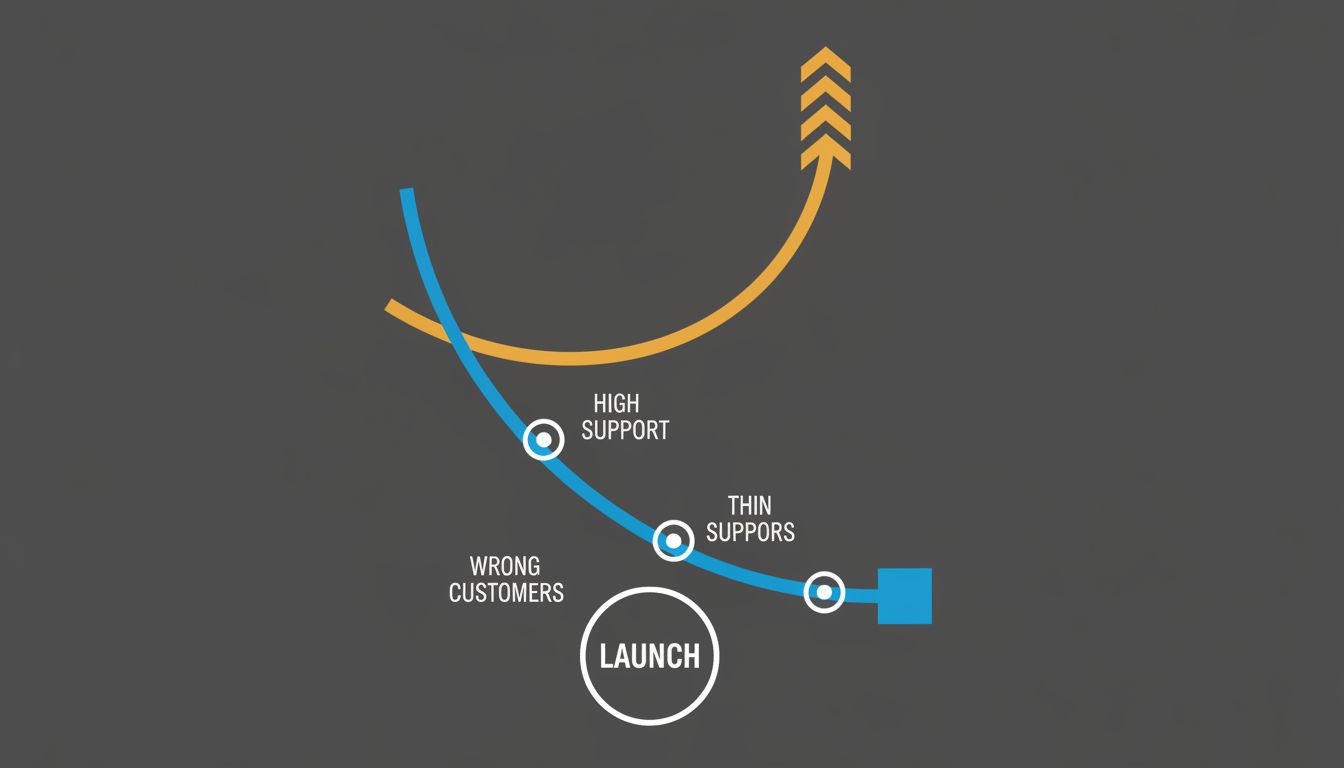
Raising Prices Later Is Not a Strategy, It Is a Crisis
Founders sometimes convince themselves that underpricing is a temporary posture. Get customers in the door, prove the value, then raise prices later. This plan rarely survives contact with an actual customer base.
Your early customers signed up under a specific set of terms. They built budget assumptions around your price. Many of them will have sold your tool to their boss at the original number. When you announce a price increase, you are not just asking them to pay more. You are breaking a precedent, creating organizational disruption for them, and giving them a deadline to evaluate your competitors. Many will use that deadline.
The SaaS graveyard is full of companies that acquired thousands of users at an unsustainably low price and then faced an impossible choice: raise prices and churn your customer base, or stay cheap and burn out your team. There is no clean exit from that trap. The time to set the right price is before customers exist, not after they’ve anchored to a number you’re now embarrassed by.
This doesn’t mean prices can never change. It means that price increases need to be positioned around clear value additions, and they become progressively harder the longer you wait and the larger your installed base grows.
What the Right Price Actually Does
A price that’s too high will cost you deals. That’s real, and it hurts. But losing a deal to price gives you immediate, actionable signal. You know why you lost. You can study who didn’t buy and decide whether that segment matters. You can adjust.
A price that’s too low doesn’t give you signal. It gives you customers who are quietly incompatible with your business model, a support burden that looks like traction, and revenue that feels positive but is hiding structural insolvency.
The right price does several things simultaneously. It covers your cost structure with margin to spare. It positions your product in the buyer’s mind (a $200 per month tool is evaluated differently than a $20 one, even before a single feature is compared). It filters for customers who are serious about solving the problem. And it gives you room to discount when the right enterprise deal requires negotiation, rather than starting from a number that already has no room to move.
Finding that number requires actual conversations with buyers, not a spreadsheet exercise where you look at competitors and undercut by 20 percent. Talk to people who have the problem. Ask what they’re currently spending to solve it, badly. Ask what the problem costs them when it isn’t solved. The answers will usually support a higher price than your fear suggests.
The Confidence Problem Under the Pricing Problem
Here’s what I’ve noticed: most underpricing is not a strategic error. It’s a confidence problem wearing the costume of a strategic decision.
Founders price low because they don’t yet believe the product is worth more. Sometimes that’s accurate and the product genuinely isn’t ready. But often the product is genuinely valuable and the founder just hasn’t sold enough of it to trust that belief yet. They use low pricing as a hedge against rejection, a way to make a no less likely. What they’re actually doing is avoiding the market signal that would tell them whether the product works.
Charge what the product is worth to the customer who has the problem most acutely. If nobody buys at that price, you have a real problem to solve. If they do, you’ve built something with a future.