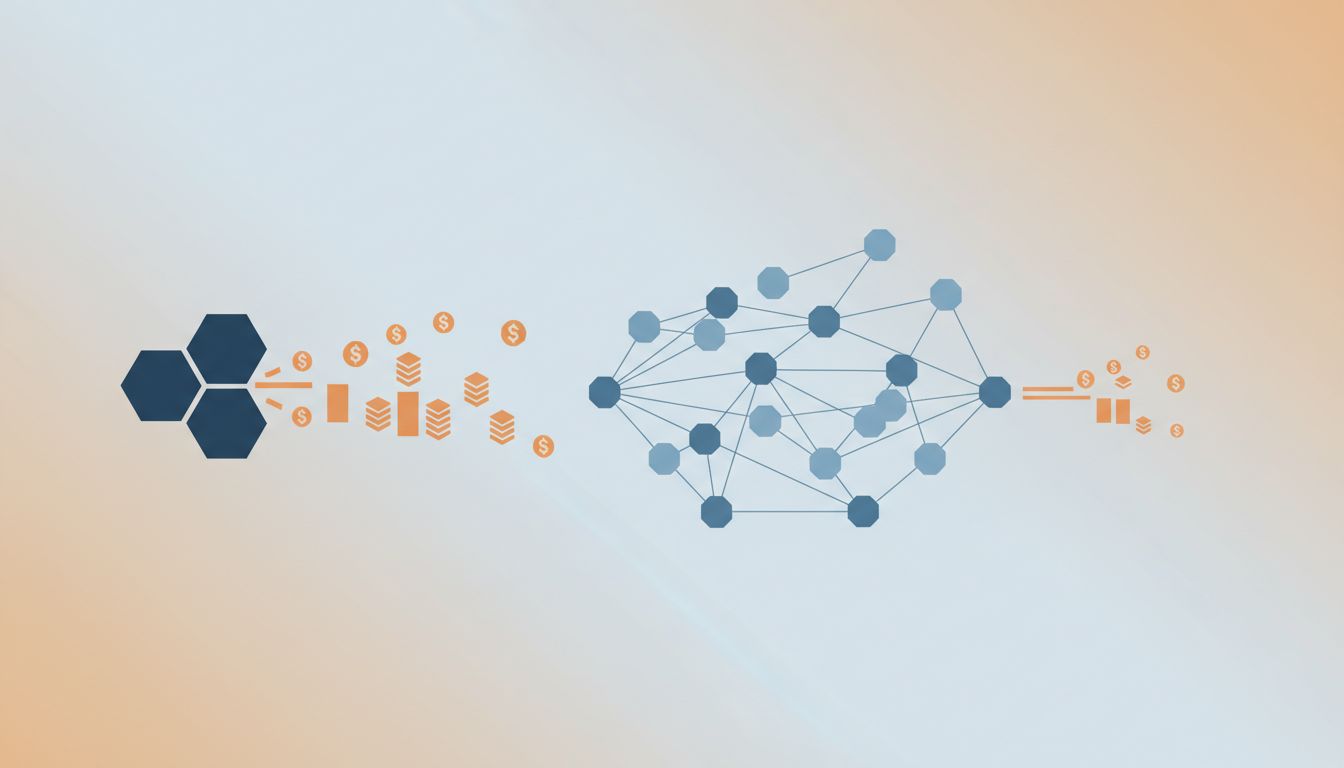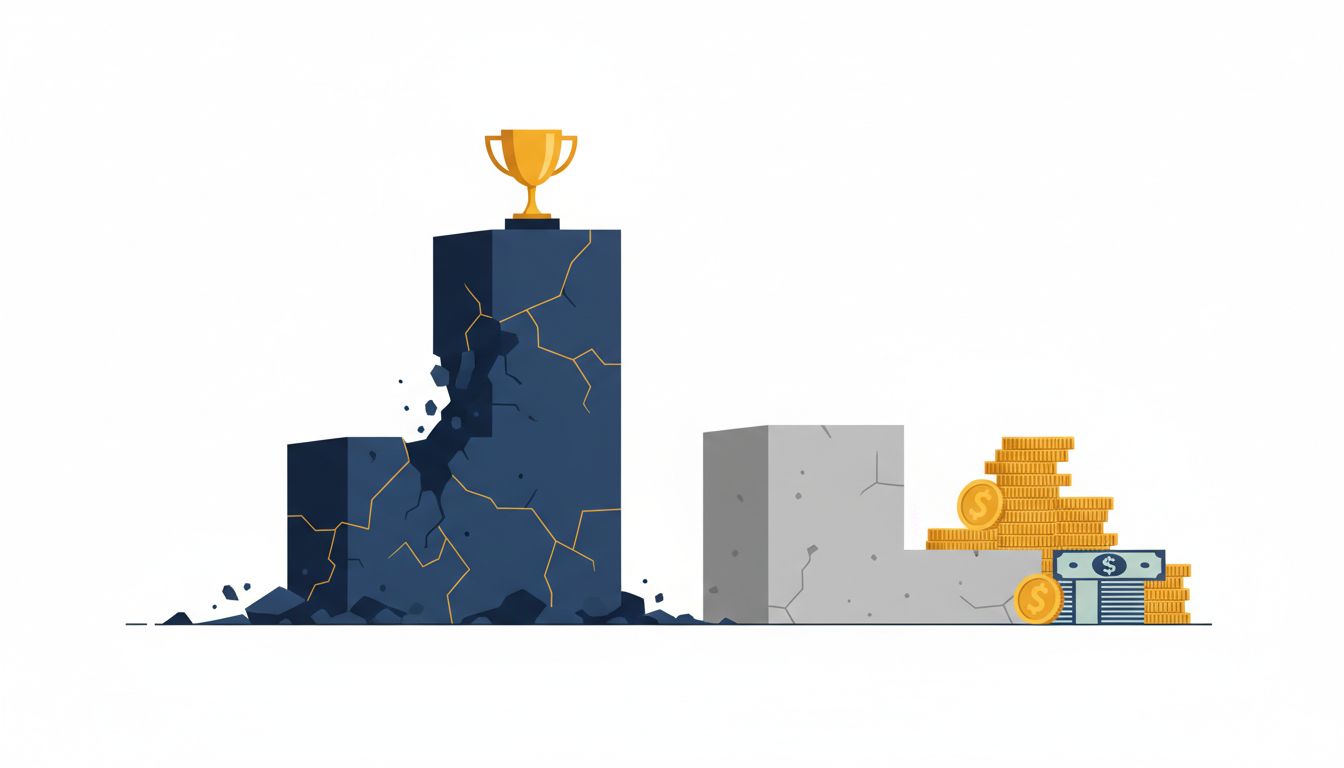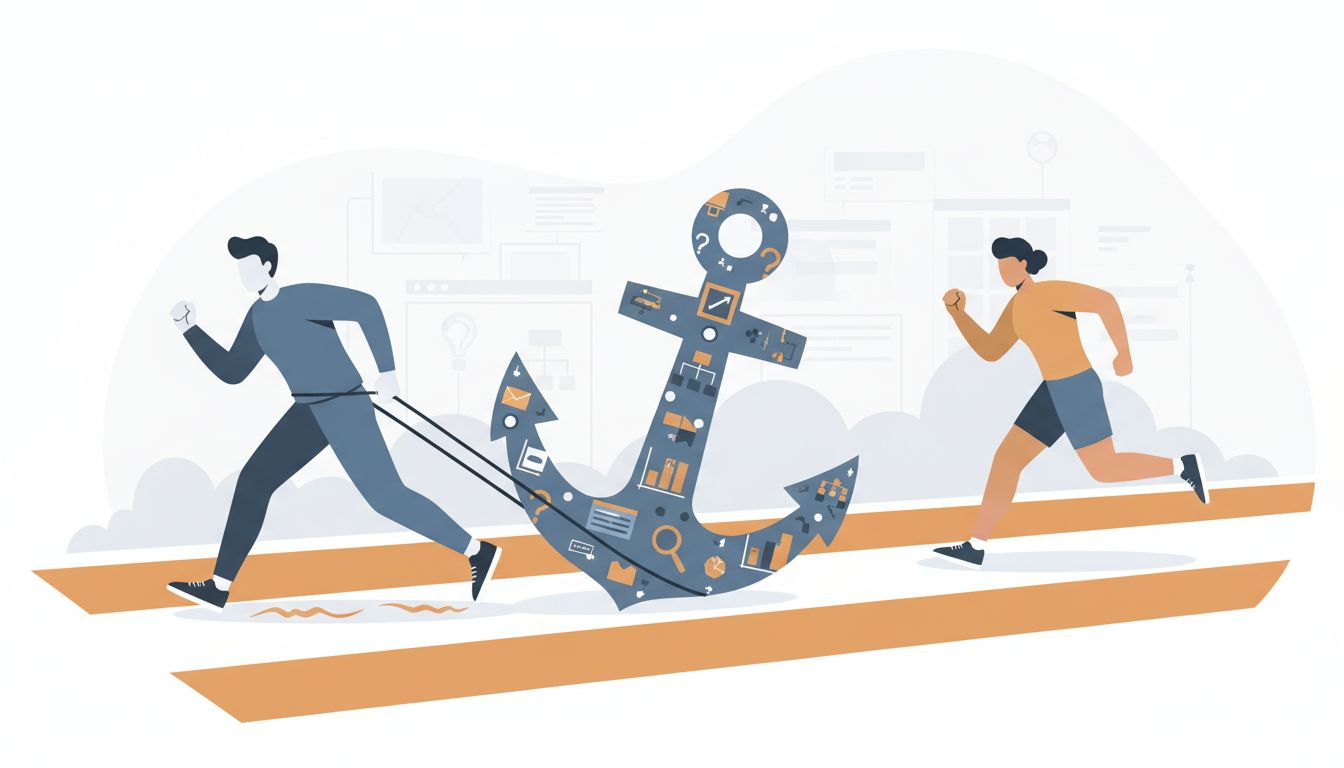

The graveyard of superior technology is well-stocked. Betamax had better picture quality than VHS. OS/2 was more stable than Windows 3.1. Google Wave was, by most technical measures, more sophisticated than what replaced it. None of that mattered. Platform wars are not engineering competitions. They are economic and social ones, and the companies that understand this earliest tend to win them.
1. Distribution Beats Features Every Time
The most technically capable platform means nothing without developers, users, or partners already inside the tent. Microsoft didn’t win the PC era by building the best operating system. It won by signing the IBM deal in 1980, which put MS-DOS on the machine that mattered, and then leveraging that foothold to set terms for the next two decades. The platform itself was notoriously clunky; the distribution was airtight.
This pattern repeats so reliably it should be a first principle. Android was not a better mobile operating system than iOS when it launched, but Google’s willingness to license it freely to any hardware manufacturer gave it access to markets Apple couldn’t or wouldn’t serve. By the time Android’s quality caught up, it already had the install base to make the quality argument moot.
2. The Chicken-and-Egg Problem Favors Whoever Cheats
Every platform faces the same cold-start problem: developers won’t build for a platform without users, and users won’t adopt a platform without apps. The companies that break this deadlock don’t solve it elegantly. They cheat.
Apple pre-loaded the original iPhone with its own applications. Facebook grew by scraping address books, then later by offering an open social graph to developers who needed distribution. Uber subsidized both sides of its marketplace simultaneously, burning cash to manufacture the appearance of liquidity. None of these were technically interesting solutions. They were economic ones, often aggressive ones, and they worked. The platform that wins is usually the one willing to operate at a loss long enough to bootstrap both sides of the network.
3. Developer Relations Is Strategy, Not Support
The platform companies that lose tend to treat developers as a constituency to manage. The ones that win treat them as co-investors in a shared outcome. Salesforce’s AppExchange, launched in 2005, was not a product feature. It was a bet that third-party developers would build the integrations Salesforce couldn’t staff for, expanding the platform’s surface area faster than any engineering team could. It paid off at a scale Salesforce’s own roadmap never could have achieved alone.
Contrast this with how Microsoft handled its developer ecosystem in the Windows Mobile era. The tools were adequate, the documentation existed, but the economics for developers were poor and the fragmentation was punishing. Apple didn’t just give developers better tools when it launched the App Store in 2008. It gave them a payment infrastructure and a distribution channel with genuine revenue potential. The result was a developer migration that had almost nothing to do with the quality of Objective-C.
4. Switching Costs Are Engineered, Not Discovered
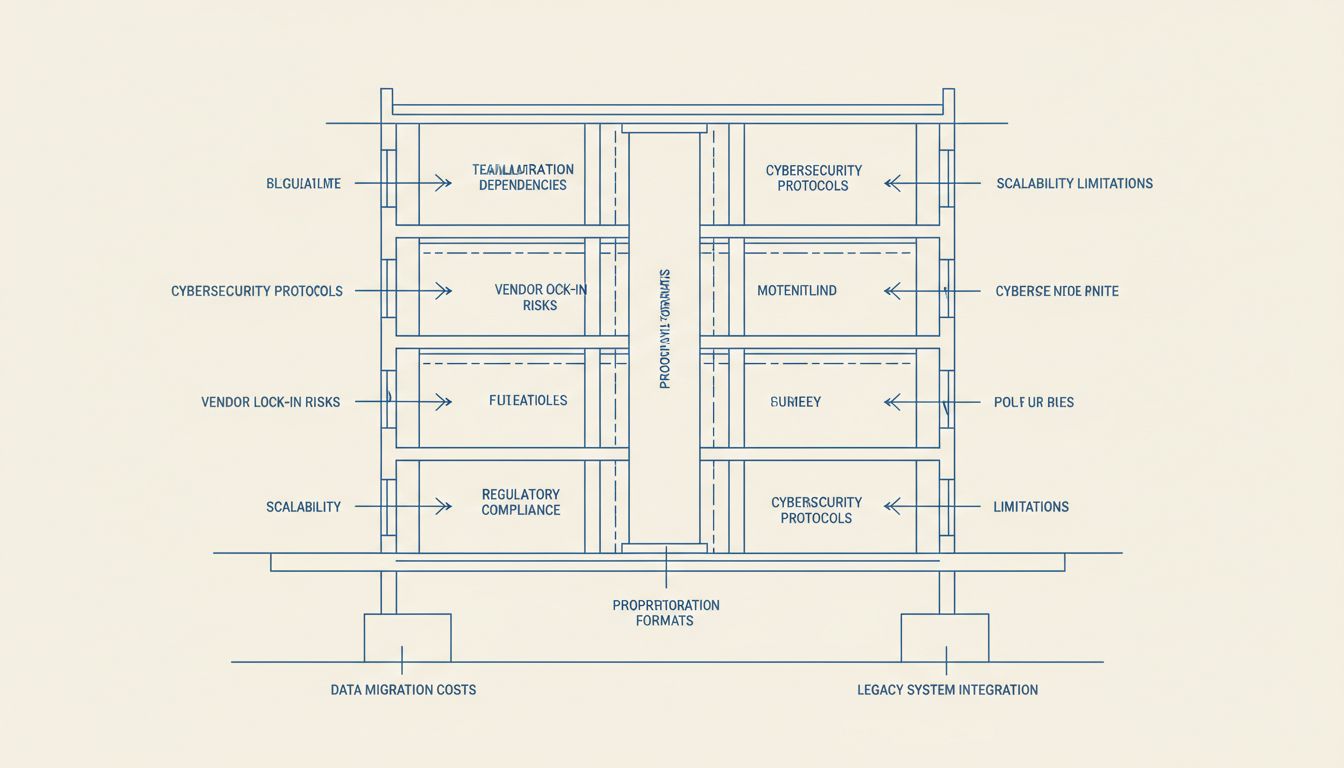
The most durable platform advantages are not technical moats. They are psychological and operational ones, built deliberately into the product. Salesforce stores years of customer relationship data in formats that require significant effort to migrate. Adobe’s Creative Cloud ties workflows, file formats, and team collaboration into a web of dependencies that makes switching painful even when a competitor offers something better at lower cost.
This is not accidental. The best platform strategists think about lock-in the way architects think about load-bearing walls: you design for it from the start, not retrofit it later. The companies that build genuinely open, portable systems often do so out of philosophical conviction, and they frequently lose to less principled competitors who understood that openness is a feature of a challenger and lock-in is a feature of an incumbent. Being second in tech is often more profitable than first precisely because the second mover can study what holds users in place and engineer for retention from day one.
5. Pricing Is a Platform Decision, Not a Finance Decision
How you price access to your platform shapes who builds on it, who competes with you on top of it, and where value ultimately concentrates. Amazon’s decision to offer AWS at granular, pay-as-you-go pricing in 2006 was not primarily a revenue decision. It was a platform architecture decision that made experimentation cheap enough for startups to build on top of it, which created a flywheel of innovation that kept AWS relevant even as competitors offered technically superior services on specific dimensions.
Intel’s pricing of its development tools significantly below cost for decades was a direct subsidy to developer adoption of x86. The tools weren’t free out of generosity. They were free because each developer who standardized on x86 made the platform marginally harder to displace. Pricing wrong kills startups in both directions, but platform companies face a specific version of this risk: pricing for short-term margin can permanently cede the ecosystem to a competitor willing to think longer.
6. The Winner Usually Moves the Battlefield
Platform wars are rarely won on the terrain where they started. When Spotify entered a market dominated by iTunes, it didn’t try to build a better music store. It changed what the platform was, moving from ownership to access and redefining what “winning” meant. When Google couldn’t beat Facebook at social networking, it moved to mobile and ambient computing, where Facebook’s advantages didn’t translate.
The companies that win do this deliberately. They find the axis of competition where their strengths are most concentrated and their opponents least prepared, then work to make that axis the one that matters. This is not just product strategy. It is platform strategy, and it requires the intellectual honesty to admit when you are losing a fight and the organizational discipline to pick a different one before the clock runs out. The best platform, measured by the criteria that existed at the start of the war, often loses to the platform that changed the criteria.