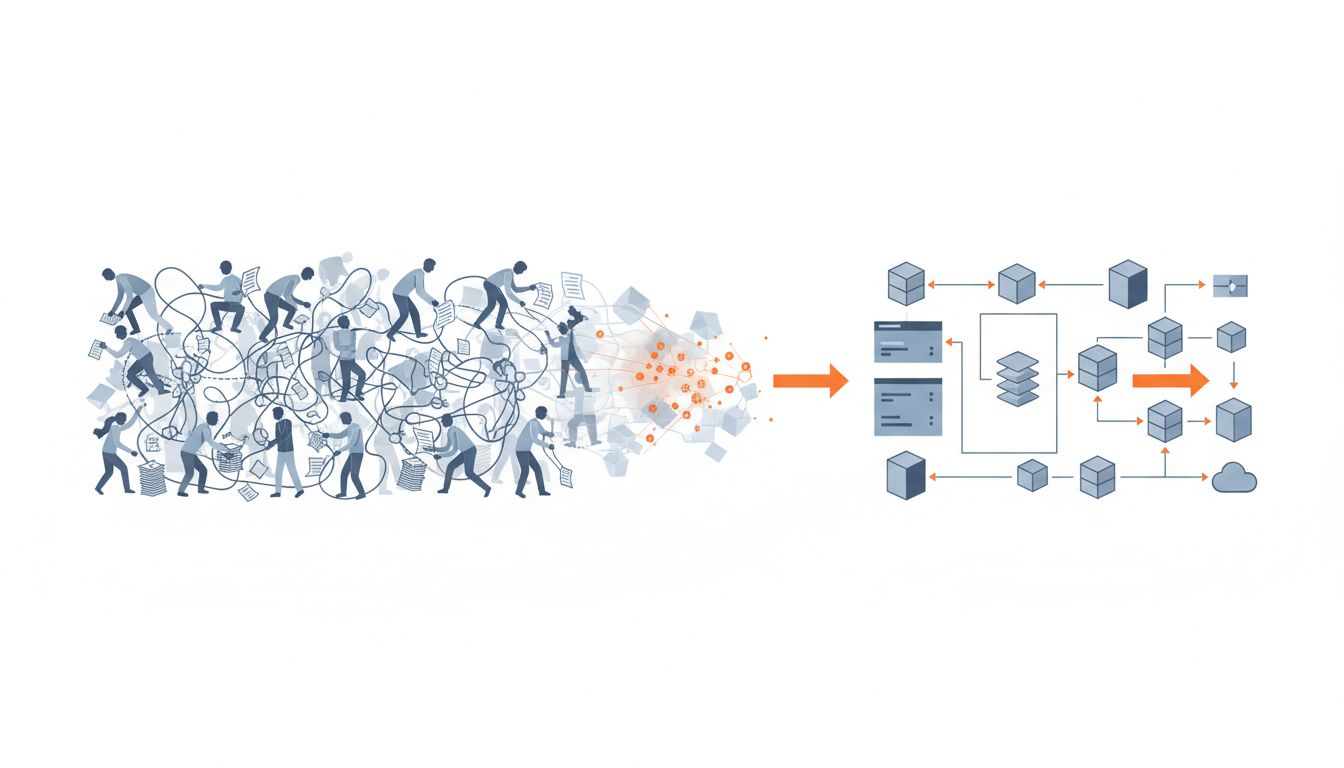
A founder I know spent eighteen months building a project management tool for architecture firms. Good product. Real pain point. Paying customers. She priced it at $29 per user per month because that’s what felt safe, what felt like it wouldn’t scare anyone off. Two years in, she had 200 users and was losing money on every one of them. Support costs, onboarding, the custom requests that came with customers who weren’t really committed. She raised prices to $149. Lost forty percent of her users in a month. The remaining sixty percent? They became profitable almost immediately, started renewing, and referred other firms. The first two years were a slow bleed. The repricing was the business actually starting.
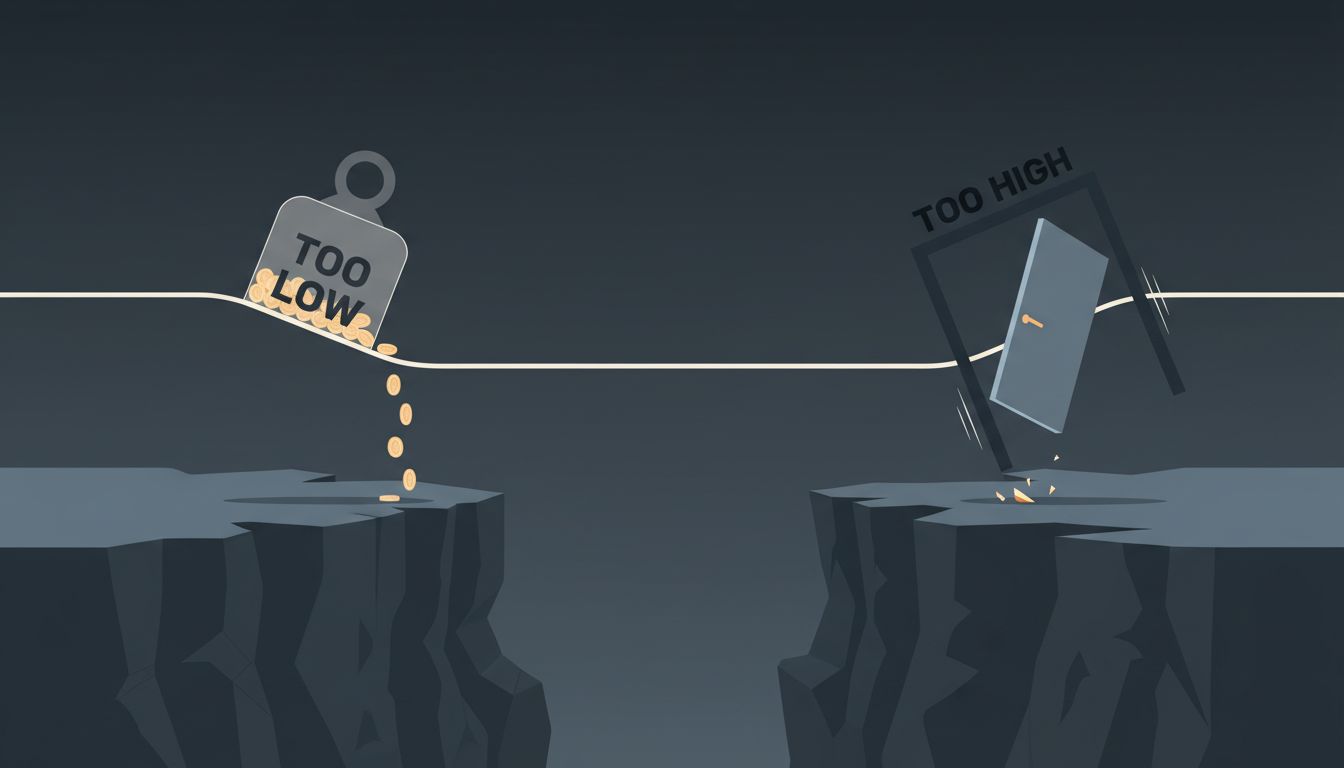
This is the pricing trap almost every founder falls into, and it’s worth being direct about why.
Underpricing Doesn’t Buy You Love. It Buys You the Wrong Customers.
There is a seductive logic to low prices: more people can afford you, more people will try you, more people will love you. In practice, low prices attract customers who are optimizing for low prices. These are not your best customers. They churn fastest, demand the most, and tell their friends about the deal they got, not the value they received. Firing the wrong customers is sometimes how you actually build a business.
Moreover, underpricing poisons your unit economics before you even understand them. You can’t hire, you can’t improve the product, you can’t run real sales. You just grind. The company doesn’t die in a quarter, it dies in three years when the founder runs out of energy and the bank account finally hits zero. Death by a thousand support tickets.
The other problem with underpricing is that price signals quality. Enterprise buyers, in particular, use price as a proxy for stability and commitment. A $15 per month tool feels like a side project. A $150 per month tool feels like a product someone is actually betting on.
Overpricing Doesn’t Kill You Slowly. It Kills You Fast.
The opposite failure is brutal in a different way. Overpricing means you see it coming: demos that don’t convert, trials that don’t stick, sales cycles that stretch out as procurement pushes back. You can feel the resistance. Founders sometimes interpret this as a sales problem or a positioning problem when it is a price problem.
The tell is churn. If customers buy, use the product for a month or two, and then cancel, the value isn’t matching the price. That’s a different problem than customers not buying at all. One means your pitch is working but the product isn’t; the other means the price is wrong before anyone has a chance to see the product.
Overpricing also freezes your iteration cycle. Expensive products require more support, more hand-holding, longer contracts. Every customer becomes precious in a way that makes it hard to experiment. You can’t kill a feature that three enterprise clients depend on, even if you know it’s a dead end.
The Line Is Not a Number. It’s a Signal.
Here is the actual position: the right price is the one where you lose customers you should lose and keep customers who get genuine value. This sounds obvious. It’s almost never practiced.
The signal that you’ve found the line is specific. Customers push back on price, some say no, but the ones who say yes don’t ask for discounts repeatedly, don’t churn after 60 days, and don’t complain that the product isn’t worth it. When customers are paying a price that makes them think, it filters for customers who have actually evaluated the value. That filtering is doing work that your sales team cannot do.
A practical test: if you raise prices ten or fifteen percent and nobody notices or complains, you were underpriced. If you raise prices and lose more than a third of your pipeline without a corresponding improvement in the quality of what closes, you’ve overshot. Neither of these is a catastrophe. Both are information.
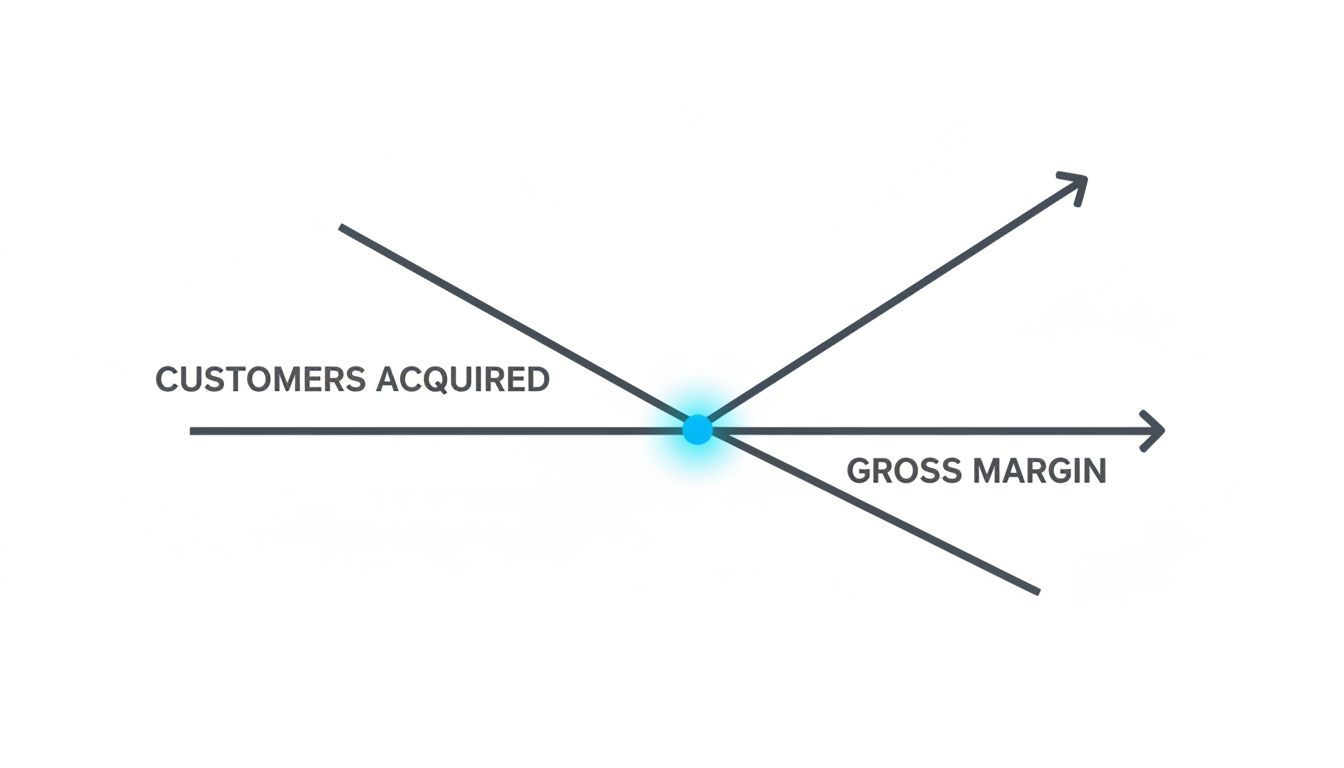
The other signal is gross margin. Software businesses should have gross margins above seventy percent. If yours are below fifty, something is wrong. Either prices are too low, the product is too expensive to serve, or you’re serving the wrong customers. Burn rate alone won’t tell you this, but gross margin will.
The Counterargument
The standard pushback is: you can’t raise prices if competitors are cheaper. This is mostly wrong. Competitors being cheaper is a positioning problem, not a pricing problem. If your product has differentiated value, the customer who defects to a cheaper competitor wasn’t your customer. They were borrowing your product until something cheaper came along.
The harder version of this argument applies in genuinely commoditized markets, where real feature parity exists and price is the primary lever. In those markets, the advice is the same but applied differently: don’t compete on being cheapest, compete on being cheapest for the specific segment where your cost structure is an actual advantage. Trying to be the cheapest for everyone is the version of underpricing that actually is fatal.
Price Is Strategy
Most founders treat pricing as a tactical decision they’ll revisit later. They set a number that feels safe, ship the product, and then discover eighteen months in that the number has calcified into the product’s identity. Customers expect it. Sales teams have built around it. Changing it becomes a project.
Set the price when you understand the value, not when you need the revenue. Find the signal. Lose the customers you should lose. The line is not a guess; it’s what remains after you’ve had honest conversations about what your product is actually worth to the people who genuinely need it.