Code generation tools are genuinely useful. That’s not the argument here. The argument is that most developers are miscalibrating their trust in these tools because they don’t understand the fundamental nature of what these tools actually are. They’re not junior developers with bad judgment. They’re something stranger than that.
1. The Model Learned to Look Like Code, Not to Write Code
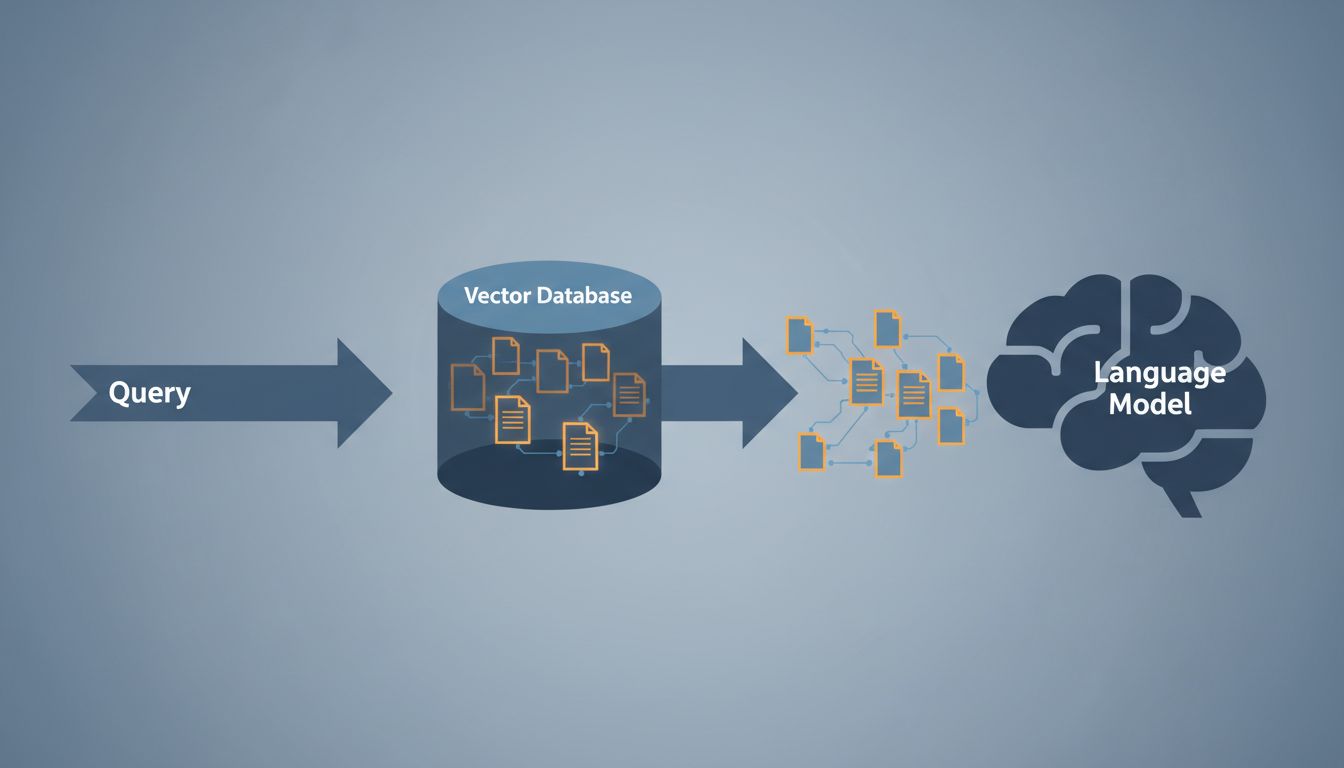
Large language models are trained on text. Code happens to be a kind of text. When a model generates a function, it is performing a sophisticated pattern-matching operation: given this context, what sequence of tokens most plausibly follows? It has seen millions of examples of functions that look like the one you’re asking for. It produces the statistical center of that distribution.
That process has nothing to do with execution. The model has never watched a loop iterate, never waited on a network call, never seen a segfault. It knows that null checks often appear before pointer dereferences because it has seen that pattern enough times to reproduce it. That’s genuinely useful, but it’s not the same thing as understanding why you need the null check or knowing which specific callsite in your codebase is missing one.
2. Confident Syntax Hides Semantic Errors
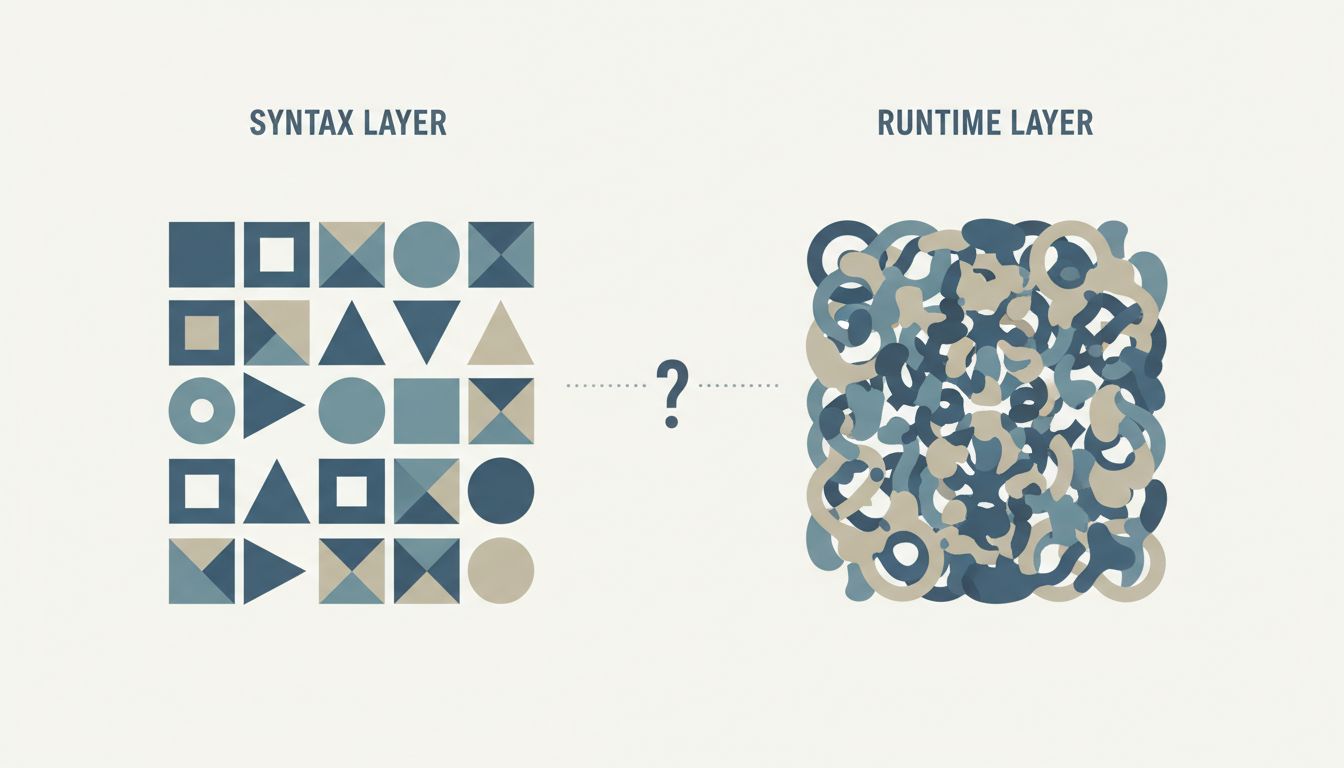
The most dangerous output from a code generation model isn’t the obviously broken code. It’s the code that compiles, passes superficial review, and fails in production under specific conditions. The model is excellent at producing syntactically valid, idiomatically correct-looking code. It has essentially no mechanism for knowing whether the logic is correct for your specific situation.
Consider a common example: asking a model to write a function that processes timestamps. The model will produce something that looks perfectly reasonable. It will handle the obvious cases. It probably won’t handle daylight saving time transitions correctly for your specific locale, or it will assume UTC when your system mixes timezones, or it will use a date library function that behaves differently across the versions you’re targeting. These aren’t syntax errors. They’re the kind of semantic bugs that don’t crash your program, they just lie to you.
3. The Model Cannot Reason About Your Specific Runtime Environment
Code doesn’t exist in a vacuum. It runs in an environment: a specific OS, a runtime version, a memory model, a set of other processes competing for resources, a database with a particular locking behavior. The model knows none of this. It knows the general shape of Python 3 or TypeScript, but it doesn’t know that you’re running on ARM with a 512MB memory limit, or that your database enforces row-level locking in a way that will deadlock if you call this function concurrently.
This is why generated code tends to work well for isolated utility functions and poorly for anything that touches the edges of your system. A function that formats a string? Probably fine. A function that manages a connection pool, or handles retry logic for a flaky external service, or coordinates writes across two tables? The model will produce something that looks right and may fail in ways that are genuinely hard to debug.
4. The Model Has No Concept of Your Codebase’s History
Software accumulates decisions. Why is this service synchronous when everything else is async? Because three years ago, the async version had a bug that cost two engineers a week to track down. Why does this function return -1 instead of throwing an exception? Because the caller was written first and the team decided not to refactor it. This context lives in your engineers’ heads, in commit messages, in Jira tickets that nobody reads.
A model generating code for your codebase has none of this. It produces the idiomatically correct solution for a generic version of your problem. Sometimes that’s exactly what you need. More often, you need the solution that fits into the specific, somewhat odd shape of the system you’ve already built. The model will never tell you “this is a reasonable general approach but it conflicts with the pattern you established in the payment module.” It doesn’t know about the payment module.
5. Velocity Without Verification Is Just Faster Debt
The real risk isn’t that developers use AI tools. It’s that the speed of generation outpaces the thoroughness of review. Writing code used to be slow enough that you had to think about it. When you’re generating fifty lines in three seconds, the temptation to skim-review and move on is real and understandable. The code looks right. It probably works. Shipping it feels responsible.
This is how you accumulate a codebase full of plausible-looking code that nobody fully understands. The bugs compound. The original authors are gone or don’t remember the AI-generated sections well enough to reason about them confidently. You’ve traded short-term velocity for long-term opacity. There’s a version of this where important work expands to fill whatever time you give it and code review is one of those tasks that will always feel like it can be shorter than it should be.
6. The Fix Is Calibration, Not Rejection
None of this means you shouldn’t use these tools. It means you should use them with an accurate mental model of what they are. Treat generated code the way you’d treat code from a very smart contractor who just joined your team, has never worked in your specific domain before, and has read every textbook but hasn’t been on call at 3am when something breaks. Their output needs review proportional to its criticality and proximity to your system’s edges.
The useful reframe is this: code generation tools are exceptionally good at reducing the cost of writing the first draft. The expensive part of software was never mostly the typing. It was the thinking about correctness, the understanding of runtime behavior, the awareness of what can go wrong. Those parts haven’t gotten cheaper. If you treat generated code as a starting point that requires real engineering judgment before it ships, you get the benefit without the exposure. If you treat it as a finished product, you’re outsourcing judgment to something that has never had to live with the consequences of being wrong.