

A founder I knew spent fourteen months building custom features for a single enterprise client. The contract was real money, enough to extend runway, enough to justify the decision every quarter. When the client finally churned, the product was so warped around their specific workflows that the next ten prospects they talked to couldn’t recognize themselves in it. The startup died eighteen months later, not for lack of revenue, but for having had the wrong revenue at the wrong time.
This isn’t a cautionary tale about enterprise sales being bad. It’s about a specific failure mode that gets almost no attention: the customer who looks like a lifeline but is actually an anchor.
The Myth of Revenue Validation
Early-stage founders are conditioned to treat any paying customer as evidence of product-market fit. This is understandable. You’ve been told to get out of the building, to talk to customers, to validate. Someone hands you a check. It feels like validation by definition.
It often isn’t. A customer paying you money tells you that your product is worth money to that specific person with their specific context, incentives, and constraints. It tells you almost nothing about whether it will be worth money to anyone else. The question you actually need answered isn’t “will someone pay for this?” It’s “will enough of the right people pay for this to build a real business?”
The dangerous customers are the ones who answer the first question loudly enough to drown out the second.
What Makes a Customer Corrosive
Not every difficult customer is worth firing. Some customers are demanding but representative of your target market. Their complaints are signals you should be following. The corrosive ones share a different profile.
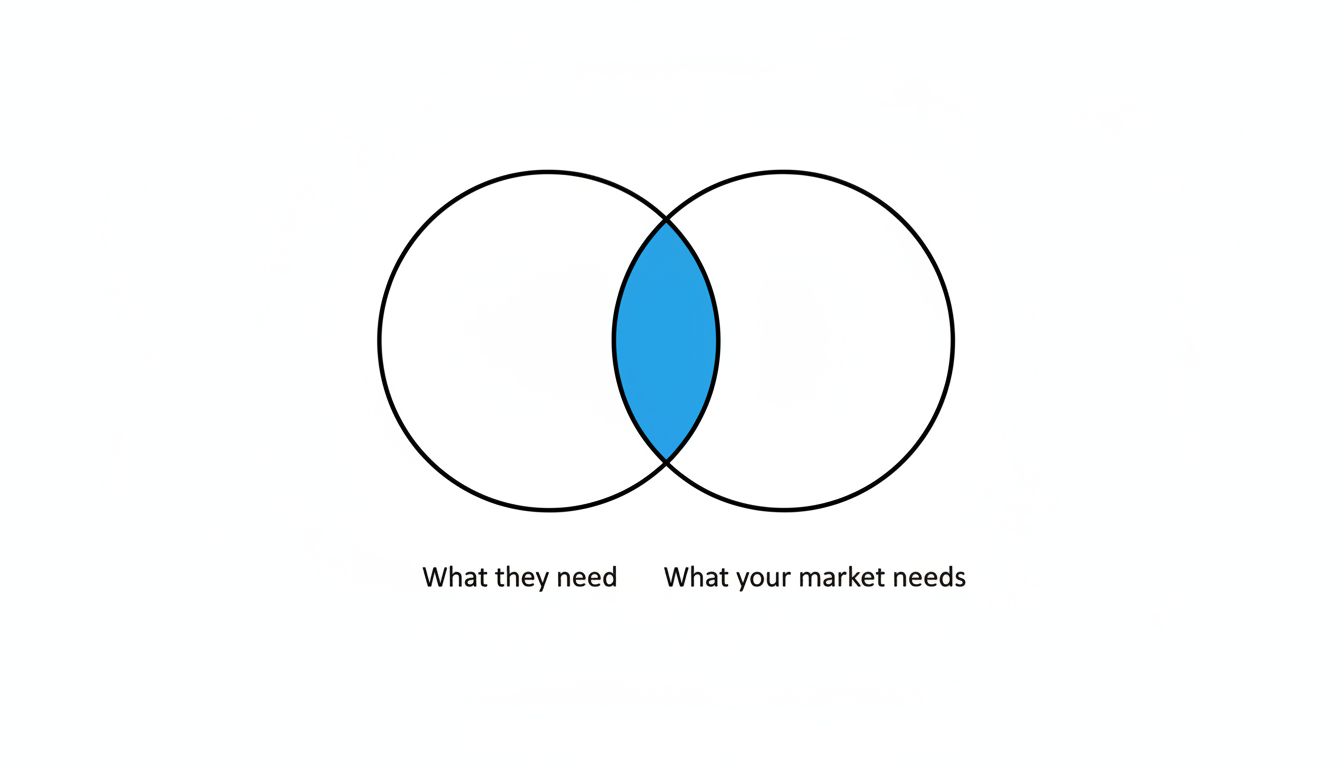
They have needs that are genuinely adjacent to, but not quite, what your target market needs. Their requirements make sense in isolation but would require your product to become something different. They often know they’re getting something semi-custom and are fine with it. You’re the one telling yourself the work generalizes.
They demand attention that’s disproportionate to their revenue. A customer representing 40 percent of your revenue while consuming 70 percent of your support and engineering capacity isn’t just costly in hours. They’re shaping your product roadmap by default, because whatever breaks for them gets fixed first, whatever they ask for gets built first.
They create organizational habits that are hard to unlearn. The sales process you develop around them, the contract terms you normalize, the implementation process you build, these become templates. New hires learn how the company works by watching how you handle your biggest customer. If that customer is anomalous, you’re training your team on the wrong playbook.
And perhaps most critically, they give you enough revenue to survive but not enough to thrive, which is often the most dangerous place to be. You’re not desperate enough to change, but you’re not successful enough to know if what you’re doing actually works. The first full-price customer can kill your startup for exactly this reason, the pricing structure and product decisions you make to close them set precedents that compound.
Why Founders Don’t Pull the Trigger
Firing a customer is psychologically brutal in a way that’s hard to explain to people who haven’t done it. You’re not just declining revenue. You’re making a bet that better revenue exists and that you can find it before you run out of runway. That bet might be wrong. It feels arrogant, almost delusional, to look at real money and decide it’s not good enough.
There’s also the social dimension. Customers become relationships. Firing them means telling a person who trusted you that you’re walking away. Founders who are good at building relationships (which is most successful founders) find this disproportionately hard.
And there’s the internal politics. If the corrosive customer represents a significant chunk of ARR, someone on your team, maybe your CFO or your board, is going to push back hard on losing them. You’d better have a clear-eyed case for why you’re doing it and a credible theory for where the replacement revenue comes from.
How to Actually Do It
The decision to fire a customer rarely needs to be abrupt. More often the right move is to stop investing in them. Stop building their features. Stop letting their requests shape sprint priorities. Gradually shift the relationship toward what your product actually does rather than toward what they’ve asked you to make it.
Some customers will self-select out when they realize you’re not going to keep bending to their needs. Others will stick around even with a more standardized product because the core value was there all along and the customization was just noise they’d gotten comfortable asking for.
When you do need to terminate outright, be honest. Tell them your product is moving in a direction that won’t serve their needs, give them reasonable notice, and help them find alternatives if you can. This is both the ethical move and the practical one. Enterprise markets are small. How you exit relationships gets remembered.
Before you fire anyone, you need clarity on who you’re actually building for. That sounds obvious, but many founders at the stage where this problem bites them don’t have a precise answer. They have a general sense of the market, a few anecdotes, and the revenue they’ve already taken. Getting specific about the customer profile you’re optimizing for is the prerequisite, because without it you have no basis for deciding who’s wrong-fit.
The Revenue That Doesn’t Exist Yet
The case for firing a corrosive customer ultimately rests on a claim about opportunity cost: that the time, attention, and product coherence you’ll recover is worth more than the revenue you’ll lose. This claim is sometimes wrong. If you’re two months from zero and the corrosive customer is the only thing keeping you alive, survival takes priority over strategy.
But in most cases where founders are wrestling with this decision, the math is closer than it looks. The corrosive customer’s revenue is certain; the upside from firing them is probabilistic. What you have to ask is whether the expected value of the probabilistic upside exceeds what you’re giving up, accounting for the very real cost of what their ongoing presence is doing to your product and your team.
Companies that stay small and coherent long enough to find their actual market tend to scale faster once they find it, because they haven’t built technical debt into the product in the form of compromises made for the wrong customers. Saying no to the wrong revenue isn’t restraint. It’s the work.