
The Simple Version
When an engineer fixes a bug, they’re solving a symptom. The original cause, usually a decision made under pressure by someone who no longer works there, is rarely documented and almost never understood.
Bugs Are Organizational Artifacts
A bug in software looks like a technical failure. It usually isn’t. Most bugs are the residue of a meeting that happened three years ago, when a product manager needed a feature shipped by a deadline, a lead engineer made a reasonable judgment call with the information available, and nobody wrote down why the code was structured the way it was. The engineer who inherits that code sees only the structure, not the negotiation that produced it.
This is why bug fixes so often introduce new bugs. The person writing the fix is working with an incomplete mental model. They understand what the code does, not what it was meant to protect against. Remove the wrong constraint and you’ve solved one problem while opening three others.
The phenomenon has a name in software circles: Chesterton’s Fence. The principle, borrowed from G.K. Chesterton’s 1929 essay, holds that you should never remove something until you understand why it was put there. A fence in the middle of a road looks pointless until you learn it marks the boundary of an old cattle path that crosses during floods. Code that looks redundant often exists for the same reason: it’s marking something dangerous that isn’t visible from where you’re standing.
The Information Decay Problem
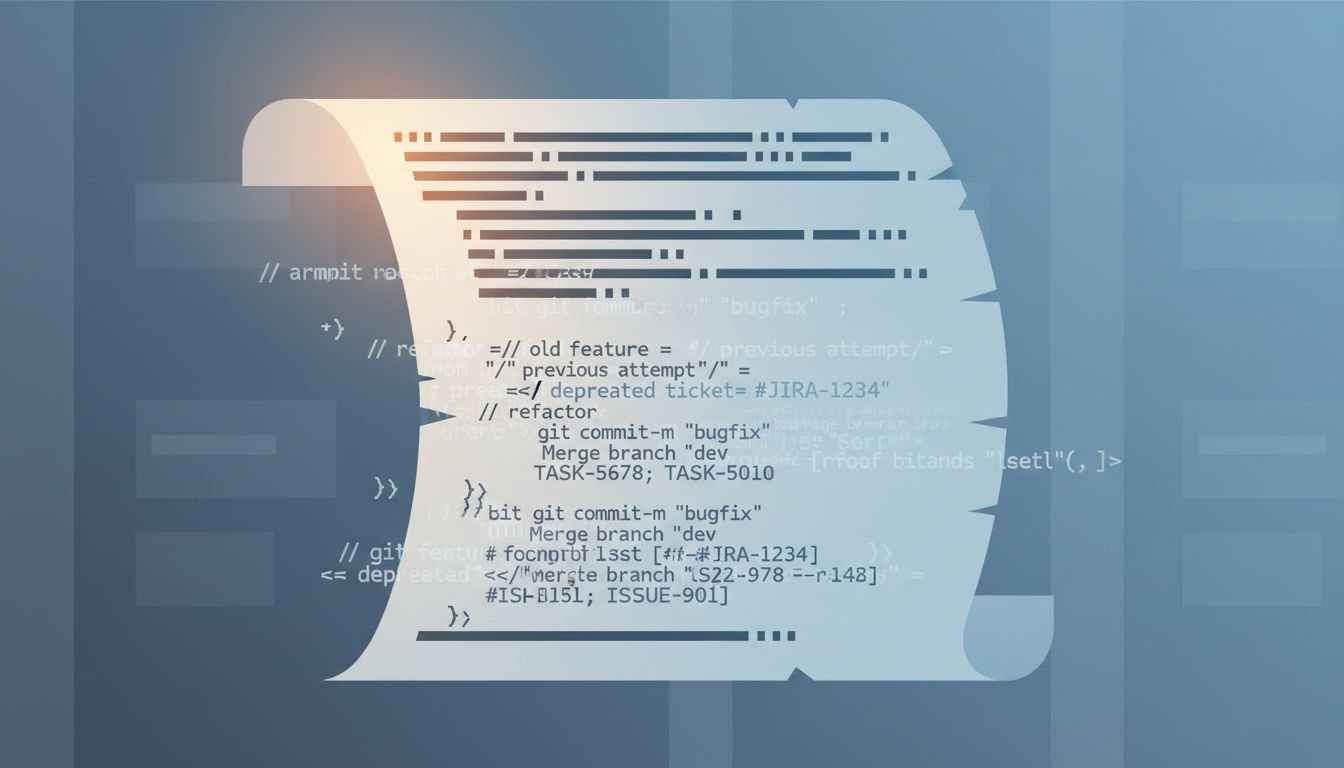
Organizations bleed context constantly. Engineers leave. Products pivot. The Slack thread where someone explained a tricky edge case is buried under eighteen months of other conversations, assuming it wasn’t lost in a migration. Version control systems like Git preserve what changed, but rarely why. A commit message that says “fix edge case in payment processing” is practically useless to whoever inherits it two years later.
This isn’t laziness or negligence. It’s a structural problem. Writing down context takes time, and that time competes directly with shipping. Under deadline pressure, context documentation is almost always the thing that gets cut. It doesn’t feel urgent because it won’t matter until it does, and by then the person who had the knowledge is usually gone.
The result is a system where technical debt accumulates not just as bad code but as missing institutional memory. Why maintaining old code pays more than writing new code touches on this: the real cost of legacy software isn’t the code itself, it’s the lost understanding of what the code was compensating for.
Why the Fixer Rarely Investigates the Origin
There’s an economic incentive at play here that rarely gets discussed. Bug fixes are measured by resolution time. The faster a bug is closed, the better everyone looks. A thorough root-cause investigation that traces a bug back to a product decision from 2021 takes days and might not produce a cleaner fix than the patch that takes two hours. So engineers patch, close the ticket, and move on.
This isn’t a character flaw. It’s rational behavior inside a system that rewards closure over understanding. When performance reviews count resolved issues and sprint velocity, deep investigation is an invisible cost. Nobody gets promoted for writing a five-page postmortem on a bug that was fixed in one afternoon.
The incentive structure also explains why bugs cluster in the same areas of a codebase repeatedly. Without understanding the root cause, patches accumulate on top of each other. Each one makes sense locally. Together they form a structure that nobody fully understands, which produces more bugs, which produce more patches. The quietest bug is the one your tests are built to miss describes a related trap: the testing assumptions that get built around broken behavior until the broken behavior becomes load-bearing.
What Good Archaeology Looks Like
The engineers who consistently avoid reintroducing old bugs are doing something specific: they’re treating the codebase as a historical document, not just a functional system. Before touching a suspicious piece of code, they ask who wrote it, when, and whether there’s any record of why. They look at git blame not just to assign credit but to find adjacent commits that might explain the context. They search old tickets, old Slack archives, old design documents.
This is slower. It doesn’t fit neatly into sprint planning. But it’s how you avoid the specific failure mode where fixing one thing breaks something else that everyone had quietly depended on without realizing it.
Some teams have started institutionalizing this with decision records: short documents that capture not just what architectural or design choice was made, but why, and what alternatives were considered. The format matters less than the habit. The goal is to make context durable enough that the engineer who inherits the code three years from now has a fighting chance at understanding it.
The Deeper Problem
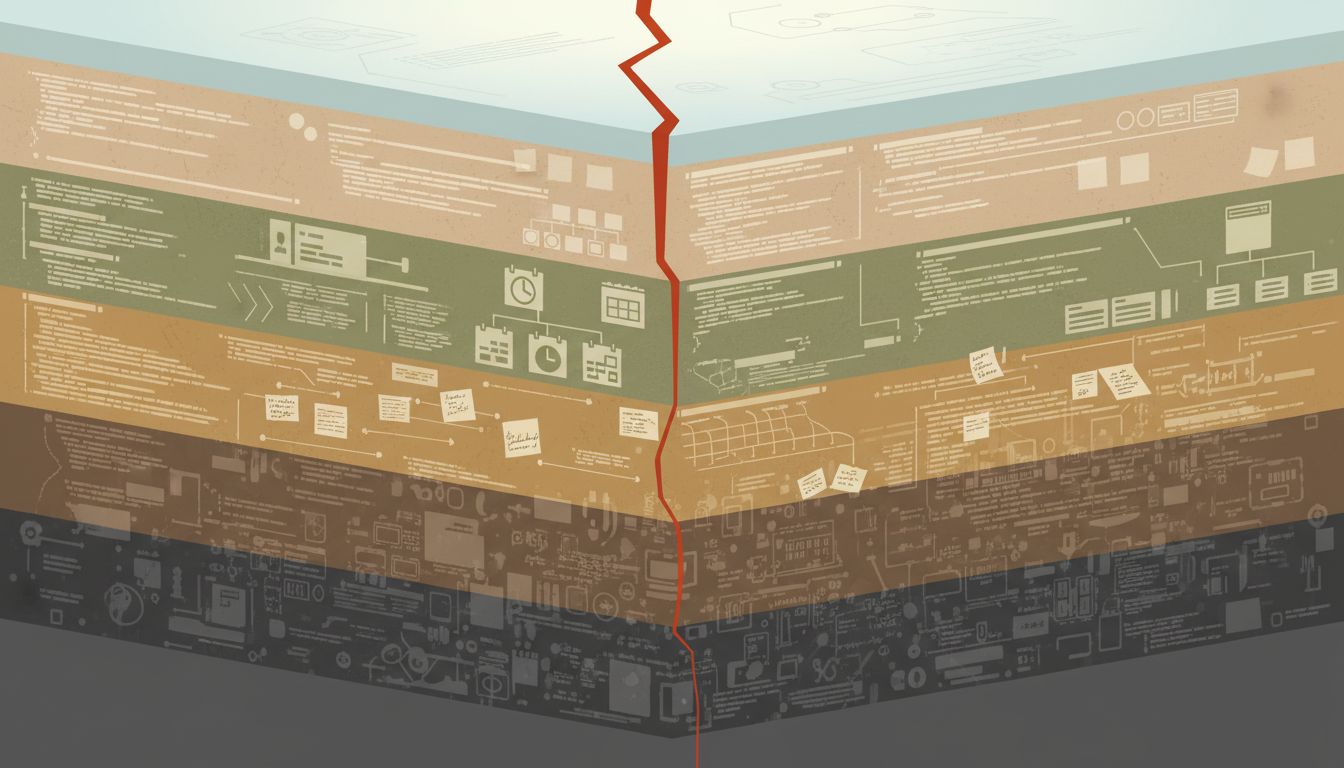
The bug is rarely the real problem. The real problem is that software accumulates decisions the way a city accumulates infrastructure, layer on layer, each generation building on what the last one left behind without fully understanding it. A bug is just a place where two layers are in conflict.
Fixing it without understanding the conflict doesn’t resolve the tension. It papers over it. The tension stays, looking for another place to surface. Which it will, eventually, in a different form, assigned to an engineer who will once again face a piece of code whose history has been lost, trying to do their best with incomplete information.
The systems that handle this best aren’t the ones with the fewest bugs. They’re the ones that treat context as a first-class artifact, worth preserving alongside the code itself. That’s a cultural commitment, not a technical one. And it’s harder to ship on a deadline than any feature anyone has ever asked for.