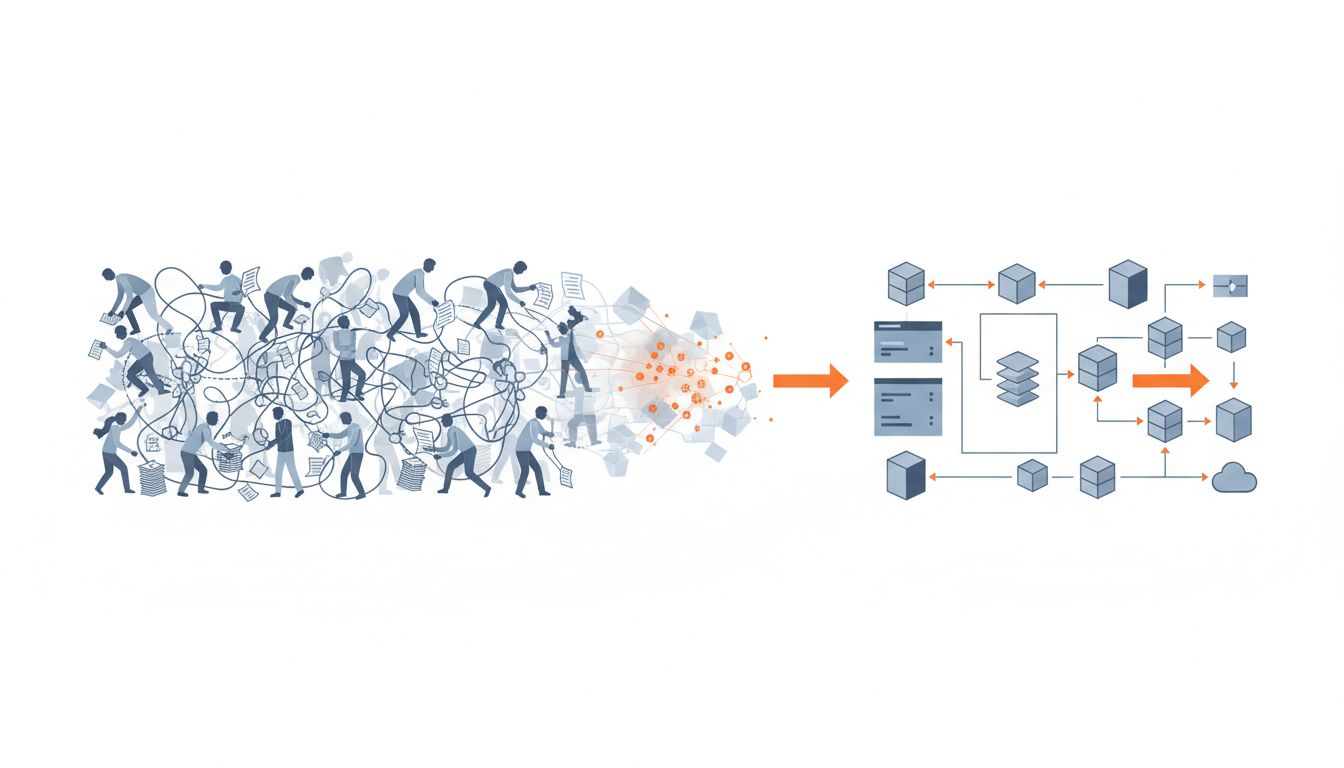

I watched a founder give a keynote once where he described building his company as a singular act of will. His vision, his sleepless nights, his stubbornness in the face of doubt. The crowd loved it. His co-founder, who had run operations, closed the first enterprise deals, and rebuilt the engineering team after a catastrophic early hire, was mentioned once, in passing, near the end.
This is not unusual. Startup mythology runs on the lone genius narrative because it’s a better story. But if you spend enough time around companies that actually made it, you notice a pattern: there’s almost always a second person in the room, and that person’s contribution is systematically underestimated, including by the person making it.
1. The Visionary Creates the Problem, the Operator Solves It
Most founding stories go like this: person one has a big idea and enormous conviction. They recruit person two because they need someone to help execute. What actually happens is that person two ends up spending the next three years cleaning up the consequences of that conviction.
This is not a criticism of visionaries. Conviction is genuinely rare and valuable. But conviction without correction is just speed toward a wall. The second founder, whether they hold that title or not, is usually the one course-correcting in real time. They’re the one who tells the CEO that the roadmap is incoherent, that the sales cycle is too long, that the team is burning out, that the product demo they’ve been showing doesn’t match anything the engineering team has built.
The first founder sets the direction. The second one makes sure the car doesn’t flip on the first turn.
2. They Absorb the Organizational Debt Nobody Talks About
Early-stage companies generate organizational debt at roughly the same rate they generate technical debt. Roles are undefined. Reporting structures are invented on the fly. Promises get made to early employees that can’t be kept. The founding story gets calcified into a narrative that may not reflect what’s actually happening.
Someone has to manage this. Someone has to have the hard conversations with the employee who was great at twelve people and is now actively damaging the team at forty. Someone has to tell the board that the CTO’s timeline is optimistic by a factor of three. Someone has to write the compensation philosophy that doesn’t exist yet so the next round of hiring doesn’t create a resentment time bomb.
That work almost never gets named in the keynote. It doesn’t make for a good founding story. But companies that fail to do it reliably fall apart between Series A and Series B, when the organizational debt comes due all at once.
3. Investor Pattern-Matching Actively Obscures This
Venture capital has a strong preference for legible narratives, and the legible narrative is almost always built around a single founder. This is partly because solo founders are genuinely easier to pattern-match against prior successes. It’s also partly because managing a co-founder dispute from the board seat is painful, and investors have learned to be wary of unclear power dynamics.
The side effect is that second founders, and the operators and builders who function in that role without the title, learn to make themselves invisible. They get good at making the lead founder look decisive, at attributing wins upward and absorbing losses quietly. This is tactically useful for the company. It’s bad for the historical record and for how we train the next generation of founders to think about what they actually need.
The pattern is worth paying attention to because it mirrors something true about second movers in markets: the first one captures the story, the second one often captures the value.
4. They’re Usually the Reason the Company Didn’t Die in Year Two
Year two is when most companies that are going to fail actually fail. The initial energy has worn off. The product-market fit thesis is getting tested against reality. The founding team is exhausted. The first round of money is mostly gone.
In this period, the quality that matters most is not vision. It’s persistence combined with pragmatism, the ability to keep doing the unglamorous work while the headline founder is managing investor relationships and press and the public narrative of momentum. The second founder is often working on retention, on fixing the support process, on figuring out why churn is higher than the model predicted.
This is the work that determines whether the company gets to a Series A. It’s almost never the work that gets credited in the Series A announcement.
5. The Title Doesn’t Tell You Who the Second Founder Is
The person I’m describing doesn’t always hold the co-founder title. Sometimes they’re the first VP of Engineering who joined six months in. Sometimes they’re the Chief of Staff who effectively ran the company while the CEO was in fundraising mode for eight months. Sometimes they’re the co-founder who got a smaller equity split because they came in later and took a title that undersold what they were actually doing.
The tell is usually this: ask anyone in the company who they’d call if something was actually on fire. The answer is often not the person whose name is on the press releases. That gap between public credit and actual operational load is where second founders live.
If you’re building a company and you haven’t identified who this person is for you, that’s worth thinking about carefully. Not because you need to redistribute credit in some abstract fairness sense, but because if they leave, you’ll find out very quickly how much of the company they were holding together.
6. The Best Co-Founder Relationships Are Deliberately Designed
The founding teams that get this right don’t stumble into it. They talk explicitly about who owns what. They argue about decision rights before there’s a decision to fight over. They design mechanisms for the second founder’s concerns to surface even when the lead founder is on a roll and not listening.
This is harder than it sounds because the dynamics that make a visionary founder effective, high confidence, strong narrative, the ability to recruit people to an improbable idea, are exactly the dynamics that make them hard to argue with when they’re wrong. The second founder has to develop specific skills: when to push, when to let something play out, how to surface a problem in a way that lands instead of getting dismissed.
If you want to understand why some founding teams thrive and others fracture, the answer is rarely the idea or the market timing. It’s whether the second person in the room had the standing, the skills, and the trust to actually do their job.