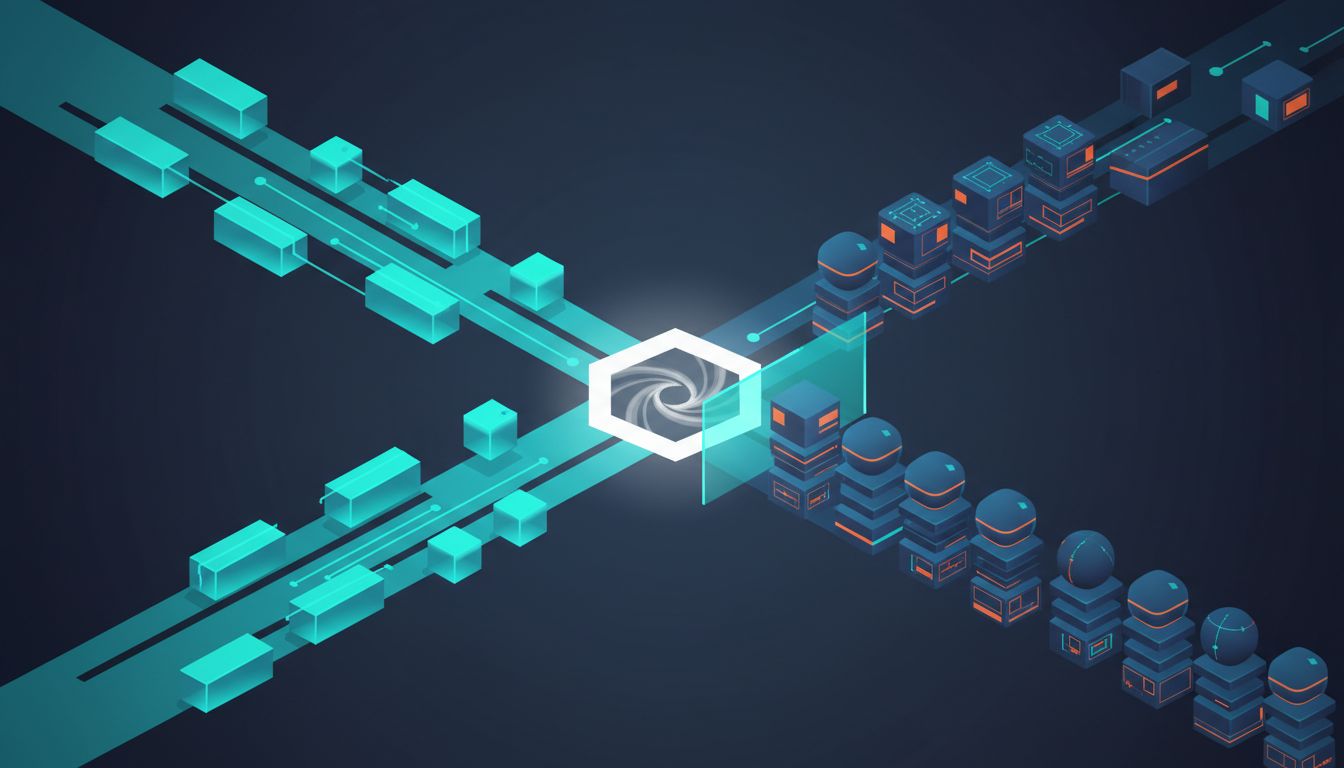
Here’s a position worth staking out: most people who work in software have a dangerously incomplete model of how routers handle congestion, and that incomplete model leads to real architectural mistakes. The question of what happens when two packets arrive simultaneously isn’t an edge case or a curiosity. It’s the central operating condition of every network that has ever existed at meaningful scale.
The short answer is: one packet waits. The interesting question is what governs which one, for how long, and what happens when waiting isn’t possible.
Routers Are Sequential Machines Operating in a Concurrent World
A router receives packets on input interfaces and forwards them out output interfaces. The hardware can process multiple packets in parallel, but any single output link is a serial resource. You can only push one packet down the wire at a time. When two packets arrive simultaneously and both need to leave on the same output interface, you have a fundamental conflict that no amount of hardware cleverness fully eliminates.
The mechanism for resolving this is a queue. Packets that can’t be forwarded immediately get buffered, waiting their turn. Modern routers use sophisticated queuing disciplines to manage this, the most common being variants of weighted fair queuing (WFQ), which attempts to give each traffic flow a fair share of available bandwidth rather than serving them strictly in order of arrival.
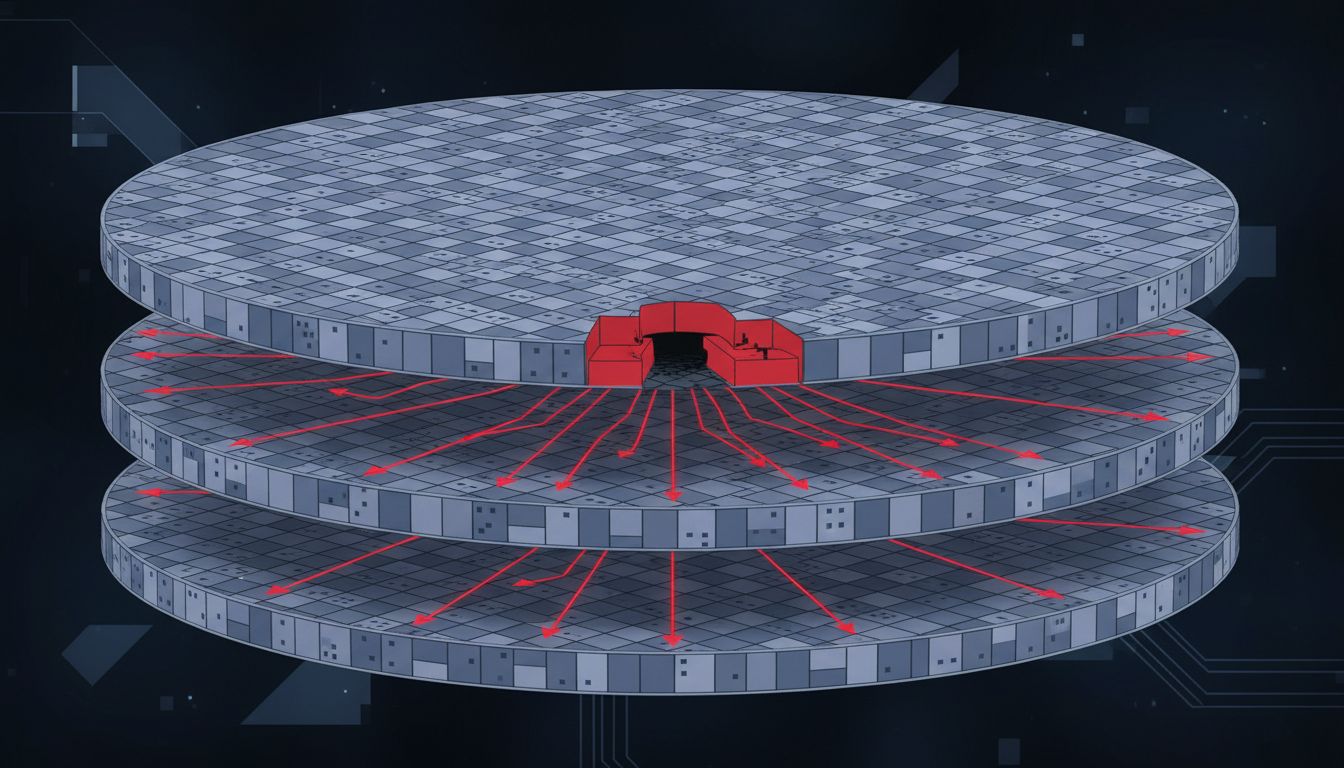
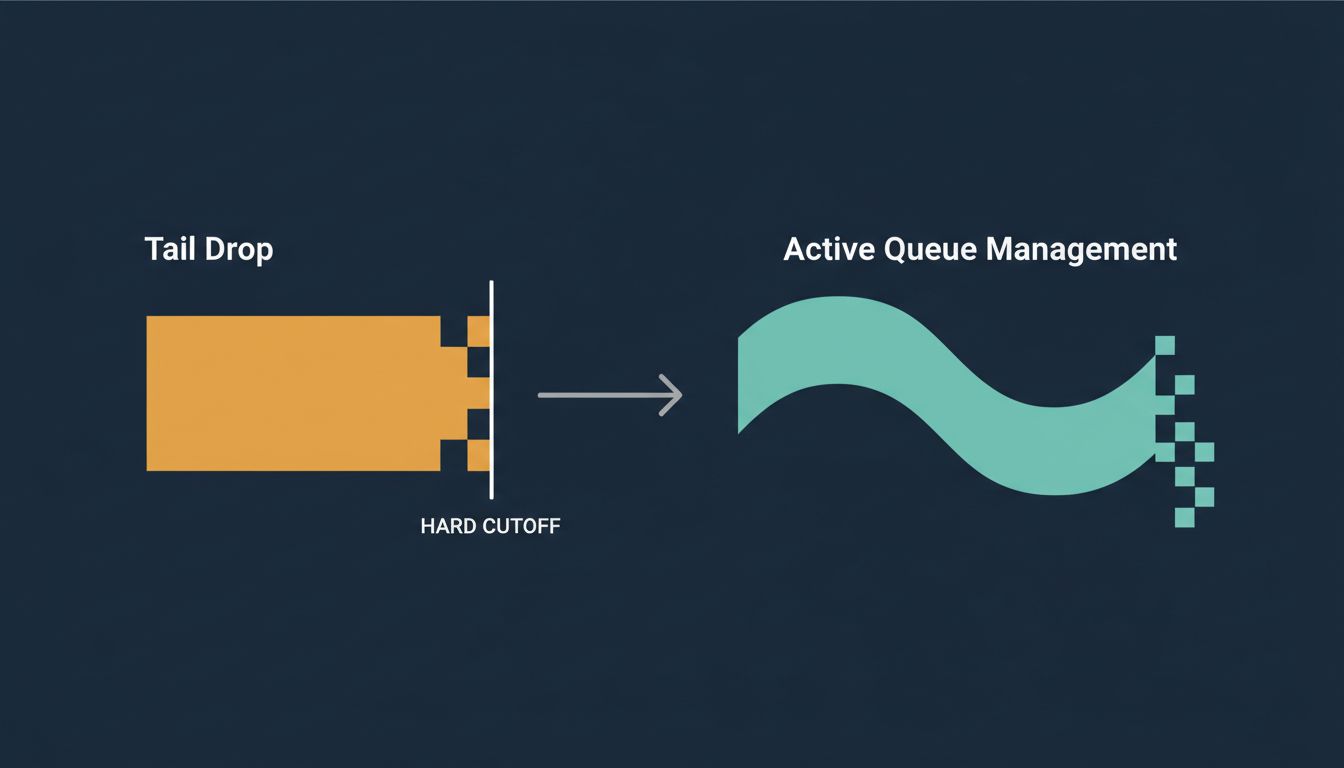
But here’s what most people miss: the queue has a finite size. When it fills up, the router has no choice but to drop incoming packets. This is called tail drop in its simplest form, and it was the dominant behavior of internet routers for years. Tail drop sounds brutal because it is. Once the buffer is full, every new arrival gets discarded regardless of what it is.
Active Queue Management Changed the Game, Quietly
The problem with tail drop is that it’s reactive. You only drop packets after the buffer is already full, which means by the time drops happen, the queue has been full long enough to introduce significant latency. Every packet already in the buffer still has to wait for all the packets ahead of it to transmit.
Active queue management (AQM) was developed specifically to address this. The original proposal, Random Early Detection (RED), was published by Sally Floyd and Van Jacobson in 1993. The core idea is to start probabilistically dropping packets before the buffer fills completely. Drop a few packets early, and TCP connections respond by slowing down before they’ve overwhelmed the link. You trade a small amount of throughput efficiency for much lower average latency.
More recent algorithms like CoDel (Controlled Delay), developed by Kathleen Nichols and Van Jacobson and deployed in Linux since kernel 3.5, go further. CoDel monitors how long packets spend sitting in the queue rather than how full the queue is. If packets are consistently waiting longer than a target threshold (5 milliseconds by default), it starts dropping. This is a better signal because a buffer being 80% full means very different things depending on how fast that link is draining.
The Scheduling Decision Is a Policy Decision
When that queue has packets from a video call, a file download, and a DNS lookup all waiting, which one goes first? This is where quality of service (QoS) configuration lives, and it’s genuinely a policy choice with real consequences.
Differentiated Services (DiffServ) lets packets carry markings in their IP headers indicating what priority they want. Expedited Forwarding (EF) is the highest class, nominally reserved for real-time traffic like voice and video. Best Effort is everything else. Routers configured to respect these markings will drain EF queues before touching the BE queue.
The problem is that these markings are set by the sender. Nothing stops an application from marking all its traffic as high-priority. In practice, enterprise networks police these markings at ingress, resetting them if they don’t match expected patterns. On the open internet, DiffServ markings are largely ignored because there’s no trust relationship between arbitrary senders and the ISP’s routers.
This is the reason your video call degrades when someone on your network starts a large download. In the absence of meaningful QoS enforcement at your router, packets are treated roughly equally, and the download floods the queue with its own packets, crowding out the real-time traffic that’s much more sensitive to delay.
The Counterargument
Some engineers push back on this framing by pointing out that modern network hardware has gotten fast enough that contention is rarely a problem in practice. High-end switch ASICs from Broadcom and others can process tens of terabits per second. At those speeds, they argue, the queuing problem essentially disappears.
This is wrong in an interesting way. Faster hardware doesn’t eliminate contention, it shifts where contention occurs. In a data center with 400-gigabit links between switches, you still have slower links connecting servers to those switches, and access layer ports are exactly where congestion happens during bursty traffic. Beyond that, the latency introduced by even a brief queue buildup matters enormously for time-sensitive workloads. A buffer that fills for 10 milliseconds on a link that normally has sub-millisecond latency is a severe disruption for anything that depends on timing.
High-speed hardware also creates a subtler problem called buffer bloat, where routers are given enormous buffers specifically to avoid dropping packets, but those large buffers introduce hundreds of milliseconds of latency when they fill up. The solution turned out to be smarter queue management, not more buffer space.
What This Should Change About How You Design Systems
If you’re building distributed systems, you need to treat network latency as a distribution, not a constant. The round trip time between two services isn’t 2 milliseconds, it’s a distribution that might have a 99th percentile ten times higher than the median, driven partly by exactly the queuing dynamics described here. Designing to the median is how you build systems that break in subtle ways under load.
Retry logic that doesn’t account for queue-induced latency spikes can make congestion dramatically worse. If your service times out after 100ms and immediately retries, and that timeout was caused by a temporarily saturated link, the retry adds more load to an already struggling network. Exponential backoff with jitter exists precisely because the people who designed TCP in the 1980s understood that synchronized retries amplify congestion.
Two packets arrive at the same router. One waits. Everything else in network engineering is a debate about how long it waits, what happens when waiting isn’t possible, and who gets to decide.