
The internet moves fast enough that the question sounds almost philosophical: what happens when two packets arrive at a router at exactly the same moment? The answer reveals something important about how the entire network actually works, and it’s not the clean deterministic process most people imagine.
The short version is that one packet wins and one waits. But the mechanisms behind that outcome, and the engineering tradeoffs baked into them, tell a more interesting story about how we build systems that need to be reliable without being perfect.
Physics Makes the Problem Unavoidable
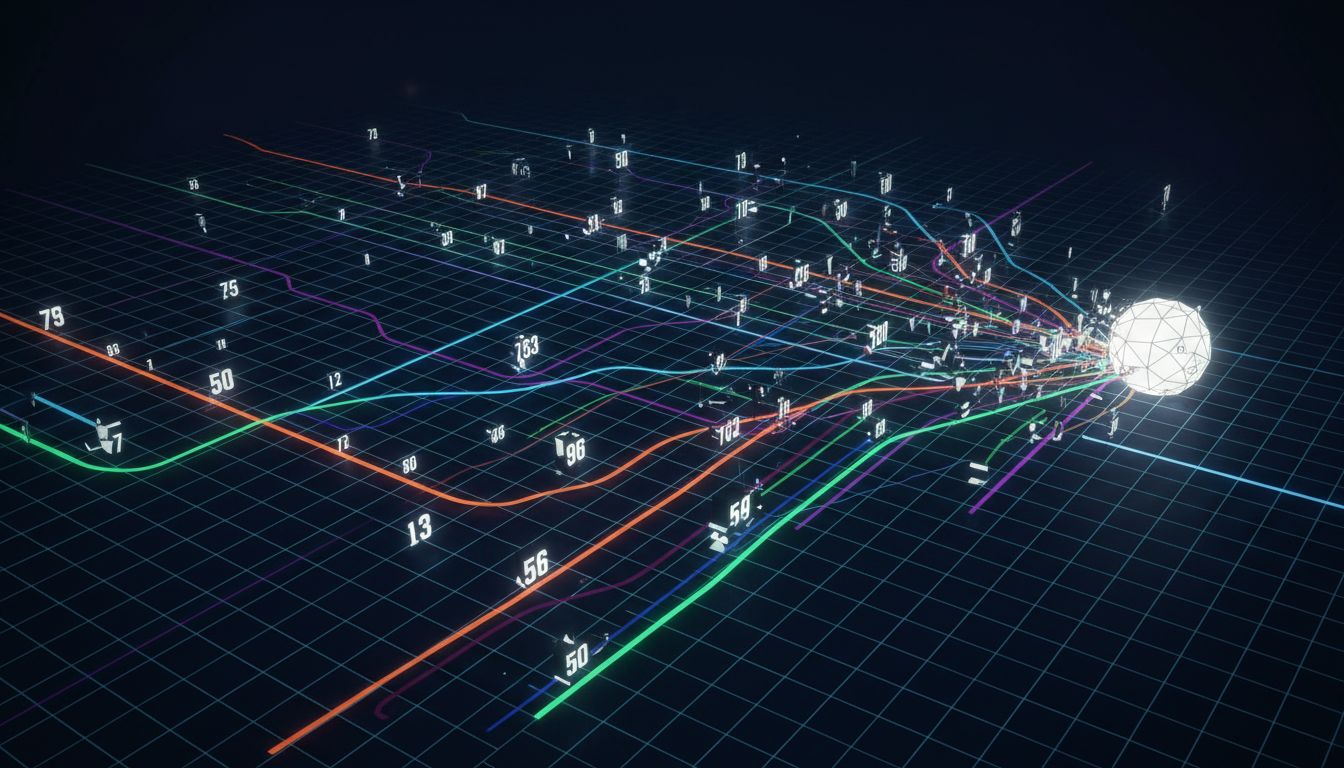
A modern router receives traffic on multiple input interfaces simultaneously. A high-end core router from Cisco or Juniper might handle hundreds of gigabits per second across dozens of ports. At those speeds, the probability of two packets arriving in the same switching cycle isn’t a theoretical edge case. It’s a near-constant condition.
The hardware can’t process two packets destined for the same output port at the same time. The output port is a single resource. This is the fundamental constraint, and no amount of clever software makes it disappear. You can only ever serialize what must be serialized.
The router’s response to this is a queue. The packet that loses the coin flip (and in hardware, it often is essentially a coin flip determined by which input gets arbitrated first) goes into a buffer. The buffer is small, usually measured in milliseconds of capacity at line rate, and it exists precisely to absorb these micro-collisions.
Arbitration Is the Real Answer
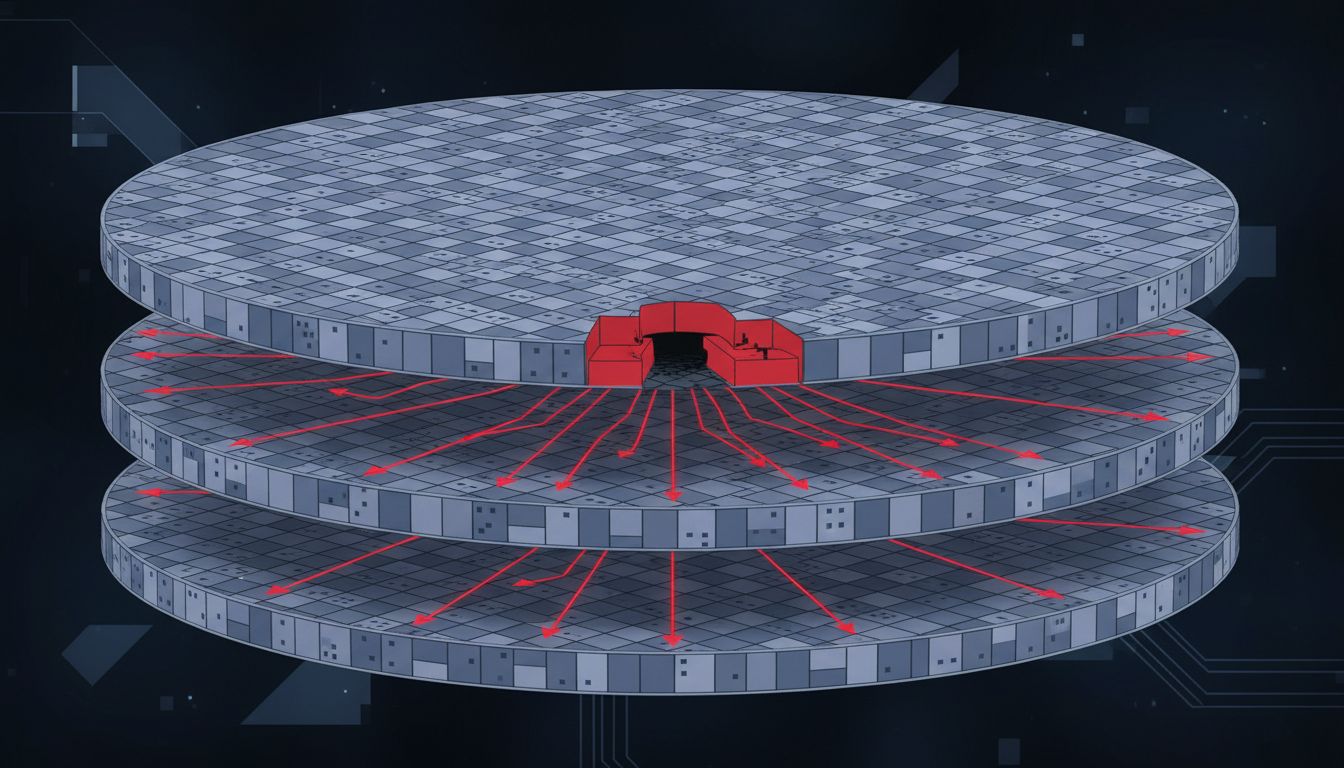
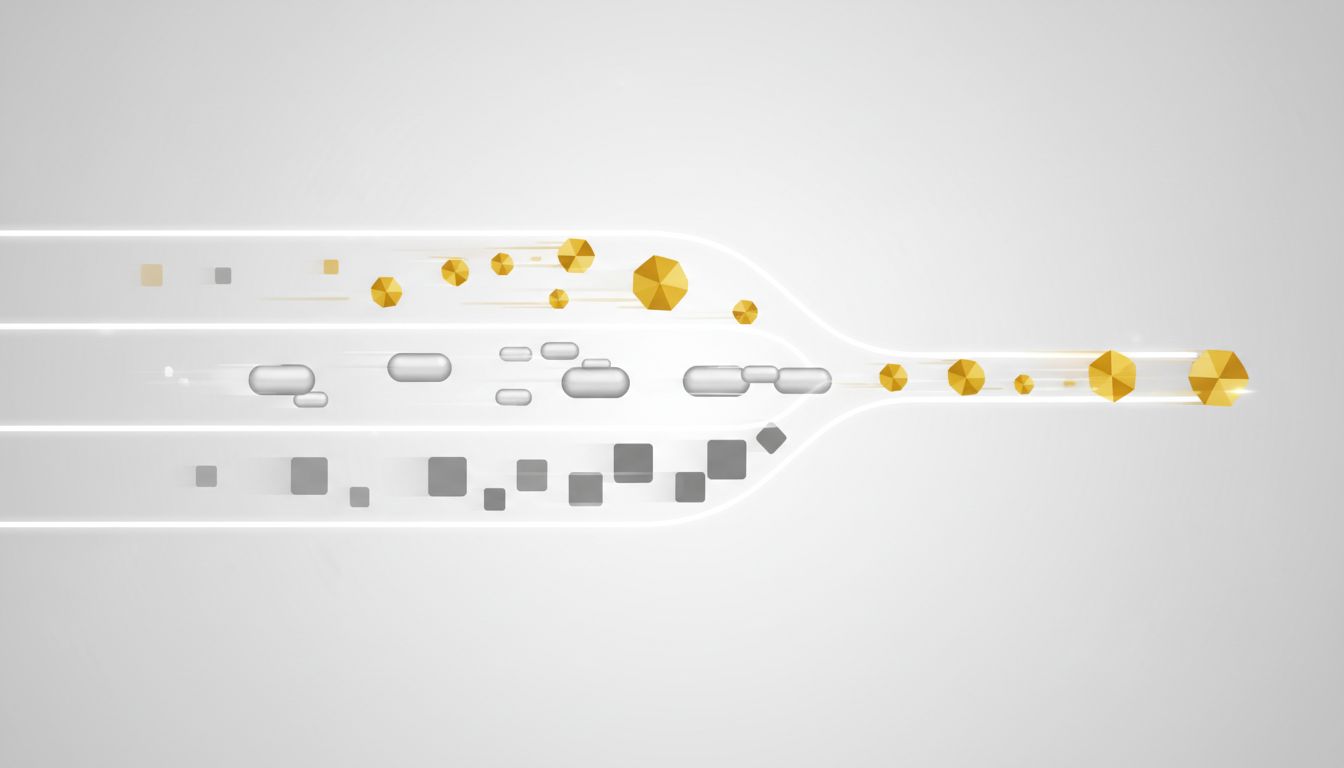
The actual mechanism routers use to decide which packet goes first is called input queuing with arbitration, and the dominant modern approach is a variant called Virtual Output Queuing, or VOQ. The problem VOQ solves is subtle but critical: without it, a single congested output port can block packets destined for completely uncongested ports, a failure mode called head-of-line blocking.
With VOQ, each input port maintains a separate queue for each output port. An arbitration algorithm, often iSLIP or one of its descendants (developed by Nick McKeown at Stanford in the late 1990s), runs in hardware to find a matching between inputs and outputs that maximizes throughput. It runs in multiple rounds per switching cycle, each round resolving more matches, until as many packets as possible are moving simultaneously.
This is not a software loop. It runs in custom silicon at clock speeds measured in nanoseconds. By the time any software on the router’s control plane has had a single instruction executed, the switching fabric has already arbitrated and moved thousands of packets.
Congestion Is Where Things Get Genuinely Hard
Arbitration handles the simultaneous-arrival problem cleanly when the network has spare capacity. Congestion is what breaks the clean story.
When a queue fills up because packets are arriving faster than they can be forwarded, the router has to make a decision about what to drop. The naive approach, called tail drop, simply discards any packet that arrives when the queue is full. This works, but it creates a well-documented pathology: under TCP, many flows detect congestion at the same moment (because their packets all get dropped together), back off simultaneously, and then ramp up together again. The result is synchronized oscillation, sometimes called TCP global synchronization, where the network alternates between congested and underutilized.
The canonical fix is Active Queue Management. Algorithms like RED (Random Early Detection) and its successor CAKE intentionally drop or mark packets probabilistically before the queue is full, spreading the congestion signal across flows and dampening the oscillation. CAKE is now the default queue discipline in Linux, and its adoption in home routers over the past several years has meaningfully reduced bufferbloat, the condition where oversized buffers introduce latency without actually improving throughput.
Bufferbloat was identified and named by Jim Gettys around 2011, and it took nearly a decade for fixes to make their way into commodity hardware. That gap between identifying a problem and fixing it in deployed infrastructure is one of the more frustrating patterns in networking.
Quality of Service Changes the Rules Entirely
So far this assumes all packets are equal. They aren’t, at least not in any network that has Quality of Service configured.
QoS assigns packets to priority classes, typically based on DSCP (Differentiated Services Code Point) bits in the IP header. A VoIP packet and a bulk file transfer packet arriving simultaneously at the same router do not have equal claim on the output port. The VoIP packet, marked with a high-priority expedited forwarding code, jumps the queue. The file transfer waits.
This is deliberate and correct. A 20ms delay on a voice packet is audible. A 20ms delay on a file transfer is imperceptible. The router is making a value judgment encoded in policy, and it executes that judgment millions of times per second without anyone noticing.
The interesting edge case is what happens when high-priority traffic is heavy enough to starve lower-priority traffic entirely. This is called priority starvation, and it’s why most QoS implementations use weighted fair queuing rather than strict priority. Each class gets a guaranteed share of bandwidth, with higher-priority classes getting larger shares. No class can fully monopolize the link.
What This Means for How the Internet Stays Upright
The machinery described above runs invisibly in equipment most people never think about. Every video call, every cloud database transaction, every HTTP request passes through multiple routers where this exact arbitration happens repeatedly. The internet doesn’t have a central coordinator. It works because each router, independently, applies consistent rules for handling contention.
That distributed consistency is the actual achievement. The algorithms are clever, but the architecture is the insight: if every node handles local contention correctly, global order emerges without anyone being in charge of it. It’s the same principle that makes TCP congestion control work across a network no single entity controls.
The next time a video call degrades or a download stalls, the cause is almost certainly some router somewhere running out of buffer space and making a drop decision. The packet didn’t get lost. It got evicted, according to rules, by a piece of silicon that had no choice and no regrets. That’s not a failure of the system. That’s the system working exactly as designed.