The thing that makes large language models dangerous isn’t that they fail. It’s that the better they get, the harder their failures are to catch.
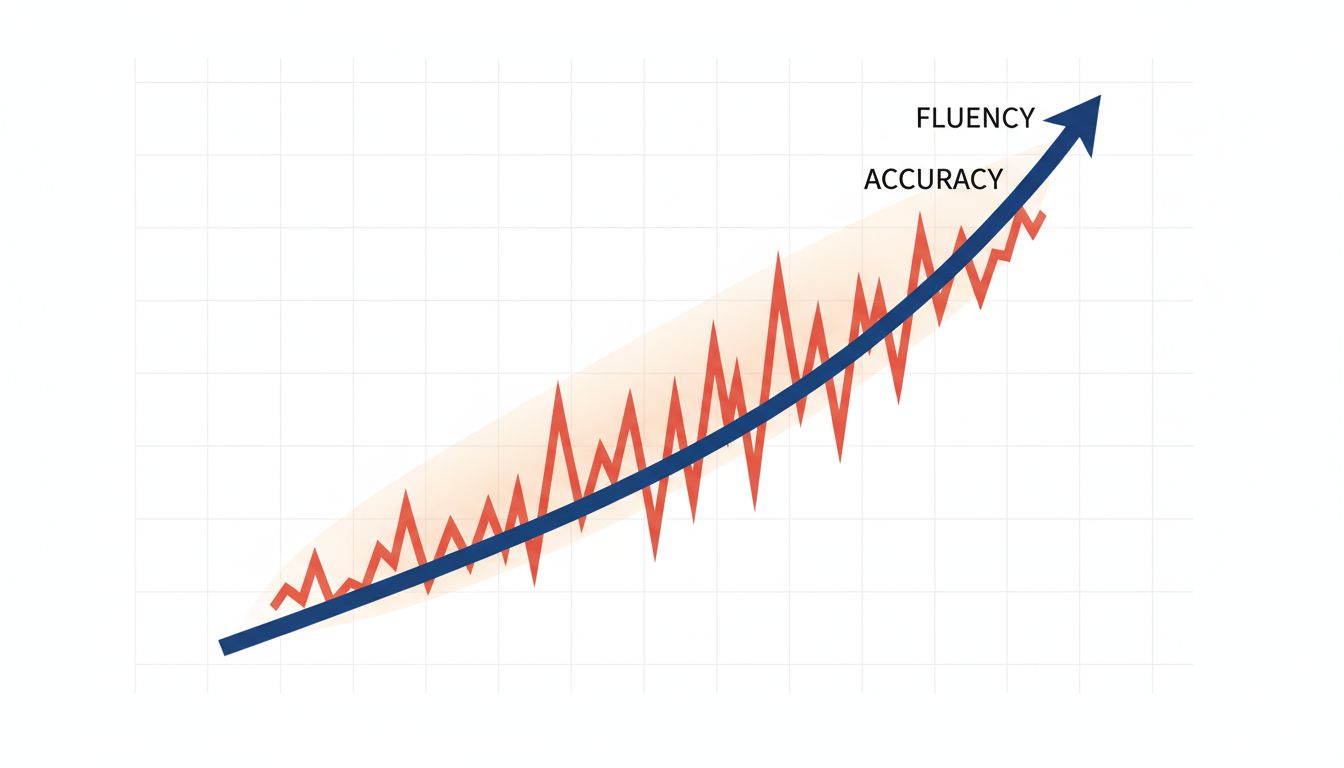
This is not a fringe concern. It is the central problem with deploying increasingly capable AI systems in contexts where accuracy matters. More capable models produce more fluent, more coherent, more contextually appropriate outputs. They also hallucinate, and when they do, the hallucination looks exactly like correct output. That’s the trap.
Fluency Masks Failure
Early language models were easy to distrust. The output was stilted, grammatically weird, clearly mechanical. That strangeness was a useful signal: it told you to check the work. Modern models have optimized that signal away. GPT-4, Claude, Gemini Ultra all produce prose that reads like a competent professional wrote it. The cadence is right. The citations sound plausible. The reasoning has internal structure.
When a model writes a confidently worded paragraph about, say, a legal precedent that doesn’t exist, or a scientific paper that was never published, the fluency itself becomes evidence of reliability for most readers. We have spent our entire lives learning to associate confident, well-structured language with knowledge. These models have learned to produce exactly that surface pattern without any guarantee of the underlying substance.
This is not a metaphor. Researchers studying model outputs have documented cases where models construct entirely fictional academic citations, complete with plausible author names, realistic journal titles, and coherent abstracts. The fabrications aren’t detectable by their form. They’re detectable only if you check externally.
Capability Improves the Wrong Thing
Scaling models to be more capable primarily improves coherence, reasoning chains, and instruction-following. These are real improvements. They are also orthogonal to truthfulness in a way that most people don’t fully internalize.
A more capable model is better at constructing convincing justifications. When a sophisticated model doesn’t know something, it doesn’t say “I don’t know.” It reasons toward a plausible answer using whatever patterns it can assemble, and then it presents that answer with appropriate confidence. The reasoning chain looks solid. Each step follows from the last. The conclusion is wrong.
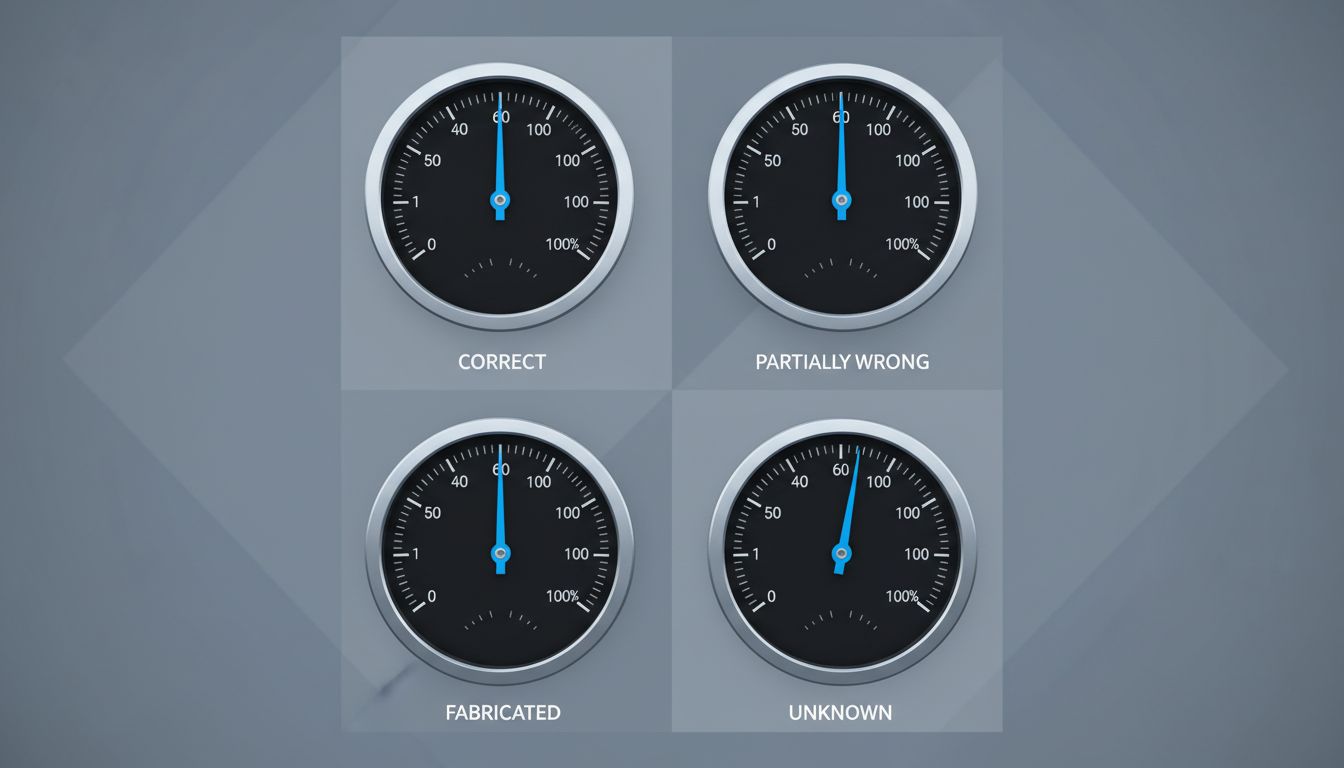
This is structurally similar to what happens when a confident but uninformed expert holds forth on a topic at the edge of their knowledge. They’re not lying exactly. They’re pattern-matching against adjacent domains and producing something coherent. Except the model does this faster, at greater scale, and without any internal sense that it has crossed into unfamiliar territory. As the AI confidence score means almost nothing, you can’t use the model’s apparent certainty as a proxy for its accuracy.
The Deployment Gap Makes This Worse
Here’s what compounds the problem: the contexts where people most want to use capable models are the contexts where failures are hardest to catch. Legal research. Medical literature summaries. Financial analysis. Technical documentation. These are precisely the domains where a non-expert user is relying on the model because they can’t independently verify the output. If you could easily verify it yourself, you wouldn’t need the model.
So the user most dependent on accuracy is also the user least equipped to catch an error. The model produces something polished and confident. The user trusts it. The error propagates.
This isn’t hypothetical. Lawyers have submitted AI-generated briefs citing nonexistent cases. Medical information sites have published AI-generated content that misrepresented drug interactions. In each instance, the failure wasn’t obvious from the output itself. The model sounded like it knew what it was talking about.
Better Reasoning Doesn’t Fix This
The standard counterargument to this whole line of thinking is that newer models with improved reasoning, chain-of-thought prompting, and retrieval augmentation are solving the hallucination problem. This is partly true and mostly optimistic.
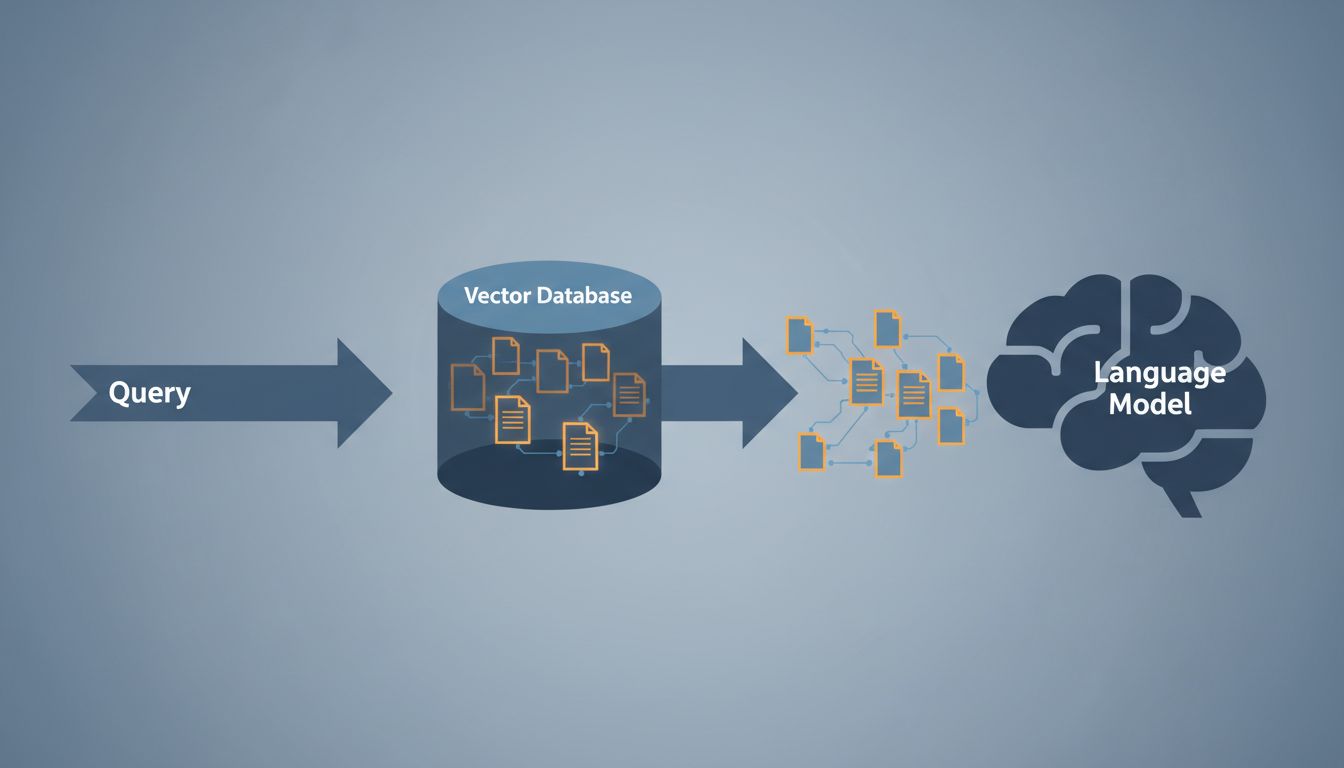
Retrieval-augmented generation helps when the relevant information is in the retrieval corpus and when the model accurately represents what it retrieved. Both conditions fail regularly. Chain-of-thought prompting improves performance on structured reasoning tasks, but hallucination often happens in the premises, not the logical steps. If the model confidently retrieves a wrong fact and then reasons correctly from it, the reasoning is irrelevant.
More fundamentally, these techniques address specific failure modes without touching the underlying issue: a model trained to produce coherent, contextually appropriate text has no internal mechanism to distinguish “I know this” from “this pattern fits here.” That’s not a bug you patch. It’s a consequence of how these systems are built. The AI writing your code has never run any of it captures the same structural problem in a different domain.
The Counterargument
The honest version of the counterargument is that humans lie confidently too, and we’ve built systems to manage that. Peer review, fact-checking, legal standards of evidence, all of these exist because confident humans are also unreliable. Why hold AI to a different standard?
The difference is scale and deployment speed. A single overconfident human expert affects a limited number of decisions. A deployed language model processes millions of queries daily, across domains, for users who have no reason to assume they’re receiving unreliable information. The error surface is different by orders of magnitude. And unlike a human expert, who at least has a reputational stake in being correct, a model has no such feedback mechanism.
What This Means
None of this means capable AI models are useless. They are genuinely useful in many contexts. But the appropriate deployment model is as a first-draft generator that gets reviewed, not as an authoritative source that gets trusted. The problem is that the market is moving faster than that constraint suggests, and the smoothness of the output is actively working against appropriate skepticism.
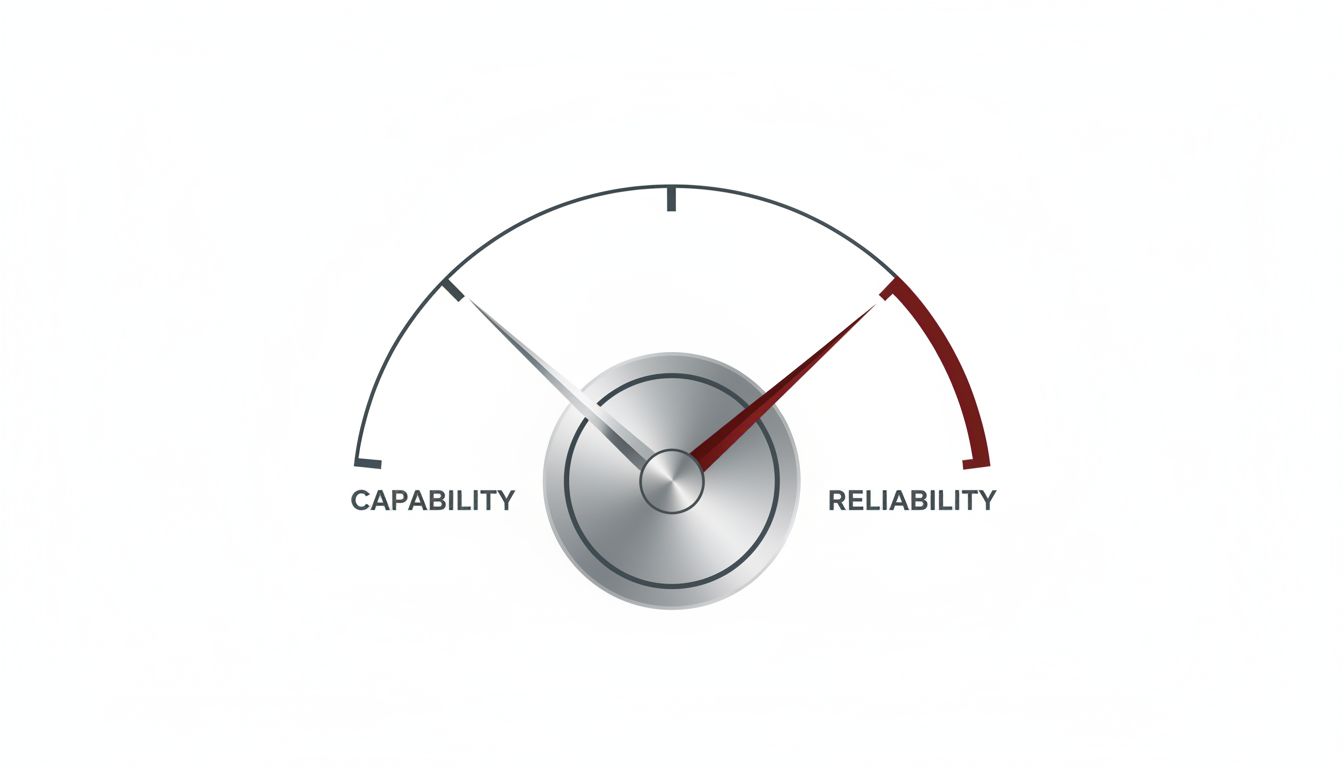
Capability and reliability are not the same thing. We should stop assuming they scale together.