
Why Being Second in Tech Often Pays Better Than First
In 2015, AMD was close to irrelevant. Intel held roughly 80 percent of the desktop CPU market. AMD’s stock traded under $2. The company had lost money for several consecutive years and was quietly selling off its campus real estate in Sunnyvale just to stay solvent. Analysts debated not whether AMD would recover, but whether it would survive.
By 2022, AMD’s stock had climbed above $160. Its data center revenue was doubling year over year. Its gross margins, historically crushed by Intel’s manufacturing advantages, had expanded to levels that looked nothing like a company fighting for scraps in someone else’s market. AMD had not overtaken Intel in unit volume. It had done something more interesting: it had become dramatically more profitable while remaining, by most measures, second.
This pattern shows up often enough in tech markets that it deserves a serious explanation.
The Setup
The conventional story about market leadership says that the company with the most customers wins. More customers means more revenue, more data, more engineering resources, and a stronger network effect. The winner pulls away. The loser fights for what’s left.
This logic holds in some markets. Search advertising is one. Social media is another. In both cases, the network effect is so strong that the second-place competitor earns a fraction of the leader’s revenue and, often, a fraction of its profit margin. Being second in search is a difficult business.
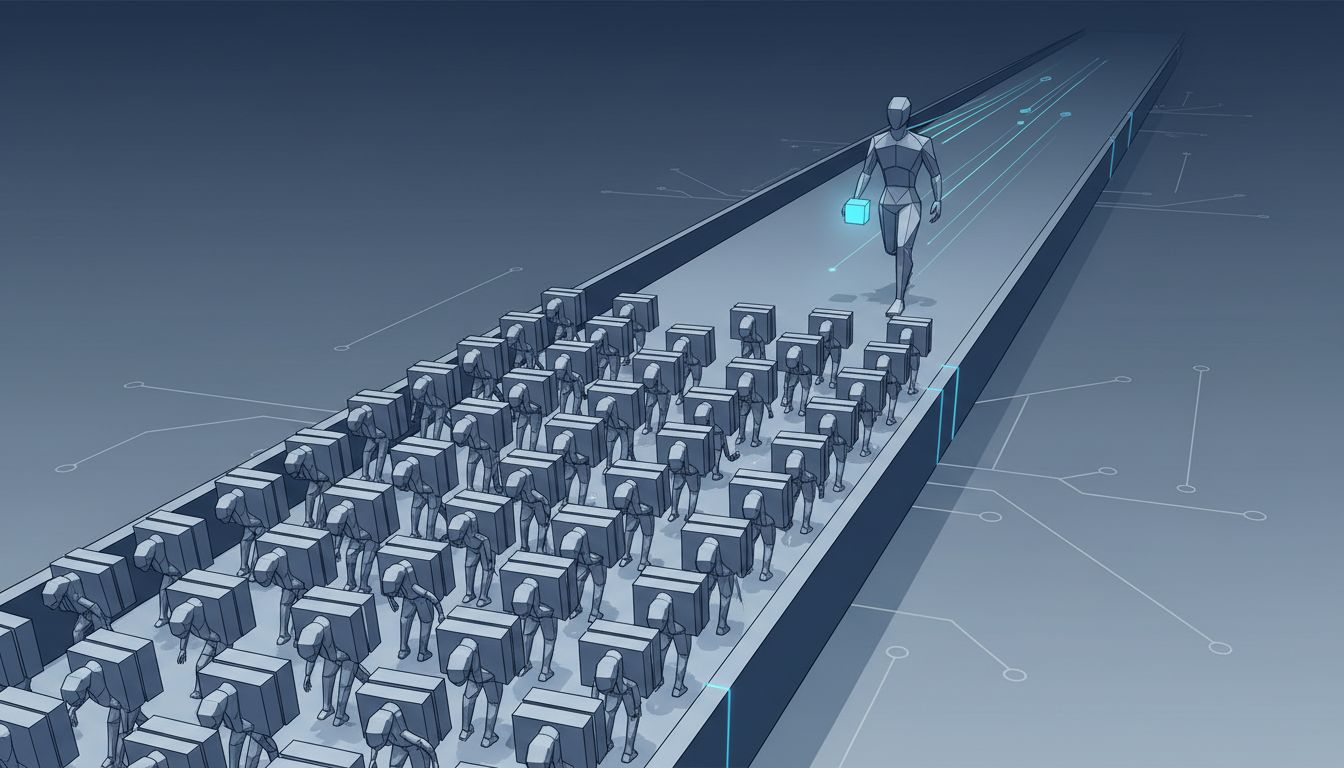
But in markets where the product is genuinely technical, where buyers are sophisticated, and where the winning company has to defend a wide front, the calculus shifts. The leader spends heavily to protect every segment. The challenger picks the segments worth winning.
What AMD Actually Did
AMD’s recovery under Lisa Su, who became CEO in 2014, was not primarily a manufacturing story. It was a resource allocation story.
Intel, sitting on 80 percent market share, had to serve consumers, businesses, laptop makers, server vendors, and embedded systems customers. It maintained separate product lines, separate sales organizations, and separate engineering roadmaps for all of them. It had investors and analysts expecting consistent margins across the board. Its own success had made it structurally slow.
AMD chose differently. Su’s team concentrated engineering investment on the segments with the highest margin potential: high-performance computing and, crucially, data center processors. The Zen architecture, which debuted in 2017, was not designed to beat Intel everywhere. It was designed to beat Intel where it mattered most for revenue per unit sold.
The data center bet paid off. Hyperscale customers (Amazon, Microsoft, Google) are sophisticated buyers who benchmark performance per dollar with more rigor than any consumer. When AMD’s EPYC processors demonstrated genuine advantages in multi-threaded workloads, these buyers switched significant portions of their purchasing. Not all of it. Enough of it.
This is the second-place advantage in its clearest form. AMD did not have to win the whole market. It had to win enough of the right customers to generate profits that, on a per-employee and per-dollar-of-R&D basis, exceeded what Intel was generating while defending its entire installed base.
Why the Leader’s Position Is a Trap
Market leadership in tech comes with obligations that most financial analyses undercount. The leader must support legacy products for customers who haven’t upgraded. It must respond to every competitive move, even in markets it doesn’t care about, because letting a challenger win anywhere signals weakness everywhere. It must maintain pricing in segments where the challenger has structural cost advantages, because dropping prices would crater margins across its full revenue base.
Intel’s struggles with the transition to smaller process nodes were real engineering failures. But they were also partly a consequence of trying to move an enormous and heterogeneous product portfolio through a manufacturing transition simultaneously. The scope of what Intel had to protect made the transition harder.
AMD, by contrast, outsourced its manufacturing to TSMC. This decision, which looked like a concession in the early 2010s, turned into a structural advantage. AMD’s products got TSMC’s most advanced nodes. Intel’s products had to wait for Intel’s own fabs to catch up. The challenger’s apparent weakness (not owning fabs) became a source of flexibility the leader couldn’t match without abandoning decades of capital investment.
The Broader Pattern
AMD is not unique. Nvidia spent years as a clear second in the workstation GPU market behind what was then ATI (later acquired by AMD). It focused its engineering on the professional visualization and scientific computing segments, built CUDA as a programming platform that locked in researchers and engineers, and eventually found itself owning the market that mattered most when machine learning emerged as a major compute workload.
In mobile operating systems, Android holds the majority of global unit share. Apple’s iOS is second by that measure, but iOS generates substantially more revenue per device and attracts disproportionate app developer investment. Apple is not trying to win the volume game. It is not second place by accident.
The pattern also appears in enterprise software, where [the economics of focused positioning]((/why-the-second-best-product-often-makes-more-money/) often beat the economics of trying to own the whole market. A challenger who wins 30 percent of the high-value segment can generate margins that a market leader with 70 percent of the whole market would envy.
What We Can Learn
The lesson is not that companies should aim for second place. The lesson is that market share and profitability are less correlated than most business coverage implies, and that the mechanics of competition in tech often favor the challenger in ways that only become visible in hindsight.
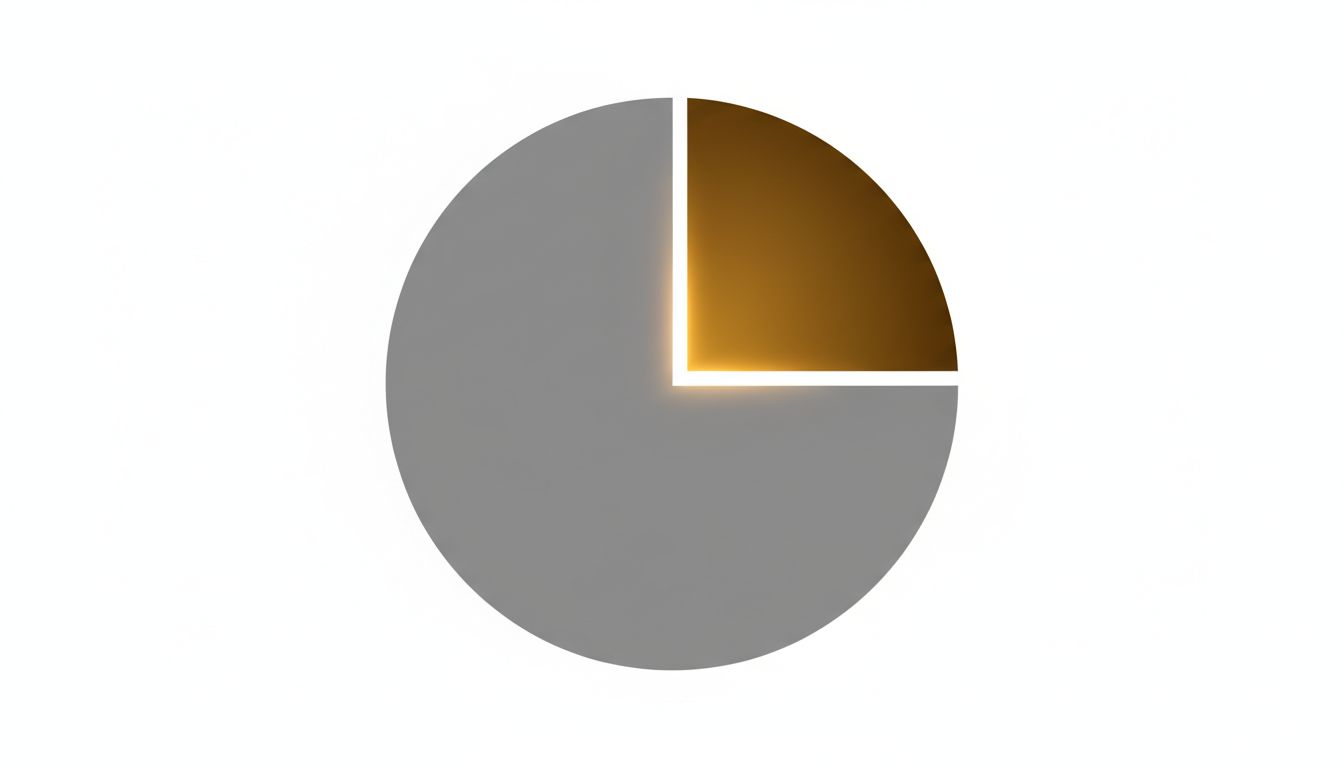
For investors, the practical implication is straightforward: a company holding 25 percent market share in the right segment, with lower overhead than the leader and improving margins, can be a better investment than the company with 60 percent share and declining margins from defending a wide front.
For operators, the implication is about resource concentration. The danger in becoming a market leader is the institutional pressure to serve everyone, protect everything, and optimize for the metrics that justified the last capital raise rather than the ones that will justify the next decade. AMD in 2015 could not have competed with Intel everywhere even if it had wanted to. That constraint, painful as it was, forced a focus that its larger competitor could not replicate.
Intel has not disappeared. It remains a large and technically capable company, and its current manufacturing investments may yet prove decisive. But for most of the period between 2017 and 2023, the more interesting business to analyze was the one in second place.
The winner of the market share war pays for the trophy out of its own margins.