

The Simple Version
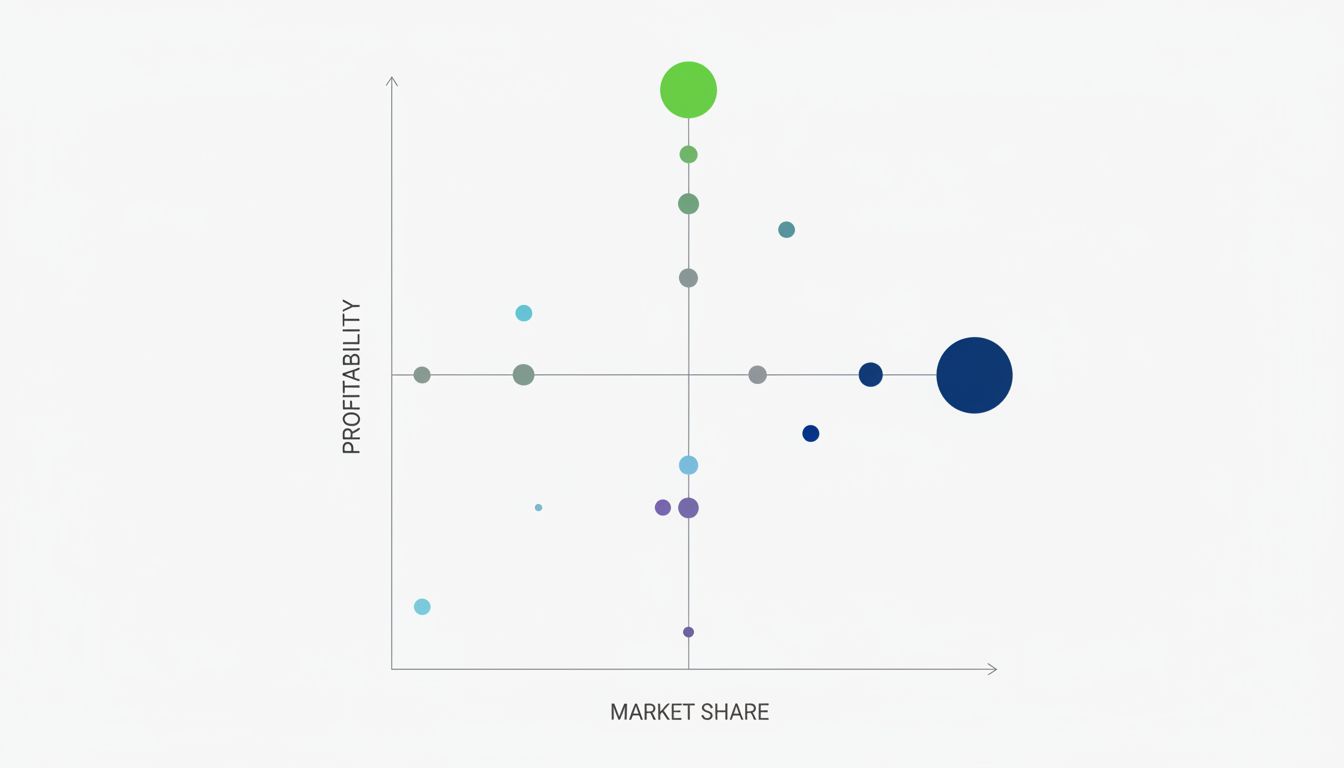
The company that wins a tech market usually has to spend aggressively to stay there. The company just behind it often gets to be profitable while the winner bleeds.
Why Winning Is Expensive
There is a seductive logic to market leadership. The biggest player sets prices, attracts the best talent, and earns the most press coverage. What this story leaves out is the cost of maintaining that position.
Market leaders face a specific tax that second-place companies largely avoid: they have to respond to every competitive threat, invest in every adjacent category, and defend their position on every front simultaneously. A challenger only has to win one fight at a time.
Amazon Web Services is the canonical market leader in cloud infrastructure, but the margins story is more complicated than the rankings suggest. Microsoft Azure, firmly in second place for years, has consistently shown stronger overall profitability as a share of Microsoft’s total business. Part of this is because Microsoft could cross-subsidize and integrate across enterprise software in ways AWS could not, but part of it is simpler: AWS spent years subsidizing customer acquisition at scale, building out infrastructure in geographies that weren’t yet profitable, and pricing aggressively to prevent defection. The leader’s burden.
The Innovator’s Curse
Market leaders also tend to carry the heaviest legacy costs. They built the infrastructure when it was expensive to build. They hired when salaries peaked. They made architectural decisions that were right for the moment but are now load-bearing walls in a house that needs to be redesigned.
Second-place companies often get to learn from the leader’s mistakes and build cleaner. When Salesforce dominated CRM, a generation of vertical SaaS companies didn’t try to beat it directly. They picked specific industries, built leaner products, and ran profitable businesses while Salesforce spent enormous sums on acquisitions and platform expansion to defend its position.
This is a structural advantage, not a fluke. The challenger gets to optimize for profitability because it isn’t trying to be everything to everyone. The leader has to be.
The Price Premium Paradox
Here is the counterintuitive part: second-place companies often charge more, not less, and get away with it.
When a market has a dominant player, that player tends to compete on price because volume and market share are the metrics that matter to investors. The challenger, unable to win on price alone, is forced to compete on quality, service, or differentiation. Customers who choose the challenger are often less price-sensitive. They want something the leader doesn’t offer, and they’re willing to pay for it.
The result is that the challenger ends up with a customer base that’s smaller but more profitable per account. Lower customer acquisition costs (because you’re not trying to own the whole market), better retention (because customers chose you for specific reasons rather than defaulting to the incumbent), and higher margins per customer.
This dynamic shows up clearly in enterprise software, where second-tier vendors routinely post better net revenue retention and gross margins than the category leaders who are growing faster in absolute terms. Growth and profitability are not the same thing, though they’re often treated as interchangeable.
What Investors Miss
The financial press tends to cover market share as a proxy for business quality. This is a habit borrowed from consumer markets, where it sometimes applies. In tech, it often misleads.
The metrics that actually predict long-term business health are gross margin, customer lifetime value relative to acquisition cost, and net revenue retention. A company with 15% market share but 80% gross margins and 120% net revenue retention is a better business than one with 40% market share, thin margins, and churning customers, even if the headlines go to the leader.
The companies that quietly compound value in tech tend to be the ones that found a defensible position just off the center of the market. They don’t have to win the whole thing. They just have to serve their customers better than anyone else and not spend themselves into trouble trying to be number one.
The Exception Worth Noting
This pattern doesn’t hold everywhere. In markets where network effects are both strong and exclusive (social networks being the clearest example), second place is often a death sentence rather than a comfort. When the value of a product is determined almost entirely by who else is using it, the leader’s position compounds in ways that margins alone cannot overcome.
The framework also breaks down when the market is still being defined. In the early stages of a new category, the leader’s aggressive spending is often genuinely necessary to establish that the category exists at all. The challenger benefits from that investment while it matures.
But in established markets with heterogeneous customers and multiple viable use cases, the second-place dynamic is real, durable, and underappreciated. The winner’s podium in tech is a complicated place to stand. The company just behind it, focused and profitable, is often the better business to own.