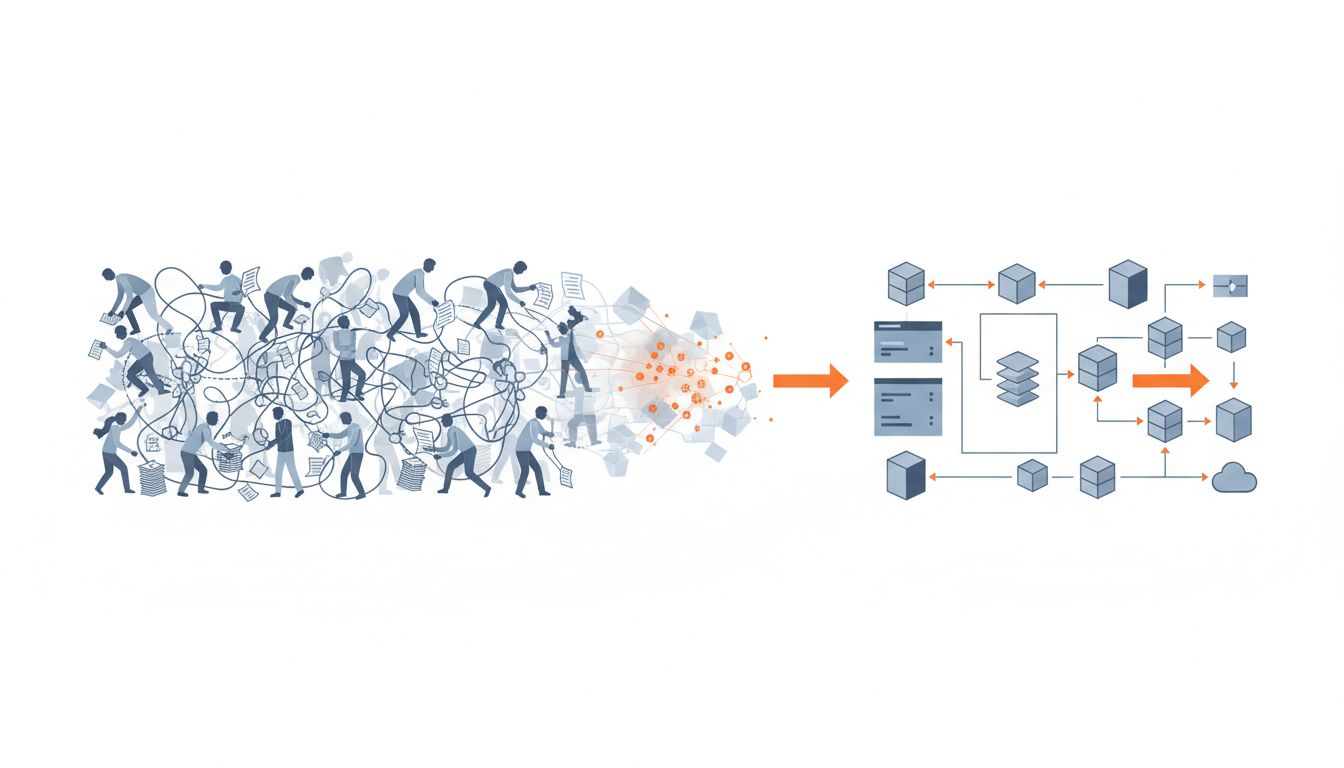

Imagine you’re pitching a VC in 2004. You want to build a social network. The investor leans back and says, “Friendster already exists. You’re too late.” You go home and build it anyway. You call it Facebook.
This is the story we usually tell as a triumph of persistence. But it’s also a story about timing, and specifically about what the second company into a market gets that the first one doesn’t.
The Pioneer Tax Is Real
Being first into a market carries costs that almost nobody talks about honestly. The first company has to educate customers that the problem is worth solving, convince investors to bet on an unproven category, recruit engineers into an uncertain mission, and figure out pricing when there’s no comparable product to anchor against.
These aren’t small expenses. They’re existential ones. Friendster spent enormous energy just convincing people that “social networking” was a thing they might want. By the time Facebook launched, that battle was already won. Zuckerberg didn’t have to explain what a social network was. He just had to explain why his was better.
The pioneer builds the road. The follower drives on it.
This pattern repeats so consistently across tech history that it stops being a coincidence. Google was not the first search engine. It was the better one, arriving after Lycos, AltaVista, and Yahoo had already established that people would use web search. Salesforce was not the first CRM. Siebel Systems pioneered that category, did the hard missionary work of convincing enterprises to track their sales pipelines in software, and then watched Salesforce eat their lunch by delivering the same concept through a browser without a seven-figure implementation project.
The Follower Knows Something the Pioneer Doesn’t
Here’s what the second company has that the first one almost never does: real data about real users trying to solve a real problem.
The pioneer is operating on a hypothesis. They think customers want X. They build X. They discover customers actually wanted something adjacent to X, or that they wanted X but not at that price point, or that the sales cycle is three times longer than expected because procurement has to be involved.
All of this is expensive to learn. The pioneer pays tuition. The follower reads the syllabus.
When Facebook watched Friendster struggle with performance issues and a confusing interface, they didn’t have to run experiments to find out those things mattered. They already knew. When Netflix saw Blockbuster’s late-fee backlash (Blockbuster collected roughly $800 million annually in late fees, which was both a revenue driver and a customer-relations disaster), they knew exactly which nerve to hit with “no late fees” positioning.
The follower gets to be opinionated in the right direction because they’re not guessing. They’re responding.
Fast Follower Is Not the Same as Copycat
This is where the strategy gets misread. Plenty of companies try to be the second mover and fail badly because they confuse “following” with “copying.”
Copying is dangerous for two reasons. First, you end up inheriting the pioneer’s assumptions about the problem, which are often the assumptions that made the pioneer vulnerable in the first place. Second, you give customers no reason to switch. If you build Salesforce but for existing Siebel customers who are already locked in, you haven’t found an angle. You’ve just built a worse version of something people already bought.
The successful second movers don’t replicate the product. They replicate the insight that there’s a market, then use the pioneer’s mistakes as a design brief.
Slack is a useful example here. HipChat and Campfire existed before Slack. The “team messaging” category was established. Slack didn’t look at those products and copy them. They looked at why those products hadn’t achieved the kind of organic adoption that indicated genuine product-market fit, then built something that solved the same problem with dramatically better user experience and a viral loop baked into the invite mechanism.
The difference between a fast follower and a copycat is whether you have a thesis about what the pioneer got wrong.
Why Investors Have This Backwards
Venture investors, as a class, have a love affair with the “first mover” concept that the actual evidence doesn’t support. The logic sounds clean in a pitch meeting: if you’re first, you can establish the brand, lock in customers, and build a moat before anyone else arrives.
But this logic assumes the first mover correctly identified what the customer actually wants, which is exactly the thing a first mover can’t know with any certainty. The first mover is taking the highest-variance bet available. They might nail it and build an uncatchable lead. More often, they validate the category and then get outcompeted by someone who arrives with more information.
Investors who penalize founders for entering a market that already has one player are making a systematic error. That player is often proof of demand, not proof the door is closed. The question isn’t “is anyone already doing this” but “is the existing player so entrenched that the switching costs are prohibitive.” And in most software categories, they’re not.
Where Being First Actually Does Matter
It would be dishonest to argue the second-mover advantage is universal. There are categories where being first matters enormously and where the follower framework breaks down.
Networks are the obvious one. When network effects are true and strong, the pioneer’s lead compounds on itself in a way that’s nearly impossible to overcome. Early eBay is a good example. By the time any serious competitor could launch, eBay had buyers because it had sellers, and it had sellers because it had buyers. That loop makes the pioneer’s early mistakes mostly irrelevant because users don’t leave even if the product is subpar.
Regulatory capture is another. In industries where early players can shape regulation around their existing infrastructure, being second means playing by rules someone else wrote. This is less common in pure software but shows up in fintech, healthcare tech, and anything adjacent to telecommunications.
Distribution deals matter too. If the first mover locks up an exclusive distribution channel, like a default browser position or a carrier relationship, they may have an advantage that survives product inferiority for years.
But outside of genuine network effects and locked distribution, first-mover advantage is mostly mythology that successful first movers retroactively apply to their stories to make luck look like strategy.
The Timing Question
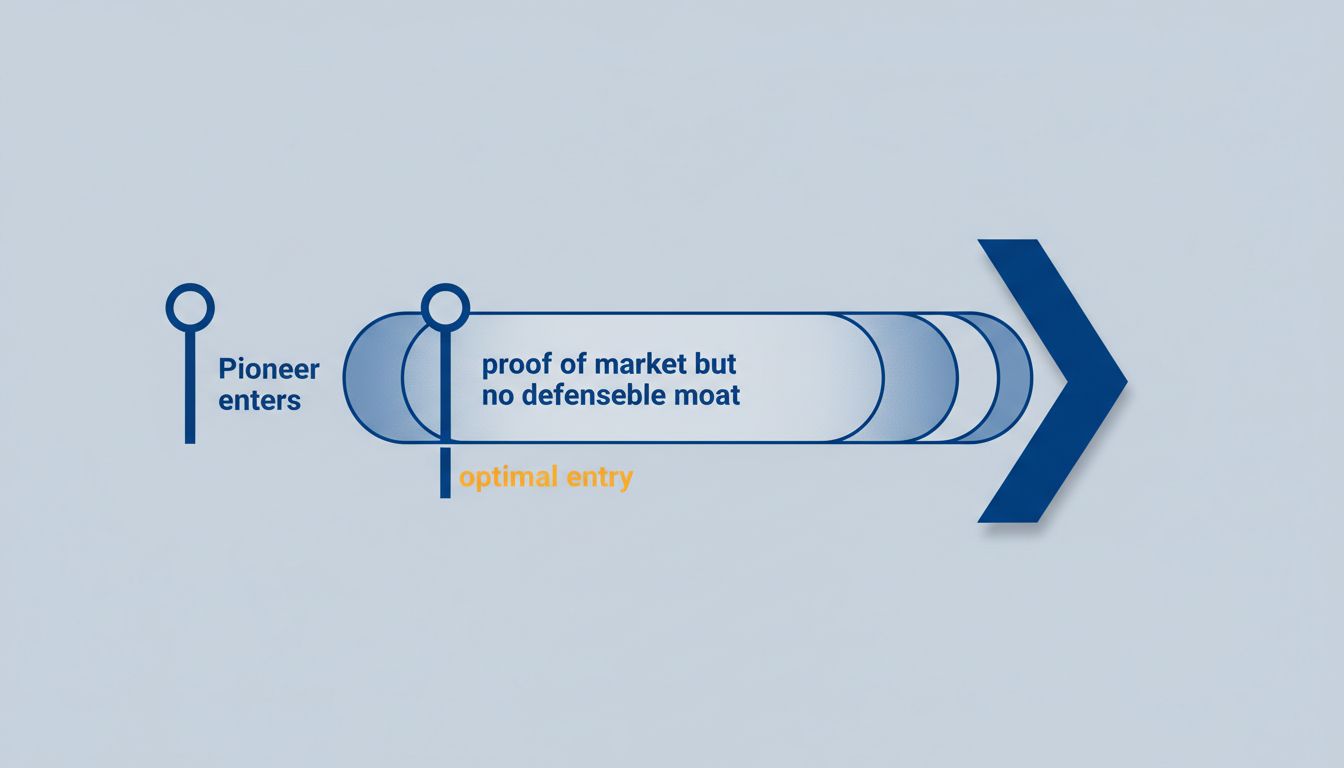
If you accept that being second is often better than being first, the strategic question becomes: how long do you wait?
Wait too long and the pioneer recovers from early mistakes and builds something defensible. Wait too short and you’re entering before the pioneer has proven the market, which means you’re both paying the pioneer tax.
The honest answer is that the window for an effective second entry tends to open when the pioneer shows signs of product-market fit (they have real customers who love the product) but before they’ve solved distribution at scale. That window can be narrow. It can also be surprisingly long in enterprise software, where sales cycles and implementation timelines give the category time to prove itself without the pioneer actually dominating.
The companies that execute this well are usually watching the pioneer closely and building in parallel, not waiting to see a sign and then starting from scratch. By the time you can see the window clearly, you’re already late to start building.
What This Actually Means for Founders
If you are a founder staring at a market where one company already exists, the framework should be:
First, treat the pioneer’s product as user research you didn’t have to pay for. Read every negative review, every forum complaint, every churned customer story you can find. Build that into a specific thesis about what the existing product gets wrong.
Second, don’t assume the pioneer’s business model is correct just because they invented it. The first company to charge for cloud storage often got the pricing wrong. The second company won by pricing differently, not just by building the same thing.
Third, ignore investors who cite the pioneer as a reason to pass. Their logic sounds rigorous but it’s actually lazy. Push them to articulate what specifically makes the pioneer’s position defensible, not just that they exist. “They got there first” is not a moat analysis.
And finally, move fast. The second-mover advantage is a window, not a permanent position. Pioneering customers who can’t get satisfaction from the first company are looking for an alternative right now. They won’t wait indefinitely while you build the perfect product.
Being second is a structural advantage, not a consolation prize. The founders who understand this stop apologizing for arriving after someone else and start treating the pioneer’s stumbles as the most valuable market research money can’t buy.